Nila Kartika Wati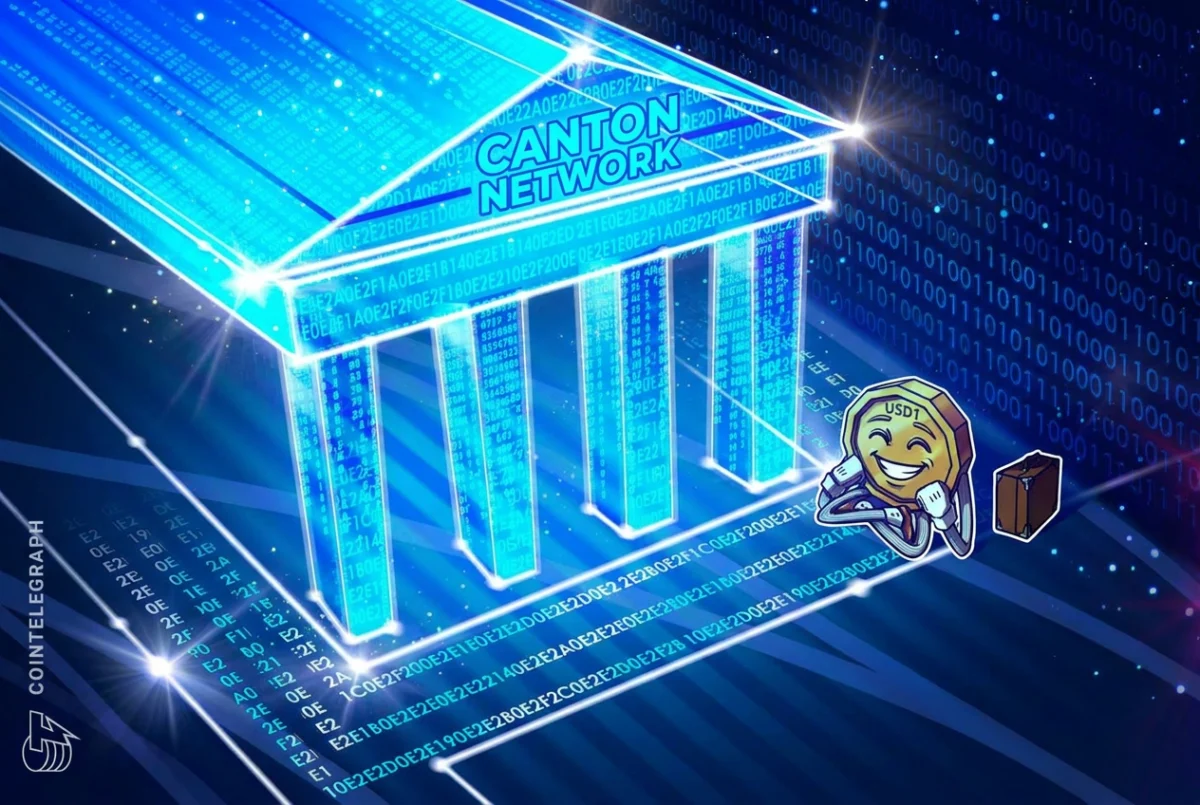
World Liberty Financial has announced the native integration of its USD1 stablecoin onto the Canton Network, a strategic move poised to significantly enhance institutional capabilities for settling transactions involving tokenized real-world assets (RWAs). This development positions USD1, currently the sixth-largest stablecoin with a market capitalization exceeding $4 billion, as a pivotal "cash leg" for a wide array of institutional financial activities on a leading blockchain infrastructure designed for enterprise-grade applications.
The integration, publicly disclosed on Tuesday, August 25, 2026, marks a critical step in bridging traditional finance with the burgeoning digital asset economy. By enabling native issuance on the Canton Network, USD1 can now settle seamlessly and simultaneously alongside tokenized assets within the same transaction. This capability is underpinned by Canton’s robust privacy and permissioning controls, which are essential for meeting the stringent compliance and operational requirements of institutional players. The applications for USD1 within this framework are extensive, ranging from facilitating derivatives collateral and institutional lending to streamlining asset issuance and redemptions.
World Liberty Financial and the Genesis of USD1
World Liberty Financial, a crypto venture launched in 2024 with backing from the Trump family, quickly established its presence in the digital asset space. The company’s flagship stablecoin, USD1, debuted in March 2025, entering an increasingly competitive market dominated by well-established players. From its inception, USD1 was designed to cater to institutional demands for stability and regulatory compliance, being backed by a diversified reserve portfolio comprising short-term US Treasurys, government money market funds, and dollar deposits. This backing strategy is crucial for instilling confidence, providing a clear 1:1 peg to the U.S. dollar, and ensuring liquidity and redemption capabilities.
The issuance and reserve management of USD1 are handled by BitGo Bank & Trust, a regulated entity known for its digital asset custody and financial services. BitGo’s involvement lends significant credibility to USD1, assuring institutions that the stablecoin’s reserves are managed by a compliant and trusted third party, thereby mitigating counterparty risk and enhancing the overall security framework. This operational structure aligns with the evolving regulatory expectations for stablecoins, which increasingly emphasize transparency, robust reserve management, and independent audits.
Canton Network: A Hub for Institutional Digital Finance
The Canton Network stands out as a public, permissionless blockchain specifically architected to serve the complex demands of institutional finance. Its design prioritizes high throughput, security, and the ability to handle sensitive financial data with appropriate privacy and permissioning. According to network data, Canton processes and issues an astounding volume of tokenized assets, exceeding $9 trillion each month, with over $350 billion in on-chain US Treasurys moving across the network daily. These figures underscore Canton’s capacity to facilitate large-scale, high-value financial operations, making it an attractive platform for stablecoin integrations like USD1.
The network’s permissionless nature, combined with its advanced privacy features, offers a unique value proposition. While public blockchains often struggle with the privacy requirements of institutional transactions, Canton’s design allows participants to maintain confidentiality over their specific transaction details while still benefiting from the transparency and immutability of blockchain technology. This balance is critical for financial institutions that must adhere to strict data protection regulations and competitive sensitivities.
The Strategic Importance of Native Integration
The native issuance of USD1 on the Canton Network represents more than just adding another stablecoin to a blockchain. It signifies a fundamental shift in how institutional digital asset transactions can be executed. Traditionally, settling tokenized assets might involve multiple steps or even different platforms for the asset and its corresponding cash leg. Native integration on Canton streamlines this process, allowing the tokenized asset and USD1 to settle atomically – meaning either both components of the transaction succeed or both fail – within a single, secure operation.
This atomic settlement capability is particularly valuable for complex financial instruments. For instance, in derivatives collateral management, USD1 can be instantly transferred and settled as collateral against a tokenized derivative, reducing settlement risk and improving capital efficiency. In institutional lending, tokenized loans can be originated and funded with USD1, ensuring immediate and verifiable transfer of funds. For asset issuance and redemptions, USD1 provides a reliable and efficient mechanism for primary market activities and secondary market liquidity, accelerating the lifecycle of tokenized securities and other assets. The efficiency gains translate into reduced operational costs, faster transaction speeds, and enhanced risk management for institutions.
Expanding Stablecoin Landscape and USD1’s Market Position
The stablecoin market has grown exponentially, becoming a cornerstone of the broader digital asset ecosystem. With a market capitalization of approximately $4.05 billion, USD1 holds the distinction of being the sixth-largest stablecoin, according to data from DeFiLlama. This position, while significant, places it behind industry giants like Tether’s USDT and Circle’s USDC, which command tens of billions in market cap. However, USD1’s focus on institutional use cases and its strategic integrations distinguish its growth trajectory.
The competition among stablecoins is not merely about market capitalization but also about utility, regulatory compliance, and institutional adoption. USD1’s emphasis on robust backing, independent reserve management by BitGo Bank & Trust, and now its native integration with a prominent institutional blockchain like Canton, are key differentiators. This strategy aims to capture a segment of the market that prioritizes security, compliance, and seamless integration with existing financial workflows over sheer volume. The stablecoin sector continues to attract significant regulatory scrutiny globally, with authorities pushing for clearer frameworks around reserve requirements, auditing, and consumer protection. USD1’s proactive approach to these aspects positions it favorably for continued institutional acceptance.
The Broader Trend of Tokenized Real-World Assets
The integration of USD1 on Canton is a clear indicator of the accelerating trend towards the tokenization of real-world assets. RWAs, which include everything from government bonds and corporate equities to real estate and commodities, are being transformed into digital tokens on blockchain networks. This tokenization promises to unlock new levels of liquidity, transparency, and fractional ownership for assets that were traditionally illiquid or inaccessible.
For institutional finance, tokenized RWAs represent a paradigm shift. They offer the potential for 24/7 trading, instant settlement, and reduced intermediation costs. However, the successful adoption of tokenized RWAs hinges on the availability of reliable, compliant, and efficient "on-chain cash" for settlement. This is precisely where stablecoins like USD1, operating on networks like Canton, play a crucial role. By providing a stable, regulated digital dollar that can settle alongside tokenized assets, the friction associated with traditional settlement mechanisms is dramatically reduced, paving the way for broader institutional embrace of digital assets.
Canton’s Growing Ecosystem and Future Implications
The integration of USD1 is the latest in a series of strategic expansions for the Canton Network. Just last week, Digital Asset, a leading blockchain technology company behind Canton, alongside former U.S. House Speaker Paul Ryan’s American Idea Foundation, unveiled plans to pilot a Canton-based system for distributing state-administered benefits across three U.S. states starting in 2027. This initiative, while distinct from financial market applications, highlights Canton’s versatility and its potential to serve various public and private sector needs requiring secure, efficient, and auditable digital transfers.
The cumulative effect of these integrations and pilot programs solidifies Canton’s position as a critical infrastructure layer for the institutional adoption of blockchain technology. For World Liberty Financial, the move significantly expands USD1’s utility and reach within the institutional ecosystem, potentially driving its market capitalization and cementing its role as a key player in the digital asset settlement space. The backing by a politically prominent family, while sometimes a point of discussion, has arguably contributed to the venture’s visibility and ability to attract strategic partnerships.
Looking ahead, the successful deployment of USD1 on Canton could serve as a blueprint for other stablecoins and digital assets seeking to cater to institutional clients. It underscores the importance of purpose-built blockchain infrastructure that can meet the rigorous demands of traditional finance, including privacy, permissioning, and regulatory compliance. As the digital asset landscape continues to mature, such integrations are vital for fostering trust, driving efficiency, and ultimately facilitating the seamless convergence of traditional and decentralized financial systems. This ongoing evolution suggests a future where digital assets and blockchain technology become integral components of the global financial infrastructure, with stablecoins like USD1 acting as the indispensable digital currency rails.