
 admin
admin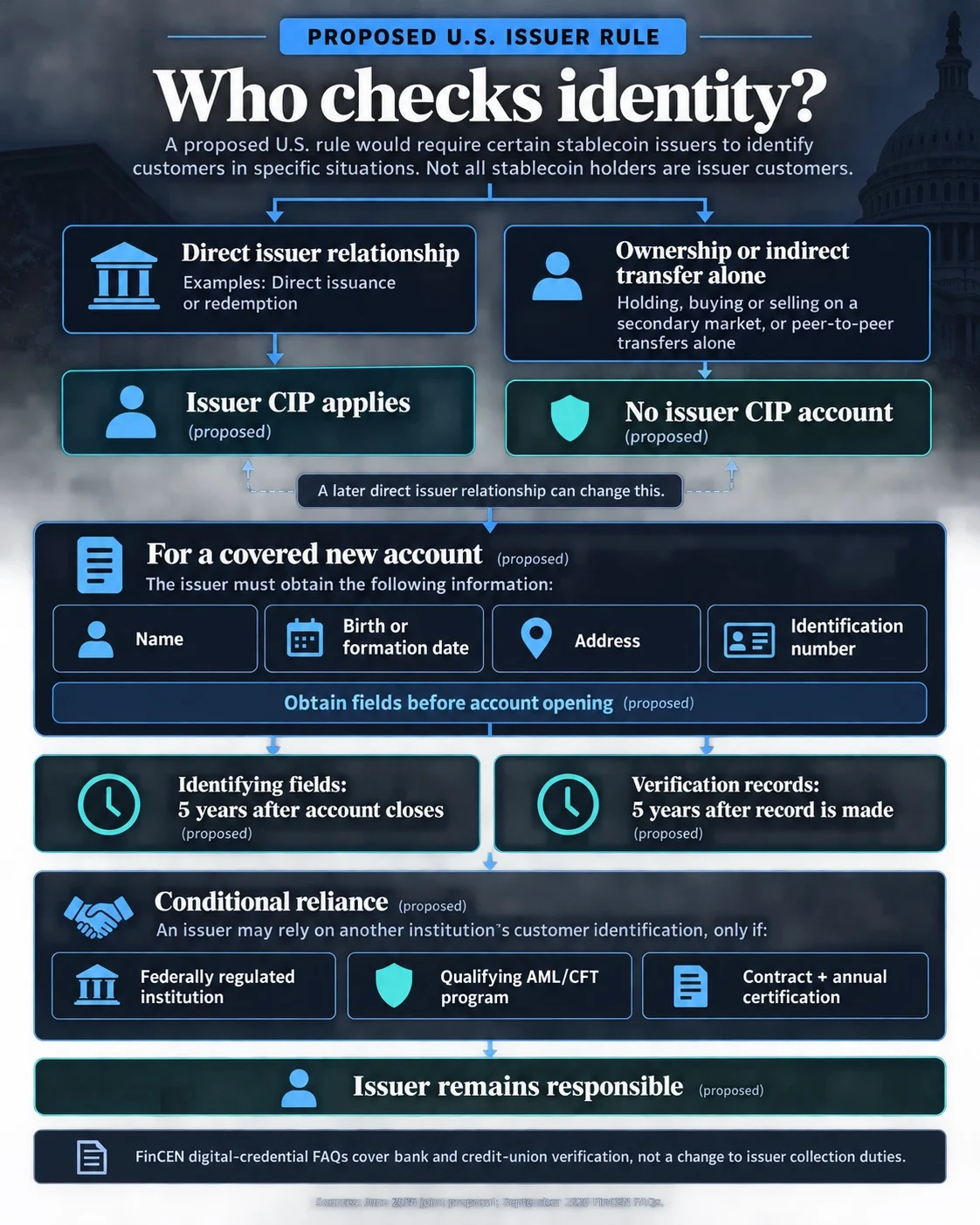
In a significant call for a paradigm shift in financial data management, U.S. Securities and Exchange Commission (SEC) Commissioner Hester Peirce has urged financial institutions to move away from the extensive stockpiling of customer data. Her appeal comes in the wake of a series of high-profile data breaches that have starkly illuminated the vulnerabilities and escalating costs associated with mandatory identity collection practices. Speaking at the SIFMA Digital Assets Conference, Commissioner Peirce championed the broader adoption of reusable digital credentials, a technological approach that could enable the verification of customer facts without necessitating each financial institution to repeatedly collect and store sensitive personal information.
"Today society is at a crossroads," Commissioner Peirce articulated, painting a vivid picture of the diverging paths ahead. "Down one path lies the status quo: more data collection, more intermediary surveillance, more ‘know your customer’ requirements that turn our financial rails into a panopticon. Down the other path lies an opportunity to use new technologies to improve our ability to catch criminals while collecting less personal information than ever before, and monitoring more sparingly to protect Americans’ privacy." This dichotomy underscores a growing tension between the regulatory imperative to combat financial crime and the fundamental right to privacy in an increasingly digital world.
The impetus for Peirce’s remarks is rooted in recent security incidents that have compromised vast troves of customer data held by major financial platforms. Companies like Revolut have experienced breaches that exposed identity documents, addresses, and other personal details diligently collected to meet stringent customer-verification and anti-money-laundering (AML) regulations. These incidents serve as potent reminders that the very data amassed to protect customers can, paradoxically, become a primary target for malicious actors.
Commissioner Peirce suggested that regulators should critically re-evaluate the necessity of institutions collecting specific pieces of sensitive information versus simply needing confirmation of the facts those records establish. She pointed to attribute-based credentials as a potential solution. These credentials could effectively prove an individual’s age, citizenship status, or inclusion on sanctions lists without disclosing their name, income, or address. "Does more than one firm need to collect it?" Peirce queried, highlighting the existing technological capacity to reduce the volume of surrendered information and the number of entities possessing it. She emphasized that her statements represented her personal views, not necessarily the official stance of the SEC.
The debate over data collection practices is gaining particular traction as Washington actively constructs a new compliance regime for stablecoins. The proposed GENIUS Act, for instance, mandates that permitted payment stablecoin issuers implement customer-identification programs. Regulatory proposals accompanying this legislation continue to require covered issuers to obtain and retain identifying information from their customers, a model that Peirce’s call for reform seeks to challenge.
The Escalating Threat of Data Breaches: KYC Records as Prime Targets
The year 2026 provided a stark illustration of the risks inherent in large-scale data accumulation through the security incident at Coinbase. In a sophisticated attack, adversaries reportedly bribed contractors or employees in overseas customer-support roles to gain access to the exchange’s internal systems. Coinbase subsequently disclosed that approximately 69,461 customers were affected by this breach. The compromised data encompassed a wide range of sensitive personal information, including names, addresses, phone numbers, email addresses, partial Social Security numbers, images of government-issued identification, account balances, and transaction histories. While critical security elements like passwords and private keys were not stolen, Coinbase cautioned that the exposed information could be exploited for social-engineering attacks against its user base.
Following the Coinbase breach, Chief Executive Officer Brian Armstrong publicly voiced his concerns, leveraging the incident as an argument against the extensive data retention requirements imposed on financial companies. "We don’t want to collect it, and our customers hate it," Armstrong stated, advocating for a legislative review of the Bank Secrecy Act and AML regulations. His position, which even suggested potential constitutional challenges to existing laws, extended beyond Peirce’s call for a reformed collection methodology to question the fundamental legal frameworks themselves.
The issue resurfaced with renewed urgency in September 2026 at the fintech company Revolut, albeit through a different attack vector. Revolut reported that an unauthorized party had employed a legitimate government-agency email domain to dispatch fraudulent information requests. In response to these deceptive solicitations, Revolut inadvertently disclosed customer information, including identity and contact details, and copies of passports and driver’s licenses. Depending on the customer, the leaked data could also have included verification selfies, account statements, and transaction histories. Revolut affirmed that its internal systems and customer funds remained unaffected by the incident.
These episodes underscore the precise vulnerability that Commissioner Peirce aims to address: once financial institutions amass extensive identity records, the path to financial harm does not solely rely on breaching private keys or directly compromising accounts. Personal information itself transforms into a valuable commodity for extortion, impersonation, and subsequent cyberattacks, creating a cascading effect of potential damages.
Stablecoin Regulation: A Persistent Adherence to the Data Collection Model
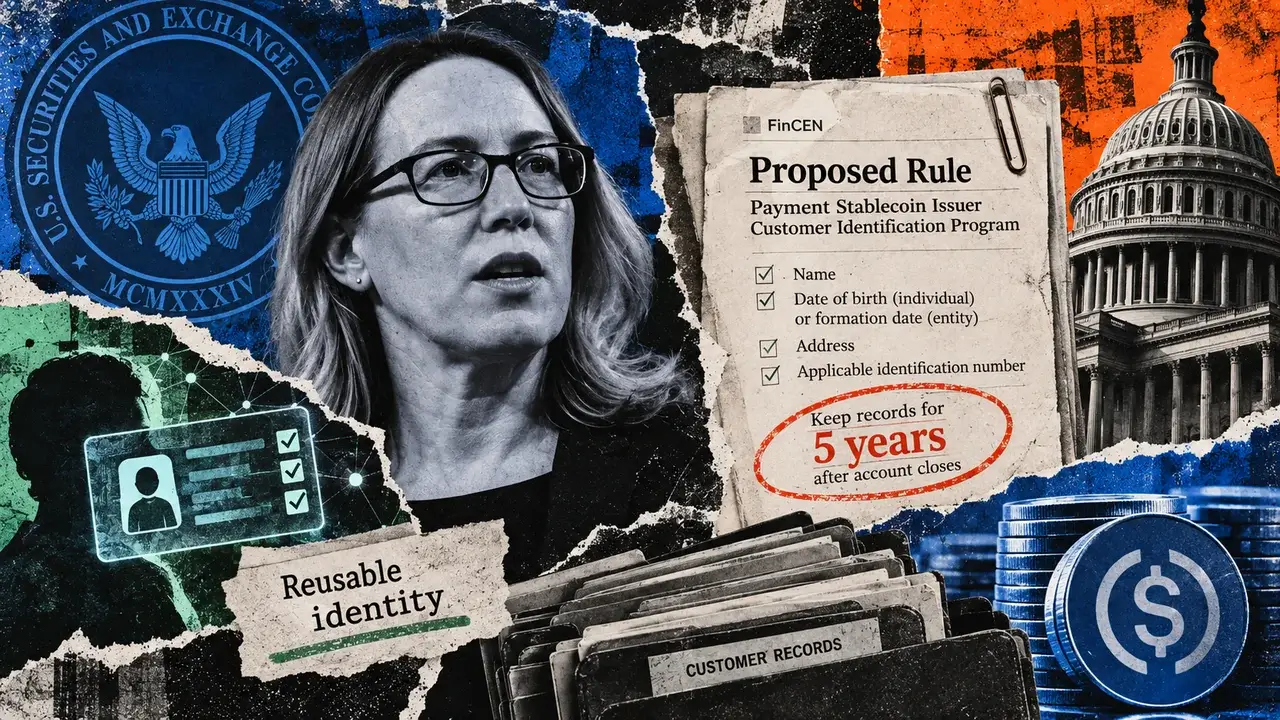
Compounding the concern over data security is the simultaneous extension of customer-identification requirements into another burgeoning sector of the financial system: stablecoins. The implementation of the GENIUS Act, as currently proposed, generally obliges permitted payment stablecoin issuers to acquire a customer’s name, date of birth or formation, address, and identification number before establishing a covered account. This identifying information would then be retained for a period of five years following the account’s closure. Furthermore, records detailing the verification methods and their outcomes are slated for retention for five years from their creation.
It is important to note that these requirements do not encompass every individual who might receive or hold a stablecoin. The focus is specifically on customers who establish "covered relationships" with issuers, particularly those involving direct issuance or redemption activities. Regulators maintain that these mandates are in direct response to congressional directives that treat permitted stablecoin issuers as financial institutions under the Bank Secrecy Act. The objective is to ensure the maintenance of effective customer-identification programs designed to thwart money laundering, terrorist financing, and other illicit financial activities.
The current regulatory proposals do acknowledge the potential role of technology, allowing issuers to utilize digital credentials as part of their identity verification processes. Under specified conditions, they may also rely on verification procedures conducted by other regulated financial institutions. FinCEN also issued guidance in September 2026 indicating that banks and credit unions can incorporate qualifying government-issued digital credentials, such as mobile driver’s licenses, into their existing customer-identification programs.
However, these mechanisms fall short of the more portable, decentralized model envisioned by Commissioner Peirce. While verification technology can indeed evolve the how of identity confirmation for an institution, it does not inherently eliminate the obligation to obtain prescribed customer information or to maintain extensive records of that information.
The Battleground Shifts: The Final Rule and the Future of Digital Identity
The ultimate shape of these regulations remains a subject of ongoing deliberation. Both FinCEN and the banking agencies have explicitly solicited public input on whether the final stablecoin rule should explicitly address digital identity systems or verifiable credentials, and what potential benefits and risks might accompany their widespread adoption.
The regulators have acknowledged the theoretical capability of non-governmental credentials to allow individuals to prove their identity without divulging superfluous information. Nevertheless, they have thus far refrained from incorporating specific provisions for verifiable credentials into the proposed regulatory text. This omission creates a critical window of opportunity for the final rules to determine the extent to which redundant data collection will persist.
There are several potential avenues for regulatory action. Regulators could expand the circumstances under which stablecoin issuers are permitted to rely on identity checks performed by other entities. They could provide clearer recognition and standardization for cryptographically verifiable credentials, thereby encouraging their use. Alternatively, they might allow financial firms to retain proof that required checks have been conducted, without necessitating the retention of additional copies of the underlying personal documents, where permitted by law.
For stablecoin companies, the forthcoming final rules will be decisive. The outcome will dictate whether their compliance strategies necessitate the construction of yet another generation of extensive databases housing customer identity information, or if they can pivot to investing in systems designed to verify required attributes while minimizing their own holdings of raw personal data. The GENIUS Act has already established the fundamental requirement that regulated issuers must know their customers. The subsequent rulemaking process will ultimately define how many companies will be compelled to maintain extensive physical or digital copies of the information used to substantiate those customer identities. The implications of this decision extend far beyond regulatory compliance, impacting the privacy of millions of individuals and the security posture of the entire financial ecosystem.








