Lina Irawan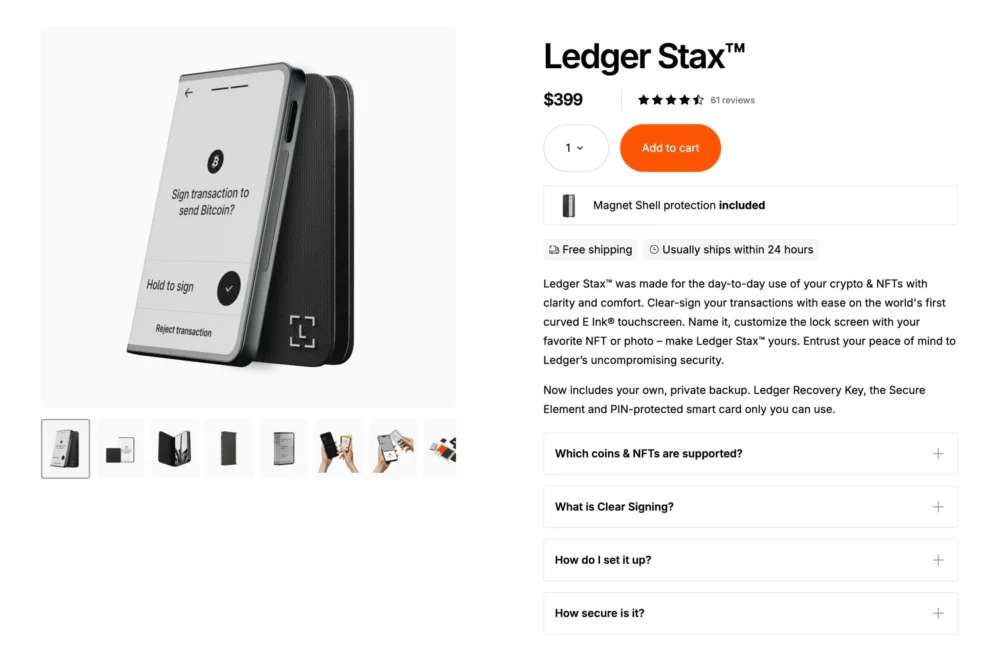
The digital asset landscape, characterized by its rapid evolution and inherent volatility, demands robust security solutions for investors. At the forefront of this security paradigm are cold wallets, specialized devices designed to store cryptocurrencies offline, thereby shielding them from the pervasive threats of the online world. While the fundamental purpose of all cold wallets is to maintain digital assets in an air-gapped environment, their construction, features, and underlying security protocols vary significantly. This comprehensive exploration delves into ten of the leading cold wallets available, dissecting their pricing, advantages, and disadvantages. Furthermore, it aims to elucidate the critical distinctions between cold and hot wallets and provide a step-by-step methodology for the secure setup and utilization of a cold wallet.
Best Cold Storage Wallets for Crypto: A Snapshot
| Cold Wallet | Key Features | Best For | Security Method |
|---|---|---|---|
| Ledger Nano X | Bluetooth-enabled hardware wallet | High-security storage | CC EAL5+ certified Secure Element chip |
| Ledger Stax | Touch-screen, premium design | Active crypto and NFT users | Tamper-proof Secure Element chip (CC EAL6+ rated) |
| Trezor Safe 3 | Beginner-friendly, open-source | New users and multi-coin storage | EAL6+ certified Secure Element, SLIP39 backup |
| Trezor Safe 5 | Advanced multi-chain support | Experienced users managing multiple assets | EAL6+ certified Secure Element |
| Coldcard MK4 | Bitcoin only, fully air-gapped | Maximum Bitcoin security and offline storage | Air-gapped, PSBT support |
| Tangem | Card-style, minimal hardware | Users who want cold storage without extra devices | EAL6+ certified chips, physical card authentication |
| Trust Wallet | Mobile wallet with fiat on-ramp | Fast mobile access without hardware | Software-based keys |
| MetaMask | Web3 hot wallet for dApps | Quick dApp access and token trading | Local encryption, self-custody, user-controlled auth |
| Best Wallet | Mobile crypto wallet with staking & dApp access | Fast mobile access and presales participation | MPC, biometrics, 2FA |
| Zengo | Keyless mobile wallet with multi-chain support | Mobile users wanting simple crypto access | MPC, cloud-assisted key recovery |
10 Best Cold Wallets for Crypto in 2026
The year 2026 is poised to witness continued innovation in cryptocurrency security. Investors are increasingly prioritizing solutions that offer an uncompromised blend of advanced protection and user accessibility. The following list represents the vanguard of cold storage solutions, each offering distinct advantages for various user profiles.
1. Ledger Nano X
The Ledger Nano X stands as a premier hardware wallet, offering users the ability to securely store their cryptocurrency assets offline, thereby creating a robust defense against online threats. Its capacity to support a vast array of cryptocurrencies, including prominent assets like Bitcoin (BTC) and Ethereum (ETH), alongside thousands of altcoins and tokens, makes it an exceptionally versatile choice for individuals managing diversified portfolios. The device is fortified with a certified secure element chip, a component designed to withstand sophisticated physical and digital attacks. Moreover, its integrated Bluetooth connectivity enhances usability by facilitating seamless management through mobile devices, striking an effective balance between heightened security and user convenience.
Price: Typically ranges from $150 to $200 USD.

Pros and Cons
| Pros | Cons |
|---|---|
| Robust security features | Higher price point compared to basic cold wallets |
| Keeps private keys securely offline | Bluetooth connectivity introduces a minor, albeit theoretical, attack surface |
| Ideal for long-term asset storage | |
| Extensive support for numerous coins and tokens |
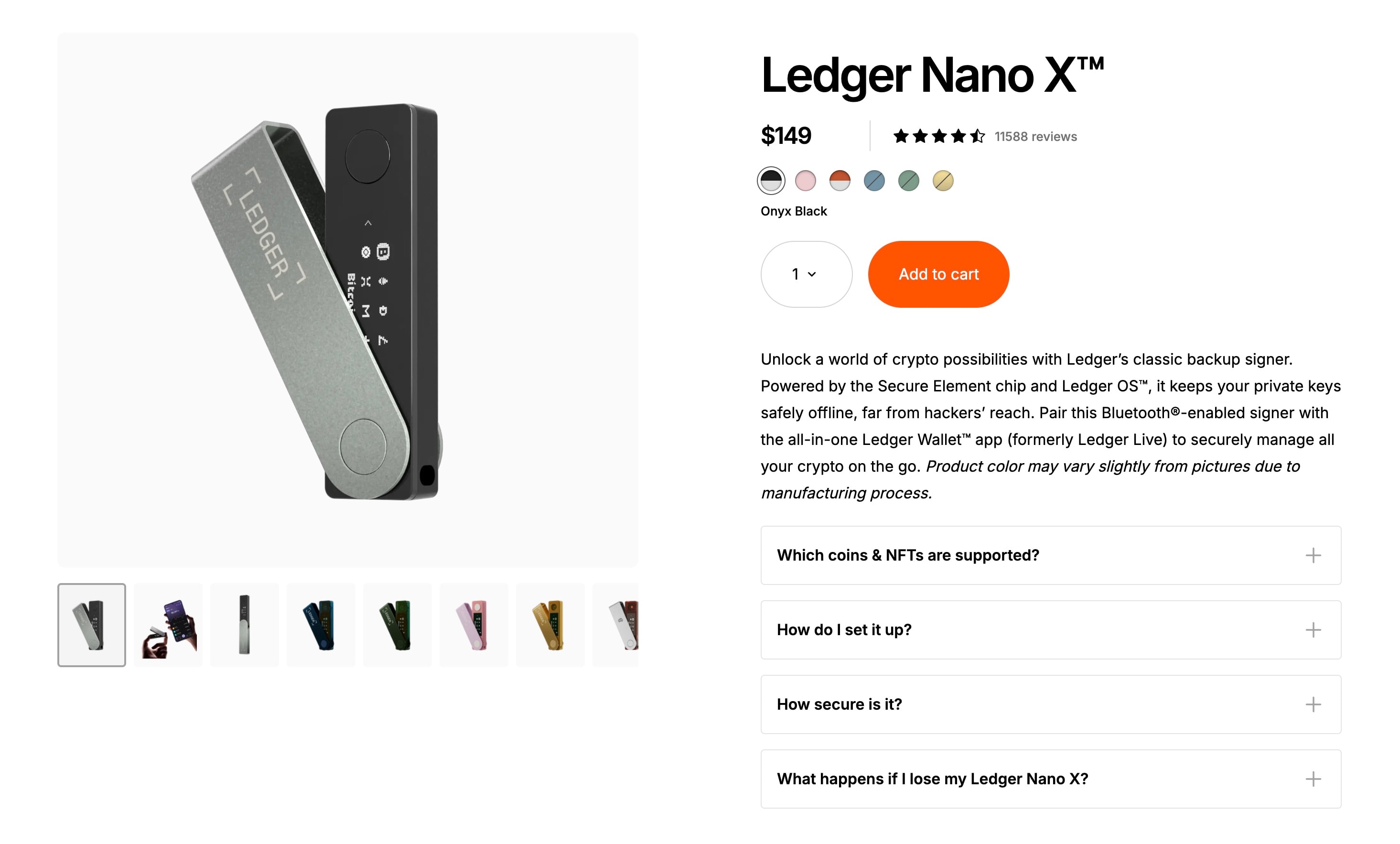
2. Ledger Stax
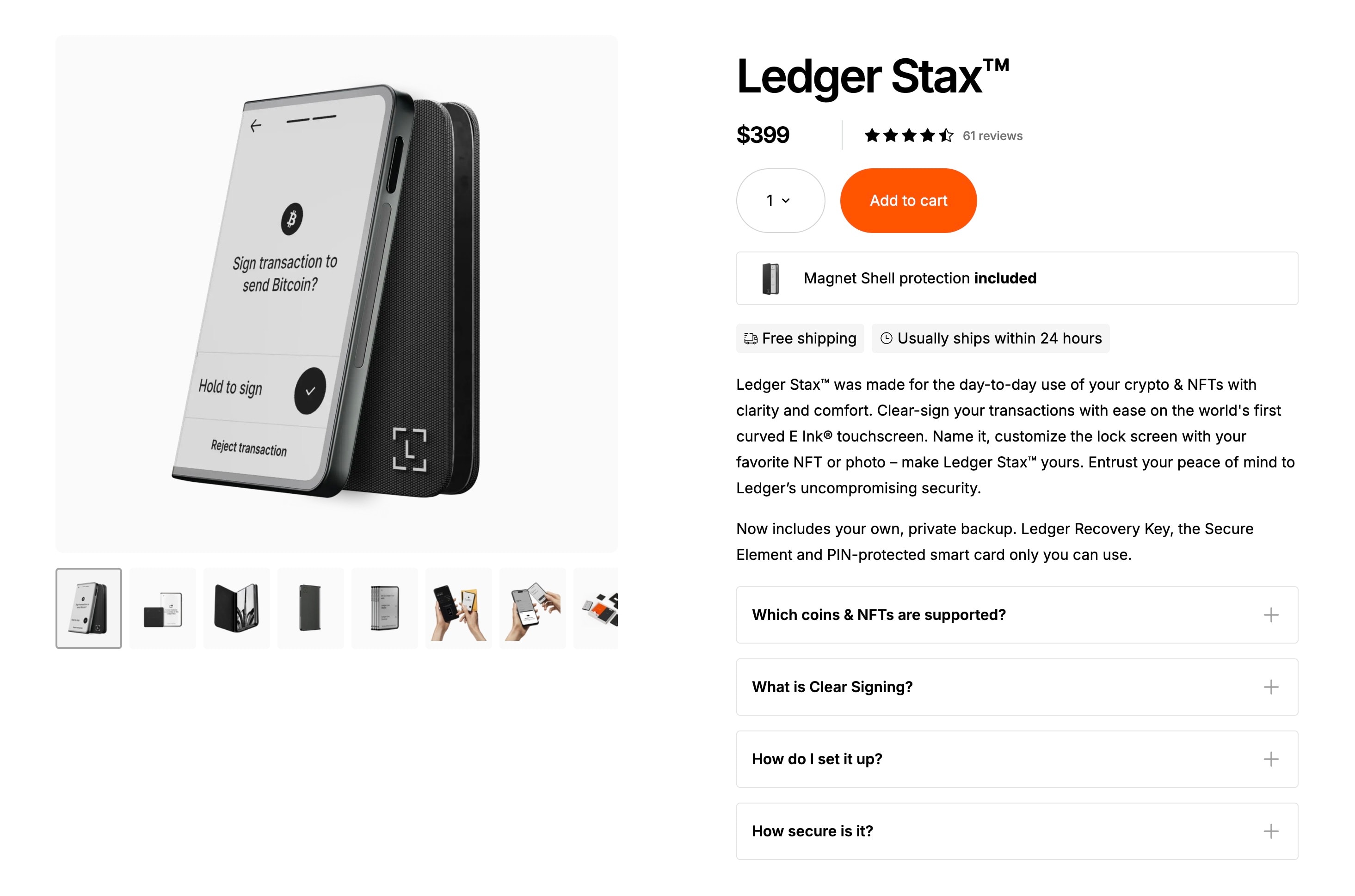
Emerging as a stylish and contemporary hardware wallet, the Ledger Stax distinguishes itself with its advanced touchscreen interface. This device caters to a broad spectrum of digital assets, supporting a wide array of coins and tokens, which positions it as a suitable option for users managing a complex portfolio. Security is paramount, with the Stax employing a certified secure element for its protective mechanisms and long-term asset preservation. While Bluetooth connectivity offers convenient mobile access, the Stax is optimally suited for secure, long-term holding rather than high-frequency trading activities. Its premium design and intuitive interface make it attractive to active participants in the cryptocurrency and NFT markets.
Price: Typically ranges from $280 to $300 USD.
Pros and Cons
| Pros | Cons |
|---|---|
| Large, intuitive touch-screen display | Significantly higher price compared to other hardware wallets |
| Strong security underpinned by a secure element chip | Bluetooth connectivity, while convenient, presents a minor theoretical attack vector |
| Broad coin and token compatibility | |
| Sleek, modern aesthetic |
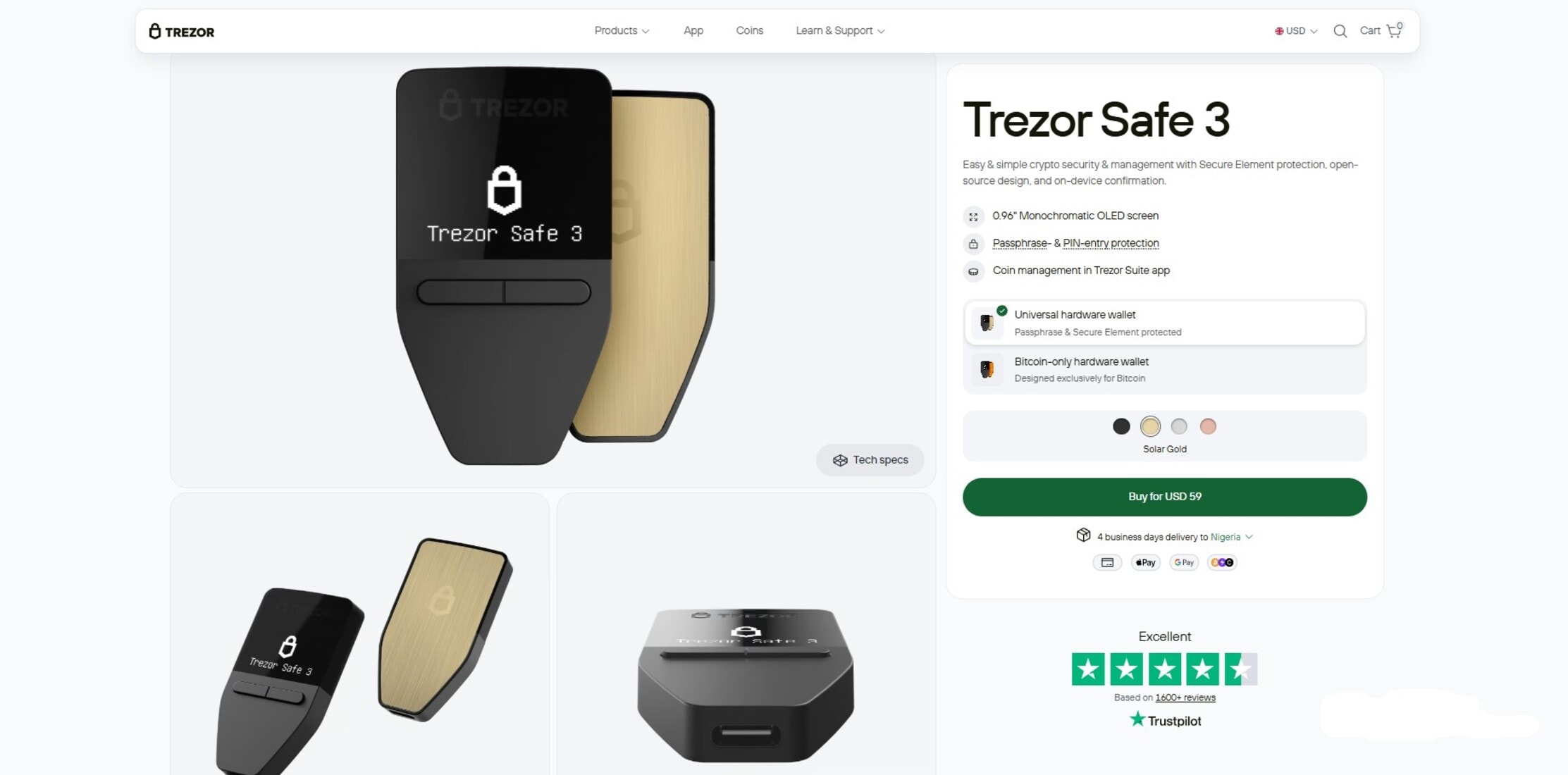
3. Trezor Safe 3
The Trezor Safe 3 emerges as a compelling option for both novice and experienced cryptocurrency users. It boasts support for over 7,000 distinct coins and tokens, offering extensive utility. A key security enhancement is the inclusion of a Secure Element, which significantly bolsters protection against unauthorized physical access. The device is fully compatible with standard 12, 18, and 24-word recovery phrases, and also supports the more advanced SLIP39 backup protocol, ensuring secure long-term data retention. A notable characteristic of Trezor devices, including the Safe 3, is their commitment to open-source firmware, fostering transparency and community-driven security audits. This, coupled with a user-friendly setup process, makes the Trezor Safe 3 a strong contender for those prioritizing ease of use without compromising on robust security.
Price: Typically ranges from $70 to $100 USD.
Pros and Cons
| Pros | Cons |
|---|---|
| Accessible price point for a hardware wallet | Lacks Bluetooth connectivity |
| Ensures private keys remain offline | Features a relatively small screen |
| Secure Element provides an extra layer of protection | Requires a physical USB connection for operation |
| Broad support for a multitude of coins and tokens |
4. Trezor Safe 5
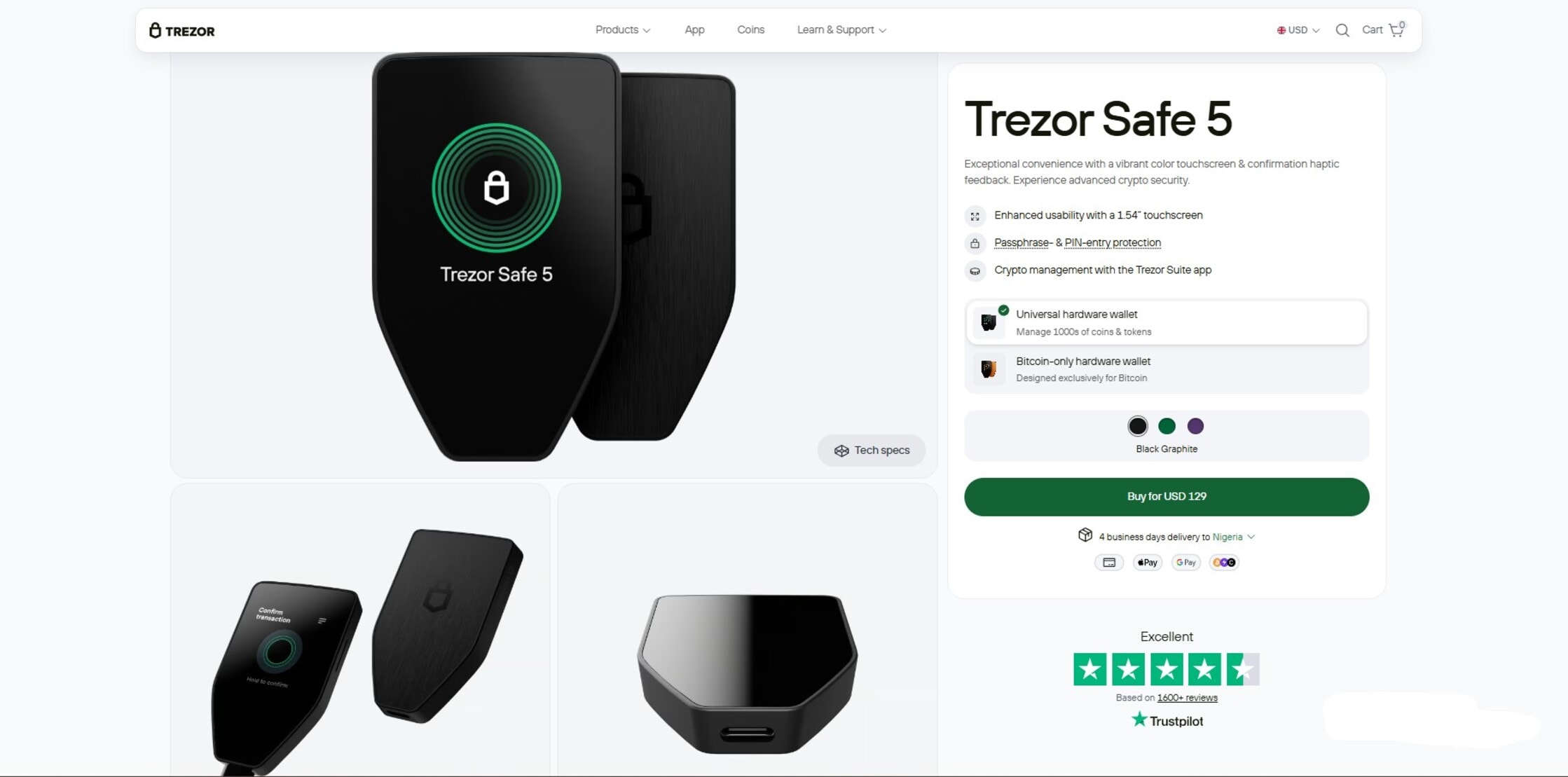
Designed for users who demand enhanced physical security without sacrificing interface simplicity, the Trezor Safe 5 represents an evolution in hardware wallet design. Its integrated Secure Element provides superior resistance against physical tampering. However, this integration means that a portion of its security architecture is no longer fully open-source, a trade-off for enhanced resilience. The Safe 5 comes with a higher price tag and introduces more sophisticated backup mechanisms and passphrase setups, which may present a steeper learning curve for absolute beginners. Nonetheless, its vibrant touchscreen with haptic feedback offers an intuitive navigation experience, making it a robust choice for experienced users managing diverse and valuable digital asset portfolios.
Price: Expected to be in the mid-to-high range, likely above $150 USD.
Pros and Cons
| Pros | Cons |
|---|---|
| Vibrant touchscreen with haptic feedback for intuitive navigation | Mid-range price may be a barrier for casual users |
| NDA-free EAL 6+ Secure Element with robust PIN & passphrase protection | Slightly bulkier form factor compared to minimalist wallets |
| Supports 20-word backups for advanced recovery | Less widespread mobile app integration compared to Ledger |
| Integrates seamlessly with the Trezor ecosystem and third-party services | Exclusively uses USB-C connection, lacking wireless options |
5. Coldcard MK4
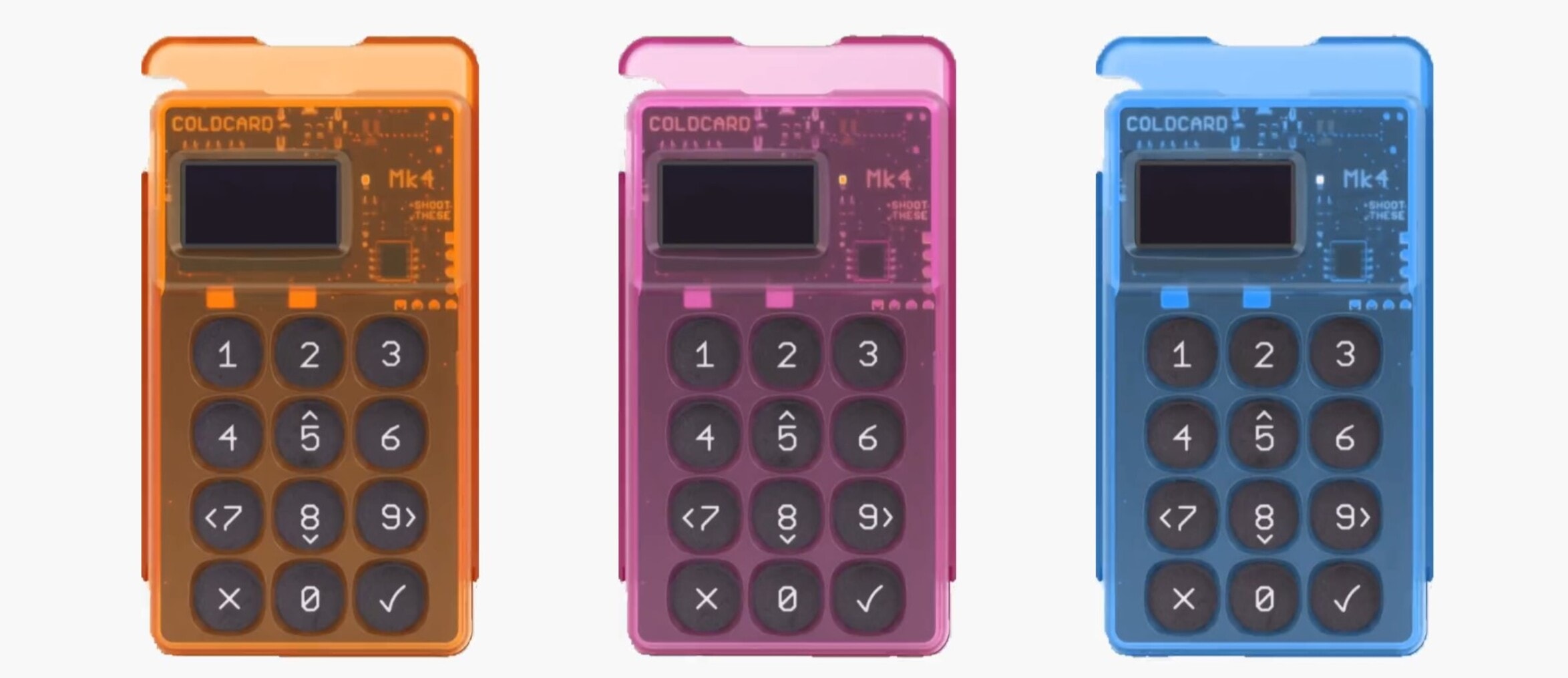
The Coldcard MK4 stands out as a specialized hardware wallet dedicated exclusively to Bitcoin. It offers an unparalleled level of security and offline storage, making it the definitive choice for maximalist Bitcoin security. Its design emphasizes a fully air-gapped operation, meaning that transactions can be signed without the device ever connecting to the internet, drastically minimizing exposure to online threats. The wallet supports standard seed phrases (12 to 24 words) and incorporates advanced features like Partially Signed Bitcoin Transactions (PSBT) compatibility, catering to professional users and those employing sophisticated Bitcoin management strategies. Its robust and durable construction ensures its suitability for long-term, secure storage.
Price: Typically ranges from $150 to $200 USD.
Pros and Cons
| Pros | Cons |
|---|---|
| Fully air-gapped operation for superior offline security | Bitcoin-only; no support for other cryptocurrencies |
| Secure Element with advanced anti-tamper features | A steeper learning curve for novice users |
| PSBT support for professional workflows | Relies on physical buttons and a small display, lacking a touchscreen |
| Durable and robust build quality | Higher cost compared to entry-level wallets |
6. Tangem
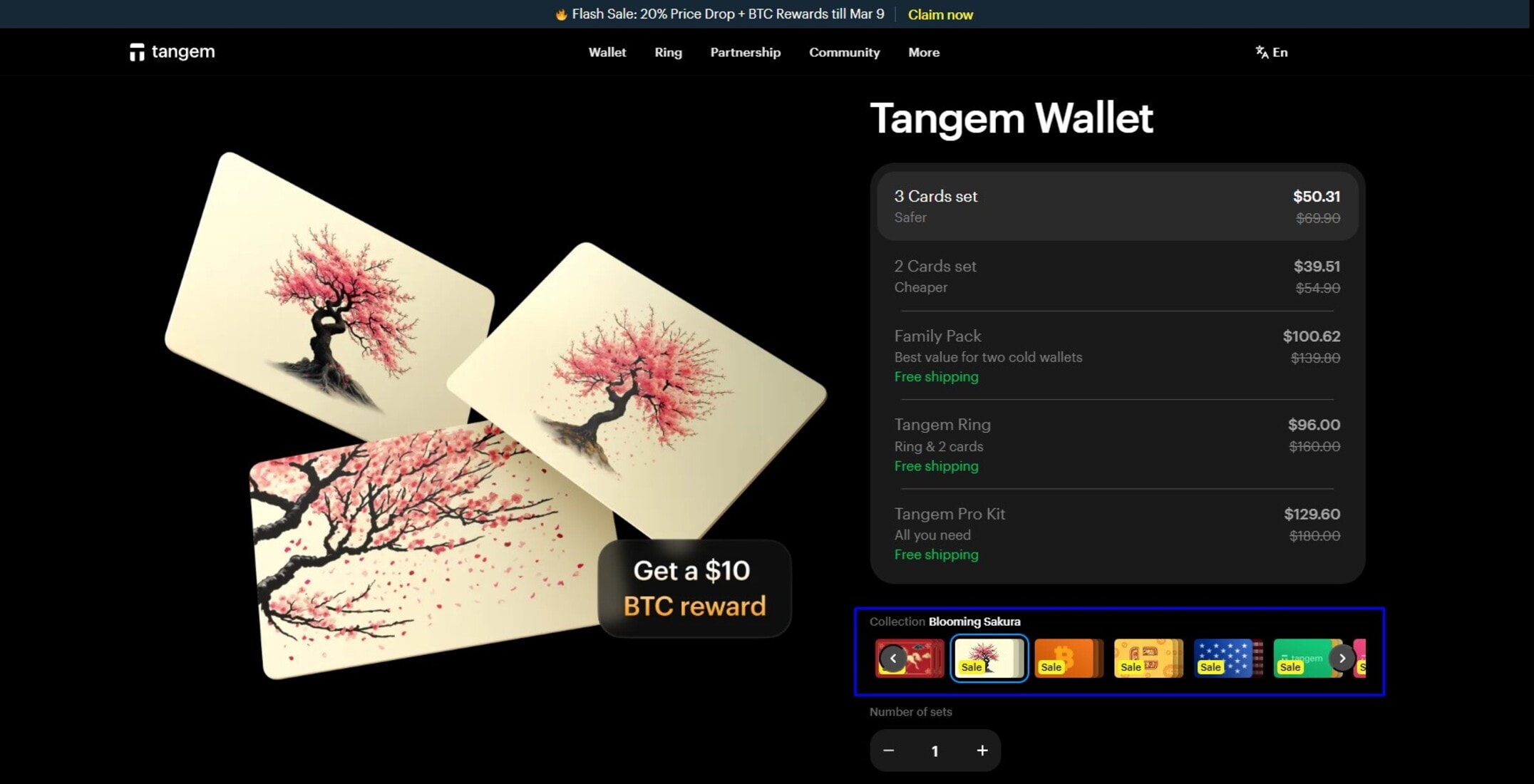
Tangem offers a unique approach to cold storage with its card-style hardware wallet. This design eliminates the need to carry an additional device, as private keys are generated and stored directly within a certified secure element embedded in the card itself, ensuring they never interface with the internet. During the setup process, keys are generated offline, significantly reducing the risk of malware compromising your crypto assets. The primary trade-off for this minimalist design is the lack of a screen on the card itself. Users rely on the companion mobile application to verify wallet addresses and transactions. This makes Tangem an excellent option for everyday carry and for holding smaller balances over the long term. However, for managing substantial assets or when absolute device-level verification is critical, this setup might feel like a compromise.
Price: Typically sold in sets of two or three cards, ranging from $50 to $100 USD.
Pros and Cons
| Pros | Cons |
|---|---|
| Private keys generated and stored offline for true cold storage | No on-card screen for direct transaction verification |
| EAL6+ secure element with independent audits for enhanced security | Reliance on the mobile app as part of the security model |
| Slim, durable, battery-free, and cable-free design for easy daily carry | Less transparent than hardware wallets with fully open hardware |
| Multi-card backup system to mitigate loss of access | Potentially less ideal for very large balances where maximum isolation is paramount |
7. Trust Wallet
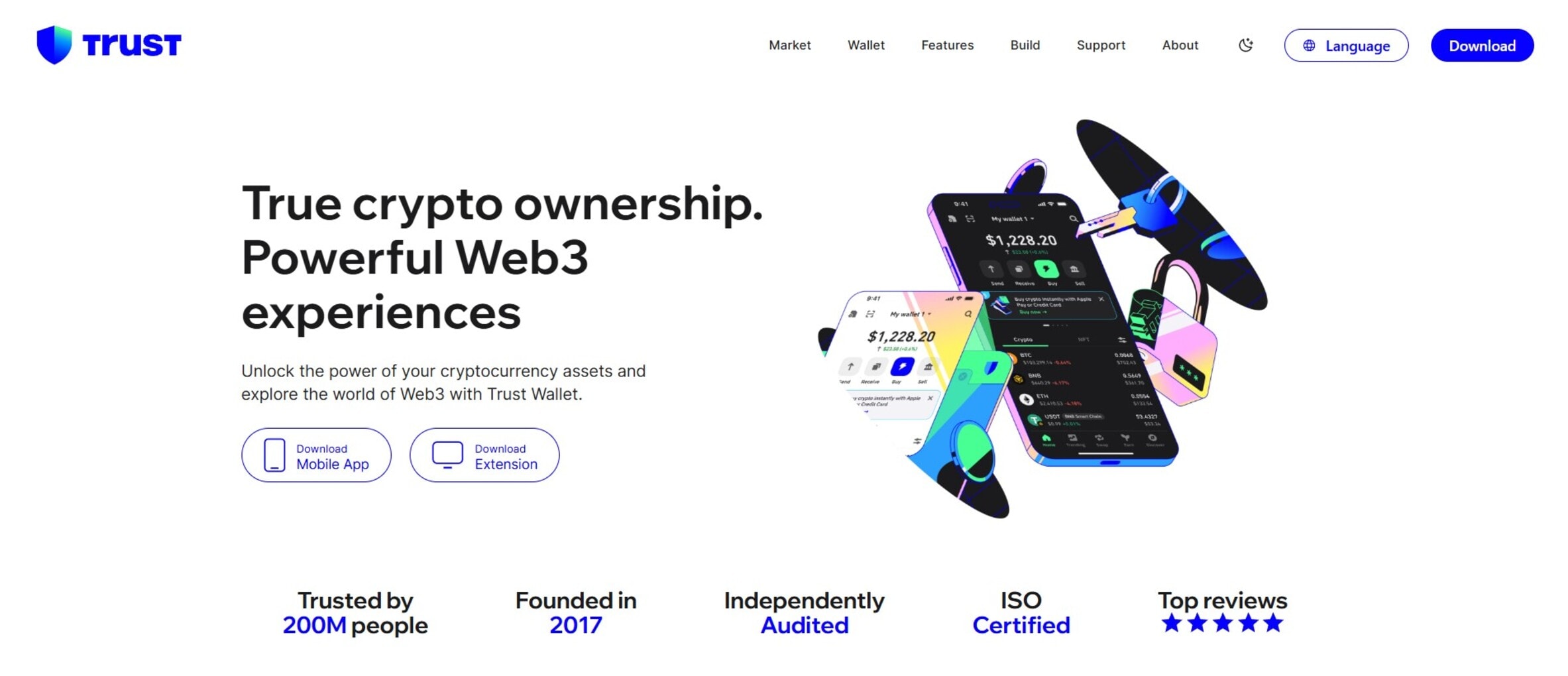
Trust Wallet simplifies the process of engaging with the cryptocurrency ecosystem without the need for dedicated hardware devices. It offers an integrated fiat on-ramp, allowing users to purchase crypto directly within the app through various payment providers like MoonPay, Ramp, Simplex, and Mercuryo. This includes support for credit/debit cards, bank transfers, and mobile payments, significantly easing the onboarding process for individuals transitioning from traditional fiat currencies. While the convenience is undeniable, it is important to note that wallet rates and fees can vary by provider and region, and are often higher than those found on centralized exchanges. Trust Wallet excels in its support for a vast number of blockchains and tokens, making it a versatile tool for DeFi, swaps, and NFT management.
Price: Free to download and use.
Pros and Cons
| Pros | Cons |
|---|---|
| Seamless fiat-to-crypto purchasing within the app | Transaction fees can be higher than on centralized exchanges |
| Extensive support for numerous chains and tokens | Not a hardware wallet; remains online, posing inherent risks |
| Excellent for DeFi, swaps, and NFTs | Security is contingent on the user’s device and browser hygiene |
| User-friendly interface for beginners and intermediate users | Not ideal for long-term storage of substantial asset amounts |
| No hardware required | Pricing and limits are influenced by third-party providers |
8. MetaMask
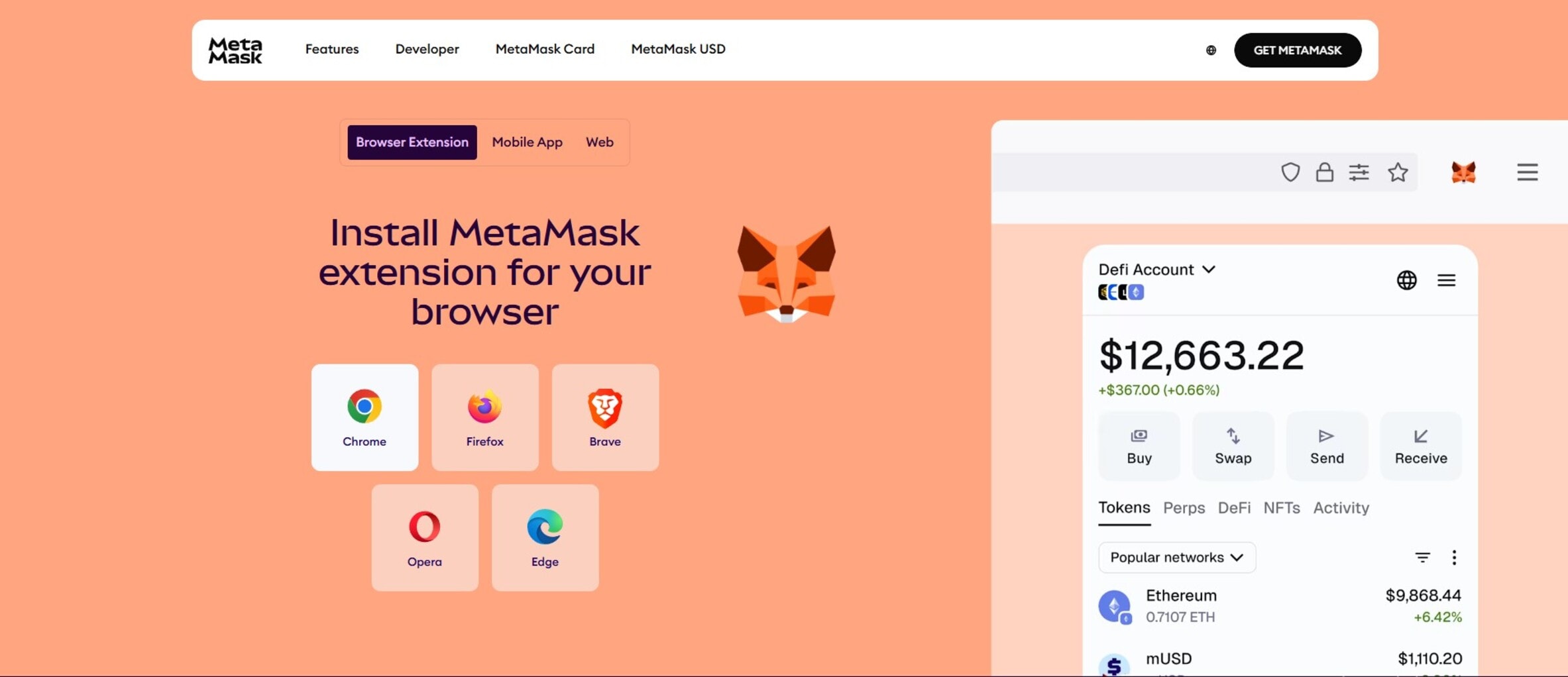
MetaMask has established itself as the de facto standard hot wallet within the Decentralized Finance (DeFi) and Web3 spheres. Its browser extension and mobile application provide rapid access to decentralized applications (dApps) across multiple blockchain networks. This facilitates seamless interaction with protocols, token trading, NFT minting, and fund transfers without the need to engage with centralized exchanges. However, this convenience comes with inherent risks, as the wallet is hosted on an internet-connected device, exposing it to potential browser and device vulnerabilities. For active on-chain participants, MetaMask serves as an excellent daily driver for managing small to medium-sized balances. Nevertheless, for the secure storage of substantial, long-term holdings, a dedicated hardware wallet remains the superior choice.
Price: Free to download and use.
Pros and Cons
| Pros | Cons |
|---|---|
| Unparalleled dApp compatibility | As a hot wallet, it’s exposed to browser and device risks |
| Supports a wide array of major blockchain networks | In-app swaps and purchases often incur higher fees |
| Facilitates easy onboarding for DeFi and NFTs | Susceptible to phishing scams and fake website attacks |
| Strong ecosystem and extensive tooling | Requires diligent personal security practices |
| Available on both mobile and desktop browsers |
9. Best Wallet
Best Wallet is a non-custodial mobile cryptocurrency wallet that skillfully balances user simplicity with advanced functionalities, including staking rewards and comprehensive analytics. It offers support for multiple blockchains and features an integrated dApp browser along with WalletConnect, simplifying interaction with decentralized applications. The wallet employs a robust security framework utilizing Multi-Party Computation (MPC), biometrics, and Two-Factor Authentication (2FA) to safeguard private keys, which remain accessible on the user’s mobile device. While highly convenient and feature-rich, it is important to recognize that Best Wallet operates as a hot wallet, and therefore users must remain cognizant of the inherent risks associated with online connectivity.
Price: Free to download and use.
Pros and Cons
| Pros | Cons |
|---|---|
| User-friendly interface for mobile devices | Primarily mobile-focused, with limited desktop interface options |
| Strong security features for a hot wallet | A wide array of features may overwhelm novice users |
| Supports multiple blockchain networks | |
| Integrated staking and analytics capabilities |
10. Zengo
Zengo distinguishes itself in the mobile crypto wallet space by mitigating the risk of seed phrase loss through the innovative use of MPC cryptography, a departure from traditional private key management. This approach significantly reduces vulnerability to phishing attacks, device theft, and backup exposure. Zengo provides support for major blockchains and thousands of digital assets, enabling users to buy, swap, and manage their cryptocurrencies within a single, intuitive application. While it offers robust security features and streamlined recovery options, Zengo is more appropriately suited for active cryptocurrency engagement rather than long-term, secure cold storage.
Price: Free to download and use, with optional premium features.
Pros and Cons
| Pros | Cons |
|---|---|
| Innovative keyless security model (MPC) | Not ideal for frequent, high-volume transactions |
| Easy recovery process | Less emphasis on hardware-based cold storage |
| Supports a wide range of cryptocurrencies | |
| User-friendly interface |
Why Do I Need a Cold Storage Wallet?
For individuals holding significant cryptocurrency assets, relying solely on exchanges or hot wallets introduces substantial risk. These online platforms are prime targets for cyberattacks, potentially exposing users’ private keys. A cold storage wallet, by contrast, ensures that your private keys are kept entirely offline, providing a superior level of security for long-term asset preservation. This offline storage grants users complete sovereignty over their funds, dramatically reducing the risk of loss due to hacks, theft, or the insolvency of an exchange. For anyone serious about the enduring security and control of their digital wealth, a cold wallet is the most prudent and reliable solution.
Cold Wallets vs. Hot Wallets: Which One Is Best for You?
The choice between a cold wallet and a hot wallet hinges on an individual’s specific needs, risk tolerance, and usage patterns.
| Features | Cold Wallet | Hot Wallet |
|---|---|---|
| Security | High: Keys offline, protected from online attacks | Lower: Keys connected to the internet, vulnerable to hacks |
| Convenience | Moderate | High |
| Best For | Long-term storage of significant crypto assets | Daily trading, dApp interaction, small holdings |
| Access | Slower, requires physical interaction | Instant via mobile or browser |
| Recovery | Seed phrase or recovery phrase only | Usually password and optional 2FA |
| Control | Full control of private keys and digital assets | Custody is often partially controlled by the wallet provider |
| Risk of Loss | Device lost/stolen (recoverable with seed phrase) | Online hacks, phishing, malware |
Key Security Features of Cold Wallets
The efficacy of cold wallets in safeguarding digital assets is derived from a suite of advanced security features. These typically include:
- Secure Element Chip: A dedicated, tamper-resistant chip designed to isolate and protect private keys, often certified to stringent security standards (e.g., CC EAL5+ or higher).
- Air-Gapped Operation: The ability to sign transactions without the device ever connecting to an internet-enabled network, achieved through methods like QR code scanning or SD card transfer.
- PIN and Passphrase Protection: Multi-layered authentication that requires a PIN to access the device and an optional passphrase for an added layer of security, often used to create hidden wallets.
- Seed Phrase/Recovery Phrase: A unique sequence of words generated during setup, serving as the ultimate backup for regaining access to assets if the device is lost, stolen, or damaged.
- Tamper-Evident Seals/Packaging: Physical indicators designed to show if a device has been tampered with during shipping or handling.
- Open-Source Firmware: For some wallets, the code is publicly auditable, allowing the community to identify and report potential vulnerabilities, fostering transparency and trust.
- Encrypted Communication: Secure channels are used when the wallet interacts with companion software or apps, even if only for transaction broadcasting.
How to Choose the Best Cold Wallet for Crypto
Selecting the ideal cold wallet involves a careful evaluation of several critical factors to ensure it aligns with your investment strategy and security needs.
1. Security Features
The paramount consideration when choosing a cold wallet is its security architecture. Prioritize devices equipped with a certified Secure Element chip, which provides a hardware-level isolation for private keys, rendering them impervious to software-based attacks. Additional protective measures such as robust PIN codes, customizable passphrases, and air-gapped transaction signing are vital. For substantial holdings, features like tamper-evident hardware and multi-signature capabilities offer further layers of defense. Investing in a wallet with uncompromising security features provides the peace of mind essential for protecting your digital assets against the ever-evolving threat landscape.
2. Compatibility
A crucial aspect often overlooked is the wallet’s compatibility with the specific cryptocurrencies you intend to store. Not all cold wallets support every coin, token, or blockchain network. Before making a purchase, verify that the wallet supports your existing and planned holdings. For instance, if you manage a diversified portfolio, opt for a wallet that accommodates hundreds or thousands of cryptocurrencies rather than a Bitcoin-only solution. Furthermore, consider compatibility with popular wallet management applications or software wallets, which can streamline portfolio tracking and transaction signing.
3. Functionality
Beyond core security, assess the additional functionalities that may enhance your cryptocurrency management experience. Features like multi-signature support for collaborative asset management, SLIP39 backups for enhanced recovery security, or seamless integration with staking platforms can add significant flexibility and long-term utility. Some wallets offer convenient air-gapped signing via QR codes or USB drives, while others incorporate Bluetooth connectivity for easier mobile interaction. The ultimate goal is to select a wallet that not only provides robust protection but also integrates smoothly into your intended cryptocurrency usage patterns.
4. User Experience
Even the most secure wallet is rendered ineffective if it is too complex to use correctly. A positive user experience is characterized by an intuitive setup process, clear guidance on managing recovery phrases, and straightforward transaction signing procedures. Beginner-friendly interfaces can significantly reduce the likelihood of user errors that could lead to fund loss. Conversely, advanced users should have access to the necessary tools and configurations for sophisticated management. A wallet that offers a smooth and confident user experience empowers you to manage your assets securely and effectively.
5. Cost
Cold wallets span a wide price spectrum, from budget-friendly options to premium, feature-rich devices. While lower-cost wallets may offer basic cold storage capabilities, investing in a more expensive model often translates to superior security features, enhanced build quality, and a more refined user experience. For individuals safeguarding significant cryptocurrency assets, the additional investment in a high-quality, secure wallet is a prudent trade-off for enhanced long-term peace of mind and asset protection.
How to Set Up and Use Your Cold Wallet Safely
The secure setup and ongoing use of a cold wallet are critical to its effectiveness. A typical process involves:
- Purchase Verification: Always buy directly from the manufacturer or authorized resellers. Inspect the packaging for any signs of tampering.
- Initialization: Connect the device to your computer and follow the on-screen prompts. This usually involves setting a PIN code.
- Seed Phrase Generation: The wallet will generate a unique recovery seed phrase (typically 12, 18, or 24 words). Crucially, write this phrase down accurately on paper, in a secure location, and offline. Never store it digitally, take photos of it, or share it with anyone. This phrase is your only backup.
- Seed Phrase Verification: The wallet will usually ask you to verify the accuracy of the written-down seed phrase by re-entering it.
- Install Companion Software: Download and install the official companion application for your wallet (e.g., Ledger Live, Trezor Suite) from the manufacturer’s website.
- Create/Import Wallet: Within the companion software, you will create a new wallet or import an existing one if you are recovering from a previous device.
- Secure Storage: Store your physical cold wallet in a safe and secure location, separate from your seed phrase.
- Transaction Signing: To send crypto, you will initiate the transaction on your computer or mobile app, then connect your cold wallet. You will then physically confirm the transaction details on the wallet’s screen before it is signed offline.
- Firmware Updates: Regularly check for and install firmware updates from the manufacturer. These updates often include crucial security patches.
Limitations and Disadvantages of Cold Wallets
Despite their superior security, cold wallets are not without their drawbacks:
- Complexity: Setting up and using a cold wallet can be more complex than a hot wallet, requiring careful attention to detail.
- Inconvenience for Frequent Transactions: The offline nature means transactions take longer to process as they require physical interaction with the device.
- Risk of Physical Loss/Damage: While the assets are recoverable with the seed phrase, losing the device itself can be inconvenient.
- Cost: Hardware wallets typically represent an upfront investment, whereas many hot wallets are free.
- Seed Phrase Management: The ultimate responsibility for securing the seed phrase falls on the user, and any compromise of this phrase can lead to total loss.
Conclusion
In the dynamic and often perilous realm of cryptocurrency, the adoption of a cold wallet is not merely a recommendation but a fundamental necessity for anyone serious about safeguarding their digital assets. By maintaining private keys in an offline environment, cold wallets provide a level of security and long-term protection that is unattainable with online hot wallets or centralized exchanges. While the initial setup and ongoing management may present a steeper learning curve and an upfront cost, the profound benefits of enhanced security, complete user control over funds, and robust protection against the myriad online threats far outweigh these considerations. For the discerning cryptocurrency investor, cold storage represents the definitive standard for secure, reliable, and enduring asset preservation.
FAQs
What’s the best overall crypto wallet?
The optimal crypto wallet depends on individual priorities. For paramount long-term security, hardware wallets such as the Ledger Nano X, Ledger Stax, and Trezor Safe 3 offer superior protection for private keys by keeping crypto offline. For users prioritizing convenience with smaller holdings and frequent trading, hot wallets like MetaMask and Trust Wallet are often combined for swift access to the Web3 ecosystem.
How long do hardware wallets last?
A well-maintained hardware wallet can reliably function for 5 to 10 years, and often longer. Consistent firmware updates and careful handling are key to ensuring your device continues to securely store cryptocurrency assets over its operational lifespan.
Which cold wallet has never been hacked?
Wallets that maintain fully offline private keys, such as the Coldcard MK4 or Tangem, boast exceptionally strong security records. While no system is entirely impervious, the principle of keeping private keys completely offline significantly curtails the risk of online exploits.
What cold wallet is best for beginners?
The Trezor Safe 3 is highly recommended for beginners due to its intuitive interface, straightforward recovery phrase setup, and broad multi-coin support. The Ledger Nano X is also a beginner-friendly option, offering convenient mobile connectivity for easier access.