Lina Irawan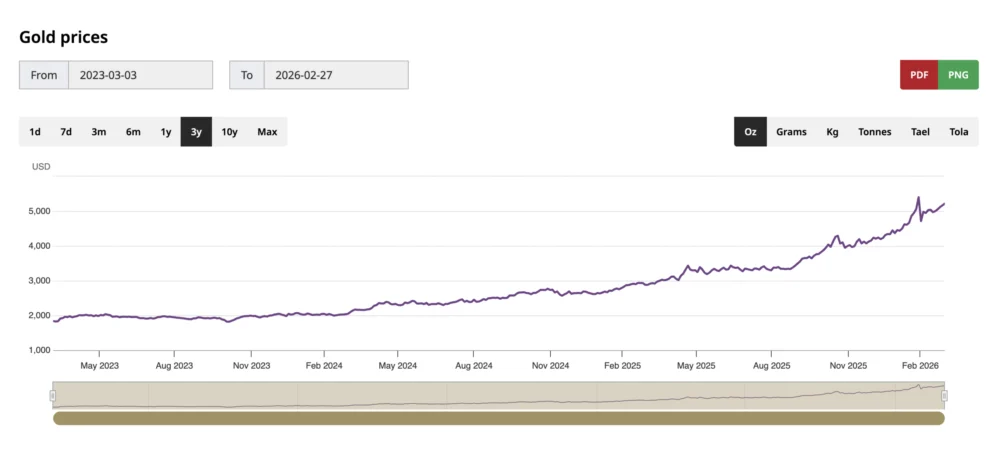
The global financial markets are currently navigating an exceptionally volatile period, characterized by heightened geopolitical tensions. Recent reports indicating a coordinated attack by the United States and Israel targeting Iran have sent shockwaves across all asset classes, from traditional stocks and bonds to the burgeoning cryptocurrency and Web3 sectors. This heightened uncertainty invariably prompts a fundamental question for investors worldwide: where will liquidity find its safest harbor? Historically, and particularly in times of significant global instability, the answer has consistently pointed towards gold, the perennial safe-haven asset. The current geopolitical climate raises a compelling question: are we on the precipice of a historic bull run for the precious metal? A comprehensive examination of the market’s reaction and the underlying drivers suggests a complex interplay of fear, hedging, and long-term economic considerations.
The Precipitating Event and Immediate Market Shockwaves
The fundamental principle of financial markets is a deep-seated aversion to uncertainty. News of a direct military engagement involving major global powers such as the United States, Israel, and Iran transcends typical geopolitical risk. Such an event carries the potential to trigger cascading disruptions across critical global energy supply chains, potentially leading to significant inflationary pressures and, in the worst-case scenarios, widespread economic downturns.
The immediate aftermath of these reports witnessed a palpable sense of alarm rippling through financial ecosystems. Equity markets globally experienced sharp declines, with major indices entering "red territory" as investors rapidly liquidated riskier assets. Similarly, assets typically classified as "risk-on," including many cryptocurrencies and altcoins, experienced significant sell-offs as market participants sought to de-risk their portfolios and secure capital against unforeseen market dislocations. This swift reallocation of capital underscores the ingrained instinct of investors to seek stability amidst escalating conflict.
Gold’s Instinctive Response to Geopolitical Turmoil
The price action of gold, both in its physical form and through tokenized representations within the crypto market, demonstrated an immediate and pronounced reaction to the escalating geopolitical events. As breaking news of the attack disseminated, charts reflecting the value of physical gold and gold-pegged digital assets, such as PAX Gold (PAXG) and Tether Gold (XAUT), depicted a significant upward surge, characterized by sharp "green candles" indicating rapid price appreciation.
This rapid ascent is largely attributable to a prevalent emotion in the market: Fear of Missing Out (FOMO). Both retail investors, seeking to preserve their capital from potential fiat currency devaluation and stock market declines, and large institutional investors, often referred to as "whales," have aggressively entered the gold market. This immediate, almost instinctual, flight to gold reinforces its enduring status as a reliable store of value, irrespective of technological advancements or the evolution of financial instruments. The historical precedent of gold’s performance during periods of conflict and uncertainty remains a powerful determinant of its market behavior.

The Underlying Rationale: Why Geopolitical Risk Favors Gold
The consistent performance of gold as an "undisputed champion" during times of crisis stems from a confluence of factors, rooted in its millennia-long history as a store of wealth. While assets like Bitcoin are often lauded in the Web3 space as "Digital Gold" due to their programmed scarcity, physical gold possesses an unparalleled track record as a hedge against a range of systemic risks.
Historically, gold has served as a crucial hedge against:
- Inflationary Pressures: When central banks engage in quantitative easing or when supply chain disruptions lead to rising prices, gold’s intrinsic value often increases as fiat currencies lose purchasing power.
- Currency Devaluation: In periods of economic instability or when a nation’s currency weakens significantly, investors often turn to gold as a tangible asset that retains its value independently of any single government’s monetary policy.
- Systemic Economic Crises: During recessions, depressions, or widespread financial panics, gold’s perceived safety makes it a preferred asset for capital preservation.
- Geopolitical Instability and War: As demonstrated by recent events, the outbreak of conflict directly impacts global economic stability, leading investors to seek assets that are insulated from the immediate fallout of warfare and political upheaval. The interconnectedness of global economies means that conflicts, especially those involving major energy-producing regions, can have far-reaching consequences for trade, supply chains, and investor confidence.
The inherent properties of gold—its rarity, durability, and universal acceptance—contribute to its enduring appeal. Unlike paper assets, its value is not dependent on the solvency or stability of any particular entity. This intrinsic resilience makes it a particularly attractive asset when the foundations of the global economic order appear to be shaken.
Distinguishing Short-Term Surges from Long-Term Trends
While the current surge in gold prices is an undeniable reality, astute market participants must differentiate between a panic-driven short-term spike and a sustainable long-term upward trend. The trajectory of gold prices in the coming weeks and months will largely depend on the evolving geopolitical landscape and its subsequent economic ramifications.
If the current conflict is swiftly de-escalated through diplomatic means and a peaceful resolution is achieved, it is probable that the "hot" money currently flowing into gold will quickly recede. Investors would likely reallocate capital back to higher-yielding, albeit riskier, assets such as cryptocurrencies and equities, seeking to capitalize on a renewed sense of market stability.
Conversely, should the conflict escalate into a protracted proxy war within the Middle East, leading to significant and sustained disruptions in global oil supplies and further exacerbating existing inflationary pressures, the upward trajectory of gold prices could be firmly cemented for an extended period, potentially spanning months or even years. The global economy’s reliance on Middle Eastern oil makes any disruption in this region a critical factor in determining long-term market sentiment and asset performance.

The Potential for a Significant Gold Rally: Conditions and Implications
The question of whether gold prices will indeed "skyrocket" or experience an exponential ascent hinges on specific conditions. The consensus among market analysts suggests that a substantial and sustained rally is contingent upon the broadening of the current conflict and its subsequent impact on the global economy, potentially pushing it into a recessionary environment.
In such a scenario, gold’s current price levels could represent merely the initial phase of a much larger upward movement. For investors, particularly within the cryptocurrency ecosystem, this period presents a critical juncture for strategic portfolio diversification. The trend of allocating capital into tokenized gold assets has gained significant momentum on the blockchain. This innovative approach allows investors to gain exposure to gold’s safe-haven properties with remarkable ease and speed, often requiring just a few clicks and remaining entirely within the Web3 ecosystem, thereby circumventing traditional financial intermediaries and their associated complexities.
The implications of this geopolitical event extend beyond immediate price movements. A sustained period of global economic uncertainty could lead to a fundamental reassessment of asset allocation strategies. Investors are likely to place a greater emphasis on tangible assets and instruments that have historically demonstrated resilience during periods of crisis. The performance of gold, coupled with the growing accessibility of tokenized gold, suggests a potential shift in investment paradigms, where digital innovation converges with traditional safe-haven principles.
As the global macroeconomic landscape continues to evolve with unprecedented rapidity, investors are advised to remain vigilant and adaptable. The coming period is anticipated to be exceptionally dynamic, requiring careful observation of geopolitical developments, central bank policies, and the resultant impact on financial markets. Buckling up for a wild ride may be prudent advice as the world navigates this complex and uncertain economic terrain.