James Watt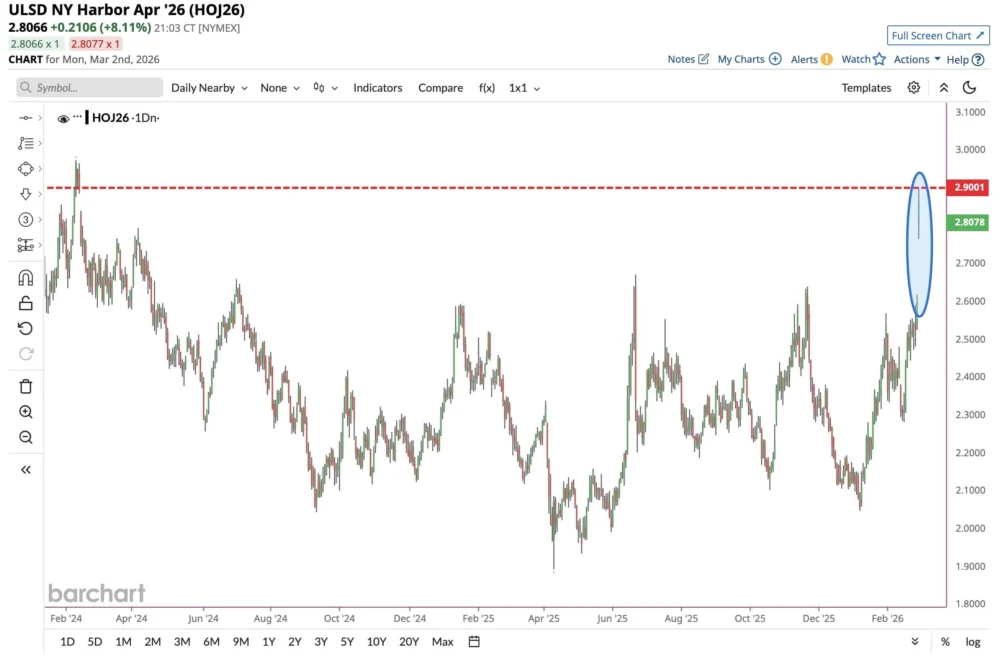
The divergence between Bitcoin’s immediate response and that of traditional commodities has reignited a long-standing debate within the financial sector: is Bitcoin a reliable hedge against geopolitical instability, or is it fundamentally a high-beta risk asset that remains tethered to broader market liquidity? While the first 24 hours of the conflict suggested the latter, historical data from BlackRock and an analysis of the market’s underlying mechanics suggest that the opening move of a crisis is rarely indicative of an asset’s long-term trajectory. For institutional observers, the critical question is not the initial liquidation, but how the asset performs once the "liquidity shock" subsides and the macro-economic implications of the conflict—particularly regarding energy and inflation—begin to take hold.
The Mechanics of the Initial Liquidation Wave
Bitcoin’s tendency to "dump" during the onset of a geopolitical crisis is often a product of its unique market structure rather than a lack of investor conviction. Unlike traditional equity markets or gold exchanges, the cryptocurrency market operates 24 hours a day, seven days a week. This constant availability makes Bitcoin one of the few global venues where investors can express fear or raise immediate liquidity when news breaks outside of standard banking hours. In the case of the weekend strikes on Iran, Bitcoin acted as a "pressure valve" for global risk sentiment. With traditional stock exchanges closed, traders looking to de-risk their portfolios or meet margin calls in other sectors often turn to the most liquid and accessible asset available: Bitcoin.
Furthermore, the prevalence of leverage within the crypto ecosystem exacerbates these downward moves. When a geopolitical headline triggers a sudden 2% or 3% drop, it often hits a "tripwire" of stop-loss orders and forced liquidations for leveraged long positions. This creates a cascading effect where the price falls much further than the news itself would fundamentally justify. This "liquidity-driven" volatility often obscures the long-term safe-haven potential of the asset. Analysts point out that while gold may be the immediate beneficiary of a flight to safety, its market is often inaccessible during the very moments when a crisis unfolds, leading to a delayed but more stable price discovery process compared to the rapid, violent price swings seen in the digital asset space.
The Oil Factor: A Critical Macro Transmission Channel
As the conflict progresses, the focus of the market shifts from immediate liquidity to the broader economic "transmission channels," with energy prices serving as the primary link between geopolitical strife and financial valuations. Following the U.S. strikes, Brent crude oil prices surged by approximately 9%, reaching $80 per barrel—the highest level seen in over two years. The trajectory of oil over the next 60 days will likely dictate the performance of both traditional and digital assets.
Financial analysts, including reports from Reuters, suggest two primary paths for energy markets. If the conflict remains localized and contained, oil is expected to stabilize in the low $80s. However, if the situation escalates or disrupts shipping lanes such as the Strait of Hormuz, oil could surge toward $100 per barrel. Such a supply shock would have profound implications for global inflation, potentially adding 0.6% to 0.7% to headline CPI figures.

For Bitcoin, the price of oil is more than just a commodity metric; it is a policy signal. If a sustained energy spike re-accelerates inflation, central banks—most notably the Federal Reserve—will have significantly less room to ease monetary policy or cut interest rates. In a "higher-for-longer" interest rate environment, real yields remain firm and the U.S. dollar tends to stay strong. Historically, these conditions are headwinds for high-beta assets like Bitcoin. Conversely, if oil settles and inflation remains on a cooling path, the "forced selling" phase can transition into a robust recovery as sidelined capital returns to the market.
Historical Precedents: BlackRock’s 60-Day Analysis
To provide context for the current volatility, BlackRock, the world’s largest asset manager with approximately $13 trillion in assets under management, has analyzed Bitcoin’s performance following previous major geopolitical shocks. Their research compares Bitcoin, gold, and the S&P 500 across 10-day and 60-day windows. The data suggests that while Bitcoin often suffers during the first 10 days of a crisis, it frequently emerges as one of the strongest rebound assets in the subsequent two months.
The most pertinent example is the January 2020 escalation between the U.S. and Iran. Following the initial shock, Bitcoin rose approximately 26% over the following 60 days. During that same period, gold gained a modest 7%, while the S&P 500 actually fell by 8%. This historical trend reinforces the "delayed safe haven" narrative—the idea that once the initial panic-selling by short-term traders is exhausted, long-term investors begin to view Bitcoin’s fixed supply and decentralized nature as an attractive alternative to traditional systems facing systemic stress.
The Institutional Shift: How ETFs and Stablecoins Change the Game
The current market environment differs structurally from previous cycles due to the maturation of institutional "plumbing." The introduction of U.S.-listed spot Bitcoin ETFs has created a more visible and regulated channel for capital flows. While these ETFs provide a massive source of demand, they also act as a barometer for institutional sentiment. Data from SoSo Value indicated nearly $2 billion in outflows from spot Bitcoin ETFs in the first two months of the year, suggesting that a segment of the institutional base was already adopting a defensive posture prior to the recent strikes.
However, the internal mechanics of the crypto market suggest that investors are not necessarily exiting the ecosystem entirely. Stablecoin dominance has remained steady at around 10.3%, and recent data shows nearly $22 billion in net inflows into stablecoins over a multi-week period. This suggests that rather than converting their wealth back into fiat currency, many investors are moving into "cash equivalents" within the digital asset space, creating a significant amount of "dry powder" that could be deployed back into Bitcoin if the geopolitical situation stabilizes.
In the options market, traders are reportedly paying higher premiums for downside protection (puts), yet they maintain a cautiously optimistic outlook for the mid-term. This suggests a market that is "hedged but not hopeless," awaiting a clearer signal from the geopolitical and energy sectors before committing to a definitive direction.

Future Scenarios: The Next 60 Days
The outlook for Bitcoin over the next two months can be categorized into three primary scenarios based on the evolution of the U.S.-Iran conflict:
1. The De-escalation Scenario (Bullish):
If the conflict remains contained and energy prices stabilize around the $80 mark, the market may follow the 2020 historical pattern. In this scenario, the unwinding of hedges and the return of institutional demand through ETFs could drive a Bitcoin rebound of 10% to 25%, potentially pushing the price above $80,000. Gold would likely remain flat or see modest gains, while equities would recover as uncertainty fades.
2. The Sustained Tension Scenario (Neutral/Volatile):
Should the conflict drag on without full-scale escalation, keeping oil in the $90 to $100 range, the environment becomes a "tug-of-war" between inflation fears and safe-haven demand. Bitcoin could see a wide trading range, potentially dipping as low as $56,000 during bouts of fear or surging toward $73,000 during periods of optimism. In this regime, gold would likely outperform as a primary inflation hedge.
3. The Severe Disruption Scenario (Bearish):
A full-scale regional war that impacts energy infrastructure or global shipping would likely trigger a massive cross-asset de-risking event. In such a liquidity crisis, Bitcoin would likely be treated as a risk asset first, potentially facing a 10% to 30% decline and falling below the $50,000 support level. Gold and the U.S. dollar would be the primary beneficiaries of this flight to absolute safety.
Conclusion: A Test of Maturity
The recent price action following the U.S. strikes on Iran demonstrates that Bitcoin is still an asset in transition. While its 24/7 liquidity makes it vulnerable to initial "panic selling," its historical resilience suggests that the "first candle" of a crisis is rarely the full story. As the market moves deeper into this 60-day window, the interplay between oil prices, Federal Reserve policy, and institutional ETF flows will determine whether Bitcoin can truly solidify its reputation as "digital gold." For now, the asset remains a complex hybrid—part risk-on technology play, part liquidity valve, and part long-term store of value—awaiting the next macro catalyst to define its path.