Karin Novilda
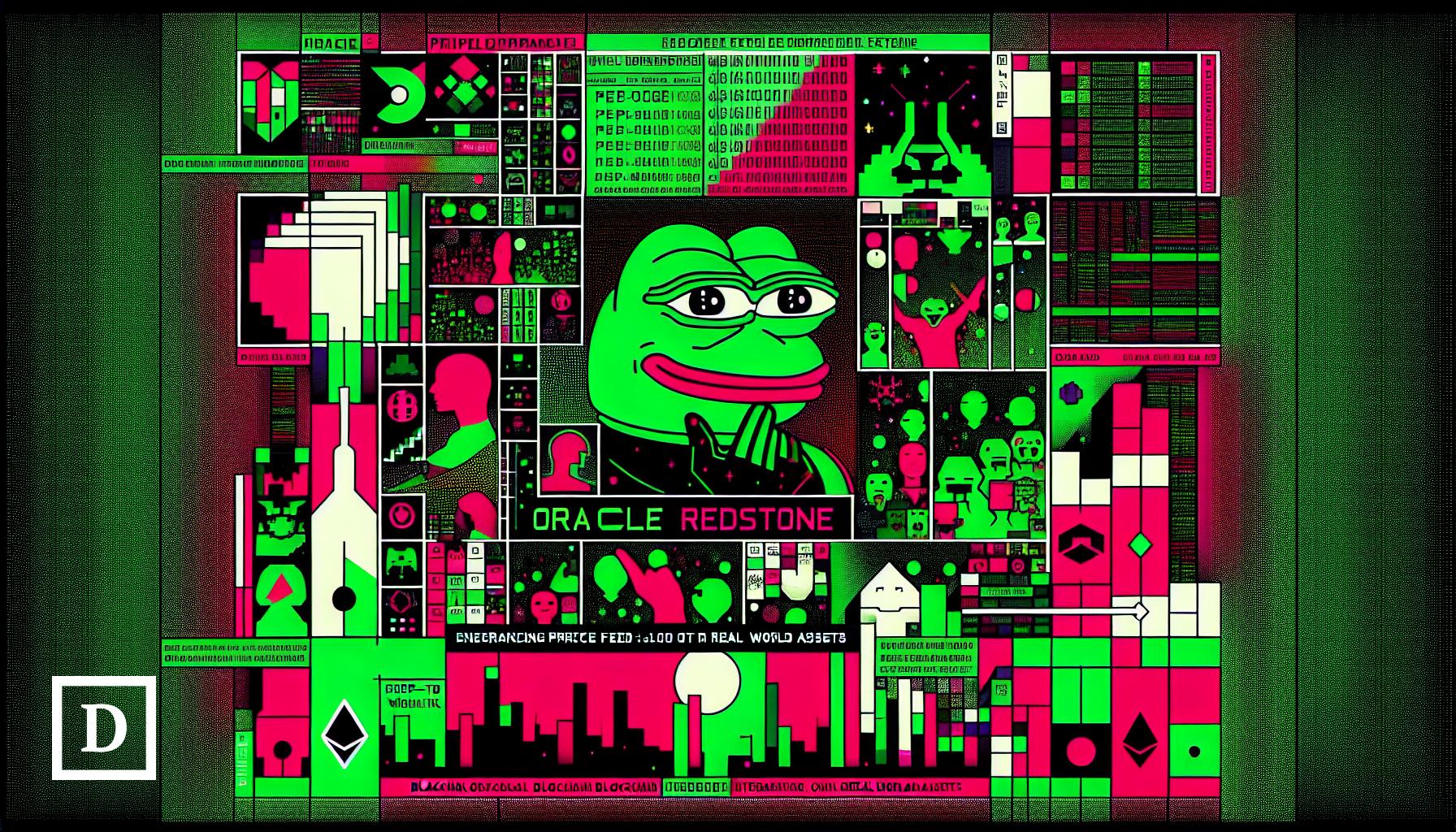
The Stellar blockchain, a network primarily recognized for its role in facilitating efficient global payments, has cemented its position as a burgeoning hub for real-world assets (RWAs), with the total value of distributed assets on the network recently surpassing an unprecedented $1.3 billion. This significant milestone coincides with the official deployment of institutional-grade price feed infrastructure by RedStone, a prominent blockchain oracle provider, marking a pivotal moment for the growth and maturation of decentralized finance (DeFi) within the Stellar ecosystem. The integration, announced by RedStone via an X post on Wednesday, March 4, 2026, is specifically designed to bolster the robustness and scalability of Stellar’s DeFi landscape, which has become a preferred destination for tokenized RWAs due to its inherent speed, low transaction costs, and focus on regulatory clarity.
RedStone’s Strategic Integration and the Oracle Imperative
RedStone’s deployment on Stellar introduces a critical new layer of data infrastructure, essential for the functioning and reliability of sophisticated DeFi applications. At its core, RedStone specializes in delivering precise, high-integrity price feeds, a fundamental requirement for any financial protocol operating in the digital asset space. For institutionally-focused tokenized RWAs, the demand for such reliable data is paramount. Traditional financial institutions venturing into blockchain require assurances of data accuracy, consistency, and resilience against manipulation – qualities that RedStone aims to provide.
Blockchain oracles like RedStone act as bridges, connecting the on-chain world of smart contracts with off-chain, real-world data. Without trusted oracles, DeFi protocols, particularly those involving lending, borrowing, or derivatives based on external asset values, would be vulnerable to inaccuracies or exploits. As RedStone articulated in its announcement, "Lending protocols need reliable price feeds. DEXs need accurate data. RWA platforms need institutional infrastructure. You can’t build financial products without trusted oracles." This statement underscores the foundational role of accurate data in fostering a secure and functional decentralized financial system. The integration on Stellar is not merely about providing data; it is about extending the reach of verifiable, real-time information to an ecosystem increasingly focused on bringing tangible assets onto the blockchain.
Stellar’s Ascendance in the RWA Landscape
Stellar, launched in 2014 by co-founder Jed McCaleb with a mission to connect individuals and financial institutions worldwide, has historically emphasized fast, low-cost cross-border payments. Its native cryptocurrency, XLM (lumens), facilitates these transactions by acting as a bridge currency. While its initial focus was on financial inclusion and remittances, the network’s robust architecture, consistent transaction finality, and predictable fee structure have made it exceptionally appealing for the tokenization of real-world assets.
According to data from RWAxyz, Stellar has firmly established itself as the fifth-largest blockchain network globally in terms of on-chain RWA value. This ranking is a testament to the network’s successful pivot and expansion into a sector that is increasingly attracting significant institutional capital. The distributed asset value on Stellar has demonstrated remarkable growth, surging by 25% in the past 30 days alone and an impressive 50% since the start of 2026. This accelerated growth trajectory highlights a rapidly increasing confidence among asset issuers and investors in Stellar’s capabilities as a platform for tokenized securities and other real-world assets. The network’s architectural design, which prioritizes scalability and compliance, has been instrumental in attracting projects that demand a high degree of operational integrity and potential for regulatory alignment.
Franklin Templeton’s BENJI Fund: A Cornerstone of Stellar’s RWA Ecosystem
A significant driver of Stellar’s RWA valuation is Franklin Templeton’s on-chain money market fund, BENJI. With a staggering $678 million in distributed asset value on Stellar, BENJI represents the largest RWA on the network by a considerable margin. This fund’s presence underscores the seriousness with which traditional finance is approaching blockchain technology and validates Stellar’s strategic direction.
Franklin Templeton, a global investment management organization with over $1.5 trillion in assets under management, launched BENJI as one of the first tokenized money market funds on a public blockchain. It offers institutional and individual investors access to yield-generating opportunities typically found in traditional money markets, but with the added benefits of blockchain technology, such as increased transparency, fractional ownership, and potentially faster settlement. RedStone’s announcement specifically noted that it would provide the BENJI fund feed as part of its integration, directly "bringing institutional-grade price feeds of real-world assets to the Stellar DeFi ecosystem." This direct support for a leading institutional RWA demonstrates RedStone’s commitment to enabling robust financial instruments on Stellar and signals to other traditional finance players that the necessary infrastructure for their participation is maturing. The provision of a dedicated, high-fidelity price feed for BENJI ensures that all on-chain operations involving the fund, such as collateralization in lending protocols or valuation for reporting, rely on accurate and up-to-date market data. This level of data integrity is non-negotiable for institutional investors who operate under stringent regulatory and fiduciary obligations.
The Broader Context of RWA Growth and Institutional Adoption
The burgeoning RWA sector witnessed "massive growth last year," as highlighted by The Defiant, transforming into a primary gateway for Wall Street’s engagement with the crypto space in 2025. This trend reflects a broader recognition within traditional financial circles of the transformative potential of blockchain technology beyond speculative cryptocurrencies. Tokenized assets offer several compelling advantages: enhanced liquidity through fractionalization, increased transparency via immutable ledger records, reduced settlement times and costs, and broader market access.
Institutions are increasingly exploring tokenization for a wide array of assets, including government bonds, corporate debt, real estate, precious metals, and even intellectual property. The ability to represent ownership of these tangible and intangible assets on a blockchain allows for new models of ownership, trading, and financing. The growth on Stellar, spearheaded by entities like Franklin Templeton, is indicative of a wider shift where regulated financial products are being reimagined and deployed on public blockchain infrastructure. This convergence of traditional finance (TradFi) and decentralized finance (DeFi) is paving the way for a more integrated and efficient global financial system. The demand for reliable data infrastructure, such as that provided by RedStone, is a direct consequence of this institutional influx, as these entities require the same level of data fidelity and security they are accustomed to in traditional markets.
Implications for Stellar’s DeFi Ecosystem and Future Development
The integration of RedStone’s oracle infrastructure is set to unlock a new era of possibilities for Stellar’s DeFi ecosystem. With dependable, institutionally-backed price feeds, developers can confidently build more complex and secure financial applications.
- Enhanced Lending Protocols: Accurate price feeds are critical for lending platforms, enabling precise collateral valuation, liquidation mechanisms, and interest rate calculations, thereby reducing risks for both lenders and borrowers.
- Sophisticated Decentralized Exchanges (DEXs): DEXs can offer more stable and reliable trading pairs for RWAs, facilitating efficient price discovery and minimizing arbitrage opportunities based on stale data.
- Derivatives and Structured Products: The foundation for more advanced financial instruments, such as tokenized derivatives or synthetic assets tied to real-world performance, becomes viable. These products require constant, real-time data to function correctly and securely.
- Increased Institutional Participation: The presence of robust data infrastructure reduces operational risks for institutional participants, encouraging greater engagement and investment in Stellar-based DeFi protocols. It signals that the ecosystem is maturing to meet the stringent requirements of traditional finance.
- Compliance and Reporting: Reliable data feeds aid in regulatory compliance and transparent reporting, crucial aspects for mainstream adoption of tokenized assets.
The Stellar Development Foundation (SDF), which champions the growth and adoption of the Stellar network, has consistently worked towards fostering an environment conducive to innovation and institutional participation. This latest development with RedStone aligns perfectly with their vision, providing a critical piece of infrastructure that strengthens the network’s appeal to sophisticated financial players. Sources close to the SDF suggest that this integration is viewed as a foundational step towards enabling a wider array of enterprise-grade financial services on Stellar, moving beyond mere payment processing to full-fledged asset management and trading.
Market Context and Stellar’s Standing
In the broader cryptocurrency market, Stellar (XLM) currently holds a market capitalization of approximately $5.2 billion, ranking it 21st among cryptocurrencies according to The Defiant’s price page. The native token has shown positive momentum, with XLM experiencing a 6% increase in the past 24 hours, reflective of a general upswing in the broader crypto markets. This rally, which saw Bitcoin surge above $73,000, suggests renewed investor confidence across the digital asset space, creating a favorable backdrop for infrastructure developments and asset growth on networks like Stellar. The positive market sentiment often translates into increased liquidity and interest in various blockchain ecosystems, including those focused on niche but growing sectors like RWAs.
Looking Ahead: A Future of Integrated Finance
The collaboration between RedStone and Stellar represents more than just a technical integration; it signifies a strategic alignment towards building a more resilient, transparent, and institutionally-friendly blockchain ecosystem for real-world assets. As the digital asset landscape continues to evolve, the convergence of traditional finance with decentralized technologies will increasingly rely on foundational elements such as reliable oracles. Stellar’s continued growth in the RWA sector, coupled with the enhanced data integrity provided by RedStone, positions the network as a key player in the ongoing transformation of global finance. The $1.3 billion RWA valuation is not merely a number; it is a tangible indicator of the accelerating trend towards tokenized assets and a strong signal that Stellar is poised to capture a significant share of this burgeoning market. The ongoing development promises to unlock new financial products and services, fostering a more inclusive and efficient financial future.
This article was generated with the assistance of AI workflows.