James Watt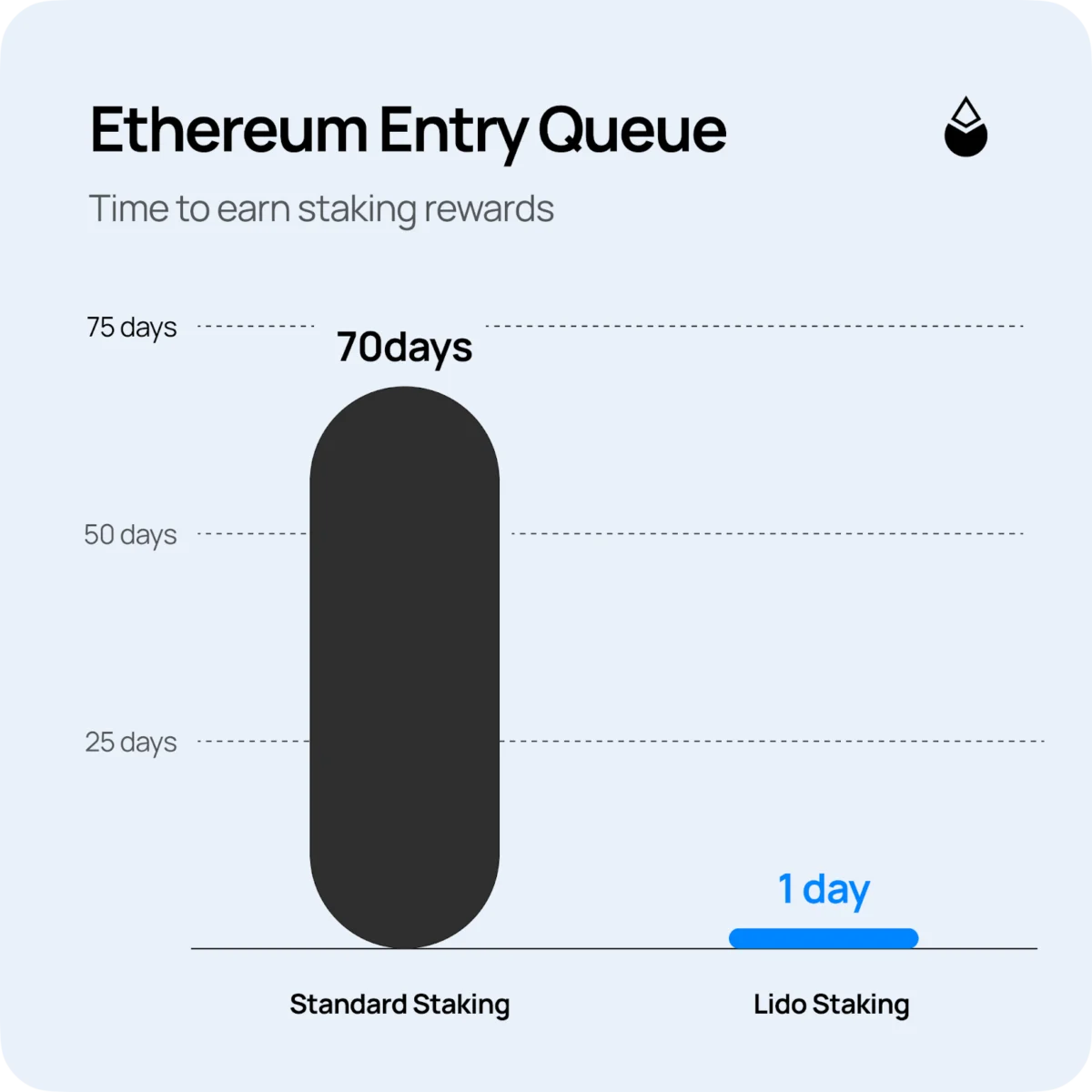
Corporate treasuries holding significant allocations of Ether (ETH) are at a critical juncture, facing a strategic decision regarding the optimal deployment of this digital capital in an evolving blockchain ecosystem. This decision carries profound implications for capital efficiency, liquidity management, and overall return on investment in the burgeoning digital asset space.
The Evolving Landscape of Ethereum and Corporate ETH Holdings
Ethereum, the world’s leading smart contract platform, transitioned to a Proof-of-Stake (PoS) consensus mechanism in September 2022, an event known as "The Merge." This monumental upgrade fundamentally altered how new blocks are added to the blockchain, replacing energy-intensive mining with a system where validators "stake" ETH to secure the network. In return for participating in this validation process, stakers earn rewards, effectively a yield on their locked capital. This paradigm shift introduced a new financial dynamic for ETH holders, transforming what was once a purely speculative asset into a potentially yield-generating one.
Prior to The Merge, the concept of staking ETH was primarily theoretical for many, or involved locking assets without a clear redemption path. However, with the successful implementation of the Shanghai/Capella upgrade in April 2023, staked ETH became withdrawable, solidifying the economic model and opening the floodgates for broader institutional participation. Corporate treasuries, increasingly exploring digital assets for diversification, hedging, or operational purposes, now find themselves weighing the pros and cons of engaging with this staking mechanism. The sheer volume of ETH held by corporations, ranging from technology firms to investment funds, underscores the significance of this strategic decision. Industry estimates suggest that the total value of ETH held by institutional entities could run into tens of billions of dollars, making the cumulative impact of any staking decision substantial.
The Dual Challenges: Unstaked ETH and Native Staking
For treasuries holding ETH, two primary, albeit suboptimal, paths have historically presented themselves. The first is to leave the ETH unstaked, an approach that prioritizes immediate liquidity and avoids operational complexities. However, this choice comes with a significant opportunity cost: missing out on the staking rewards that accrue to active network participants. Data from prominent blockchain analytics platforms indicates that approximately 30% of all circulating ETH is currently staked, a figure that has steadily climbed since the Shanghai upgrade. For corporate treasuries managing substantial ETH positions, the foregone yield from this unstaked capital represents a continuous drain on potential returns, a cost that compounds over time and can become increasingly difficult to justify to stakeholders and investment committees. In a low-yield environment for traditional assets, the competitive yield offered by ETH staking becomes a compelling factor that cannot be ignored.
The second path, native staking, allows treasuries to capture these valuable rewards directly by running their own validator nodes or delegating to a single provider. While this option secures the staking yield, it introduces a series of considerable frictions and operational hurdles. One of the most prominent challenges is the validator entry queue. As of early 2026, the queue for new validators to become active sits at nearly 70 days, with over 4 million ETH waiting for activation. This means a treasury opting for native staking today would endure a waiting period of almost two months before their capital begins generating rewards. This delay directly impacts capital efficiency, as the ETH remains idle for an extended period.
Furthermore, once staked natively, that capital is effectively locked. While withdrawals are technically possible post-Shanghai, the exit timing is governed by protocol mechanics and network conditions, not by the treasury’s immediate liquidity needs. This lack of control over redemption schedules can be problematic for treasuries that require agile capital deployment and withdrawal capabilities. Beyond these liquidity constraints, native staking introduces significant operational requirements that many corporate treasuries are simply not structured to absorb. These include complex infrastructure decisions, robust key management protocols to prevent loss or theft, and the ever-present risk of "slashing" – penalties imposed by the protocol for validator misbehavior (e.g., going offline, double-signing). These risks necessitate specialized technical expertise, significant upfront investment in hardware or cloud services, and continuous monitoring, all of which fall outside the typical mandate and capabilities of a traditional corporate treasury department. The overhead associated with managing these complexities can quickly erode the benefits of the staking rewards, particularly for treasuries without dedicated blockchain infrastructure teams.
Liquid Staking: A Paradigm Shift for Institutional ETH Management
Recognizing the significant gap between the desire for staking rewards and the practical challenges of native staking, liquid staking solutions have emerged as a transformative alternative. This innovative approach allows ETH holders to participate in staking without sacrificing liquidity or shouldering the operational burden. When ETH is staked via a liquid staking protocol, such as Lido, the staker immediately receives a liquid token – for instance, stETH (staked ETH). This token represents the underlying staked ETH and any accrued rewards, beginning to accumulate from day one.
The advantages of liquid staking are manifold and directly address the pain points of the other two options. First, there is no entry queue and no activation delay; rewards commence immediately upon staking. Second, the position remains entirely liquid. stETH, as a fungible token, can be held, redeemed, used as collateral in decentralized finance (DeFi) protocols, or sold on secondary markets with deep liquidity. This inherent liquidity is a game-changer for treasuries, offering the flexibility to access their capital when needed without being beholden to protocol-governed exit queues.
The practical liquidity of stETH is substantial. Reports indicate that approximately $100 million of stETH is executable within 2% of its redemption value on various decentralized exchanges, providing robust exit ramps for even large positions. Moreover, stETH has become a cornerstone asset within the broader DeFi ecosystem, with roughly $10 billion actively deployed as collateral across major lending protocols like Aave, Morpho, and MakerDAO. This deep integration means that a treasury needing to exit a $50 million position, for example, can do so with minimal price impact, underscoring the token’s utility as a truly liquid asset. This is a critical factor for institutional players who prioritize stability and predictability in their large-scale transactions.
Built for Institutional Scale: Custody, Compliance, and Infrastructure
The maturation of the liquid staking ecosystem has been accompanied by significant advancements in institutional support. For many institutions, the choice of custodian dictates the viability of engaging with digital assets. Acknowledging this, leading digital asset custodians, including Fireblocks, BitGo, and Copper, now natively support stETH. This means that treasuries already utilizing these platforms for ETH custody can access stETH minting and redemption directly within their existing workflows, without the need for new vendors, complex integrations, or unfamiliar operational processes. This seamless integration significantly lowers the barrier to entry for institutional adoption.
The regulatory landscape is also evolving rapidly to accommodate staked ETH products. This momentum is evidenced by the launch of regulated investment vehicles. In December 2025, WisdomTree, a prominent global asset manager, launched Europe’s first 100% staked ETH Exchange Traded Product (ETP), which quickly amassed $50 million in Assets Under Management (AUM) at launch. Following this, in October 2025, VanEck, another major investment firm, filed for the first US Lido Staked ETH Exchange Traded Fund (ETF). These developments signal a crucial shift: staked ETH products are entering mainstream regulated markets, establishing a new benchmark for performance. Treasuries holding idle, unstaked ETH now face direct comparison against these professionally managed, yield-generating investment vehicles. The performance gap between unstaked ETH and a 100% staked product compounds over time, making the decision to hold idle capital increasingly difficult to justify to boards, investors, and internal finance committees.
The underlying infrastructure supporting liquid staking solutions is also designed with institutional robustness in mind. For instance, Lido’s protocol is backed by a diverse network of over 650 node operators, distributed across curated, DVT (Distributed Validator Technology), and community staking modules. This broad distribution mitigates risks associated with single-operator concentration and reduces dependency on any individual infrastructure provider. Such decentralization enhances security and resilience, crucial considerations for institutional capital. For treasuries with specific compliance, reporting, or operational requirements that necessitate greater control, innovative solutions like Lido V3’s "stVaults" offer a compelling option. stVaults provide isolated staking environments with custom validator configurations and full on-chain transparency, all while retaining access to the critical liquidity of stETH. This blend of customizability and liquidity caters to the nuanced demands of sophisticated institutional players. This depth of infrastructure, boasting over 100 protocol integrations, native custody support, and deep liquidity across various markets, underscores why stETH has become the preferred choice for the majority of institutional liquid staking on Ethereum.
The Economic Imperative: Addressing the Cost of Idle ETH
The narrative around corporate treasury management of digital assets is rapidly shifting. Holding unstaked ETH is no longer a neutral decision; it carries an undeniable opportunity cost that accrues and compounds daily. While native staking attempts to address the reward problem, it introduces significant friction in the form of lengthy queue delays, illiquidity, and an operational overhead that typically falls outside the core mandates of most corporate treasury departments.
Liquid staking, exemplified by stETH, offers a comprehensive and institutionally viable pathway through this dilemma. It provides immediate staking rewards from day one, ensures critical liquidity when needed, and integrates seamlessly with the existing custody and trading infrastructure that institutions already utilize. This trifecta of benefits – yield, liquidity, and operational simplicity – positions liquid staking as an indispensable tool for forward-thinking corporate treasuries.
The broader implications of this trend are significant. The growing institutional adoption of liquid staking products is a testament to the maturation of the digital asset market and its infrastructure. It signals a move beyond speculative holding towards active, yield-generating participation, aligning digital asset strategies more closely with traditional treasury management principles of capital efficiency and risk-adjusted returns. As the digital asset ecosystem continues to evolve, the ability to generate yield on underlying assets like ETH, while maintaining liquidity and minimizing operational friction, will become a standard expectation for any sophisticated treasury operation. The choice is no longer whether to engage with digital assets, but how to optimize their deployment for maximum strategic advantage.
To explore how stETH can be integrated into a corporate treasury strategy and unlock the full potential of ETH holdings, interested parties are encouraged to engage directly with the Lido Institutional team for tailored insights and solutions.