Nila Kartika Wati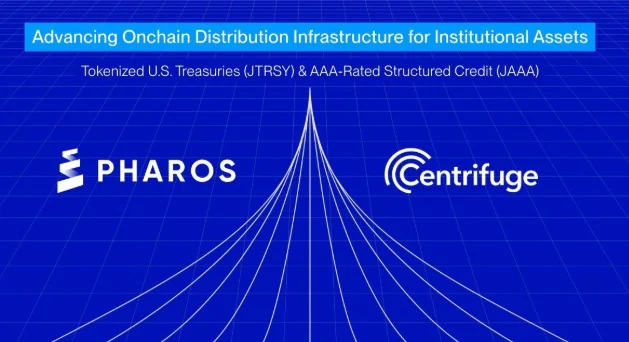
The burgeoning field of tokenizing real-world assets (RWAs) is experiencing unprecedented growth, driven by its potential to seamlessly integrate traditional finance (TradFi) with the innovative capabilities of blockchain technology. This convergence allows major financial institutions, including banks and investment funds, to bring tangible assets such as U.S. Treasuries and high-grade credit products onto the blockchain, thereby dismantling existing silos and mitigating the complexities of traditional paperwork. A recent strategic partnership between Centrifuge, a recognized leader in institutional asset tokenization, and Pharos, a novel Layer 1 blockchain designed for "RealFi" (real-world finance on-chain), aims to address a critical challenge in this ecosystem: the post-tokenization distribution and operationalization of these digital assets.
The Strategic Partnership: Centrifuge and Pharos Unite
Centrifuge, a platform that has established itself at the forefront of tokenizing institutional-grade assets, has officially announced a collaborative effort with Pharos. Pharos is a newly developed Layer 1 blockchain specifically engineered to cater to the needs of real-world finance on the blockchain. The core objective of this alliance is to co-create shared infrastructure that will facilitate the efficient distribution and operation of tokenized U.S. Treasuries, exemplified by assets like JTRSY, and AAA-rated structured credit products, such as JAAA, on a global scale.
While the process of tokenization itself is instrumental in bringing assets onto the blockchain, its true value is unlocked through effective distribution. This encompasses defining who has access to these tokenized assets, the mechanisms through which they can be traded, and the ways in which they can be utilized. Currently, this aspect of the RWA ecosystem remains a significant bottleneck. Tokenized assets frequently experience periods of inactivity or become confined within fragmented platforms, particularly in regions outside the United States and Western Europe. These geographical limitations often stem from regulatory complexities, challenges in custodial arrangements, and intricate onboarding procedures that hinder the adoption of dollar-denominated products.
The partnership between Centrifuge and Pharos is designed to fundamentally alter this landscape. Centrifuge brings its proven expertise and established standards in asset tokenization to the table, having already successfully tokenized over $300 million in assets. Its robust frameworks ensure that assets are represented accurately and securely on-chain. Pharos, in turn, will serve as the high-speed conduit for these tokenized assets. As a Layer 1 blockchain, Pharos boasts advanced capabilities, including deep-parallel execution, which allows for the simultaneous processing of a vast number of transactions without succumbing to bottlenecks. Its modular design is also engineered to accommodate compliance requirements and facilitate scalability, making it an ideal environment for sophisticated financial operations.
The synergy between the two entities means that assets tokenized on Centrifuge will be able to transition smoothly into the Pharos ecosystem. Here, they will be made available for liquidity provision, pooling, allocation, and crucially, for reuse within active Decentralized Finance (DeFi) systems. This integration aims to connect various components of the digital asset economy, including wallets, enterprise platforms, and execution venues, thereby transforming static digital representations of assets into dynamic instruments with real utility.
Addressing the Usability Gap in Real-World Assets
The rapid ascent of tokenized real-world assets has been a significant narrative in the financial technology space. In the past year alone, the market capitalization of RWAs reportedly surpassed $14 billion. However, widespread adoption and practical usability have lagged behind the initial excitement, a challenge that this new partnership seeks to overcome.
Bhaji Illuminati, the Chief Executive Officer of Centrifuge, articulated this critical need, stating, "Tokenization alone doesn’t solve access and usability." This sentiment was echoed by Wish Wu, CEO of Pharos, who identified infrastructure as the primary hurdle, rather than a lack of demand. The collaboration between Centrifuge and Pharos directly addresses this infrastructure deficit, providing the necessary tools and network to move tokenized assets from mere representation to active participation in financial markets.
Pharos: A Technological Foundation for RealFi
Pharos distinguishes itself through its native deep-parallel execution capabilities. Unlike traditional blockchains that process transactions sequentially (single-threaded), Pharos is architected to process multiple transactions concurrently. This parallel processing architecture is crucial for handling the high throughput demands of institutional finance and large-scale asset distribution.
Key Technological Features of Pharos:
- Deep-Parallel Execution: This core technology enables Pharos to process a significantly higher volume of transactions simultaneously, drastically reducing latency and increasing efficiency. This is a fundamental requirement for handling the complex and high-frequency operations associated with institutional financial products.
- Modular Design: The blockchain’s architecture is built with modularity in mind, allowing for greater flexibility in adapting to evolving regulatory landscapes and specific compliance needs. This adaptability is paramount for financial applications that must adhere to strict legal frameworks.
- Cosmos SDK Foundation: Pharos is built upon the Cosmos SDK, a widely adopted framework for developing application-specific blockchains. This foundation provides a robust and interoperable ecosystem, fostering innovation and integration within the broader Cosmos network.
- Native RealFi Composability: A key design principle of Pharos is its focus on enabling tokenized assets to interact directly with DeFi protocols without the need for complex or potentially insecure bridges. This native composability facilitates the creation of "asset-native ecosystems" where traditional assets, like U.S. Treasuries, can seamlessly participate in yield-farming and other DeFi activities.
The development team behind Pharos comprises experienced engineers from Ant Group, the financial technology giant associated with Alibaba’s extensive digital payment and financial services. This pedigree suggests a deep understanding of the operational demands and security requirements of large-scale financial systems. Pharos is positioned as an inclusive and compliant-by-design platform, attracting significant backing from prominent venture capital firms such as Hack VC and Faction VC. This blend of established financial technology expertise and venture capital support underscores its potential to bridge the gap between traditional finance and the cryptocurrency space.
Implications for Global Markets and Investment
The implications of this partnership extend far beyond the immediate technical integration. By enabling the seamless circulation of tokenized U.S. Treasuries and other high-quality credit products, the collaboration has the potential to unlock new avenues for global financial inclusion and efficiency.
Consider the emerging markets, such as Latin America, where a significant demand exists for stable U.S. dollar-denominated yields. Historically, investors in these regions have faced substantial barriers to accessing such opportunities, including regulatory hurdles, currency exchange complexities, and high transaction costs. Tokenized Treasuries, facilitated by the infrastructure provided by Centrifuge and Pharos, could now be pooled into DeFi yield-generating protocols or lending platforms, effectively transcending geographical boundaries and offering access to previously unattainable financial products.

Furthermore, the composability of these tokenized assets opens up possibilities for innovative financial instruments. Investors could combine tokenized real-world assets with other decentralized digital assets to create novel financial "Lego blocks," fostering a more dynamic and interconnected financial ecosystem. This is not theoretical speculation; it represents a move towards operational on-chain finance where institutions are not merely issuing digital tokens but are actively integrating them into their ongoing financial strategies.
A New Horizon in Crypto Cycles: Antifragility and Institutional Adoption
The cryptocurrency market is known for its cyclical nature, often characterized by periods of intense euphoria followed by significant downturns. However, the development of robust infrastructure for tokenizing real-world assets, as exemplified by the Centrifuge-Pharos alliance, suggests a shift towards greater resilience and sustainability.
Centrifuge has already demonstrated its ability to forge strategic alliances with key players in the DeFi space, including MakerDAO and Circle, indicating a growing acceptance and integration of tokenized RWAs within the broader decentralized finance ecosystem. Pharos’s contribution of high-performance execution capabilities further solidifies the practical viability of these initiatives.
While these are early stages, the groundwork being laid by such partnerships is critical for paving the way for the trillions of dollars held within traditional finance to transition onto the blockchain. For individual investors and smaller institutions looking to engage with the RWA sector, this development signifies a potential increase in liquidity and a reduction in entry barriers. As the market matures, it is advisable for all participants to conduct thorough due diligence (DYOR) on emerging RWA investment opportunities. The collaborative efforts of Centrifuge and Pharos may represent a subtle but significant bull signal, offering alternative avenues for RWA investment beyond the more established platforms.
The integration of real-world assets onto the blockchain represents a monumental shift in how financial markets operate. By addressing the critical post-tokenization challenges of distribution and usability, Centrifuge and Pharos are positioning themselves at the vanguard of this transformation. Their combined expertise promises to unlock significant value, enhance global financial access, and foster a more robust and integrated digital economy, moving beyond speculative ventures towards tangible, operational financial infrastructure.
Background and Chronology of RWA Tokenization
The concept of tokenizing real-world assets is not entirely new, but its recent surge in prominence is a testament to advancements in blockchain technology and evolving regulatory clarity. Early explorations of bringing tangible assets onto distributed ledgers began in the mid-2010s, often focusing on digital representations of commodities like gold. However, the scalability and regulatory frameworks were not yet mature enough for widespread institutional adoption.
Key Milestones in RWA Tokenization:
- Early 2010s: Initial theoretical discussions and small-scale experiments with tokenizing various assets, including real estate and art.
- Mid-2010s: The rise of stablecoins, particularly Tether (USDT) and later USD Coin (USDC) by Circle, demonstrated the potential for blockchain to represent dollar-denominated value, a precursor to tokenizing dollar-denominated assets.
- Late 2010s – Early 2020s: Platforms like Centrifuge emerged, focusing on the specific challenges of tokenizing illiquid assets like invoices and later, more traditional financial instruments. This period saw increasing institutional interest and pilot programs.
- 2021-2022: MakerDAO’s integration of real-world assets, such as real estate and invoices, into its collateral system marked a significant step towards institutional acceptance and demonstrated the utility of tokenized RWAs within decentralized finance. The total market cap for RWAs began to show notable growth.
- 2023: The RWA market experienced exponential growth, with estimates of its market cap reaching tens of billions of dollars. This year saw increased investment from traditional financial players and regulatory bodies showing more willingness to engage with the concept.
- Early 2024: The partnership between Centrifuge and Pharos represents a critical development in addressing the operational and distribution challenges that have remained post-tokenization. This signals a maturation of the RWA ecosystem, moving from the "what" (tokenization) to the "how" (distribution, liquidity, and utility).
This chronological progression highlights a steady evolution from conceptualization to practical implementation, with each phase building upon the technological and market developments of the previous one. The Centrifuge-Pharos alliance is a direct response to the identified need for robust infrastructure to support the scaling of this nascent but rapidly growing sector.
Broader Implications for Financial Innovation
The successful integration of tokenized RWAs into active financial markets carries profound implications for financial innovation and accessibility. By lowering the barriers to entry for sophisticated financial products and enabling their seamless integration into both traditional and decentralized financial systems, this trend has the potential to democratize access to investment opportunities.
Key Implications:
- Increased Liquidity: Tokenization can transform traditionally illiquid assets into more easily tradable instruments, enhancing market liquidity and potentially reducing transaction costs.
- Global Accessibility: By digitizing and decentralizing access, RWAs can be made available to a broader range of investors across different geographies, bypassing many of the traditional intermediaries and geographical constraints.
- Enhanced Efficiency: The automation and streamlined processes offered by blockchain technology can significantly reduce the administrative overhead, settlement times, and operational complexities associated with traditional finance.
- New Financial Products: The composability of tokenized assets allows for the creation of innovative financial products and investment strategies that were previously impossible or prohibitively complex to implement.
- Regulatory Evolution: The increasing institutional adoption of RWAs is also prompting regulators to develop clearer frameworks and guidelines, which will further legitimize and accelerate the growth of this sector.
The partnership between Centrifuge and Pharos is a concrete step towards realizing these implications. By providing the essential infrastructure for both tokenization and subsequent distribution, they are laying the foundation for a more efficient, accessible, and interconnected global financial system.
Disclaimer: The information provided by Altcoin Buzz is intended for educational, entertainment, and informational purposes only and does not constitute financial advice. Opinions and strategies shared are those of the authors and may not reflect your risk tolerance. Altcoin Buzz is not liable for any losses incurred from investments related to the information provided. Cryptocurrencies are high-risk assets; conduct thorough due diligence. Copyright Altcoin Buzz Pte Ltd.