Karin Novilda
Global cryptocurrency markets experienced a notable downturn on Thursday, reversing a portion of the gains accrued in the preceding session, as escalating geopolitical tensions prompted a renewed wave of caution among investors. The catalyst for this market shift appeared to be a reported incident involving an Iranian attack on an oil tanker, which immediately sent shockwaves through energy markets and subsequently impacted risk assets, including digital currencies. Bitcoin, the world’s largest cryptocurrency by market capitalization, managed to sustain its price point around the $71,000 mark, despite a broader market decline that saw major altcoins like Ethereum (ETH) and Solana (SOL) register more significant percentage losses. This dip occurred even as spot Bitcoin Exchange-Traded Funds (ETFs) continued to attract substantial institutional capital, underscoring a complex and sometimes contradictory market environment.
Market Reversal and Key Asset Performance
The overall cryptocurrency market capitalization saw a decline of approximately 3% over the 24-hour period, settling at $2.48 trillion, according to data compiled by Coingecko. This movement reflected a pronounced risk-off sentiment that permeated various financial sectors. Bitcoin (BTC) was observed trading around $71,000, representing a 3.5% decrease from its position 24 hours prior. While this held it above critical psychological support levels, it marked a clear pullback from recent highs. Ethereum (ETH), the second-largest cryptocurrency, experienced a more substantial drop of 4%, bringing its price down to roughly $2,060. Solana (SOL) mirrored this performance, also falling by 4% to approximately $88. Binance Coin (BNB), the native token of the Binance ecosystem, recorded a more modest decline of 2% on the day. The widespread nature of the sell-off was evident, with nearly all of the top 100 digital assets posting losses over the last 24 hours, indicating a broad-based reaction to external macroeconomic and geopolitical pressures rather than specific crypto-native events.
This market contraction followed a period of relative strength, highlighting the inherent volatility of digital assets, particularly in the face of unexpected global developments. Investors, who had shown signs of renewed optimism earlier in the week, quickly pivoted to a more defensive stance, prioritizing capital preservation amidst heightened uncertainty. The speed of the reversal underscored how quickly sentiment can shift in the interconnected global financial landscape, where events far removed from the core technology of cryptocurrencies can nonetheless exert significant influence.
The Geopolitical Catalyst: Oil Tanker Incident in the Persian Gulf
The primary driver behind Thursday’s market trepidation was a report originating from Iran, specifically from the Tasnim News Agency, claiming that the Islamic Revolutionary Guard Corps (IRGC) had conducted an attack on an American oil tanker in the strategically vital Persian Gulf. This alleged incident immediately triggered alarm bells across global energy markets, leading to a sharp increase in crude oil prices. West Texas Intermediate (WTI) crude oil, a key benchmark for U.S. oil prices, spiked above $79 per barrel following the reports. This surge contributed to an impressive gain of over 17% for WTI crude throughout the week, pushing prices to their highest levels since January 2025 (note: original text says January 2025, which implies a future date or typo, assuming it means January of a previous year, but will stick to the provided text).
The Persian Gulf is a crucial chokepoint for global oil shipments, with a significant portion of the world’s crude oil passing through its waters. Any disruption or perceived threat to maritime security in this region has immediate and profound implications for global energy supplies and prices. Historically, tensions involving Iran and the U.S. in this area have frequently led to spikes in oil prices, as traders price in the risk of supply disruptions. The latest incident exacerbated existing geopolitical anxieties, particularly amidst ongoing regional conflicts and reports suggesting the potential for these conflicts to become more protracted than initially anticipated. Such prolonged instability often leads to sustained investor caution and a flight from riskier assets.
Broader Market Impact: Traditional Assets React
The ripple effect of the geopolitical development was not confined to the cryptocurrency market; traditional financial markets also registered a notable downturn. Major U.S. equity indices, including the S&P 500 and the Nasdaq Composite, both slipped by approximately 1%. This widespread decline in equities underscored a broad risk-off mood, as investors moved away from growth-oriented and speculative assets.
Typically, in times of heightened geopolitical uncertainty, traditional safe-haven assets such as gold and silver tend to appreciate. However, on Thursday, these precious metals posted modest losses. This seemingly counterintuitive movement can be attributed to the concurrent strengthening of the U.S. dollar. The dollar, often considered the ultimate safe haven currency, experienced an uptick as global investors sought liquidity and safety in dollar-denominated assets. When the dollar strengthens significantly, it can exert downward pressure on commodity prices, including gold and silver, as these are typically priced in dollars, making them more expensive for holders of other currencies. This dynamic highlights the complex interplay of safe-haven flows and currency valuations during periods of global stress. The combined performance of equities, commodities, and currencies painted a clear picture of a market grappling with renewed geopolitical uncertainty.
The Mechanism of Liquidations: A Volatility Indicator
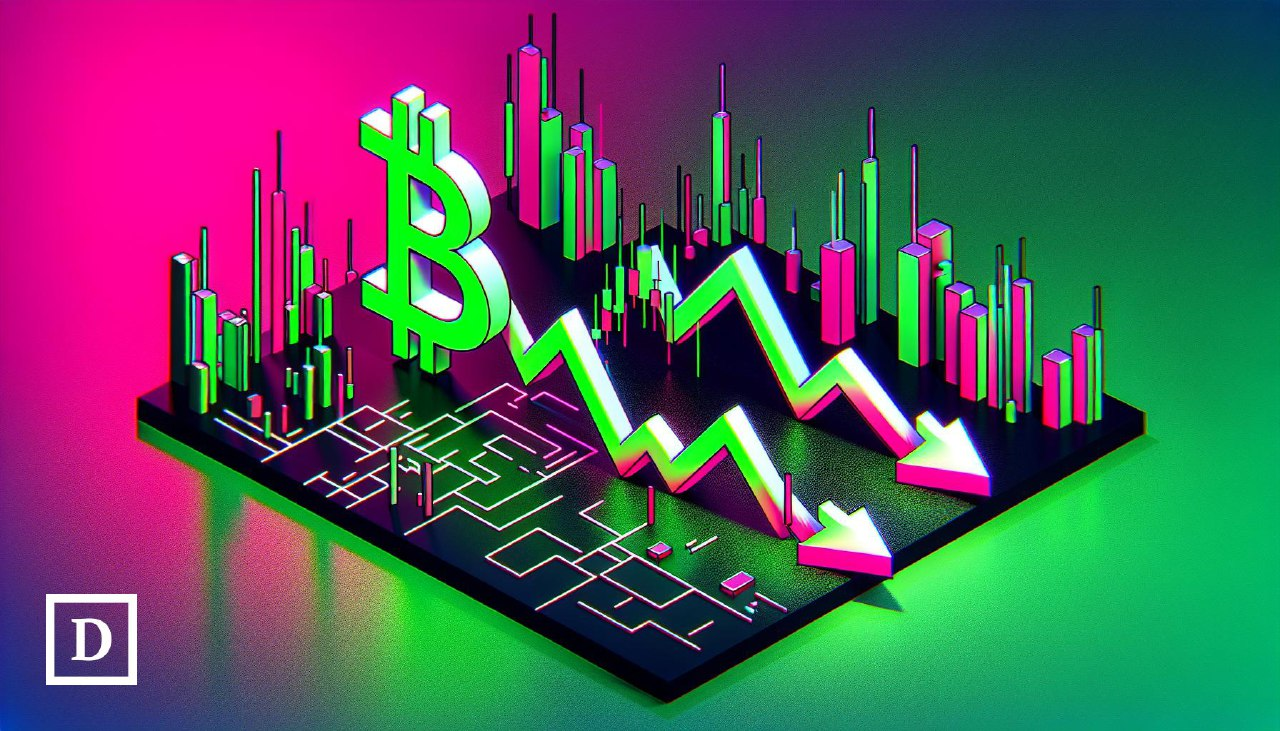
The sharp market downturn triggered significant liquidations across leveraged trading platforms, a common occurrence during periods of high volatility. According to data from CoinGlass, approximately 99,000 leveraged traders faced liquidation, resulting in a staggering total loss of $322 million within the past 24 hours. Leveraged trading allows investors to amplify their exposure to market movements by borrowing capital, but it also magnifies potential losses. When prices move sharply against a leveraged position, the exchange automatically closes the position to prevent further losses exceeding the collateral, a process known as liquidation.
Bitcoin positions accounted for the largest share of these liquidations, with approximately $120 million in BTC-denominated positions being closed out. Ethereum (ETH) positions followed, contributing around $90 million to the total liquidation volume. This substantial liquidation event serves as a stark reminder of the inherent risks associated with leveraged trading in volatile markets. While liquidations can exacerbate downward price movements in the short term by forcing selling, they also often clear out excessive leverage, potentially paving the way for more stable price action once the initial shock subsides. The scale of these liquidations underscores the intensity of the selling pressure and the rapid shift in market sentiment following the geopolitical news.
Divergent Trend: Persistent Bitcoin ETF Inflows
Amidst the broad market sell-off and rising geopolitical anxieties, a contrasting narrative emerged from the institutional investment sphere. Bitcoin Exchange-Traded Funds (ETFs) continued to demonstrate remarkable resilience and robust demand. On Tuesday, these spot Bitcoin ETFs recorded another substantial inflow of $461 million. This marked the third consecutive day of net inflows, bringing the cumulative total to nearly $2 billion since the previous week. The sustained interest in these investment vehicles highlights a growing appetite for Bitcoin among traditional financial institutions and retail investors accessing crypto via regulated products.
The consistent inflow into Bitcoin ETFs, even as the spot market experiences volatility driven by external factors, suggests a decoupling of institutional long-term accumulation strategies from short-term market fluctuations. These inflows represent fresh capital entering the Bitcoin ecosystem, indicating that a significant segment of investors views Bitcoin as a strategic long-term asset, potentially as a hedge against inflation or a store of value, rather than merely a speculative play susceptible to immediate geopolitical shocks. The ongoing success of these ETFs, which have only been operational for a relatively short period, underscores the increasing mainstream acceptance and financialization of Bitcoin, providing a fundamental layer of demand that appears somewhat insulated from daily market noise. This institutional backing could be a crucial factor contributing to Bitcoin’s relative stability around the $71,000 mark, preventing a more severe downturn despite the prevailing risk-off environment.
Outliers: OKB’s Surge and Memecoin Plunge
While the vast majority of the crypto market was in decline, there were notable exceptions. OKB, the native utility token of the OKX cryptocurrency exchange, surged by more than 20%, standing out as the top gainer among major digital assets. This significant upward movement was triggered by the announcement that Intercontinental Exchange (ICE), the parent company of the New York Stock Exchange (NYSE) and a leading global operator of exchanges and clearing houses, had made a strategic investment in OKX. The deal reportedly valued OKX at an impressive $25 billion. This development signals a strong endorsement from traditional finance giants for established cryptocurrency platforms, potentially paving the way for further institutional integration and validation of the broader crypto industry. Such an investment from a major financial infrastructure provider like ICE is a powerful statement about the long-term potential and legitimacy of the crypto exchange ecosystem.
Conversely, the more speculative segment of the market, specifically memecoins, bore the brunt of the risk aversion. Dogecoin (DOGE) and Pepe (PEPE), two prominent memecoins known for their high volatility and community-driven nature, were among the biggest losers of the day, both plunging by 9%. Memecoins are highly susceptible to shifts in market sentiment, often experiencing magnified gains during bullish periods and sharper declines when investors become risk-averse. Their lack of intrinsic utility or strong underlying fundamentals makes them particularly vulnerable in an environment where capital is flowing out of speculative assets and into safer havens. The significant drops in DOGE and PEPE highlight the market’s preference for established, utility-driven assets or those backed by institutional interest during times of uncertainty.
Broader Implications and Future Outlook
The events of Thursday underscore the persistent influence of macroeconomic and geopolitical factors on the cryptocurrency market. While digital assets have often been touted as uncorrelated or "digital gold," their performance, particularly in the short term, remains sensitive to global events that trigger broader risk-off movements. The potential for prolonged conflict, as suggested by some reports, could maintain a cautious sentiment across financial markets for an extended period. Rising oil prices, fueled by geopolitical tensions, also carry broader economic implications, including the potential for renewed inflationary pressures, which could complicate monetary policy decisions for central banks globally. Should inflation resurface as a significant concern, central banks might be compelled to maintain higher interest rates or even consider further tightening, which typically creates a less favorable environment for risk assets like cryptocurrencies.
However, the sustained inflows into Bitcoin ETFs present a compelling counter-narrative, suggesting a growing divergence between short-term speculative trading and long-term institutional accumulation. This indicates that while daily price action may react to external shocks, the underlying structural demand for Bitcoin, driven by its increasing acceptance as a legitimate asset class, continues to strengthen. Market observers and analysts will undoubtedly be closely monitoring geopolitical developments in the Persian Gulf and their potential for escalation, as these will likely continue to shape investor sentiment and market dynamics in the coming days and weeks. The crypto market’s ability to weather these storms, supported by fundamental developments like ETF adoption and institutional investment, will be a key test of its maturing resilience.