Lina Irawan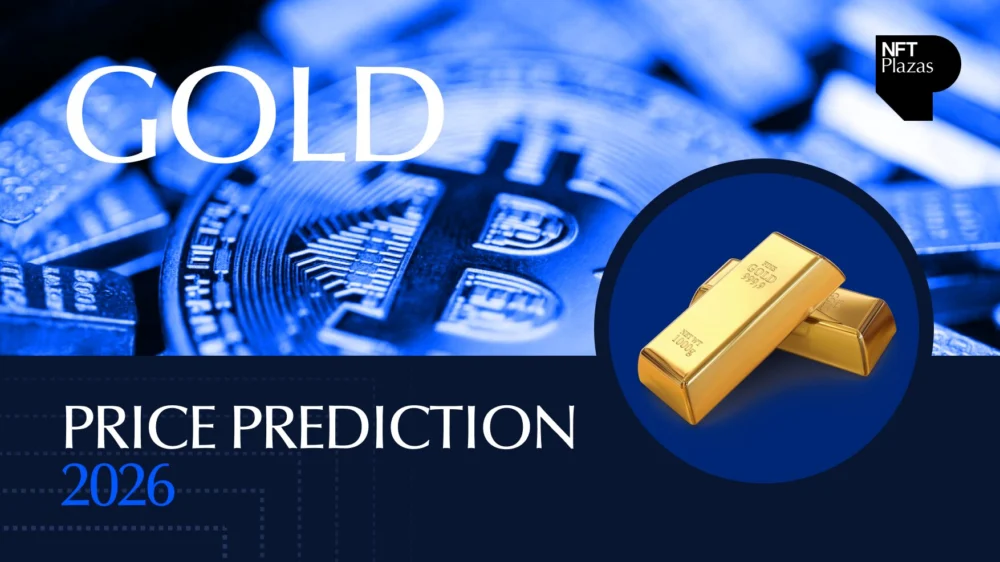
As early March 2026 unfolds, the price of gold is holding firm at approximately $5,186.00 per ounce, with intraday fluctuations reaching peaks of $5,192.92. This sustained high valuation underscores gold’s enduring reputation as a critical asset for hedging against inflationary pressures and navigating periods of market volatility. The yellow metal’s performance continues to be closely watched by investors, economists, and central bankers worldwide, as it reflects broader economic sentiment and geopolitical stability.
Daily Gold Price Dynamics and Short-Term Outlook
The current trading volumes and prevailing market sentiment suggest a period of steady momentum for gold, albeit with minor price adjustments anticipated in the immediate future. Forecasts indicate that the price is expected to nudge upwards to $5,188.40 by tomorrow, with a projection of $5,192.75 over the next few days. Looking ahead to the following week, the consensus points towards a further modest increase, reaching approximately $5,198.50. These short-term movements, while incremental, are indicative of the underlying demand for gold as a safe-haven asset amidst ongoing economic uncertainties.
Gold Price Forecast for 2026: The Bull Case Scenario
The optimistic outlook for gold in 2026, often referred to as the "bull case," is largely predicated on the continuation of persistent inflation and robust demand from central banks. Under these conditions, analysts project that gold prices could reach a minimum of $5,400.00, with an average price anticipated to be around $5,450.75. The upper end of this bullish forecast suggests a potential peak of $5,500.00 per ounce.
The primary driver for this upward trajectory would be sustained high inflation, eroding the purchasing power of fiat currencies and compelling investors to seek tangible assets like gold. Concurrently, aggressive gold accumulation by central banks, a trend observed over the past several years, would provide a significant floor and a catalyst for price appreciation. Many central banks have been diversifying their reserves away from traditional currencies, driven by concerns over geopolitical risks and the potential for currency devaluation. This strategic shift by monetary authorities injects substantial and consistent demand into the global gold market, acting as a powerful upward force on prices.
Gold Price Forecast for 2026: The Bear Case Scenario
Conversely, the "bear case" for gold in 2026 anticipates a scenario where aggressive interest rate hikes by major central banks and a strengthening U.S. dollar could dampen the metal’s appeal. In this environment, the minimum predicted price for gold is $4,850.00, with an average expected to hover around $4,895.20. The maximum price in this bearish outlook is projected to be $4,950.00 per ounce.
Rising interest rates make interest-bearing assets, such as bonds, more attractive relative to non-yielding assets like gold. As the cost of borrowing increases, the opportunity cost of holding gold also rises, potentially leading investors to reallocate capital towards higher-yielding investments. Furthermore, a stronger U.S. dollar typically correlates with lower gold prices, as gold is priced in dollars. When the dollar appreciates, it becomes more expensive for holders of other currencies to purchase gold, thereby reducing demand. Geopolitical stability, if it were to emerge significantly, could also reduce the perceived need for safe-haven assets, leading to a decline in gold’s demand.
Comprehensive Gold Price Prediction for 2026
The overarching prediction for the gold price in 2026 points to a stable trading range, with an average price expectation of approximately $5,185.50 per ounce. Analysts maintain a cautiously optimistic stance, acknowledging gold’s long-standing role as an effective hedge against economic uncertainty. The first half of the year is anticipated to witness moderate growth, laying the groundwork for a potential significant upward movement in the latter half, contingent upon the persistence of inflationary pressures and sustained central bank interest.
The trajectory of gold prices in 2026 will be intricately linked to a confluence of macroeconomic factors. These include the monetary policy decisions of major central banks, particularly concerning interest rates; the prevailing geopolitical landscape, which can ignite safe-haven demand; and the fluctuations in global currency markets. While the bullish scenario presents an ambitious target of $5,500.00, the bearish outlook suggests a potential downside support level near $4,850.00. Nevertheless, the consensus is that gold is poised to retain its status as a dependable asset, catering to the needs of both short-term traders seeking speculative opportunities and long-term investors aiming for portfolio diversification and wealth preservation.
Key Factors Influencing Gold Prices in 2026
Several critical factors will shape the price of gold throughout 2026. Understanding these dynamics is crucial for any investor or market observer.
- Inflationary Environment: The persistence and severity of inflation will be a primary determinant of gold’s performance. High inflation erodes the value of fiat currencies, making gold a more attractive store of value. Central bank responses to inflation, such as interest rate adjustments, will also play a significant role.
- Central Bank Policies and Demand: The actions of central banks, particularly their net purchases or sales of gold, have a substantial impact on the market. As noted, a continuation of aggressive buying by central banks would provide strong support for prices. Conversely, significant selling could exert downward pressure.
- Geopolitical Stability and Risk: Global political tensions, conflicts, and uncertainties often drive investors towards safe-haven assets like gold. Periods of heightened geopolitical risk tend to boost gold prices, while a more stable international environment can diminish this demand.
- U.S. Dollar Strength: The inverse relationship between the U.S. dollar and gold is a well-established market dynamic. A weakening dollar generally supports higher gold prices, as it becomes cheaper for holders of other currencies to acquire gold. Conversely, a strong dollar tends to suppress gold prices.
- Interest Rate Environment: As mentioned, the level of global interest rates significantly influences the attractiveness of gold. When interest rates are low, the opportunity cost of holding gold is minimal, making it more appealing. Higher interest rates increase the attractiveness of interest-bearing assets, potentially drawing capital away from gold.
- Economic Growth and Recession Fears: In times of robust economic growth, investor appetite for riskier assets may increase, potentially leading to less demand for gold. However, if fears of an economic slowdown or recession emerge, gold’s safe-haven appeal often strengthens.
- Physical Demand: While often overshadowed by investment demand, physical demand for gold, driven by jewelry consumption and industrial applications, also contributes to overall market dynamics. Fluctuations in these sectors can have localized or short-term impacts on prices.
Historical Context and Recent Performance
The current price levels for gold represent a significant departure from historical norms, reflecting a paradigm shift in the global economic and financial landscape. The surge in gold prices over recent years can be attributed to a combination of unprecedented monetary stimulus, prolonged periods of low interest rates, and escalating geopolitical uncertainties. In early 2025, gold had already surpassed the $3,000 per ounce mark, building upon previous records. The prior all-time high of approximately $2,075 per ounce, set in August 2020, now appears modest in comparison. This dramatic ascent highlights the growing investor confidence in gold’s ability to preserve wealth amidst a backdrop of systemic risks. The Federal Reserve’s aggressive monetary tightening cycle, initiated to combat rising inflation, has introduced a new layer of complexity, with gold’s resilience demonstrating its value even in an environment of rising yields.

Investment Implications and Diversification
The analysis of gold prices in 2026 offers several key implications for investors. Firstly, gold continues to be a vital component of a diversified investment portfolio, particularly for those seeking to mitigate inflation risk and market volatility. Its historical tendency to move independently or inversely to other asset classes like equities and bonds makes it a valuable tool for reducing overall portfolio risk.
For investors considering both gold and Bitcoin in 2026, the decision hinges on individual risk tolerance and investment objectives. Gold offers a time-tested hedge against inflation and economic instability, characterized by its relative stability. Bitcoin, on the other hand, presents the potential for higher returns but is accompanied by significant price volatility and regulatory uncertainties. A balanced approach, involving diversification across both assets, could be a prudent strategy for some investors looking to capture potential upside while managing risk.
Frequently Asked Questions (FAQs)
What is the gold price prediction for 2026?
The gold price prediction for 2026 suggests a stable trading range, with prices averaging around $5,185.50. Analysts anticipate a bullish scenario could push prices to an average of $5,450.75, while a bearish outlook might see prices dip to an average of $4,895.20.
Is gold or Bitcoin a better investment in 2026?
The choice between gold and Bitcoin in 2026 depends on your risk tolerance and investment goals. Gold is a stable, time-tested hedge against inflation, whereas Bitcoin offers higher potential returns but comes with significant volatility. Diversifying between the two could be a balanced approach.
What is the highest gold price ever recorded?
Gold has broken multiple all-time highs in recent years, surpassing $3,000 per ounce in early 2025 before continuing its climb to current levels above $5,000. The previous record of $2,075, set in August 2020, now appears modest by comparison, reflecting the significant shift in the macro environment.
Can gold reach $10,000?
While unlikely in the near term, gold reaching $10,000 would require extreme economic conditions, such as hyperinflation, a collapse of fiat currencies, or unprecedented central bank demand. While theoretically possible, such scenarios are highly speculative and not currently anticipated by mainstream analysts.
Will gold prices go down in 2027?
Gold prices in 2027 will depend on a complex interplay of global economic factors, including interest rates, central bank policies, and geopolitical stability. If economic conditions stabilize and interest rates rise significantly, gold prices could face downward pressure. However, predicting such long-term trends involves considerable analytical challenges.
Is gold a good investment for the next 5 years?
Yes, gold is considered a good investment for the next 5 years, particularly for those seeking a stable asset to hedge against inflation and economic uncertainty. Its historical performance as a safe-haven asset makes it a reliable choice for long-term investors looking to diversify their portfolios and protect their capital against unforeseen economic shocks.