Nila Kartika Wati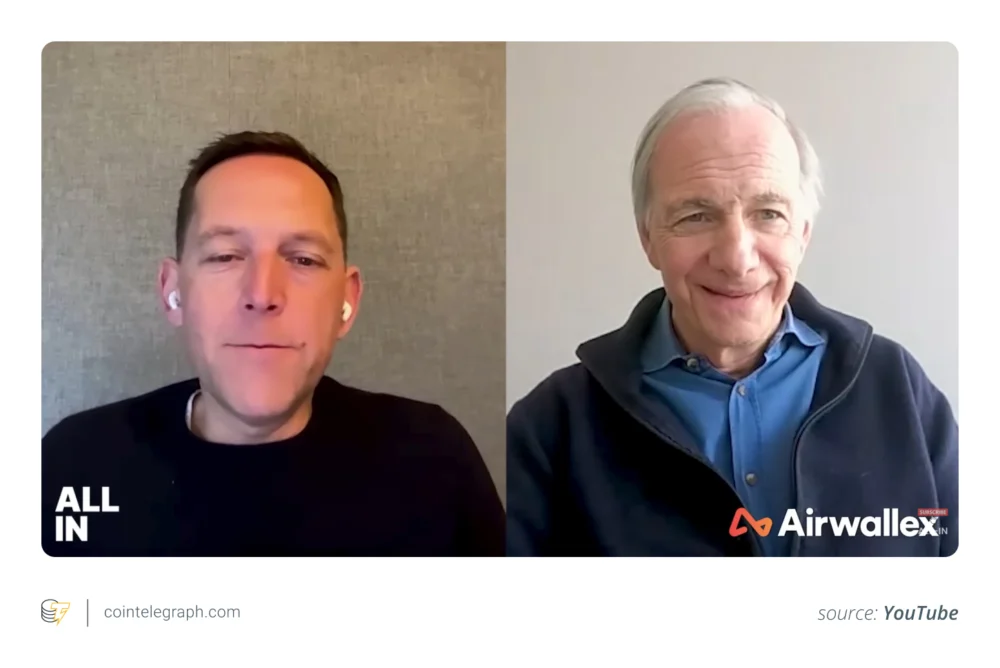
For years, a significant debate has unfolded across global financial markets: could Bitcoin (BTC), the pioneering cryptocurrency, one day supplant gold as the world’s primary store of value? Proponents of Bitcoin frequently champion it as "digital gold," citing its immutable fixed supply and decentralized architecture as characteristics that position it as a modern hedge against inflation and currency debasement. However, this perspective has been met with considerable skepticism from seasoned investors, notably billionaire Ray Dalio, founder of Bridgewater Associates, one of the world’s largest hedge funds. While acknowledging Bitcoin’s innovative features and its growing footprint in the financial landscape, Dalio steadfastly maintains that it cannot replicate gold’s foundational role. His arguments are deeply rooted in gold’s millennia-long historical precedence, its entrenched position within global monetary systems, the unwavering demand from central banks, and its fundamental resilience against emerging technological and systemic risks.
This article delves into the intricate reasoning behind Ray Dalio’s conviction that Bitcoin is unlikely to replace gold as the paramount store of value. It systematically explores his concerns regarding central bank adoption, the divergent market behaviors of the two assets, inherent privacy considerations, and potential technological vulnerabilities, while also clarifying his nuanced view that Bitcoin can still serve as a valuable, albeit complementary, asset within a diversified investment portfolio.
Ray Dalio: A Luminary in Macroeconomics and Global Finance
To fully appreciate the weight of Ray Dalio’s opinions, it is crucial to understand his stature within the global financial community. As the founder of Bridgewater Associates, Dalio built the firm from a small apartment operation into a macroeconomic powerhouse managing tens of billions of dollars. Over five decades, he has cultivated a reputation as one of the most influential and insightful thinkers in macroeconomics, global markets, and investment strategy.
Dalio is perhaps best known for his pioneering work on "All Weather" investment strategies, designed to perform across various economic cycles, and his extensive historical analyses of long-term debt cycles, monetary policy evolution, and shifts in global economic power dynamics. His seminal works, such as "Principles" and "The Changing World Order," offer profound insights into the rise and fall of currencies and empires over centuries, significantly influencing the investment decisions of sovereign wealth funds, institutional investors, and governments worldwide. Given his profound expertise in understanding the enduring mechanisms of wealth preservation and the historical trajectory of monetary systems, Dalio’s views on stores of value, especially during periods of pronounced economic uncertainty and geopolitical flux, command significant global attention.
Dalio’s Core Thesis: "There is Only One Gold"
At the heart of Dalio’s perspective lies a fundamental distinction between gold and Bitcoin. He asserts that gold occupies a unique and irreplaceable position within the global financial framework, arguing vehemently against treating it as merely another commodity or speculative asset that can be interchanged with a digital counterpart. Dalio describes gold as "the most established form of money" in human history. Its journey as a reliable store of value spans more than 4,000 years, traversing countless civilizations, diverse financial systems, and myriad political transformations. From ancient Egypt and Mesopotamia, where it was prized for its rarity, durability, and divisibility, to its role as the bedrock of modern monetary systems like the gold standard, gold has consistently proven its utility and trustworthiness.
This extraordinary historical pedigree, according to Dalio, endows gold with a legitimacy and resilience that no nascent asset, digital or otherwise, can simply replicate within a few decades. The very definition of a "store of value" implies not just scarcity but also a deeply embedded societal and institutional trust that is cultivated over millennia.
The Unwavering Demand of Central Banks: A Pillar of Gold’s Uniqueness
A cornerstone of Dalio’s argument rests on the pivotal role of central banks in the global gold market. Central banks across the globe collectively hold vast quantities of gold as a critical component of their foreign exchange reserves. As of late 2023, official gold reserves exceeded 36,000 metric tons, with institutions like the U.S. Federal Reserve, the European Central Bank, and the People’s Bank of China holding significant portions. This institutional demand is not merely a speculative play; it is a strategic decision to diversify national assets, hedge against currency fluctuations, and maintain financial stability during times of economic or geopolitical stress. For instance, in 2022, central banks bought a record 1,081 tonnes of gold, continuing a strong buying trend into 2023, underscoring their enduring confidence in the metal.

This widespread, state-backed institutional adoption provides gold with a level of governmental legitimacy and systemic integration that Bitcoin has yet to achieve. Dalio remains highly skeptical about the prospect of central banks accumulating Bitcoin as a significant reserve asset in the foreseeable future. Governments, by their nature, gravitate towards assets with long, verifiable histories, deep and highly liquid markets, and established regulatory frameworks. Bitcoin, despite its rapid growth, remains a relatively young asset, still evolving technologically and navigating a complex, often fragmented, global regulatory landscape. Without widespread adoption by these foundational pillars of the global monetary system, Dalio contends, Bitcoin is unlikely to ascend to the same monetary status as gold.
Bitcoin’s Market Behavior: A Risk Asset, Not a Safe Haven
Dalio also highlights a crucial divergence in how Bitcoin and gold behave across various market cycles. Gold has historically functioned as a quintessential safe-haven asset. During periods of heightened market volatility, economic uncertainty, currency weakness, or geopolitical instability, investors have traditionally flocked to gold as a reliable hedge and a refuge for capital. Its inverse correlation or low correlation with traditional equities and other risk assets has been a defining feature of its appeal.
Bitcoin, conversely, has demonstrated a markedly different pattern. Dalio observes that Bitcoin frequently exhibits a strong correlation with technology stocks and other growth-oriented, risk-on assets. In times of market stress, liquidity tightening, or broad risk aversion, investors often sell off Bitcoin alongside equities, rather than utilizing it as a hedge. For example, during the initial phases of the COVID-19 market crash in March 2020, both Bitcoin and stock markets experienced sharp declines before recovering. Similarly, during periods of rising interest rates and quantitative tightening in 2022, Bitcoin’s price movements largely mirrored the downturns seen in high-growth tech equities. To Dalio, this pattern unequivocally suggests that Bitcoin currently behaves more like a speculative growth asset, driven by sentiment and future expectations, than a traditional, time-tested store of value.
Scale and Maturity: The Gold Market’s Unmatched Depth
The sheer scale and maturity of the global gold market far outstrip that of Bitcoin. The gold market has evolved over thousands of years, fostering an intricate ecosystem of institutional involvement that includes central banks, sovereign wealth funds, major financial institutions, jewelry manufacturers, industrial users, and a diverse array of investment funds. This profound depth and breadth of participation ensure robust liquidity, facilitating large-scale transactions without undue price distortion, and contribute to greater price stability compared to nascent markets. The estimated global gold market, encompassing physical gold, derivatives, and ETFs, is valued in the tens of trillions of dollars, with daily trading volumes in the hundreds of billions.
Bitcoin’s market, while remarkably significant within the cryptocurrency sphere, remains considerably smaller and inherently more susceptible to shifts in investor sentiment, concentrated ownership, and speculative trading cycles. Its market capitalization, while fluctuating, typically hovers in the range of hundreds of billions to just over a trillion dollars, a fraction of the gold market. This relative lack of depth means Bitcoin is prone to sharp price volatility, often amplified by leveraged trading and the influence of a relatively small number of large holders ("whales"). Dalio views this substantial disparity in market maturity, scale, and institutional integration as another compelling reason why gold retains its leading role as a reliable store of value.
Privacy and Regulatory Scrutiny: A Double-Edged Sword for Bitcoin
Dalio has also raised concerns regarding the inherent transparency of Bitcoin’s public blockchain, which he views as a potential impediment to its long-term adoption as a reserve asset for certain institutions or governments. While Bitcoin transactions offer pseudonymity, identifying users only by wallet addresses, every transaction is permanently recorded on a public ledger. Advanced blockchain analysis tools can often link transaction patterns, identify clusters of activity, and in some cases, de-anonymize individuals or entities, especially when transactions interact with regulated exchanges.
This level of visibility, while celebrated by some for its transparency and auditability, may render Bitcoin less appealing to entities, particularly states, that prioritize privacy and discretion in their reserve asset management. Gold, as a physical asset, operates outside the purview of a publicly visible, immutable transaction ledger, offering a different degree of privacy. Furthermore, the regulatory landscape surrounding cryptocurrencies is constantly shifting, with governments globally grappling with how to regulate digital assets, often viewing them through the lens of potential illicit finance or systemic risk. This evolving regulatory environment adds another layer of uncertainty for institutional adoption compared to gold, which benefits from well-established international legal and regulatory frameworks developed over centuries.
The Quantum Computing Threat: A Future Vulnerability?

A more futuristic, yet critical, technological risk highlighted by Ray Dalio is the potential threat posed by quantum computing to Bitcoin’s foundational security. Bitcoin’s cryptographic security relies heavily on algorithms that protect private keys and validate transactions. Specifically, the elliptic curve digital signature algorithm (ECDSA) used in Bitcoin could theoretically be vulnerable to attacks from sufficiently powerful quantum computers. If these future breakthroughs in quantum computing were to materialize, they could potentially compromise or break existing cryptographic systems, thereby jeopardizing the security of Bitcoin transactions and the integrity of the network.
While quantum computing remains largely a theoretical concern, with widespread practical application still years, if not decades, away, Dalio suggests that such long-term technological risks must be factored into any comprehensive assessment of Bitcoin’s viability as a perpetual store of value. Gold, being a physical commodity, is inherently immune to these types of technological vulnerabilities. Its value and security are not dependent on software, algorithms, or the continuous evolution of cryptographic defenses. This fundamental resilience against future technological disruption further solidifies gold’s position in Dalio’s view.
Dalio’s Broader Macroeconomic Perspective: Gold in a Changing World Order
Dalio’s preference for gold over Bitcoin is intrinsically linked to his broader macroeconomic thesis, particularly his outlook on the future of the global economic and geopolitical order. He has consistently cautioned that the world may be entering an unprecedented era of significant disruption, characterized by escalating national debt burdens, intensifying geopolitical rivalries, the potential for currency wars, and a fundamental shift in global power dynamics away from established hegemonies.
In such an environment, Dalio argues, investors must prioritize assets with an undeniable and proven track record of preserving value during periods of systemic financial stress. Gold, throughout history, has consistently fulfilled this role amidst hyperinflation, currency devaluations, wars, and the collapse of empires. Its long historical record, untethered to any single government or financial system, makes it a uniquely resilient store of wealth in times of profound uncertainty. This deep historical perspective, which forms the bedrock of Dalio’s investment philosophy, is a key reason why he continues to view gold as the ultimate, time-tested safe haven.
Bitcoin’s Complementary Role in Diversified Portfolios
Despite his skepticism about Bitcoin replacing gold, Dalio holds a nuanced view regarding its place within an investment portfolio. He acknowledges Bitcoin’s unique attributes—specifically its programmed scarcity (capped at 21 million coins) and its decentralized, permissionless nature—which mirror some of the strengths historically associated with gold. He has stated that he considers Bitcoin an "alternative money" and that it has "established itself" over approximately a decade.
Rather than viewing the relationship as an "either/or" proposition, Dalio suggests that both assets can serve a similar, albeit distinct, purpose as diversifiers in a portfolio that aims to protect wealth against the erosion of traditional fiat currencies and the risks inherent in centralized financial systems. For investors seeking exposure to digital innovation and a potentially higher-growth, though more volatile, asset, Bitcoin can offer a compelling avenue. For those prioritizing millennia-tested stability, institutional acceptance, and physical tangibility, gold remains the unparalleled choice. Dalio’s perspective, therefore, is not an outright rejection of Bitcoin but a clear delineation of its current limitations relative to gold’s enduring monetary status.
The Enduring Debate: Trust, Tangibility, and the Future of Money
The ongoing discourse between Bitcoin and gold encapsulates a fundamental divide within the financial world. Bitcoin represents the promise of digital portability, absolute scarcity, and technological innovation, embodying a paradigm shift in how value can be stored and transferred in the digital age. Gold, conversely, stands for a multigenerational history of trust, physical tangibility, universal acceptance, and deep-seated institutional endorsement.
Ultimately, this debate transcends mere asset comparison; it touches upon profound questions about how societies define, value, and trust money itself. While revolutionary technologies can undoubtedly create incredibly efficient and transformative financial tools, the deep-rooted, universal trust required for a global monetary standard or a primary store of value is typically forged over centuries, through countless crises and periods of stability, rather than emerging over just a few decades. Ray Dalio’s perspective, grounded in historical patterns and institutional realities, offers a powerful framework for understanding why gold’s reign as the ultimate store of value, in his view, remains unchallenged by its digital contender, even as Bitcoin carves out its own significant, complementary role in the evolving financial landscape.