Nila Kartika Wati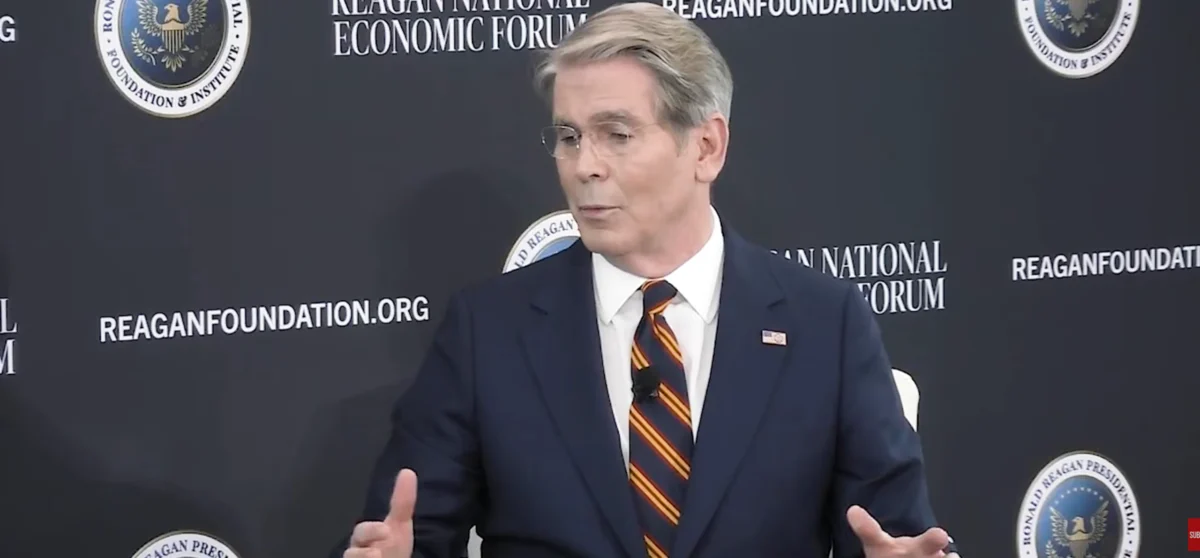
The United States has significantly escalated its financial pressure campaign against Iran, announcing the seizure of approximately $1 billion in Iranian cryptocurrency assets. Treasury Secretary Scott Bessent disclosed the substantial confiscation on Friday at the Reagan National Economic Forum, emphasizing that some of the wallet owners might not yet be aware their funds have been taken. This aggressive move is a cornerstone of "Operation Economic Fury," a comprehensive strategy launched in March 2025 designed to cripple Iran’s financial capabilities across multiple fronts.
"I believe that we have seized about a billion dollars of their crypto," Secretary Bessent stated unequivocally during his address. He elaborated on the direct nature of the action, asserting, "Just outright grabbed the wallets. Some of them may be typing in right now and not have realized that their wallet had been grabbed." This statement underscores the clandestine and immediate nature of modern financial warfare, where digital assets can be targeted and secured with speed and precision, leaving holders potentially oblivious until attempting to access their funds.
Operation Economic Fury: A Multifaceted Pressure Campaign
Operation Economic Fury, initiated in March 2025, represents a concerted effort by the U.S. government to exert maximum financial leverage against the Iranian regime. Beyond cryptocurrency seizures, the operation encompasses freezing traditional bank accounts and collaborating with European allies to confiscate properties linked to Iranian entities. This multi-pronged approach aims to sever the financial arteries sustaining the Iranian government and its regional proxies.
Secretary Bessent highlighted the swift impact of these measures. "I think between five and a half to six weeks of an incredibly successful military campaign and Operation Economic Fury, where we have really cut them off. They are at the end of their Tether now financially," he remarked, indicating a perceived rapid deterioration of Iran’s economic stability following the intensified pressure. The term "Tether" here, while a common idiom for being at one’s limit, also carries an ironic double meaning given the context of cryptocurrency, particularly USDT, a stablecoin often used in international transactions.
The Escalating Scale of Crypto Seizures
The newly disclosed $1 billion figure marks a dramatic increase in the volume of Iranian cryptocurrency assets seized by the U.S. Treasury. This figure is roughly double the $500 million in Iranian crypto assets the department announced seizing in late April, and considerably higher than the $344 million in seized crypto assets reported earlier in the month. This upward trajectory suggests either an increased effectiveness in identifying and seizing these assets, or a larger volume of Iranian funds being moved into or through cryptocurrencies, or likely a combination of both.
The ability to seize such substantial amounts of digital assets highlights the evolving capabilities of government agencies in tracking and confiscating funds on blockchain networks. While cryptocurrencies are often lauded for their decentralized and pseudonymous nature, sophisticated blockchain forensics, coupled with cooperation from regulated cryptocurrency exchanges and legal frameworks, can enable authorities to trace transactions, identify ultimate beneficiaries, and freeze or seize assets, especially when funds interact with centralized services. These seizures serve as a stark warning to entities attempting to circumvent international sanctions through digital currencies.
Iran’s Dire Economic State and Internal Instability
Secretary Bessent painted a grim picture of Iran’s current financial and social conditions, directly linking them to the success of the U.S. pressure campaign. He revealed that prior to the intervention, the regime had been siphoning an estimated $400 to $500 million per month, distributing the proceeds among approximately 80 key leaders. This alleged corruption and illicit enrichment at the highest levels of government underscore the motivations behind targeting the regime’s financial lifelines.
The broader impact on the Iranian populace appears severe. Bessent stated that inflation in Iran has likely surged past 200%, a hyperinflationary environment that devastates purchasing power and destabilizes daily life. As a consequence, food vouchers are reportedly being distributed to alleviate widespread hunger, a clear indicator of a humanitarian crisis unfolding. Furthermore, internet access has been restricted or shut down in various areas, a tactic often employed by authoritarian regimes to suppress dissent and control information flow during periods of unrest. The economic strain has also impacted the military, with 40 to 50% of Iranian troops reportedly not receiving their salaries, a situation that could lead to widespread disaffection and potential instability within the armed forces.
The Treasury Secretary also touched upon the complex political landscape within Iran, noting the challenges of engaging in negotiations with a "fractured leadership structure." This internal fragmentation, he indicated, was a direct consequence of recent U.S. and Israeli strikes targeting senior regime figures, further weakening the coherence and authority of the government. The combined effect of economic collapse, social unrest, and political disarray presents an unprecedented challenge to the stability and longevity of the current Iranian leadership.

Historical Context of US-Iran Sanctions and Geopolitics
The current "Operation Economic Fury" is not an isolated event but rather the latest chapter in a long and often contentious history of U.S.-Iran relations, heavily characterized by sanctions. Following the 1979 Iranian Revolution, the U.S. imposed a series of sanctions, which have intensified and evolved over decades, particularly concerning Iran’s nuclear program and its support for regional proxy groups.
A significant shift occurred with the 2015 Joint Comprehensive Plan of Action (JCPOA), or Iran nuclear deal, which saw the lifting of many international sanctions in exchange for limitations on Iran’s nuclear activities. However, the U.S. withdrawal from the JCPOA in 2018 under the Trump administration led to the re-imposition and expansion of "maximum pressure" sanctions, aiming to force Iran back to the negotiating table for a more comprehensive deal. These sanctions severely impacted Iran’s oil exports, banking sector, and access to international finance, leading to significant economic contraction.
The current administration, while signaling a willingness to negotiate, has continued and in some areas intensified, the financial pressure. The use of "Operation Economic Fury" and targeted crypto seizures demonstrates an adaptation of these pressure tactics to the modern digital financial landscape. The stated goal remains to prevent Iran from developing nuclear weapons and to curb its destabilizing activities in the Middle East, including support for groups like Hezbollah and various militias in Iraq, Syria, and Yemen. The geopolitical stakes are high, with the stability of the entire region often hanging in the balance of U.S.-Iran tensions.
Iran’s Countermeasures: The Bitcoin-Powered "Hormuz Safe" Scheme
In response to crippling sanctions and limited access to traditional global financial systems, Iran has actively explored alternative methods for international trade and revenue generation, with cryptocurrency emerging as a potential solution. Cointelegraph previously reported on Iran’s consideration of a plan to monetize its control over the strategically vital Strait of Hormuz through a Bitcoin-based insurance model.
A state document, reportedly cited by Fars News Agency—an outlet closely affiliated with the Islamic Revolutionary Guard Corps—outlined a platform dubbed "Hormuz Safe." This proposed initiative would sell digital marine insurance, payable in Bitcoin and settled on the blockchain. The report suggested that such a scheme could generate over $10 billion in revenue annually for the country. The Strait of Hormuz is a crucial chokepoint through which approximately 20% of the world’s oil supply passes, making control over its security a significant leverage point.
In early April, a spokesperson for Iran’s Oil, Gas, and Petrochemical Products Exporters’ Union further elaborated on these plans, indicating that certain ships would be granted passage through the strait provided they paid a tariff of $1 per barrel of oil in Bitcoin. This move highlights Iran’s desperate need for foreign currency and its willingness to embrace decentralized digital currencies to bypass traditional financial sanctions and facilitate trade. However, the international legal viability and practical implementation of such a scheme, particularly given the ongoing U.S. financial offensive, remain highly questionable. International shipping laws and existing insurance frameworks are deeply entrenched, and a unilateral, Bitcoin-based system could face significant challenges regarding recognition, enforceability, and security.
Implications and the Evolving Nature of Financial Warfare
The U.S. seizure of $1 billion in Iranian crypto assets marks a significant development in the ongoing saga of financial warfare and sanctions evasion. It demonstrates the growing sophistication of state actors in leveraging blockchain analytics and legal instruments to counter illicit financial activities even within the seemingly anonymous world of cryptocurrency. For Iran, these seizures disrupt critical funding streams, further exacerbating its already dire economic situation and potentially limiting its ability to fund its military and regional proxies.
The incident also sends a powerful message to other state and non-state actors who might consider using cryptocurrencies to circumvent international sanctions. It underscores that while digital assets offer new avenues for transactions, they are not immune to state-level intervention, especially when those transactions touch upon regulated entities or can be traced through on-chain analysis. The ability to "just outright grab the wallets" signals a new frontier in financial enforcement, where digital assets held across borders can be targeted and seized.
Looking ahead, this development suggests a continued arms race between sanctions enforcers and evaders. As governments enhance their capabilities in blockchain forensics and digital asset seizure, those seeking to bypass sanctions will likely seek out even more decentralized or privacy-focused cryptocurrencies and transaction methods. This dynamic will undoubtedly shape the future of global financial regulation and the geopolitical landscape, particularly concerning rogue states and illicit networks. The effectiveness of Operation Economic Fury will be measured not only by the immediate financial impact on Iran but also by its long-term deterrent effect and its influence on the evolving strategies of financial statecraft. The ongoing economic and political turmoil in Iran, compounded by these aggressive financial maneuvers, ensures that the region will remain a flashpoint for international attention.