Nila Kartika Wati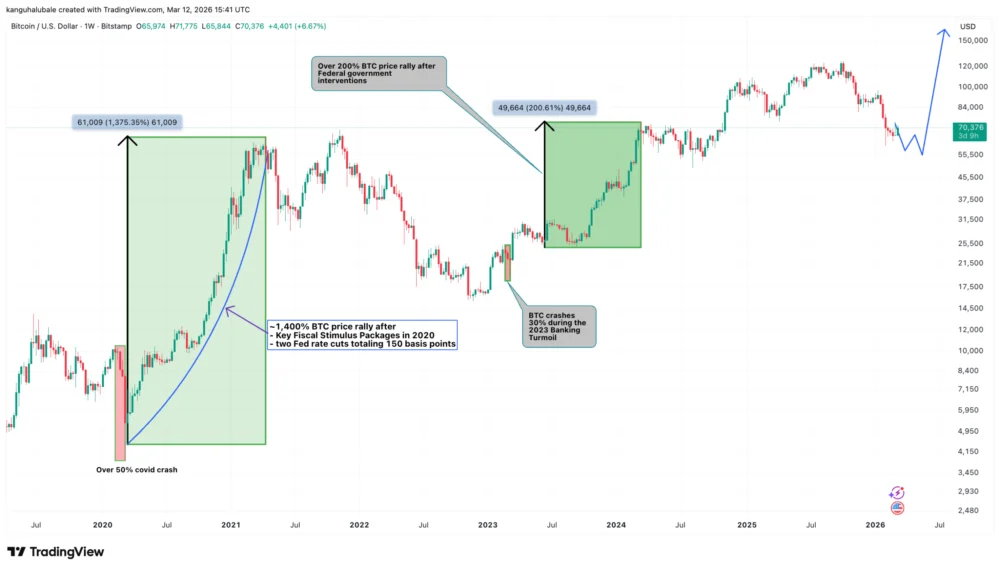
A growing chorus of analysts and financial institutions are sounding the alarm over a potential crisis brewing within the private credit market, a rapidly expanding sector of non-bank lending. Fueled by an unprecedented surge in redemptions and a troubling increase in defaults, there is a significant risk that the instability in this opaque, $2 trillion market could cascade, triggering a liquidity crunch that directly impacts highly liquid assets, including Bitcoin (BTC) and the wider cryptocurrency ecosystem. The concerns echo historical warnings of systemic risk, drawing parallels to the conditions preceding the 2008 global financial crisis.
The Proliferation of Private Credit: A Decade of Unfettered Growth
Over the past five years, the private credit sector has exploded in size, ballooning from a relatively modest $500 billion to an estimated $2 trillion in assets under management. This remarkable expansion has seen it emerge as a formidable rival to traditional bank lending, particularly for mid-market companies and leveraged buyouts that might find conventional financing routes more restrictive or less appealing. The primary drivers behind this rapid growth have been a prolonged period of ultra-low interest rates, which pushed investors to seek higher yields outside of traditional fixed-income markets, and an increased regulatory burden on banks following the 2008 financial crisis, which incentivized some lending activity to migrate to less regulated channels.
Private credit encompasses a diverse range of lending activities, including direct lending to companies, venture debt, distressed debt, and mezzanine financing. Unlike syndicated loans from banks, these loans are typically originated and held by a small group of institutional investors, such as pension funds, endowments, sovereign wealth funds, and wealthy individuals, often through private equity-style funds. The allure for investors lies in the promise of higher returns, often with floating interest rates that offer some protection against inflation, and direct relationships with borrowers. For borrowers, private credit offers speed, flexibility, and confidentiality, often without the stringent covenants associated with public markets.
However, this explosive growth has unfolded largely outside the purview of the rigorous regulatory frameworks that govern traditional banking. The lack of standardized disclosure, limited transparency into underlying assets, and complex, often illiquid structures have raised serious questions about the sector’s resilience during periods of economic stress. This opacity makes it challenging for regulators and market participants alike to accurately assess the true extent of leverage and interconnectedness within the system, creating fertile ground for systemic risk.
Mounting Warnings and Alarming Incidents
The International Monetary Fund (IMF) was among the first prominent institutions to flag these concerns publicly. In April 2024, the IMF issued a stark warning that the private credit sector "warranted closer watch," emphasizing that the "rapid growth of this opaque and highly interconnected segment of the financial system could heighten financial vulnerabilities given its limited oversight." This statement underscored a fundamental worry: a lack of visibility into risk accumulation and potential contagion pathways.

Recent events within the market itself have intensified these anxieties, painting a picture of cracks appearing in the foundations of this rapidly expanding edifice.
One of the most significant indicators of distress emerged when BlackRock, the world’s largest asset manager with over $10 trillion under management, reportedly limited withdrawals from its $26 billion flagship private credit fund. Such restrictions are typically imposed when a fund faces significant redemption requests but struggles to liquidate its underlying, often illiquid, assets quickly enough without fire-selling them at a loss. This move by a titan like BlackRock sent shivers through the market, signaling potential liquidity issues that could affect even the most sophisticated players.
Following closely, Blue Owl Capital, another major player in the private credit space, reportedly halted redemptions in some of its funds. This decision was reportedly exacerbated by woes within the software sector, a significant recipient of private credit funding, where disruptions from advancements in artificial intelligence (AI) are creating uncertainty and impacting profitability for some companies. The inability of investors to access their capital from these funds highlights the inherent illiquidity of private credit investments, which can become a critical vulnerability during periods of market stress or investor unease.
Further compounding the concerns, UBS, a global banking giant, issued a dire warning that default rates within the private credit market could escalate to as high as 15% in worst-case scenarios. Such a default rate would represent a significant blow to investor capital and could trigger a wave of write-downs across the sector, potentially leading to further redemption pressures and tightening of credit conditions.
The cascade of troubling news continued as Reuters reported that JPMorgan, one of the largest banks globally, restricted lending to its private credit funds following markdowns on certain assets. This suggests a more cautious stance from traditional banks regarding their exposure to the private credit space, potentially indicating a broader recognition of heightened risk. Moreover, other prominent asset managers, including Morgan Stanley and Cliffwater Private Credit Fund, have reportedly joined the growing list of entities experiencing distress, further illustrating the pervasive nature of the challenges.
Historical Echoes: A Pre-2008 Parallel?
Perhaps the most chilling warning came from "Bond King" Jeffrey Gundlach, the influential founder of DoubleLine Capital. Gundlach publicly stated that the private credit fund of funds market in 2026 bears a striking resemblance to the CDO-squared (collateralized debt obligation squared) market in early 2007, just prior to the onset of the 2008 global financial crisis. This comparison is deeply unsettling because CDO-squared instruments were highly complex, opaque financial products that bundled together tranches of other CDOs, making their underlying risks exceptionally difficult to assess. Their eventual collapse played a central role in the systemic breakdown of the financial system. Gundlach’s analogy suggests a concern that the complexity, interconnectedness, and lack of transparency in private credit funds could be masking significant, underestimated risks that, once exposed, could unravel rapidly.
Market analyst MartyParty echoed these concerns on social media, forecasting "financial repression is incoming." He attributed the looming problems to the sector’s explosive growth juxtaposed with increasing scrutiny over liquidity, especially during periods of investor outflows. MartyParty’s stark assessment, "Either the Fed injects liquidity, or we go into crisis," encapsulates the binary choice facing policymakers: intervene to stabilize the market or risk a broader financial contagion.

Adding to these domestic concerns are broader macroeconomic uncertainties and global geopolitical conflicts. These factors contribute to an environment of heightened risk aversion, potentially delaying any anticipated easing of monetary policy by the Federal Reserve. A prolonged period of higher interest rates, coupled with ongoing market volatility, places additional pressure on highly leveraged companies that rely on private credit, further exacerbating the risk of defaults and intensifying the private credit market’s woes. Futures markets, for instance, are currently pricing in less than a 1% chance of a Fed rate cut at the upcoming March 18 FOMC meeting, signaling market expectations of a continued restrictive monetary stance.
The Mechanics of a Spillover: A Liquidity Crunch for Bitcoin
While the immediate impact of withdrawal limitations and rising defaults is felt within the private credit market, the implications are far-reaching and extend directly to the crypto sphere. Crypto investor Paul Barron articulated this risk, stating that withdrawal limits are a "big deal for crypto." He explained, "When giants like Blackrock lock the gates on private funds, it signals a ‘liquidity crunch.’ Investors stuck in private credit might sell their ‘liquid’ assets (Bitcoin/ETH) to raise cash elsewhere."
This scenario describes a classic "flight to liquidity." When investors find their capital trapped in illiquid investments like private credit, and they need to meet redemption requests or cover other financial obligations, they naturally turn to assets that can be sold quickly and easily in public markets. Bitcoin, with its 24/7 trading availability, high liquidity on major exchanges, and global reach, often serves as one of the primary pressure valves for such forced selling. Investors needing immediate cash would prioritize divesting assets that offer instant conversion, even if it means selling at a discount.
Historical Precedents: Bitcoin’s Dual Reaction to Crises
Bitcoin’s price history offers compelling, albeit nuanced, precedents for its reaction to broader financial crises.
In March 2020, as the world grappled with the nascent COVID-19 pandemic and its economic fallout, Bitcoin experienced a dramatic and rapid sell-off, plummeting by approximately 50% in a matter of days. This sharp decline reflected the initial panic and the scramble for cash across all asset classes, with investors liquidating even their most promising holdings to shore up balance sheets or meet margin calls. However, this initial capitulation was quickly followed by an unprecedented recovery. The Federal Reserve, in an emergency response to avert systemic collapse, injected trillions of dollars of liquidity into the financial system and slashed interest rates to near zero. These aggressive monetary easing measures effectively devalued fiat currencies and fueled a massive risk-on rally. Bitcoin, perceived by many as a hedge against inflation and a beneficiary of increased money supply, surged from its March 2020 low of around $4,400 to a new all-time high of $69,000 by year-end, a staggering 1,400% rally.
A similar pattern, though on a smaller scale, played out during the banking turmoil of March 2023, which saw the collapse of Silicon Valley Bank and Signature Bank. Initially, fears of contagion led to a brief sell-off in Bitcoin as investors braced for wider financial instability. However, as the Federal Reserve and other regulators stepped in to stabilize the banking system and signaled a potential pause in aggressive interest rate hikes, Bitcoin quickly rebounded. It rallied more than 200% from its lows, demonstrating its capacity to act as both a short-term liquidity sink and a long-term beneficiary of monetary easing and perceived systemic weakness in traditional finance.

These historical episodes suggest a two-phase reaction for Bitcoin during financial crises stemming from traditional markets. The initial phase is characterized by a sharp sell-off due to forced liquidations and a universal flight to cash. The subsequent phase, however, often sees Bitcoin emerge stronger, particularly if government interventions involve significant liquidity injections or a loosening of monetary policy.
The Federal Reserve’s Role and Bitcoin’s Long-Term Outlook
The potential for a private credit breakdown ultimately leading to further expansion of the money supply by central banks is a critical aspect of Bitcoin’s long-term investment thesis. Faced with a choice between allowing a systemic financial crisis to unfold or intervening with liquidity, central banks historically tend to choose the latter, often at the cost of further currency debasement.
BitMEX co-founder Arthur Hayes, a prominent voice in the crypto space, has openly stated his intention to wait until the Federal Reserve demonstrably loosens its monetary policy before significantly increasing his Bitcoin holdings. He has famously predicted that under such conditions, the price of BTC could ascend to $250,000. This perspective aligns with the "liquidity pump" theory: when central banks print money or lower rates to stimulate the economy or avert crisis, a portion of that newly created liquidity often flows into scarce assets like Bitcoin, driving up its price.
Therefore, while a private credit crisis might initially trigger a sharp downturn in Bitcoin as investors seek to liquidate assets, the eventual response from central banks – likely involving aggressive monetary easing – could position Bitcoin for a significant long-term rally. The current confluence of a stressed private credit market, rising defaults, and the looming possibility of a liquidity crunch thus presents a complex and potentially volatile landscape for investors in both traditional and digital asset markets. The interconnectedness of the global financial system means that distress in one sector, particularly one as large and opaque as private credit, can no longer be contained in isolation.