admin
admin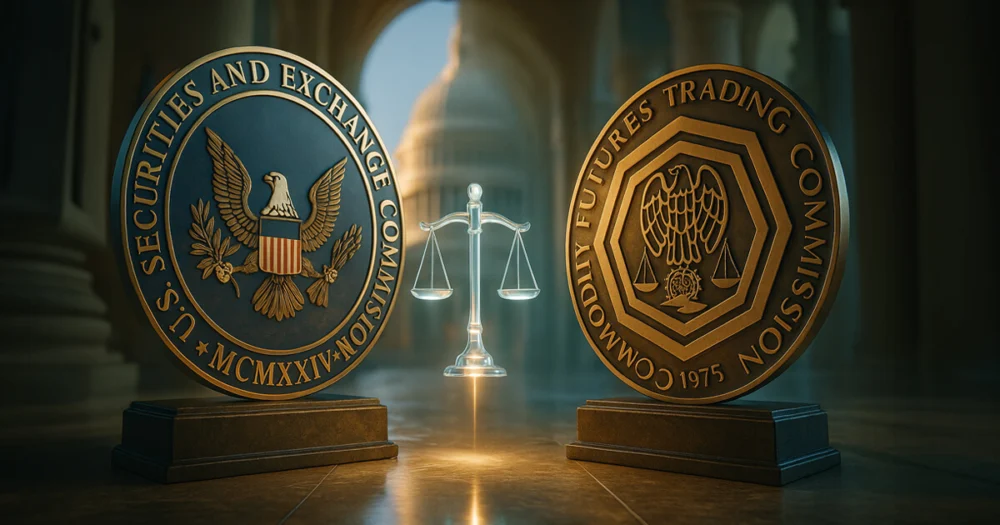
The landscape of digital asset regulation in the United States is at a critical juncture, with two competing Senate committee drafts emerging that could fundamentally alter the oversight responsibilities between the Securities and Exchange Commission (SEC) and the Commodity Futures Trading Commission (CFTC). This intense legislative maneuvering follows years of ambiguity and regulatory battles, particularly concerning the classification of cryptocurrencies and the extent of each agency’s authority. While the House of Representatives passed the Digital Asset Market Clarity Act of 2025 earlier this summer, aiming to provide a clearer framework, the Senate’s deliberative process has yielded two distinct proposals, each promising a path towards regulatory order but charting different jurisdictional maps.
These Senate drafts, released by the Agriculture Committee and the Banking Committee respectively, represent a significant potential reshaping of the U.S. digital asset market. The implications are far-reaching, affecting everything from the trading of Bitcoin spot markets to the disclosure requirements for Ethereum and the rulebooks governing cryptocurrency exchanges. For industry participants, understanding these proposals is not merely an academic exercise; it is crucial for navigating the evolving regulatory environment that will dictate custody practices, asset classification, and disclosure obligations, effectively redrawing the boundaries of U.S. digital asset markets.
The Agriculture Committee’s Vision: Empowering the CFTC
One of the most impactful proposals originates from the Senate Agriculture Committee, co-authored by Senators John Boozman and Cory Booker. This draft, titled the "Bipartisan Market Structure Discussion Draft," advocates for a substantial expansion of the CFTC’s purview, positioning it as the primary regulator for "digital commodities" and their associated spot markets. This approach aligns with the historical mandate of the CFTC, which oversees traditional commodities markets, and suggests a preference for treating many cryptocurrencies, particularly Bitcoin, as commodities rather than securities.
Under this framework, digital asset intermediaries, including exchanges, brokers, and dealers, would be required to register with the CFTC. This registration process would mirror the oversight applied to traditional commodity markets, necessitating adherence to new capital requirements, robust custody rules, and stringent operational standards. A key tenet of this draft is the emphasis on qualified custodians and the segregation of customer assets. This measure aims to prevent conflicts of interest, particularly when affiliates of regulated entities might engage in other aspects of the digital asset ecosystem. The proposed legislation also allows for joint rulemaking between the CFTC and the SEC in instances where entities or activities fall under the purview of both agencies, or where dual registration is deemed necessary. However, complex areas like decentralized finance (DeFi) are explicitly deferred for future deliberation, acknowledging the intricate challenges they present.
This Agriculture Committee draft builds upon the foundational principles of the House’s Clarity Act, seeking to bring the burgeoning U.S. spot markets for cryptocurrencies under a well-established regulatory umbrella. If enacted, U.S.-based Bitcoin platforms, for instance, would need to transition from their current operational models to become registered digital-commodity exchanges. This would entail meeting significantly enhanced capital reserves and custody protocols, alongside providing more comprehensive protections for retail investors.
Beyond direct market operations, this approach could foster greater data standardization across trading venues. Improved data sharing is a critical element for market surveillance, a feature particularly sought after by issuers of exchange-traded funds (ETFs) seeking to demonstrate market integrity. While ETFs themselves, as investment products, would likely remain under the SEC’s jurisdiction, the underlying spot markets they track could benefit from the enhanced transparency and oversight proposed by the CFTC.
The practical implications of shifting spot market oversight to the CFTC are profound. It would compel exchanges to adopt a regulatory mindset focused on commodity market logic, prioritizing clear reporting mechanisms and rigorous market surveillance over the disclosure-centric approach traditionally favored by securities regulators. This could lead to a more transparent and understandable market environment for analysts and traders, offering deeper insights into market quality, liquidity dynamics, and price discovery. While the CFTC’s authority would be significantly amplified, the SEC would retain its oversight over instruments that are clearly defined as securities and over crypto-related futures contracts, indicating a continuation of a dual-oversight regime for certain aspects of the digital asset market.
The Banking Committee’s Approach: Defining "Ancillary Assets" and SEC Authority
In parallel, the Senate Banking Committee has put forth its own legislative discussion draft, the "Responsible Financial Innovation Act," which offers a different perspective on regulating digital assets. This proposal focuses on assets that occupy a more ambiguous space, often straddling the line between commodities and securities. A central concept introduced by this draft is the definition of an "ancillary asset."
The Banking Committee’s draft defines an "ancillary asset" as a "fungible digital commodity" that is distributed through an arrangement that also constitutes an investment contract. This definition acknowledges that some digital assets may begin their lifecycle with characteristics of both a commodity and a security. Crucially, this framework would grant the SEC explicit authority to oversee these "ancillary assets." Issuers would be mandated to provide comprehensive disclosures concerning token distributions, the governance structures of the associated projects, and the inherent risks involved.
Furthermore, this proposal sets a clear timeline for regulatory action, allotting the SEC approximately two years to finalize rules that definitively articulate what constitutes an "investment contract" within the digital asset context. This addresses a long-standing criticism of the SEC’s approach, which has often relied on a case-by-case enforcement strategy rather than providing clear, codified definitions. The draft also introduces a novel "decentralization certification process." Under this mechanism, a digital asset project could potentially transition out of SEC securities treatment once its network control falls below specified thresholds, indicating a sufficient degree of decentralization.
This approach provides a structured pathway for digital assets linked to "active projects," such as Ethereum, to evolve. A token could initially be subject to SEC oversight, including disclosure requirements and investor protections, but could subsequently "graduate" to a different regulatory status as its governance becomes more distributed and less reliant on a central issuer or controlling group. This framework offers a much-needed clarity to a regulatory gray area that has troubled the industry since the early days of projects like The DAO. By compelling the SEC to formally define decentralization, the bill aims to move away from ad hoc enforcement and towards predictable regulatory standards.
Under the Banking Committee’s model, the practical distinctions between different types of digital assets would become more pronounced. Bitcoin, widely considered a decentralized digital commodity, would likely continue to be treated as such under the CFTC’s jurisdiction. However, tokens with strong ties to specific enterprises or development teams would likely remain within the SEC’s ancillary-asset regime until they can demonstrate sufficient decentralization through the proposed certification process. Centralized exchanges would find themselves operating under a dual regulatory framework. They would need to register as CFTC digital-commodity exchanges for their spot cryptocurrency trading activities but would simultaneously remain subject to SEC oversight for any listed securities, including potentially certain tokenized securities.
The cumulative effect of this dual registration requirement, coupled with potentially stricter capital requirements and the need for more transparent trading books, could significantly reshape the operational models of U.S. cryptocurrency platforms.
Navigating the Path Forward: Timelines, Coordination, and Uncertainty
A critical factor in the ongoing debate is the issue of timing and clarity. The Banking Committee’s draft, with its explicit deadlines for rulemaking, offers a more defined roadmap for regulatory action. In contrast, the Agriculture Committee’s proposal leaves several key questions regarding implementation and enforcement open for further discussion. Both drafts, however, are contingent on future coordination between the agencies and extensive public consultation periods before any of their provisions could take effect.
The legislative process is far from complete. While the House has already advanced its version of clarity legislation, the Senate proposals are still very much in the discussion phase. Opposition has surfaced within both Republican and Democratic parties, highlighting the deep divisions and differing philosophies on how to regulate this rapidly evolving sector. The two Senate drafts currently serve as vital working documents, offering a preview of how U.S. spot venues might evolve under a CFTC-led regime and how token projects could potentially transition away from securities classification. They also signal the potential need for exchanges to fortify internal firewalls to manage dual regulatory oversight.
While the titles of these bills promise clarity, their current forms suggest they are more accurately described as mapping out the next stage of an ongoing regulatory tug-of-war. In a market where an asset’s classification can profoundly impact its liquidity, custody arrangements, and compliance obligations, understanding which agency will ultimately draw the regulatory lines first could prove to be as strategically significant as any on-chain analytical signal. The path forward remains uncertain, but the direction of travel indicates a decisive push towards defining the roles of the SEC and CFTC in the digital asset economy.
Broader Implications for the Digital Asset Ecosystem
The potential bifurcation of regulatory authority between the SEC and CFTC carries significant implications for the entire digital asset ecosystem, from retail investors and institutional players to blockchain developers and innovative startups.
For Investors: A clearer regulatory framework, regardless of which agency takes the lead on specific assets, could foster greater investor confidence. The uncertainty surrounding the legal status of digital assets has been a significant barrier to broader adoption. If Bitcoin and similar assets are clearly defined as commodities, investors might find comfort in the CFTC’s established oversight mechanisms, which are geared towards preventing market manipulation and ensuring fair trading practices. Conversely, if certain tokens are consistently treated as securities, the SEC’s investor protection mandates, including disclosure requirements and anti-fraud provisions, would offer a different but equally important layer of security.
For Exchanges and Intermediaries: The prospect of dual registration and compliance with potentially conflicting rules presents a substantial operational and financial challenge. Exchanges that currently list a wide range of digital assets may need to restructure their compliance departments, invest in new technological infrastructure to segregate and manage assets according to different regulatory regimes, and potentially hire additional legal and compliance personnel. The cost of compliance could increase significantly, potentially impacting smaller exchanges disproportionately.
For Blockchain Projects and Developers: The Banking Committee’s proposed "ancillary asset" classification and decentralization certification process could offer a much-needed roadmap for projects seeking to navigate the securities laws. The ability for a token to "graduate" from securities status could incentivize projects to prioritize decentralization and robust governance structures. However, the process of proving decentralization and navigating the SEC’s requirements could still be complex and resource-intensive. For projects that are clearly more aligned with commodity characteristics, the CFTC’s framework might offer a more streamlined path to market.
For Market Innovation: The debate itself highlights the tension between fostering innovation and ensuring market integrity. A regulatory approach that is too rigid or overly cautious could stifle the development of new technologies and business models within the digital asset space. Conversely, a lack of clear rules can lead to investor harm and market instability, ultimately hindering long-term growth. The Senate’s efforts, though complex, represent an attempt to strike this balance, providing a more predictable environment for both innovation and investor protection.
International Ramifications: The U.S. regulatory approach often sets a precedent for other jurisdictions. A definitive ruling on the SEC vs. CFTC jurisdiction could influence how other countries classify and regulate digital assets, potentially leading to greater global regulatory convergence or divergence. As the U.S. grapples with these foundational questions, the outcomes of these legislative efforts will be closely watched by regulators and market participants worldwide.
The coming months will be critical as these Senate drafts move through the legislative process. The interplay between the House and Senate proposals, along with potential amendments and political negotiations, will ultimately determine the future of digital asset regulation in the United States. The desire for clarity is palpable, but the path to achieving it is proving to be intricate and contested, reflecting the dynamic and transformative nature of the digital asset revolution.