admin
admin
In a landmark legislative achievement that promises to reshape the landscape of digital asset ownership, the United Kingdom has officially recognized cryptocurrencies and other digital assets as a distinct category of personal property. The Digital Asset Act 2025, which received Royal Assent on December 2nd, marks a significant departure from previous legal interpretations, establishing a "third category" of property that acknowledges the unique nature of these intangible assets. This development is poised to resolve long-standing legal ambiguities and provide a more robust framework for digital asset transactions, investment, and dispute resolution across the UK and potentially on a global scale.
For years, the legal system has grappled with how to classify digital assets, which defy traditional property classifications. English law, a cornerstone of international commerce and finance, categorizes personal property into two main types: "things in possession" (tangible, physical objects) and "things in action" (intangible rights or claims that must be enforced through legal proceedings, such as debts or contractual entitlements). Cryptocurrencies, with their decentralized nature and reliance on private keys for control, fit neither category neatly. They are not physical objects one can hold, nor are they simple contractual IOUs.
This doctrinal mismatch created significant challenges. Lawyers and judges were forced to improvise, stretching existing legal doctrines designed for physical goods or traditional financial instruments to accommodate digital assets. While courts often treated tokens as property in practical scenarios, issuing freezing orders and proprietary injunctions, these decisions were often based on analogies that lacked a clear statutory foundation. This created a degree of uncertainty, particularly in complex financial operations such as lending, insolvency, and the assignment of digital assets as collateral.
The Digital Asset Act 2025 directly addresses this "fatal flaw" by explicitly stating that a digital object is not disqualified from being property simply because it does not fit the criteria of "things in possession" or "things in action." This legislative intervention provides a statutory anchor, moving beyond ad hoc judicial interpretations and offering a definitive legal basis for digital asset ownership.
A Decade in the Making: The Road to the Digital Asset Act 2025
The passage of the Digital Asset Act 2025 is not an overnight development but the culmination of a decade of academic research, legal consultation, and evolving case law. The Law Commission, a statutory body that reviews and recommends reforms to UK law, played a pivotal role in this process.
Around five years ago, the Law Commission began a deep dive into the legal status of digital assets. In its landmark report, the Commission proposed treating crypto assets as "data objects," a concept designed to capture assets whose existence and value are derived from consensus mechanisms and distributed ledger technology, rather than physical possession or traditional contractual agreements. This conceptual shift was critical, as it moved away from forcing digital assets into pre-existing legal boxes.
Following the Law Commission’s recommendations, judges began to reference the "data object" concept, but the absence of parliamentary legislation meant that each judgment still felt like a temporary fix. For individuals and entities seeking to recover stolen Bitcoin or secure hacked stablecoins, the process often relied on the court’s willingness to interpret and apply existing laws in novel ways.
The limitations of this approach became particularly evident in areas like lending and custody. Lenders require clear assurance that they can obtain a proprietary interest in collateral, an interest that will remain valid even in the event of the borrower’s insolvency. With crypto, courts struggled to provide this certainty, often relying on analogies to intangible choses in action, which carried their own set of ambiguities when applied to decentralized digital assets.
Similarly, insolvency practitioners faced significant hurdles when exchanges collapsed. Determining the exact nature of a customer’s "property" interest in their holdings – whether it was a contractual right, a trust claim, or something else entirely – became a complex and often contentious issue. This uncertainty directly impacted the ability to ring-fence customer assets and determine priority in bankruptcy proceedings, potentially leaving customers as unsecured creditors.
Disputes over control and ownership also highlighted the legal seams. Who truly "owns" a token: the individual holding the private key, the person who purchased it, or the entity that facilitates its exchange through a platform? While common law provided avenues for answering these questions, a definitive and universally applicable solution remained elusive, especially as new hybrid digital assets like Non-Fungible Tokens (NFTs) and wrapped tokens emerged, further stretching the definitions of existing property categories.
The "Third Category": Resolving Doctrinal Strain and Procedural Bottlenecks
The Digital Asset Act 2025’s establishment of a dedicated category for digital property is not about granting special rights to crypto assets or creating a bespoke regulatory regime. Instead, it’s about providing a clear and appropriate legal classification that allows existing legal principles to be applied effectively. By recognizing digital assets as property in their own right, the Act removes the need for forced analogies and interpretive gymnastics.
This has profound practical implications:
- Ownership and Control: The focus shifts from debating metaphors to interpreting the asset’s on-chain existence and functionality. Control becomes a more factual question of who possesses the ability to move the asset, rather than a complex negotiation over abstract rights.
- Insolvency Proceedings: The classification of tokens in insolvency becomes more predictable, which is crucial for individuals holding assets on UK-regulated exchanges. This clarity helps ensure that customer assets are properly segregated and protected.
- Recovery and Tracing: For UK citizens holding Bitcoin or Ethereum, the process of tracing, freezing, and recovering stolen or misappropriated coins is significantly smoother. Courts now have a clear statutory footing to treat these digital assets as proprietary assets, streamlining the legal machinery for victims.
- Collateralization: This is an area where the long-term payoff is expected to be most significant. Banks, funds, and prime brokers require legal certainty when accepting digital assets as security. The Act strengthens the legal basis for digital assets to function as eligible collateral in structured finance and secured lending, removing a major conceptual impediment to their wider use in financial markets.
- Custody Arrangements: For custodians holding tokens on behalf of clients, the precise nature of the client’s proprietary interest is critical for various operations, including redemptions, staking, and recovery after operational failures. The new framework allows client claims over digital assets to be classified as direct property interests, improving consumer transparency and reducing the likelihood of litigation following platform failures.
Global Reach and Regulatory Synergies
The UK’s legal system holds significant global influence. A substantial volume of international corporate contracts, fund structures, and custody arrangements are governed by English law, even for entities based outside the UK. Therefore, clarifications in UK property law, particularly concerning novel asset classes like digital assets, have far-reaching implications.
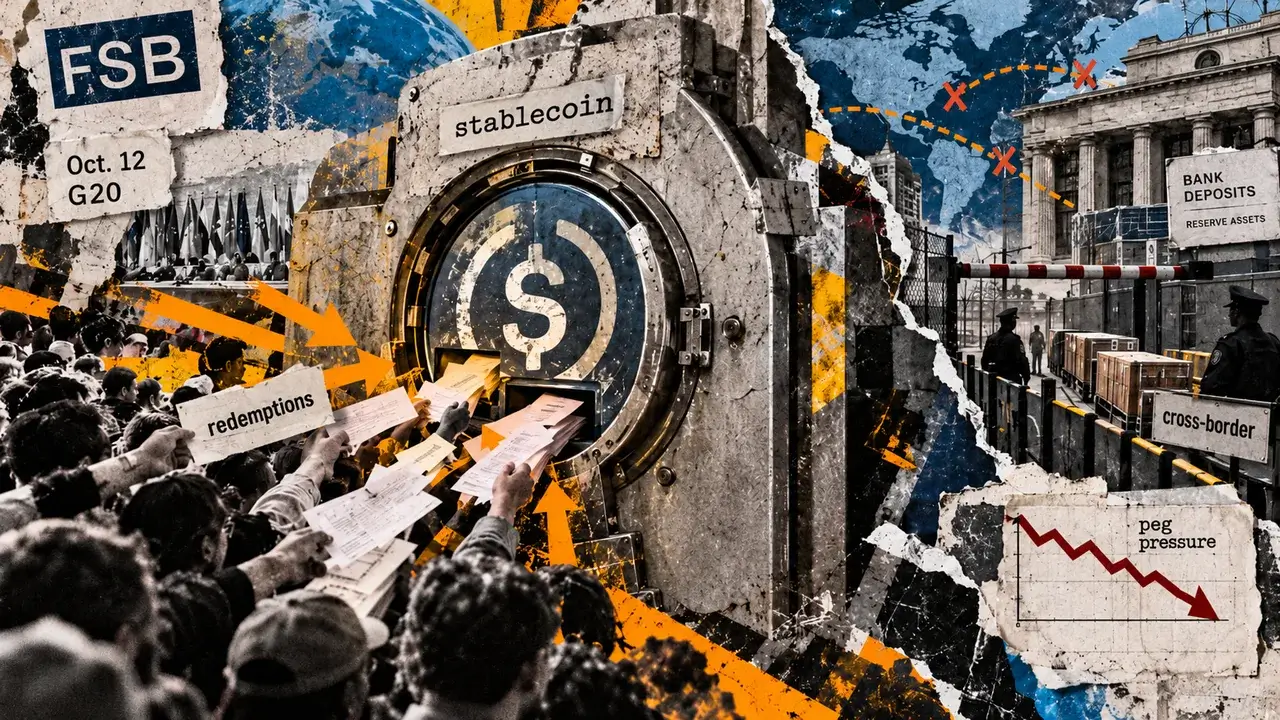
The timing of the Act’s passage is also notable, coinciding with the Bank of England’s ongoing consultation on a systemic stablecoin regime. The Act is expected to serve as a foundational element for the UK’s crypto market design over the next decade. A robust property law framework is essential for implementing effective regulations for stablecoins, ensuring they can be redeemed at par, operate within payment systems, and adhere to bank-like oversight. The Act provides the necessary legal ground for treating stablecoins as property that can be held, transferred, and recovered, supporting the Bank of England’s prudential standards and segregation requirements.
What the Act Does Not Do: Regulation vs. Property Rights
It is crucial to emphasize that the Digital Asset Act 2025 is not a regulatory statute. It does not introduce new tax rules, license custodians, rewrite Anti-Money Laundering (AML) obligations, or confer special status on any particular token. Its sole purpose is to address the conceptual mismatch that has plagued the legal treatment of digital assets.
The "heavy regulatory lifting" will continue to be undertaken by bodies such as the Financial Conduct Authority (FCA) and the Bank of England. These institutions are expected to issue further rules and guidance, particularly concerning the stablecoin regime, which is expected to solidify over the next 18 months. However, the property law foundation laid by the Act is now firmly in place, providing a stable platform for future regulatory developments.
A Clearer Path Forward for Citizens and Institutions
For average UK crypto users, the benefits of the Act may appear subtle initially but are substantial. If their coins are stolen, the legal recourse for tracing and recovery is more robust. If an exchange fails, the assessment of their holdings’ status is more straightforward. For those engaging with lending markets or collateral-backed products, the agreements governing these transactions will be grounded in more predictable legal rules.
The Act extends its reach to England, Wales, and Northern Ireland, providing a largely unified approach across the UK. While Scotland operates under its own distinct legal system, its courts have been moving in a similar intellectual direction, suggesting a broader convergence in approach across the United Kingdom.
When compared to other major jurisdictions, the UK’s Digital Asset Act 2025 stands out. The EU’s Markets in Crypto-Assets (MiCA) regulation, while comprehensive in its regulatory scope, does not delve into property categories. In the United States, the legal landscape remains a patchwork of state-level rules, such as UCC Article 12. The UK’s legislative clarity on digital property rights offers a distinct advantage in the Western world.
Conclusion: A Foundation for the Future
For nearly a decade, the crypto industry has often humorously referred to the need to "bring English law into the twenty-first century." With the Digital Asset Act 2025, Parliament has achieved precisely that by resolving a fundamental legal problem that could not be overcome through metaphorical interpretations alone.
The courts now possess the legal category they desperately needed. Regulators have a clear runway for developing systemic stablecoin policy. And individuals holding Bitcoin and Ethereum in the UK enter 2026 with demonstrably clearer and more robust property rights than they had at the beginning of the year.
The impact of this legislative change will unfold gradually, manifesting case by case, dispute by dispute. Whether it’s an individual recovering lost coins, an institution deploying digital assets as collateral, or a platform winding down after failure, the legal machinery in the UK is now better equipped to handle the complexities of the digital asset age. The Digital Asset Act 2025 represents a significant step forward, providing a crucial foundation for innovation and security in the evolving world of digital finance.