admin
admin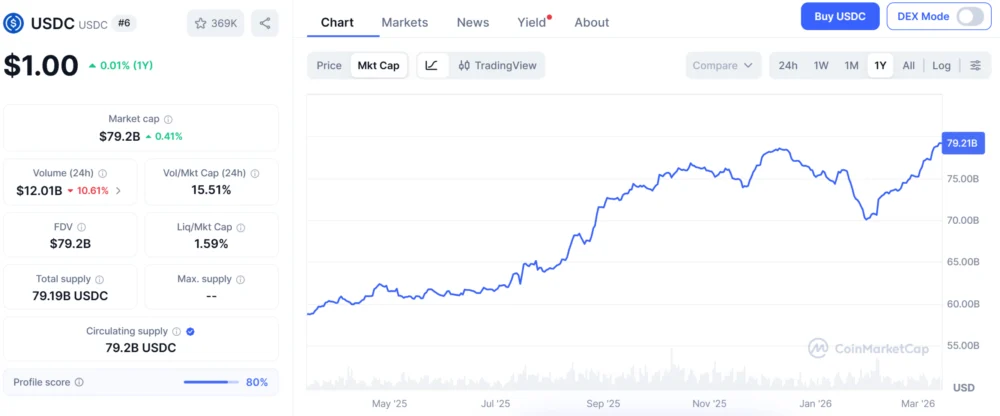
The landscape of the digital asset industry is currently undergoing a multifaceted transformation, characterized by significant technical proposals on the Ethereum network, a tightening legislative window in the United States, and a shifting liquidity tide in the Middle East. Ethereum co-founder Vitalik Buterin has officially introduced a proposal aimed at streamlining the technical requirements for running network nodes, a move that could fundamentally alter the decentralization profile of the world’s second-largest blockchain. Simultaneously, political analysts are sounding the alarm regarding the CLARITY Act, warning that the window for federal stablecoin and market structure regulation is rapidly closing. Amidst these developments, the USDC stablecoin is witnessing an unprecedented surge in market capitalization, nearing the $80 billion threshold as investors in the United Arab Emirates reportedly seek refuge from local real estate volatility.
Technical Evolution: Buterin’s Vision for Unified Ethereum Nodes
On Saturday, Vitalik Buterin published a significant proposal via a pull request that seeks to consolidate the backend architecture of Ethereum nodes. Under the current system, which was solidified following "The Merge" in September 2022, the Ethereum network operates through two distinct layers: the Execution Layer (EL) and the Consensus Layer (CL). The Execution Layer handles the processing of transactions and smart contracts, while the Consensus Layer manages the proof-of-stake mechanism, including the Beacon Chain, staking, and block finalization.
To participate in the network as a validator or even as a non-validating full node, users are currently required to run two separate software clients—one for each layer. This dual-client setup necessitates complex configuration, high-speed communication between the two programs (often via Engine API), and double the synchronization efforts. Buterin’s proposal aims to merge these backend programs into a unified code structure, effectively simplifying the setup process for node operators.
The Barriers to Decentralization
The primary motivation behind this proposal is the reduction of technical and hardware barriers. For years, the Ethereum community has debated the "centralization of infrastructure." Currently, many users and developers rely on third-party service providers like Infura or Alchemy because the technical overhead of running a self-sovereign node is too high for the average enthusiast.
High hardware requirements, including the need for large Solid State Drives (SSDs) and significant RAM, coupled with the complexity of maintaining two separate software environments, have led to a concentration of nodes in professional data centers. By unifying the node software, Buterin hopes to democratize the ability to run infrastructure, allowing "ordinary users" to contribute to the network’s security from home-based hardware. This initiative aligns with the broader Ethereum roadmap, specifically the stages known as "The Verge" and "The Purge," which focus on making node validation so light that it could eventually be performed on a mobile device or a simple laptop.

Implications for Validators and the Network
If implemented, the merger of the execution and consensus backends would reduce the "surface area" for bugs and synchronization errors. It would also decrease the latency between the two layers, potentially improving the overall efficiency of block production. For the thousands of independent validators currently securing billions of dollars in ETH, this change would represent the most significant architectural shift since the transition to Proof of Stake.
Legislative Gridlock: The Narrowing Path for the CLARITY Act
While Ethereum looks toward technical simplification, the United States’ regulatory environment is facing increasing complexity. Alex Thorn, the head of firmwide research at Galaxy Digital, has issued a stark warning regarding the CLARITY Act. This proposed legislation, which seeks to establish a comprehensive federal framework for stablecoins and digital asset market structures, is currently caught in a legislative bottleneck.
Thorn noted that if the CLARITY Act does not pass through the relevant committees by the end of April 2026, its chances of becoming law within the current legislative session are "extremely low." The urgency stems from the shrinking amount of "floor time" available in the Senate. As the legislative calendar progresses toward the middle of the year, political priorities often shift toward election-cycle optics and high-priority national security or budgetary bills.
The SAVE America Act and Priority Shifts
The primary obstacle to the CLARITY Act’s immediate progress appears to be the SAVE America Act. US Senate Majority Leader John Thune has indicated that the chamber will prioritize this legislation, which focuses on voter registration requirements and proof of citizenship. This shift in focus means that digital asset legislation, which requires significant bipartisan negotiation and technical review, is being pushed further down the agenda.
The delay is particularly concerning for the US crypto industry, which has long advocated for "regulatory clarity" to prevent the migration of capital and talent to more friendly jurisdictions like the European Union (under MiCA) or Hong Kong. The CLARITY Act is seen as a pivotal piece of the puzzle that would define which assets fall under the jurisdiction of the SEC versus the CFTC, and provide a legal pathway for stablecoin issuers like Circle and Paxos to operate with federal oversight.
Chronology of US Crypto Legislation Efforts
The path of the CLARITY Act follows a series of attempts by lawmakers to regulate the space:

- Early 2024: Initial drafting and bipartisan discussions regarding stablecoin reserves and consumer protection.
- Late 2025: The introduction of the formal bill in the House, aiming for a unified market structure.
- Q1 2026: Increasing pressure from the crypto lobby to move the bill to the Senate floor.
- Current Status: Senate leadership prioritizes voter-related legislation, leaving the CLARITY Act in a precarious "waiting room" that expires in late April.
Global Liquidity: USDC Growth and the UAE Connection
Amidst the technical and regulatory shifts in the West, the stablecoin market is seeing a massive influx of capital in the East. Circle’s USDC, the second-largest stablecoin by market cap, is currently nearing a record-breaking $80 billion valuation. According to data from CoinMarketCap, the circulating supply of USDC has surged to approximately $79.2 billion, eclipsing its previous peaks from late 2025.
This growth is notable because it suggests a pivot in investor preference. While Tether (USDT) remains the dominant stablecoin globally, USDC is often preferred by institutional investors and those seeking a more transparent, US-regulated alternative. The recent spike—expanding from $70 billion in February to nearly $80 billion in March—represents a 13% increase in just over a month.
Capital Flight from Dubai Real Estate
Market analysts have identified a surprising catalyst for this growth: the United Arab Emirates. Rami Al-Hashimi, a Dubai-based financial analyst, reports that the surge in USDC demand is directly linked to "capital flight" from the traditional UAE markets, specifically the real estate sector.
For years, Dubai has been a global hub for real estate investment, often seen as a safe haven for international wealth. However, recent turmoil and a cooling of the property market have prompted investors to seek more liquid assets. Over-the-counter (OTC) desks in Dubai, which facilitate large-scale trades between fiat and crypto, are reportedly struggling to keep up with the demand for USDC.
Investors are moving funds out of physical assets and into dollar-pegged stablecoins to preserve value and maintain the ability to move capital across borders instantly. The preference for USDC over local currency or other digital assets highlights the continued dominance of the US dollar as the world’s reserve currency, even when accessed through a blockchain.
Broader Impact and Market Implications
The convergence of these three stories—Ethereum’s node simplification, the US legislative struggle, and the surge in stablecoin liquidity—paints a picture of a maturing but volatile industry.

Infrastructure Resilience
If Buterin’s proposal is successful, the Ethereum network will become more resilient against censorship. By lowering the barrier to entry for node operators, the network reduces its dependence on centralized cloud providers like Amazon Web Services (AWS). This is not just a technical upgrade; it is a strategic defense mechanism against potential future regulatory pressures that might target large-scale infrastructure providers.
The Global Regulatory Race
The potential failure of the CLARITY Act in the US creates a vacuum that other nations are eager to fill. While the US remains bogged down in domestic political debates, jurisdictions like the UAE and Hong Kong are actively building frameworks to attract the very capital that is currently flowing into USDC. If the US fails to provide a legislative home for stablecoins by the end of 2026, it risks losing its influence over the next generation of financial technology.
Stablecoins as the Bridge
The growth of USDC to $80 billion proves that stablecoins are no longer just "trading pairs" for Bitcoin; they are essential tools for global wealth management. The situation in Dubai illustrates how crypto-assets are being used as a pragmatic solution for capital preservation in the face of local economic shifts. As stablecoins continue to grow, the pressure on lawmakers to provide a clear legal framework will only intensify.
In conclusion, the digital asset sector is moving toward a future defined by streamlined technology and massive liquidity, even as its regulatory foundations remain shaky. The next seven weeks will be critical for US policy, while the Ethereum community watches closely to see if Buterin’s vision of a "home-node" future can be realized. Meanwhile, the steady climb of USDC serves as a reminder that the global demand for digital dollars remains insatiable.