Layla Zulfa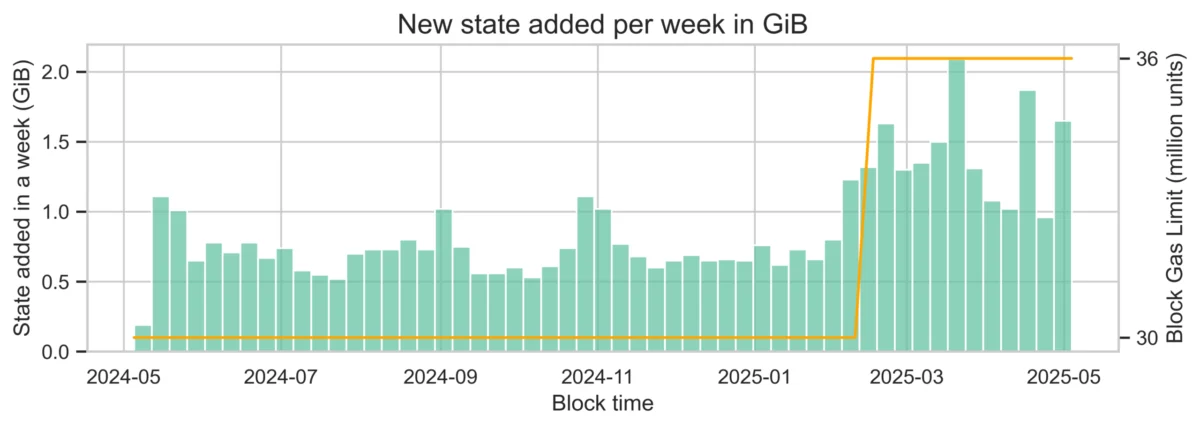
Ethereum, once a nascent experimental blockchain, has matured into a foundational pillar of global digital infrastructure. Each day, it orchestrates the transfer of billions of dollars in value, underpins thousands of decentralized applications, and anchors an expansive ecosystem of Layer 2 (L2) solutions. This intricate web of activity, from a simple token transfer to complex smart contract interactions, fundamentally relies on a single, often unseen, component: the network’s "state."
The Indispensable Core: Understanding Ethereum’s State
At its heart, Ethereum’s "state" can be conceptualized as the collective memory of the entire blockchain at any given moment. It encompasses every account’s balance, the code of every smart contract, and the data stored within those contracts. When a user checks their token balance, that information isn’t residing in their digital wallet; it is part of Ethereum’s global state, meticulously maintained and constantly updated across the network. This comprehensive record is the bedrock upon which all operations are built.
The state’s importance cannot be overstated. It dictates the validity of transactions, enables the execution of smart contracts, and ensures the integrity of the entire system. Without a consistent and accessible state, Layer 1 (L1) transactions would be impossible, Layer 2 networks could not settle their aggregated transactions securely, and decentralized applications (dApps) would cease to function. Consequently, any vulnerability or inefficiency related to state management—whether it becomes too expansive, overly centralized, or excessively difficult to access—introduces fragility, escalates operational costs, and undermines the very decentralization Ethereum strives to uphold.
Ethereum’s Scaling Journey and Its Unforeseen Consequences
For years, the Ethereum community has embarked on an ambitious journey to enhance the network’s scalability and throughput. Significant milestones include the development and adoption of Layer 2 scaling solutions, the implementation of EIP-4844 (Proto-Danksharding) to reduce data availability costs for rollups, strategic increases in the gas limit, and the ongoing work towards enshrined Proposer-Builder Separation (ePBS) to mitigate Maximal Extractable Value (MEV) centralization risks. Each of these advancements has successfully expanded Ethereum’s capacity to handle more transactions and support greater activity. However, this increased throughput comes with an inherent trade-off: an accelerating growth in the network’s state size, posing two primary challenges.
Challenge 1: The Relentless Expansion of State
The most immediate concern is the unidirectional nature of Ethereum’s state size: it perpetually expands. Every new account created, every piece of data written to a contract’s storage, and every new smart contract deployed adds permanent data that the network must maintain indefinitely. This continuous accumulation exacts tangible costs across several fronts:
- Storage Requirements: Nodes must allocate increasing amounts of disk space to store the full history of the state. As of recent measurements, a full archival node can require several terabytes of storage, a figure that continues to climb.
- Input/Output (I/O) Operations: Accessing and updating the state becomes more demanding, leading to slower transaction processing and block validation. This translates into higher hardware specifications for node operators, increasing operational expenditures.
- Bandwidth Consumption: Syncing new nodes or verifying state changes requires substantial network bandwidth. A new node joining the network might need to download hundreds of gigabytes, or even terabytes, of historical data, which can take days or weeks depending on connection speed and client implementation.
Data illustrates this escalating trend. As depicted in Figure 1 (based on EIP-8037 metrics), the volume of new state added weekly has shown a consistent upward trajectory over the past year. This growth is significantly amplified by increases in the network’s gas limit, which permits more write operations within each block, further accelerating state expansion.
This challenge is not unique to Ethereum; other blockchain networks have already grappled with similar issues. As state sizes balloon, the resources required to run a full node become prohibitive for the average individual. This economic barrier inevitably pushes the responsibility of maintaining and serving the full state into the hands of a dwindling number of large, well-resourced providers, such as professional node operators, centralized exchanges, and major infrastructure firms.
The implications for Ethereum’s core tenets—decentralization, censorship resistance, and credible neutrality—are profound. If only a small, specialized cadre of actors can afford to run full nodes and construct blocks end-to-end, the network risks becoming susceptible to coordinated censorship or manipulation. Fewer independent parties capable of validating and proposing blocks means a reduced ability to include transactions that might be disfavored by dominant players.
While proposals like FOCIL (Forced Transaction Inclusion Lists) and VOPS (Validity-Only Partial Statelessness) aim to safeguard censorship resistance in an environment with increasingly specialized block builders, their efficacy remains contingent on a robust ecosystem of nodes that can access, store, and serve the state without facing prohibitive costs. Therefore, controlling state growth is not merely an optimization; it is a fundamental prerequisite for preserving Ethereum’s decentralized ethos. The Stateless Consensus team, a group actively contributing to Ethereum’s research and development, actively monitors and stress-tests the network’s resilience to state bloat, with more detailed metrics and experimental data available at bloatnet.info.
Challenge 2: The Centralization Risk in a Stateless Paradigm

Even if Ethereum’s gas limit were to remain static, the network would eventually confront significant state growth challenges. This reality underscores the appeal of "statelessness" as a long-term scaling strategy. In a fully stateless model, validators would no longer be required to maintain the entire network state to validate blocks. Instead, they would only need to verify cryptographic proofs attesting to the validity of state transitions. This represents a major scalability breakthrough, enabling the network to meet the community’s demand for higher transaction throughput.
However, statelessness introduces a new, critical question: who will bear the responsibility of holding and serving the full state? While validators would be freed from this burden, the underlying data still needs to exist somewhere. In such a future, the vast majority of the network state would likely be stored and served by a concentrated group of entities: specialized block builders, large RPC (Remote Procedure Call) providers like Infura or Alchemy, and major exchanges that rely on robust state access. This effectively centralizes state storage and access.
This centralization carries several critical consequences:
- Increased Barrier for Builders: The specialized hardware, substantial storage capacity, and high-performance I/O required to maintain and serve the full state would raise the entry barrier for independent block builders. This could lead to further consolidation of power among a few large entities, impacting the diversity of block production.
- Vulnerability for L2 Users: A core security feature of Layer 2 solutions is the ability for users to "force-include" their transactions directly on L1, bypassing potential censorship or delays on the L2. This mechanism relies heavily on reliable and decentralized access to the rollup contract state on L1. If L1 state access becomes fragile, expensive, or highly centralized, these crucial safety valves become significantly harder for average users to utilize in practice, potentially compromising the security guarantees of L2s.
- Lack of Incentives for State Serving: While mechanisms like "snap sync" (a fast way for new nodes to synchronize with the current state) are often widely supported by default, serving full RPC requests—which often require deep access to the historical state for dApps, explorers, and wallets—is not. Without explicit incentives or a robust protocol-level framework, there is little motivation for numerous entities to store and serve the entire state, leading to a reliance on a few providers who might charge high fees or, worse, selectively censor access based on business or political considerations.
Charting a Path Forward: Strategic Solutions for State Management
Recognizing these formidable challenges, the Ethereum research and development community, including the Stateless Consensus team, is actively exploring several strategic directions to manage state growth and ensure the network’s long-term health and decentralization. These approaches aim to reduce state as a performance bottleneck, lower the cost of holding it, and make it easier to serve.
1. State Expiry: Pruning the Digital Garden
A significant portion of Ethereum’s state is rarely accessed. Recent analysis by the Stateless Consensus team revealed that approximately 80% of the network state has remained untouched for over a year. Despite this inactivity, all nodes are currently obligated to store this data indefinitely. State expiry proposes a mechanism to temporarily remove inactive state from the "active set" (the data readily available to all nodes), requiring a cryptographic proof to reintroduce it when needed. Two main categories are under consideration:
- Mark, Expire, Revive: This fine-grained approach, explored in discussions around EIP-4444: History Expiry, would allow the protocol to flag rarely used state entries as inactive after a certain period. While these inactive entries would no longer be part of the active state maintained by every node, they could be "revived" and brought back into the active set with a proof demonstrating their prior existence. This ensures frequently used contracts and balances remain easily accessible and inexpensive to interact with, while dormant state does not burden the entire network, yet remains retrievable. The additional metadata required to mark state entries, however, adds a layer of complexity.
- Multi-era Expiry: A more structured approach, multi-era expiry would divide the network state into distinct "eras" (e.g., one era per year). The current era would remain small and fully active, while older eras would be "frozen" from the perspective of live execution. New state would exclusively be written into the current era. To interact with or retrieve data from a previous era, users or applications would need to provide proofs validating its existence within that historical context. This design is conceptually simpler for protocol developers and pairs naturally with archiving strategies, but the revival proofs for older data tend to be more complex and larger.
Both "Mark, Expire, Revive" and "Multi-era Expiry" share the overarching goal of keeping the active state manageable by temporarily offloading inactive components. They differ in their granularities, the complexity of revival proofs, user experience implications, and the workload distributed between client software and broader infrastructure. Each design involves trade-offs that are being rigorously evaluated in forums like Ethereum Magicians and Ethresear.ch.
2. State Archive: Separating Hot from Cold
Complementary to state expiry, the concept of a "state archive" involves explicitly segregating the network’s state into "hot" and "cold" components. The hot set would comprise recent and frequently accessed data, which all nodes would need to store for fast access. The cold set would contain older, less frequently accessed data, which could be stored in a more distributed or specialized archiving layer, potentially by entities with lower latency requirements.
In a state archive design, even if the total historical state continues to grow, the performance-critical "hot set" can remain bounded in size. This ensures that the execution performance of a node—particularly the I/O costs associated with accessing active state—remains relatively stable over time, preventing degradation as the blockchain ages and accumulates more data. This approach offers a pragmatic solution to maintain operational efficiency without discarding historical data, supporting the integrity of the entire chain’s history for auditors and researchers.
3. Enhancing State Accessibility and Participation
Beyond managing the sheer volume of state, efforts are also directed at making it easier and more economically viable for a broader range of participants to hold and serve parts of the state. The goal is to reduce the barrier to entry for running useful infrastructure, even if not a full node.
- Partial Statelessness: This concept explores scenarios where nodes do not need to store the entire state.