admin
admin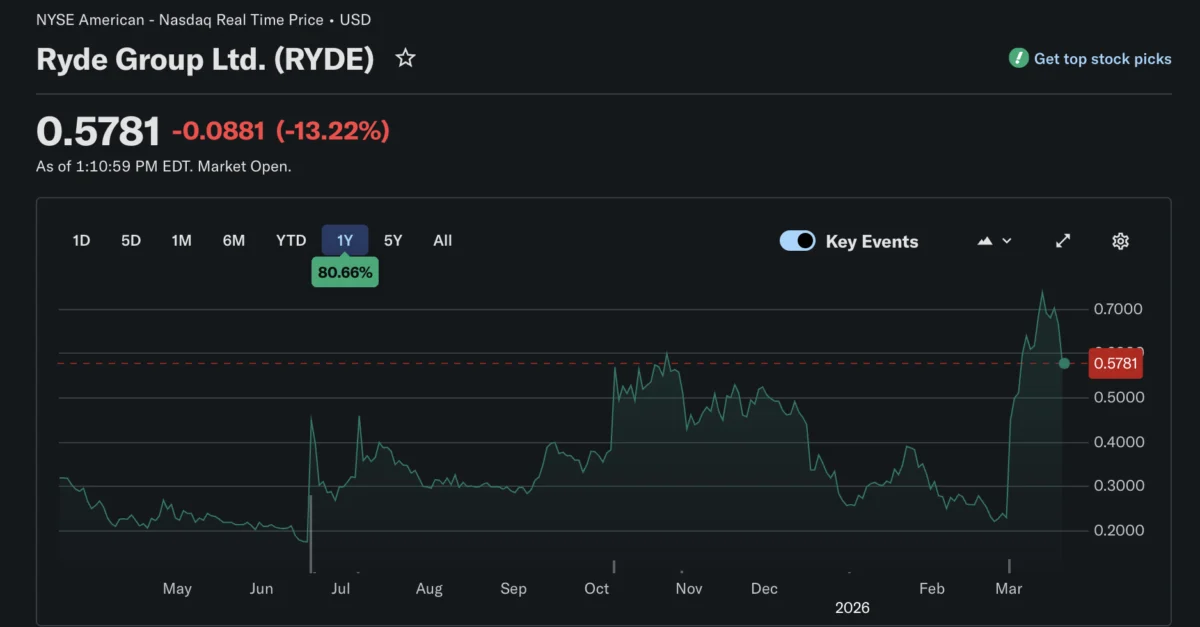
Ryde Group Ltd, a prominent Singapore-based ride-sharing and carpooling platform, has officially announced the adoption of a digital asset treasury strategy, marking a significant shift in its corporate financial management. The company, which operates a service model often compared to industry giants Uber and Lyft, revealed on Wednesday that it intends to allocate a portion of its corporate reserves into a diversified portfolio of cryptocurrencies, specifically targeting Bitcoin (BTC), Ether (ETH), and Solana (SOL). This move places Ryde among a growing but scrutinized cohort of publicly traded companies seeking to hedge against traditional fiat volatility by integrating decentralized digital assets into their balance sheets.
According to the official announcement, the specific allocations of these assets and the timing of the purchases will be overseen by a dedicated governance team within the organization. The company cited the "evolving macroeconomic environment" as the primary driver behind this strategic pivot. By diversifying into digital assets, Ryde aims to enhance the flexibility of its treasury operations, providing a potential buffer against inflationary pressures and the fluctuations of traditional currency markets. The decision follows a broader trend of corporate interest in "digital gold" and utility-based blockchain protocols, though it comes at a time of heightened volatility for both the crypto sector and the company’s own equity.
Strategic Framework and Governance Protocols
To manage the inherent risks associated with high-volatility assets like Bitcoin and Solana, Ryde Group has established a robust internal framework designed to ensure regulatory compliance and investment safety. The company’s digital assets will not be managed internally through "hot wallets" but will instead be held with a professional third-party custodian. This approach is a standard best practice for institutional investors, providing an additional layer of security against cyber threats and operational errors.
The administrative structure for this initiative involves two distinct bodies. First, an investment committee has been formed with the primary responsibility of portfolio management, including the tactical execution of trades and the rebalancing of holdings based on market conditions. Second, a separate risk management committee has been tasked with overseeing investment safety and ensuring that all activities remain in strict accordance with the prevailing regulatory requirements in the jurisdictions where Ryde operates. This dual-committee structure is intended to provide checks and balances, preventing overexposure and ensuring that the treasury’s primary goal remains the preservation and growth of corporate capital.
Market Reaction and Financial Performance
Following the announcement, Ryde’s shares, which are traded on the NYSE American exchange under the ticker RYDE, experienced a sharp downturn. During early afternoon trading on Thursday, the stock fell by more than 13%. This decline appeared to be a corrective movement following a period of intense growth; despite the single-day drop, the company’s shares maintained a year-to-date increase of over 122%. Market analysts suggest that while the long-term outlook for the company remains tied to its ride-sharing performance and regional expansion, the sudden pivot to a crypto-heavy treasury may have spooked conservative investors or triggered profit-taking from those who benefited from the stock’s earlier rally.
The volatility in Ryde’s stock price mirrors the broader turbulence seen in the "crypto-proxy" equity market—companies whose valuations are increasingly tied to the price of Bitcoin or other digital assets. While Ryde is primarily a transportation and logistics firm, its financial health will now be more closely correlated with the performance of the digital asset market, a factor that investors must now weigh alongside traditional metrics like ride volume, driver retention, and take-rates.

A History of Digital Integration
Ryde’s foray into the world of cryptocurrency is not a sudden whim but the latest step in a multi-year journey of digital integration. The company first signaled its interest in blockchain technology in 2020, when it began accepting Bitcoin as an in-app payment method for its users. This was a pioneering move in the Singaporean market, aimed at capturing a tech-savvy demographic and reducing transaction friction.
Over time, the platform expanded its support to include various altcoins, allowing users to convert their digital holdings into Ryde tokens via the integrated RydePay wallet. These tokens could then be used to pay for carpooling and ride-hailing services seamlessly. While the company has not explicitly clarified whether it continues to support direct crypto-to-service payments in the current version of its app, its historical commitment to the ecosystem provided the foundational expertise necessary to transition from a "crypto-accepting" merchant to a "crypto-holding" corporation.
The Macroeconomic Context and Industry Challenges
Ryde’s decision to adopt a crypto treasury strategy comes at a particularly challenging juncture for the digital asset industry. The sector has recently grappled with what analysts describe as a "multiple net asset value" (mNAV) collapse. In September 2025, a significant number of crypto-focused treasury companies saw their market valuations fall below the actual value of the digital assets they held on their balance sheets. This phenomenon suggested a lack of investor confidence in the management of these companies or a fear that the underlying assets could not be liquidated without further depressing prices.
Furthermore, data from February 2026 indicates a cooling of institutional interest in the space. Monthly inflows into crypto treasury companies slowed to their lowest levels since late 2024, totaling just $555 million for the month. This slowdown highlights a period of consolidation and caution as the initial euphoria surrounding corporate Bitcoin adoption gives way to the realities of regulatory pressure and market cycles.
Comparative Corporate Performance and Risk Factors
The risks associated with Ryde’s new strategy are underscored by the recent experiences of other publicly listed firms. For instance, GD Culture Group (GDC), a digital marketing and AI holding company, recently authorized the sale of portions of its Bitcoin reserves. The goal was not to exit the market entirely but to finance a share repurchase program, illustrating that crypto reserves are increasingly being used as liquid tools for corporate engineering rather than just static long-term investments.
More stark is the case of BitMine Immersion Technologies, an Ether-focused treasury company. As of early 2026, BitMine faced paper losses exceeding $7.5 billion. These losses stemmed from the price of Ether falling significantly below the company’s average acquisition price of approximately $3,753. For Ryde, the inclusion of Solana (SOL) alongside Bitcoin and Ether introduces an additional layer of specific risk. While SOL has shown immense growth and utility in the decentralized finance (DeFi) and NFT spaces, it has historically exhibited higher volatility than Bitcoin, making the role of Ryde’s risk management committee even more critical.
Regional Implications and Singapore’s Crypto Landscape
Ryde’s move is also significant within the context of Singapore’s evolving role as a global financial and technological hub. The Monetary Authority of Singapore (MAS) has maintained a "tough but friendly" stance toward digital assets, encouraging innovation in blockchain technology while implementing strict safeguards for retail investors and corporate entities.

By adopting a crypto treasury, Ryde positions itself as a forward-thinking player in the Southeast Asian tech scene. However, it must navigate a regulatory environment that is increasingly focused on the stability of stablecoins and the transparency of digital asset holdings. As one of the few Singaporean firms listed on a major U.S. exchange to adopt such a strategy, Ryde will likely serve as a test case for other regional companies considering similar moves.
Analysis of Potential Outcomes
The success of Ryde’s treasury pivot will likely depend on three key factors: the timing of their market entries, the performance of the Solana ecosystem, and the stability of their core ride-sharing business. If Bitcoin and Ether enter a sustained bull cycle in late 2026, Ryde’s balance sheet could see exponential growth, potentially offsetting operational costs and providing capital for aggressive expansion into neighboring markets like Malaysia or Indonesia.
Conversely, if the "mNAV collapse" continues to plague the sector, Ryde may find itself in a position where its stock price is punished by investors despite healthy growth in its ride-hailing metrics. The decision to include SOL is particularly noteworthy; it suggests that Ryde’s governance team views blockchain not just as a store of value (like BTC) but as a functional infrastructure (like SOL and ETH) that could eventually be integrated deeper into their logistics and payment protocols.
Chronology of Ryde Group’s Digital Evolution
- 2020: Ryde becomes one of the first ride-sharing platforms in Singapore to accept Bitcoin for in-app payments.
- 2021-2023: Expansion of the RydePay wallet and the introduction of Ryde tokens to facilitate the conversion of various cryptocurrencies for transport services.
- March 2024: Ryde Group Ltd successfully lists on the NYSE American, raising capital for regional expansion.
- September 2025: The broader digital asset treasury sector faces an mNAV collapse, leading to a re-evaluation of corporate crypto holdings across the industry.
- February 2026: Institutional inflows into crypto treasuries hit a multi-year low of $555 million.
- Wednesday (Current): Ryde officially announces the adoption of a crypto treasury strategy involving BTC, ETH, and SOL.
- Thursday (Current): Ryde’s stock drops 13% as the market reacts to the news and broader macroeconomic shifts.
Conclusion and Future Outlook
Ryde Group’s transition to a digital asset treasury is a calculated gamble that reflects the shifting paradigms of corporate finance in the digital age. While the immediate market reaction has been characterized by a sharp sell-off, the company’s long-term trajectory will be defined by its ability to balance the high-reward potential of cryptocurrencies with the operational demands of a competitive ride-sharing market.
As the governance and risk committees begin their work, the eyes of both the transportation and financial sectors will be on Ryde. Whether this move proves to be a masterstroke of diversification or a cautionary tale of corporate volatility remains to be seen. For now, Ryde stands as a bold outlier, bucking the trend of institutional cooling and doubling down on the future of the decentralized economy.