Nila Kartika Wati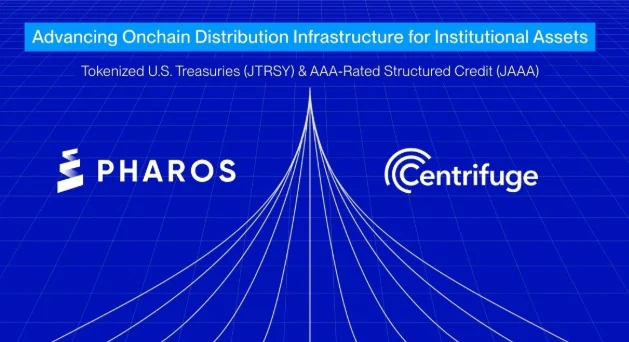
The tokenization of real-world assets (RWAs) is experiencing unprecedented growth, driven by its capacity to seamlessly integrate traditional finance (TradFi) with blockchain technology. This convergence allows major financial institutions, including banks and investment funds, to bring tangible assets like U.S. Treasuries and high-grade credit products onto the blockchain, effectively dismantling existing silos and mitigating the complexities of manual processes. A recent strategic partnership between Centrifuge, a pioneer in institutional asset tokenization, and Pharos, an innovative Layer 1 blockchain designed for "RealFi" (real-world finance on-chain), addresses a critical bottleneck: the post-tokenization lifecycle, specifically asset distribution and utilization.
The Genesis of a Strategic Alliance: Centrifuge and Pharos Unite
The announcement of the collaboration between Centrifuge and Pharos marks a significant step forward in realizing the full potential of tokenized RWAs. Centrifuge, with its established track record and robust infrastructure for tokenizing institutional-grade assets, has already facilitated over $300 million in assets on-chain. Pharos, a nascent yet potent Layer 1 blockchain, is purpose-built to support the unique demands of RealFi. Together, these entities are co-developing shared infrastructure aimed at facilitating the large-scale distribution and operationalization of tokenized U.S. Treasuries, such as the JTRSY token, and AAA-rated structured credit products like JAAA.
The critical challenge in the RWA tokenization landscape has historically been the transition from an asset being tokenized to its effective deployment and liquidity. While tokenization itself brings assets onto a blockchain, the subsequent steps—determining who has access, enabling trading, and facilitating their use within financial ecosystems—remain cumbersome. This often leads to tokenized assets becoming illiquid, languishing on fragmented platforms, particularly in regions outside the U.S. and Western Europe where regulatory frameworks, custody solutions, and onboarding processes for dollar-denominated products present considerable hurdles.
This partnership is designed to fundamentally alter this dynamic. Centrifuge’s expertise lies in its proven tokenization standards and existing network, ensuring that assets are accurately and securely represented on-chain. Pharos, in turn, is positioned as the high-performance distribution layer. Its Layer 1 blockchain architecture features deep-parallel execution capabilities, allowing for the simultaneous processing of a high volume of transactions without performance degradation. This modular design is also engineered to accommodate regulatory compliance and scalability requirements. The envisioned synergy is one where assets initially tokenized on Centrifuge can be seamlessly transferred to Pharos, unlocking liquidity, enabling pooling mechanisms, facilitating allocation, and ultimately, permitting their reuse within live decentralized finance (DeFi) systems. This integration aims to connect wallets, enterprise platforms, and execution venues, transforming static on-chain representations of assets into dynamic financial instruments.
Unlocking the Potential: Implications for Market Participants
The significance of this collaboration extends to both seasoned participants in the digital asset space and newcomers. While the concept of RWA tokenization has garnered considerable attention, with the market capitalization of tokenized RWAs exceeding $14 billion in the past year according to some analyses, the practical utility and accessibility have lagged behind. This partnership directly addresses this gap by providing the necessary infrastructure to bridge the tokenization process with tangible financial utility.
Bhaji Illuminati, CEO of Centrifuge, articulated this challenge, stating, "Tokenization alone doesn’t solve access and usability." This sentiment is echoed by Wish Wu, CEO of Pharos, who identifies infrastructure as the primary constraint, rather than a lack of demand for tokenized real-world assets.
Pharos: A Technological Foundation for RealFi
Pharos distinguishes itself through its native deep-parallel execution capabilities. Unlike traditional blockchains that process transactions sequentially, Pharos is engineered to handle multiple operations concurrently. This architectural advantage is crucial for managing the complex and high-frequency transactions often associated with institutional finance. The blockchain is built upon the Cosmos SDK, a framework that promotes interoperability and modularity, allowing for tailored solutions.

A core tenet of Pharos’s design is its emphasis on RealFi composability. This means that tokenized assets can interact directly with DeFi protocols without the need for complex bridging mechanisms. This native interoperability is essential for creating "asset-native ecosystems" where, for instance, tokenized U.S. Treasuries can be seamlessly integrated into yield-farming strategies or lending protocols.
The development team behind Pharos comprises former engineers from Ant Group, the fintech powerhouse associated with Alibaba. This background instills confidence in the platform’s ability to cater to the sophisticated needs of financial institutions. Pharos is designed to be inclusive, offering out-of-the-box compliance features, a critical factor for institutional adoption. The project has also garnered support from prominent venture capital firms, including Hack VC and Faction VC, indicating a strong belief in its market potential. The convergence of traditional finance capital with the speed and efficiency of blockchain technology is a key objective of the Pharos platform.
The implications for global markets are substantial. In regions like Latin America, where there is a significant demand for stable U.S. dollar yields but limited access, tokenized Treasuries could provide a gateway. These tokens could be pooled into DeFi yield-generating protocols or lending platforms, transcending geographical boundaries. Furthermore, the composable nature of these assets allows them to be combined with other decentralized assets, creating novel financial instruments akin to building blocks. This represents a shift towards operational on-chain finance, where institutions are not merely issuing tokens but actively participating in their circulation and utilization within dynamic financial ecosystems.
Contextualizing the Partnership within Crypto Cycles
The blockchain industry has navigated multiple cycles of rapid growth and subsequent market corrections. However, initiatives like the Centrifuge-Pharos partnership, focused on tangible real-world assets, appear to possess a degree of antifragility. Centrifuge has already established critical alliances with entities such as MakerDAO and Circle, underscoring its integration within the broader DeFi ecosystem. Pharos’s contribution in terms of execution capabilities complements these existing relationships.
While these developments are in their nascent stages, they lay the groundwork for the potential migration of trillions of dollars in traditional finance assets onto the blockchain. For individual investors and smaller institutions, this trend signifies a potential increase in liquidity within RWA markets and a reduction in entry barriers for accessing a wider array of financial products. As with any investment, thorough due diligence is essential. However, this collaboration could represent a subtle yet significant bullish indicator for the RWA sector, offering alternatives to established RWA investment vehicles.
Broader Implications for Institutional Adoption and Financial Innovation
The Centrifuge-Pharos alliance is emblematic of a broader trend towards institutionalizing the blockchain space. For decades, financial institutions have operated within highly regulated environments, often characterized by legacy systems and intricate compliance procedures. The tokenization of RWAs offers a pathway to modernize these operations, enhance efficiency, and unlock new revenue streams.
Key Considerations for the Future:
- Regulatory Clarity: While Pharos is designed with compliance in mind, the evolving regulatory landscape for digital assets remains a critical factor. Continued dialogue and collaboration with regulatory bodies will be essential for sustained growth.
- Interoperability Standards: As the RWA tokenization market matures, the establishment of industry-wide interoperability standards will be crucial to prevent fragmentation and ensure seamless asset movement across different platforms and blockchains.
- Security and Risk Management: Robust security protocols and sophisticated risk management frameworks will be paramount to safeguarding tokenized assets and maintaining investor confidence.
- Scalability and Performance: The ability of blockchains like Pharos to handle increasing transaction volumes without compromising speed or incurring prohibitive fees will be a key determinant of their long-term viability.
The partnership between Centrifuge and Pharos is not merely a technological integration; it represents a strategic move to address the operational realities of bringing institutional finance onto the blockchain. By focusing on the critical post-tokenization phase of distribution and utilization, they are paving the way for a more functional, accessible, and dynamic on-chain financial ecosystem. As more traditional assets find their way onto distributed ledgers, the innovation spurred by such collaborations will likely reshape the future of finance.
Disclaimer: The information presented in this article is intended for educational and informational purposes only. It does not constitute financial advice. Opinions and strategies shared are those of the authors and do not necessarily reflect the views of the publication or its affiliates. Investing in cryptocurrencies and other digital assets carries inherent risks. Investors should conduct their own thorough due diligence and consult with qualified financial advisors before making any investment decisions. Altcoin Buzz Pte Ltd. is not liable for any losses incurred from investments related to the information provided.