admin
admin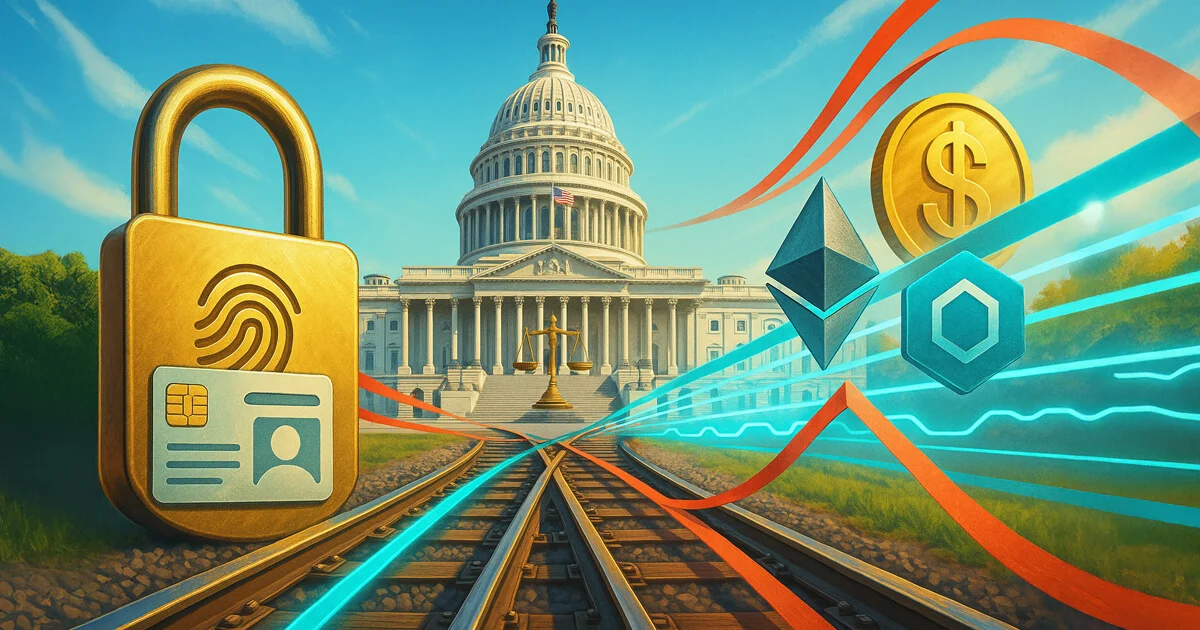
A confidential draft bill circulating among Senate Democrats proposing sweeping new oversight of Decentralized Finance (DeFi) has ignited a firestorm of concern within the cryptocurrency industry and among lawmakers. The proposed legislation, if enacted, would extend stringent Know-Your-Customer (KYC) and Anti-Money-Laundering (AML) duties to a wide array of DeFi interfaces, validators, and even node operators, potentially reshaping the landscape of digital asset finance in the United States and beyond.
This leaked framework, reportedly intended as a Democratic counterpoint to a market-structure bill advanced by the House of Representatives, has encountered internal friction, leading to stalled discussions within the Senate Banking Committee. However, the mere existence of such a proposal has sent ripples of apprehension through the market, with critics warning of a severe blow to innovation and a significant exodus of US liquidity to offshore jurisdictions.
Under the leaked proposal, all DeFi applications facilitating financial transactions would be mandated to implement front-end KYC controls. This could extend to user-facing elements such as browser-based wallets and liquidity provision interfaces, directly impacting how individuals interact with decentralized protocols. Furthermore, the draft language places new responsibilities on oracle operators, entities that provide real-world data to blockchains. These operators could potentially face enforcement actions if their price feeds are linked to protocols deemed "sanctioned," introducing a new layer of compliance risk. The Treasury Department would also be granted expanded authority to create a "restricted list" of protocols deemed too risky for US users, effectively blocking access to certain decentralized applications.
Senator Ruben Gallego has asserted that the Democrats’ bill represents a genuine effort to forge bipartisan consensus on the complex issue of crypto market structure. He stated, "Democrats have shown up ready to work… They asked for paper and substance, and we delivered." This sentiment, however, has been met with skepticism and strong opposition from various stakeholders who view the proposed regulations as overly restrictive and potentially detrimental to the burgeoning digital asset economy.
The Threat to US Liquidity: A Stark Reality
The potential ramifications of this proposed legislation on US liquidity are a central point of contention. Industry observers and market analysts point to existing data that suggests liquidity in the cryptocurrency market is already heavily concentrated outside of the United States. According to Newhedge data, US-based crypto trading venues currently account for less than 10% of global trading volume. In stark contrast, the top eight global platforms, predominantly offshore, are responsible for approximately 90% of global market depth.

This imbalance underscores a fundamental dynamic in the digital asset market: liquidity tends to gravitate towards jurisdictions with less stringent regulatory environments. The Senate proposal’s aggressive approach, mandating compliance at the protocol level, could exacerbate this trend, potentially triggering a significant flight of capital and trading activity away from the US.
If US users are compelled to interact exclusively through KYC-verified front ends, or if the Treasury gains the power to block access to specific protocols, traders seeking greater anonymity, flexibility, and lower transactional friction are likely to seek alternatives. This could manifest as a migration to decentralized bridges that circumvent traditional gateways or a greater reliance on foreign exchanges where such regulatory constraints are either looser or not enforced.
The long-term implications of such a migration are profound. Over time, this shift could solidify offshore platforms as dominant liquidity hubs, further entrenching the market share of already large non-US exchanges. This would inevitably lead to a fragmentation of trading activity across various jurisdictions, diminishing the United States’ central role in global crypto finance. Consequently, US liquidity pools would likely shrink, characterized by fewer active counterparties, wider bid-ask spreads, and a reduction in overall market depth. Such fragmentation would not only stifle innovation within the US but also create greater market inefficiencies and weaken the nation’s competitive standing in the global digital asset infrastructure.
Moreover, the practical implementation of these rules could significantly alter how American citizens engage with the rapidly expanding DeFi sector. A recent report by the DeFi Education Fund revealed that a substantial number of Americans express distrust in the traditional financial system. This disillusionment has fueled curiosity about the DeFi industry, which many perceive as offering greater control over personal assets and lower transaction fees. The proposed regulations, by introducing stringent compliance measures, could erect barriers to entry for these individuals, potentially pushing them away from a sector they see as a viable alternative to traditional finance.
Industry Backlash and Concerns Over Innovation
The immediate reaction from the cryptocurrency industry has been one of strong condemnation and alarm. Prominent figures and organizations have voiced severe criticism, warning that the proposed bill is not only unworkable but fundamentally antithetical to the principles of decentralization and innovation that define the DeFi space.

Jake Chervinsky, Chief Legal Officer at Variant Fund, articulated a widely held sentiment among industry stakeholders. He stated, "Many aspects of the proposal are fundamentally broken and unworkable. This is not a ‘first offer’ in a negotiation, it’s a list of demands that appear designed to kill the bill." Chervinsky further characterized the proposal as an "unprecedented and unconstitutional government takeover of an entire industry." He elaborated, "It’s not just anti-crypto, it’s anti-innovation, and a dangerous precedent for the entire tech sector."
Echoing these concerns, Zack Shapiro, Head of Policy at the Bitcoin Policy Institute, pointed out that the draft legislation appears to "stretch illicit-finance laws to target software and software developers rather than criminal conduct." He cautioned that this approach sets a dangerous precedent for censoring lawful private exchange, drawing parallels to past government actions against protocols like Tornado Cash and the developers of Samourai Wallet.
Brian Armstrong, CEO of Coinbase, expressed his strong opposition, asserting that the bill would "set innovation back years" and prevent the United States from achieving its ambition of becoming a global leader in crypto finance. He declared, "We absolutely won’t accept this. It’s a bad proposal, plain and simple, that would set innovation back, and prevent the US from becoming the crypto capital of the world."
Hayden Adams, the founder of Uniswap, a prominent decentralized exchange, also weighed in, stating that the language within the bill "would kill DeFi domestically." He underscored the need for a significant shift in approach from Democratic senators if meaningful progress on market structure reform is to be achieved.
A Timeline of Regulatory Scrutiny
The current legislative push follows a period of increasing scrutiny of the cryptocurrency sector by US regulators. While discussions around crypto regulation have been ongoing for years, the emergence of DeFi as a significant financial ecosystem has intensified calls for specific regulatory frameworks.

In early 2023, the Securities and Exchange Commission (SEC) and the Commodity Futures Trading Commission (CFTC) both asserted broad jurisdictional claims over digital assets, leading to a series of enforcement actions against various crypto firms. This regulatory uncertainty created a challenging environment for innovation and investment.
The House of Representatives has been actively working on its own market structure bill, aiming to provide clarity and a more defined regulatory path for the industry. The leaked Senate bill appears to be a Democratic response to these efforts, signaling a divergence in approach between the two chambers of Congress. The internal backlash suggests that achieving a unified legislative outcome may prove difficult.
The Treasury Department, under the Biden administration, has also been vocal about the risks associated with DeFi, particularly concerning illicit finance and sanctions evasion. The proposal to grant the Treasury authority to create a "restricted list" of protocols aligns with its stated objectives of enhancing financial stability and national security.
The current legislative process is still in its nascent stages. The leaked draft is not a finalized bill and is subject to negotiation and amendment. However, its contents reveal the direction of thought within certain Democratic circles regarding DeFi regulation. The coming months will be critical in determining whether this proposal evolves into actionable legislation or remains a contentious point of debate, potentially pushing the US further away from a clear and supportive regulatory environment for decentralized finance. The industry remains on high alert, anticipating further developments and advocating for a regulatory approach that fosters innovation while addressing legitimate concerns.