admin
admin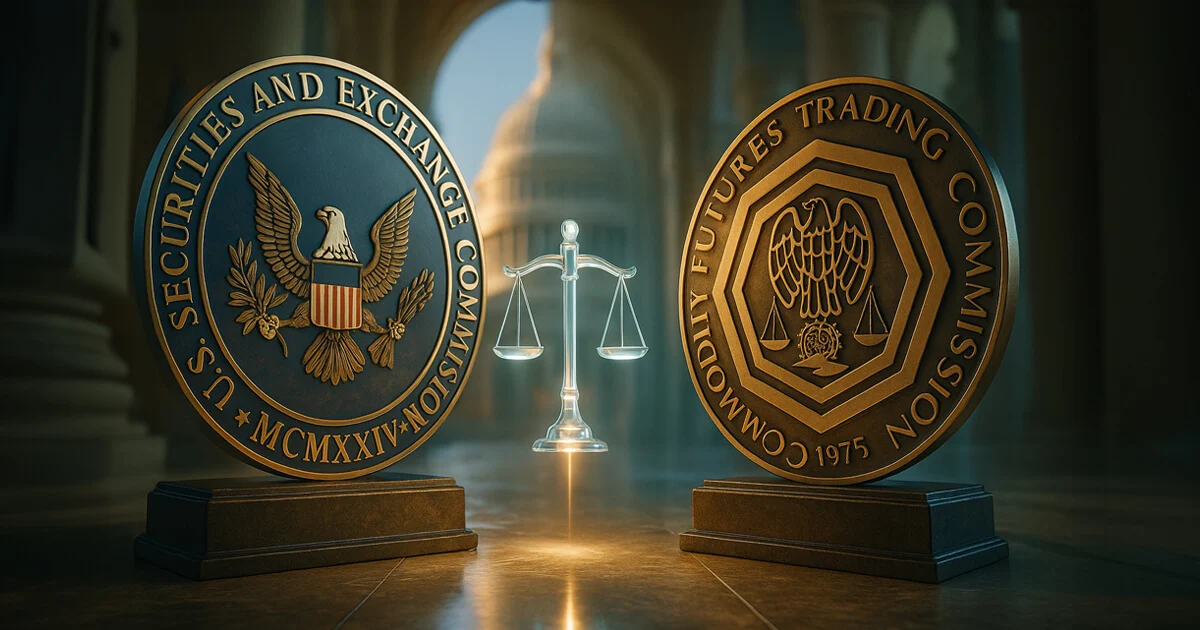
Washington’s persistent struggle to define regulatory oversight for the burgeoning digital asset market has reached a critical juncture, with competing legislative proposals emerging from the Senate that threaten to fundamentally redraw jurisdictional lines between the Securities and Exchange Commission (SEC) and the Commodity Futures Trading Commission (CFTC). The Digital Asset Market Clarity Act of 2025, having already cleared the House of Representatives this past summer, now faces a divided Senate, where two distinct discussion drafts have been released by key committees, each offering a vision for regulatory order that could reshape everything from Bitcoin spot markets to Ethereum disclosures and the operational rulebooks of cryptocurrency exchanges.
The core of the legislative debate revolves around classifying digital assets and assigning primary regulatory authority. For years, the lack of clear federal guidance has created an environment of uncertainty, leading to a patchwork of enforcement actions and stifling innovation. This legislative push represents a significant attempt to provide much-needed clarity, but the divergence in the Senate’s approach highlights the deep divisions on how best to achieve this. One draft, emanating from the Senate Agriculture Committee, leans towards expanding the CFTC’s purview, while the other, from the Senate Banking Committee, carves out a new lane for SEC authority over what it terms "ancillary assets," while also attempting to clarify the point at which a token might outgrow its classification as a security. The implications of these competing visions are profound for every participant in the cryptocurrency ecosystem, from individual investors to large institutional players and the platforms that facilitate trading and custody.
The Agriculture Committee’s Blueprint: Empowering the CFTC
A significant proposal has emerged from the Senate Agriculture Committee, spearheaded by Senators John Boozman and Cory Booker. This discussion draft, officially titled the "Bipartisan Market Structure Discussion Draft," aims to establish the CFTC as the primary regulator for "digital commodities" and their associated spot markets. The draft outlines a framework for the registration of exchanges, brokers, and dealers operating within this space, mirroring the existing oversight structure that the CFTC applies to traditional commodities markets.
Under this proposed legislation, intermediaries would be mandated to utilize qualified custodians for asset safekeeping and to segregate customer assets. This measure is designed to prevent conflicts of interest that could arise from affiliated entities operating within the same digital asset ecosystem. The draft also includes provisions for joint rulemaking between the CFTC and the SEC for entities that might fall under dual jurisdiction or require dual registration, acknowledging that certain complex areas, such as decentralized finance (DeFi), may require further deliberation and specialized regulatory approaches.
This initiative builds directly upon the principles established in the House’s Clarity Act, with a clear objective of bringing the spot markets for digital assets, particularly those akin to Bitcoin, under the regulatory umbrella of the CFTC. If enacted, U.S.-based Bitcoin platforms would be required to register as digital-commodity exchanges. This would necessitate adherence to new capital requirements, stringent custody rules, and the implementation of enhanced protections for retail investors. Furthermore, the draft suggests the potential for standardized data sharing across trading venues, a development that could significantly improve market surveillance capabilities. This enhanced transparency would be particularly beneficial for entities involved in the issuance of Exchange Traded Funds (ETFs), although ETFs themselves would likely remain under the SEC’s jurisdiction.
The economic implications of shifting spot market oversight to the CFTC are substantial. Exchanges would be compelled to operate under a framework that prioritizes clear reporting and robust market surveillance, moving away from the investor-disclosure-centric model often associated with securities regulation. This could lead to a more standardized and predictable market environment, providing analysts and traders with a clearer understanding of market quality, depth, and liquidity. Despite the expanded role envisioned for the CFTC, the SEC would continue to hold authority over digital assets classified as securities, as well as over cryptocurrency futures contracts. This suggests a continued, albeit potentially refined, dual-oversight regime for certain aspects of the digital asset market.

The Banking Committee’s Approach: Defining "Ancillary Assets" and Decentralization
In parallel, the Senate Banking Committee has put forth its own legislative discussion draft, known as the Responsible Financial Innovation Act. This proposal takes a different tack, focusing on digital assets that occupy a complex gray area, often exhibiting characteristics of both securities and commodities. A key innovation in this draft is the definition of an "ancillary asset." This term is defined as a "fungible digital commodity" that is distributed through an arrangement which also constitutes an investment contract.
Under this framework, the SEC would be explicitly empowered to oversee these "ancillary assets." Issuers would be required to provide comprehensive disclosures pertaining to token distributions, the governance structures of the associated projects, and any associated risks. Crucially, the draft grants the SEC approximately two years to finalize a formal rule defining what constitutes an "investment contract" within the digital asset context. This is a significant step, as it moves away from the current reliance on case-by-case enforcement actions. Additionally, the Banking Committee’s proposal introduces a "decentralization certification process." This process would allow a digital asset project to transition out of securities treatment once network control and governance fall below certain predefined thresholds, signifying a move towards genuine decentralization.
This proposed "ancillary asset" classification offers a potential pathway for tokens that are initially launched with centralized elements but aim to achieve decentralized status over time, such as Ethereum. A token could commence its lifecycle under SEC oversight, subject to disclosure requirements and investor protections. However, upon demonstrating sufficient decentralization of governance, it could then "graduate" to a different regulatory framework. This addresses a long-standing ambiguity in the industry, stemming from early regulatory pronouncements like the DAO Report, and compels the SEC to provide a written, articulated definition of decentralization rather than relying on evolving enforcement precedents.
The practical implications of the Banking Committee’s draft suggest a clearer distinction between different types of digital assets. Bitcoin, with its established decentralized network, would likely continue to be treated as a digital commodity under the CFTC. Tokens with strong ties to specific enterprises or centralized development teams would remain within the SEC’s "ancillary asset" regime until they can demonstrate significant decentralization. Centralized cryptocurrency exchanges would find themselves navigating a dual regulatory environment, potentially needing to register as CFTC digital-commodity exchanges for their spot crypto offerings while simultaneously adhering to SEC oversight for any listed securities. The cumulative effect of these requirements could necessitate U.S. platforms adopting dual registration protocols, enhancing capital reserves, and implementing more transparent trading practices.
Chronology of Legislative Efforts and Broader Context
The current Senate proposals represent the latest chapter in a protracted effort by U.S. lawmakers to establish a coherent regulatory framework for digital assets. The journey began years ago with initial discussions and has seen various legislative attempts, often spurred by significant market events, such as the rise of initial coin offerings (ICOs) and subsequent enforcement actions. The passage of the Digital Asset Market Clarity Act by the House of Representatives this summer marked a significant milestone, indicating a growing consensus on the need for legislative action.
However, the Senate’s response has been more nuanced and, until recently, less unified. The release of two distinct discussion drafts from powerful committees signifies a critical phase in this deliberative process. These drafts are not final legislation but rather proposals intended to elicit feedback and foster further negotiation. The differing approaches reflect fundamental disagreements on the nature of digital assets – whether they are primarily speculative investments akin to securities or commodities with underlying utility and market functionality.
The broader context for these legislative efforts is the global race to regulate cryptocurrency. Many jurisdictions are grappling with similar questions, and the U.S. approach will have significant international implications. A clear and well-defined regulatory framework could attract innovation and capital to the United States, while continued uncertainty could drive businesses and talent elsewhere. The industry has consistently called for clarity, with many proponents arguing that the current enforcement-led approach by the SEC has been overly aggressive and has failed to provide adequate guidance.

Analysis of Implications and Potential Future Scenarios
The divergence between the Agriculture and Banking Committee drafts presents a complex scenario for the future of digital asset regulation in the U.S.
Scenario 1: Agriculture Committee’s Draft Dominates
If the Agriculture Committee’s draft gains traction, the CFTC would assume a more prominent role in regulating spot markets for digital commodities like Bitcoin. This would likely lead to a more standardized, commodity-focused regulatory environment, emphasizing market integrity and surveillance. Exchanges would adapt to stricter registration and custody requirements. The SEC would retain its authority over tokens deemed securities, leading to a clearer, albeit still dual, oversight structure.
Scenario 2: Banking Committee’s Draft Prevails
Should the Banking Committee’s draft become the legislative blueprint, the focus would shift towards classifying assets and providing a clear pathway for decentralization. The "ancillary asset" framework would offer a more nuanced approach, acknowledging the evolving nature of digital projects. This could lead to greater clarity for innovative tokens and a more structured exit from securities regulation for decentralized networks. The SEC’s role would be significantly shaped by its rulemaking on investment contracts and decentralization.
Scenario 3: Hybrid Approach or Stalemate
It is also possible that a compromise could emerge, blending elements from both drafts. Lawmakers might seek to harmonize definitions and responsibilities, creating a more cohesive regulatory framework. Conversely, if consensus cannot be reached, the legislative process could stall, leaving the industry in a state of continued regulatory uncertainty. This would likely mean a continuation of the current enforcement-heavy approach, which many argue is detrimental to the industry’s growth.
Key Considerations and Unresolved Questions
Several critical factors will influence the outcome of this legislative debate:
- Timing and Deadlines: The Banking draft imposes specific deadlines for rulemaking, which could accelerate regulatory clarity. The Agriculture draft, while outlining responsibilities, leaves key questions open for future resolution. The overall timeline for any enacted legislation remains uncertain.
- Coordination and Consultation: Both drafts rely on future coordination rules and public consultations before their provisions would take effect. This suggests a lengthy implementation period, even if legislation is passed.
- Industry Reaction: The cryptocurrency industry has long advocated for legislative clarity. While many are eager for progress, specific provisions within either draft could face opposition depending on their impact on existing business models.
- Political Landscape: The current political climate and the upcoming election cycle could significantly influence the urgency and direction of legislative action. Bipartisan consensus, while present in the naming of the Agriculture draft, remains a crucial element for passage.
The two Senate drafts, while not yet definitive laws, serve as vital working documents for the digital asset ecosystem. They offer a glimpse into how U.S. spot markets might evolve under a potentially CFTC-led regime, and how token projects could navigate the complexities of securities classification. They also highlight the potential need for exchanges to re-evaluate and rebuild their internal compliance and operational structures. While these proposals may not deliver the immediate, all-encompassing clarity their titles might suggest, they undeniably map out the next critical phase in the ongoing regulatory tug-of-war in Washington. In a market where precise classification dictates liquidity, custody arrangements, and the very viability of compliance, understanding which agency ultimately draws the definitive lines could prove to be as strategically important as any on-chain analytics or market signals.