Nila Kartika Wati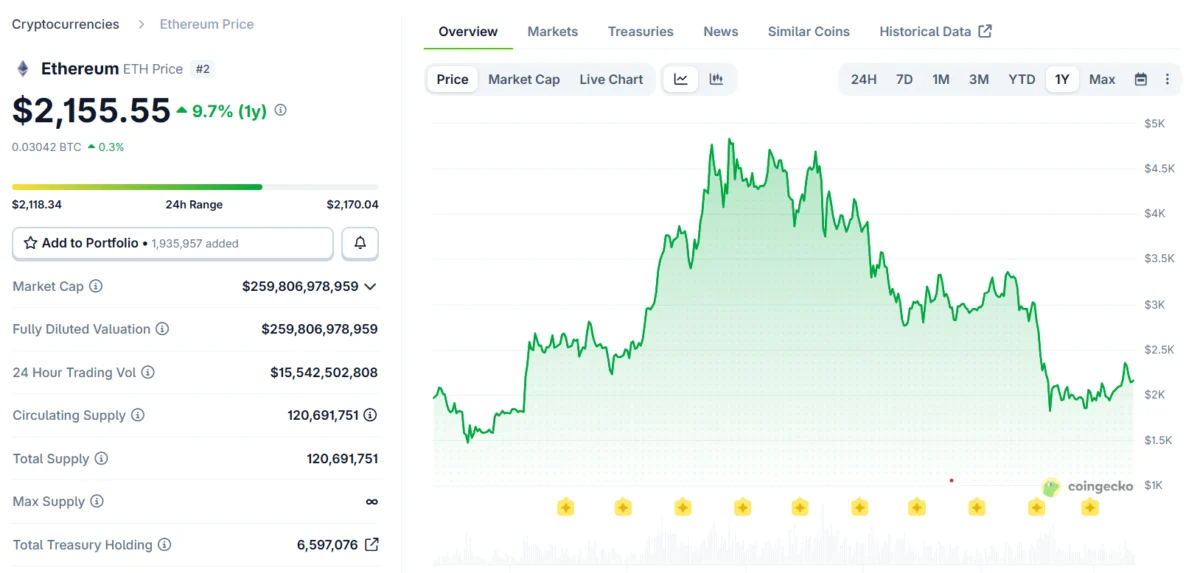
Today’s cryptocurrency landscape is marked by a confluence of significant developments spanning global regulatory shifts, major investor movements, and the continued expansion of institutional investment products. Brazil’s new Finance Minister has strategically placed crypto tax policy consultations on hiatus until after the October 2026 presidential election, a move designed to navigate complex political waters during an election cycle. Simultaneously, a prominent early Ethereum whale, identified as ‘thomasg.eth,’ who commanded a staggering $537 million in crypto assets during the market’s zenith in 2021, has initiated a substantial rebuilding of his Ether (ETH) holdings, injecting approximately $19.5 million into the asset even as U.S. spot Ether exchange-traded funds (ETFs) report consecutive days of net outflows. Adding another layer to the market’s evolving structure, crypto asset management giant Grayscale has formally submitted an S-1 registration statement to the Securities and Exchange Commission (SEC) for a spot Hyperliquid ETF, signaling a broadening appetite for specialized and innovative digital asset investment vehicles.
Brazil’s Crypto Tax Policy on Hold: A Pragmatic Political Maneuver
The decision by Brazil’s Finance Minister, Dario Durigan, to postpone public consultation on crypto tax policy until well after the October 2026 presidential election represents a calculated political move aimed at sidestepping potentially contentious policy debates during a critical election period. This hiatus means that any significant proposals or negotiations regarding new crypto tax policies are unlikely to be implemented until 2027 at the earliest, providing a temporary reprieve for the nation’s burgeoning digital asset sector.
Background and Context of Brazil’s Crypto Landscape
Brazil stands as a global powerhouse in cryptocurrency adoption, ranking number five worldwide according to a 2025 Chainalysis report. This impressive uptake is driven by a unique confluence of factors inherent to the South American nation. With a population exceeding 213 million people, many Brazilians have historically faced challenges with traditional banking systems, including high fees, limited access, and bureaucratic hurdles. Cryptocurrencies offer an alternative, providing easier access to financial services, facilitating remittances, and serving as a hedge against persistent inflation and economic volatility that has plagued the country’s fiat currency. The robust adoption has also fostered a vibrant local ecosystem of exchanges, service providers, and innovative blockchain projects.
In late 2022, Brazil demonstrated its commitment to integrating digital assets into its financial framework by enacting Law 14.478/2022, a comprehensive regulatory framework for virtual assets. This law recognized cryptocurrencies as investment assets and mandated licensing for virtual asset service providers, laying the groundwork for a more structured and secure market. However, specific taxation policies remained an area requiring further definition, with the government planning a public consultation to solicit feedback on how best to tax crypto transactions, holdings, and gains.
The Political Calculus Behind the Delay
Minister Durigan’s decision to shelve these consultations is widely interpreted as a pragmatic political strategy. Election years are often characterized by heightened political sensitivity, and governments typically seek to avoid introducing divisive issues that could alienate voters or draw sharp criticism from opposition parties. Implementing new tax policies, especially on a relatively new and often misunderstood asset class like cryptocurrency, can be complex and politically charged. Delaying the discussion allows the current administration to focus on other priorities and maintain a stable political environment leading up to the presidential election.
While no official statement was made regarding the specific political motivations, industry analysts and local observers suggest that the move reflects a desire to avoid creating new fiscal burdens or regulatory uncertainties that could impact a significant portion of the electorate engaged in crypto activities. For the estimated millions of Brazilians holding or trading cryptocurrencies, the absence of new tax obligations or a clear framework could be seen as a temporary relief, even if it prolongs long-term regulatory uncertainty.

Implications for Brazil’s Crypto Market
The immediate implication of this hiatus is a period of continued regulatory stability, albeit one without finalized tax specifics. For crypto businesses operating within Brazil, this provides a clearer runway for the next two and a half years, free from immediate changes to the tax regime. This could encourage further investment and innovation within the sector, as companies can plan their strategies without the imminent threat of new tax burdens.
For individual investors, the delay means that existing, more general tax rules (if any specific ones apply) will continue to govern crypto assets, avoiding the potential for new, more stringent levies. However, the long-term uncertainty persists. While the postponement offers breathing room, the eventual implementation of a comprehensive crypto tax policy remains inevitable. The nature of that policy—whether it will be favorable, neutral, or restrictive—will significantly shape the future growth trajectory of Brazil’s crypto economy post-2027. This period could also be used by the crypto industry to engage in proactive dialogue with policymakers, shaping future regulations in a more collaborative manner.
Ethereum Whale Resurgence: A Contrarian Bet Amid ETF Outflows
In a notable demonstration of contrarian investment strategy, an early Ethereum wallet, publicly identified as ‘thomasg.eth,’ has begun a significant accumulation of Ether (ETH), amassing approximately $19.5 million in recent purchases. This strategic rebuilding of his ETH stack comes at a time when U.S. spot Ether exchange-traded funds (ETFs) have experienced a series of net outflows, highlighting a divergence in market sentiment between large individual investors and institutional investment vehicles.
The Whale’s History and Current Accumulation
According to data compiled by Arkham Intelligence, thomasg.eth is a seasoned participant in the crypto market, having held an estimated $537 million in various crypto assets at the peak of the 2021 bull run. This historical holding underscores the wallet’s significant capital and its status as a ‘whale’—a term used to describe individuals or entities holding a substantial amount of a particular cryptocurrency, capable of influencing market dynamics with their trades.
Over the past week, thomasg.eth systematically built his $19.5 million ETH position across multiple Arkham-tracked wallets. This included direct spot ETH purchases, acquisitions of Wrapped Ether (WETH) – an ERC-20 token version of ETH that allows for greater interoperability within decentralized finance (DeFi) protocols – and deposits into Aave, a leading decentralized lending protocol. The accumulation culminated in a fresh $3 million purchase on March 20, signaling strong conviction in Ethereum’s long-term value proposition.
This aggressive accumulation phase by thomasg.eth occurs when Ether’s price is trading approximately 56% below its all-time high (ATH) of $4,946, which was recorded on August 24, 2025, according to CoinGecko data. This indicates a classic ‘buy the dip’ strategy, where a large investor believes the asset is undervalued relative to its potential and previous peaks, choosing to accumulate during a period of perceived market weakness.
Divergence from Spot ETH ETF Performance

The timing of thomasg.eth’s purchases is particularly intriguing, as it coincides with a period of net outflows from U.S. spot Ether ETFs. Data compiled by Farside Investors reveals a trend of declining institutional interest or profit-taking within these new investment vehicles:
- March 18: $55.7 million in net outflows
- March 19: $136.4 million in net outflows
- March 20: $42 million in net outflows
These outflows suggest that, at least temporarily, a segment of institutional or traditional finance investors who gained exposure to ETH via ETFs are either reducing their positions or rotating into other assets. This contrasts sharply with the actions of thomasg.eth, whose sustained accumulation indicates a strong belief in ETH’s immediate and long-term upside potential, irrespective of the sentiment reflected in the ETF market.
Analysis and Implications
The contrasting behaviors highlight the multifaceted nature of the crypto market and the diverse motivations of its participants. Whale accumulation, particularly by long-term holders with a history of significant market presence, is often seen as a bullish indicator. It suggests that experienced investors are identifying value and positioning themselves for future price appreciation, potentially absorbing selling pressure from other market segments.
Conversely, outflows from spot ETH ETFs, while potentially signaling short-term profit-taking or a re-evaluation of exposure by some institutional players, do not necessarily indicate a fundamental shift in Ethereum’s underlying value. It could reflect broader market volatility, specific institutional mandates, or rebalancing strategies. The fact that a prominent whale is actively accumulating during this period suggests that individual conviction remains high, perhaps signaling an upcoming reversal or continued strength in the asset’s fundamentals that traditional finance vehicles might be slower to react to.
For Ethereum, this whale activity could serve as a confidence booster, demonstrating that deep-pocketed investors view the current price levels as attractive entry points. It underscores the ongoing interest in Ethereum’s ecosystem, its utility in decentralized applications, and its role as a foundational layer for the broader Web3 economy. The interplay between these different investor cohorts—the seasoned whale and the institutional ETF market—will be a critical dynamic to watch as Ethereum navigates its next market cycle.
Grayscale Expands ETF Horizon with Hyperliquid Filing: A Dive into Specialized Crypto Products
Crypto asset manager Grayscale, a pioneer in bringing digital asset investments to mainstream finance, has once again pushed the boundaries of the exchange-traded fund (ETF) market by filing an S-1 registration statement with the Securities and Exchange Commission (SEC) for a spot Hyperliquid ETF. This move positions Grayscale alongside other forward-thinking firms like Bitwise and 21Shares, all vying to offer a product tied to the Hyperliquid perpetual futures protocol and its underlying blockchain.
Understanding the Grayscale HYPE ETF
The proposed Grayscale HYPE ETF, if approved by the SEC, would track the price movement of the Hyperliquid (HYPE) token and would trade under the ticker GHYP on the Nasdaq exchange. This filing, submitted on Friday (March 20, 2026), marks another significant step in the maturation of crypto investment products, moving beyond the established giants like Bitcoin and Ethereum to embrace more specialized protocols.

As per the S-1 filing, Grayscale has designated Coinbase as the custodian for the Hyperliquid ETF, a choice that reinforces the increasing reliance on established, regulated crypto platforms for securing digital assets within traditional financial products. Notably, the filing did not disclose a management fee for the proposed product, a detail often revealed closer to the potential launch date or during subsequent amendments.
Hyperliquid: A Deep Dive into the Protocol
Hyperliquid is an innovative perpetual futures protocol and blockchain designed to offer high-performance, decentralized trading for a wide array of assets. Its unique architecture enables extremely fast transaction speeds and low latency, making it particularly attractive for high-frequency traders and those seeking robust derivatives markets. Beyond traditional crypto assets, Hyperliquid is notable for its increasing integration by crypto platforms and its growing reliance by "TradFi" (traditional finance) entities, especially during hours when conventional markets are closed. The protocol offers 24/7 trading for tokenized real-world assets (RWAs) such as oil and gold, bridging the gap between traditional commodities and the decentralized finance (DeFi) ecosystem. This capability positions Hyperliquid as a key player in the evolving landscape of digital asset tokenization and cross-market liquidity.
The Expanding Crypto ETF Landscape
Grayscale’s filing for a Hyperliquid ETF is not an isolated event but rather part of a broader trend of diversification within the crypto ETF market. Following the successful launch of spot Bitcoin ETFs and the ongoing anticipation for spot Ethereum ETFs, asset managers are increasingly exploring niche, high-growth sectors within the crypto ecosystem. Firms like Bitwise and 21Shares have already initiated similar efforts for Hyperliquid, signaling a competitive race to capture institutional interest in this specific protocol. This competition is healthy, as it drives innovation, potentially lowers fees, and offers investors a wider range of choices for diversified crypto exposure.
Potential for Staking Rewards and Future Implications
An intriguing aspect highlighted in Grayscale’s S-1 filing is the consideration of incorporating staking rewards into its Hyperliquid ETF at a later date, provided certain conditions are met. If realized, this feature could represent a significant evolution in crypto ETF offerings. Staking allows token holders to earn rewards by participating in the network’s consensus mechanism, and integrating this into an ETF would enable investors to potentially generate yield on their holdings without directly managing the complexities of staking themselves. This could make the Hyperliquid ETF even more attractive to institutional investors seeking both capital appreciation and passive income from their digital asset investments.
The approval of a Hyperliquid ETF would have several profound implications. For Hyperliquid itself, it would significantly boost its visibility and legitimacy, potentially drawing substantial institutional capital into its ecosystem. For the broader crypto ETF market, it would signify a further step towards maturation and diversification, demonstrating that traditional finance is ready to embrace more specialized and high-utility protocols beyond just the largest cryptocurrencies. It would also set a precedent for future ETFs targeting other innovative DeFi protocols or RWA platforms, further blurring the lines between traditional and decentralized finance and expanding access to new investment opportunities for a wider range of investors.
In summary, the crypto market continues to demonstrate dynamic evolution, from political maneuvering impacting regulatory timelines in key adoption hubs like Brazil, to the contrasting investment strategies of individual whales versus institutional ETF flows, and the relentless innovation in financial products with Grayscale’s push into specialized protocol ETFs. These simultaneous developments underscore the growing complexity, maturity, and interconnectedness of the global digital asset ecosystem.