James Watt
The Lido DAO recently convened its Poolside Tokenholder Update call on February 26, offering a comprehensive review of its full-year results for 2025, an updated financial outlook amidst evolving market conditions, and strategic focus areas for the second quarter of 2026. The pivotal session, designed to foster transparency and direct communication with tokenholders, was spearheaded by key figures within the Lido ecosystem: Vasiliy Shapovalov, Executive Director at the Lido Labs Foundation; Isidoros Passadis, Chief of Staking at the Lido Ecosystem Foundation; and Kate Zueva, Deputy Chief Operating Officer of Lido Labs Foundation. The call provided crucial insights into the protocol’s resilience, strategic adaptations, and future growth trajectories, particularly in a dynamic cryptocurrency landscape. For those seeking the granular details of the discussion, a full recording of the session is available for public access.
Navigating Financial Headwinds: Revised 2026 Projections and Cost Discipline
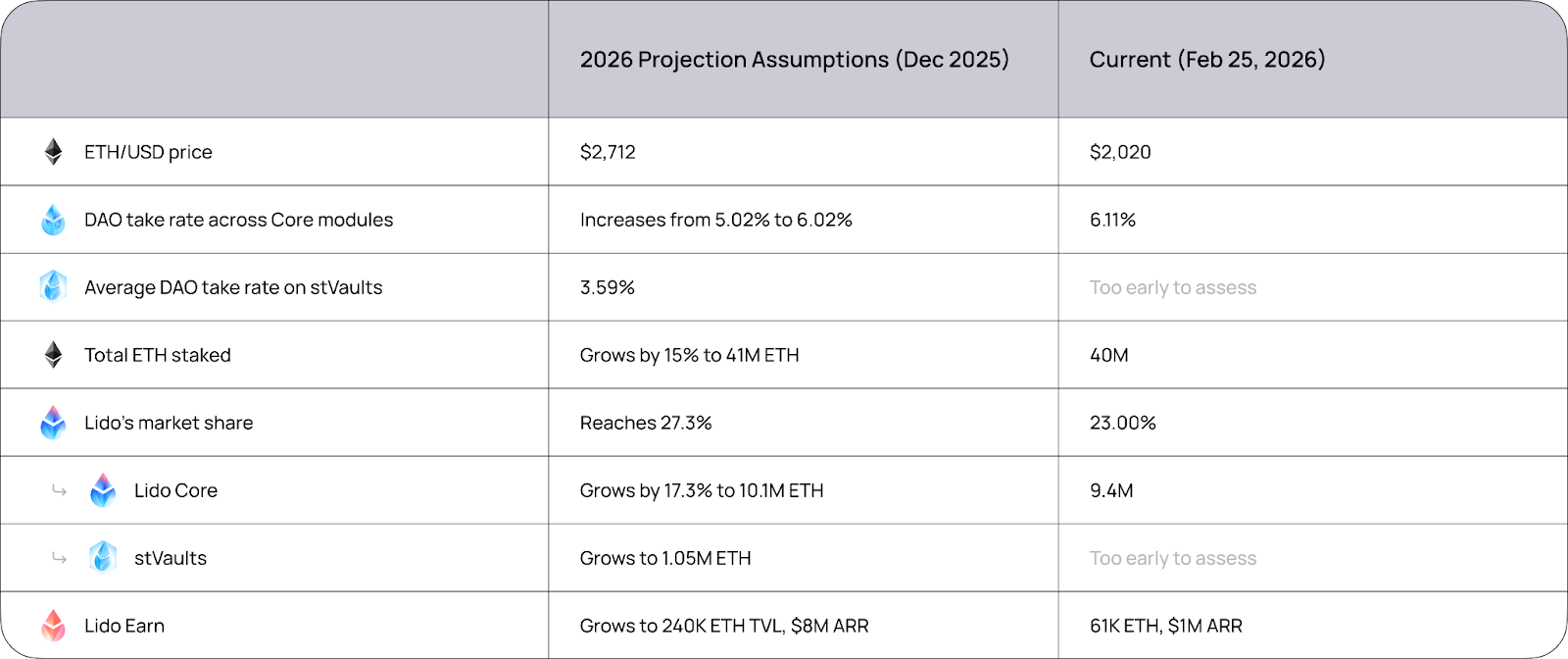
A significant portion of the update focused on Lido DAO’s financial health, specifically recalibrating its 2026 projections in light of recent shifts in the Ethereum (ETH) market. The initial 2026 EGG (Ecosystem Grant Group) grant request, a critical component of the DAO’s operational funding, had been formulated based on a projected average ETH price of $2,712. This assumption, while considered cautious when ETH was trading above $3,000 in late December, faced immediate pressure as the cryptocurrency market experienced a downturn, with ETH dropping to $2,020 by February 25.
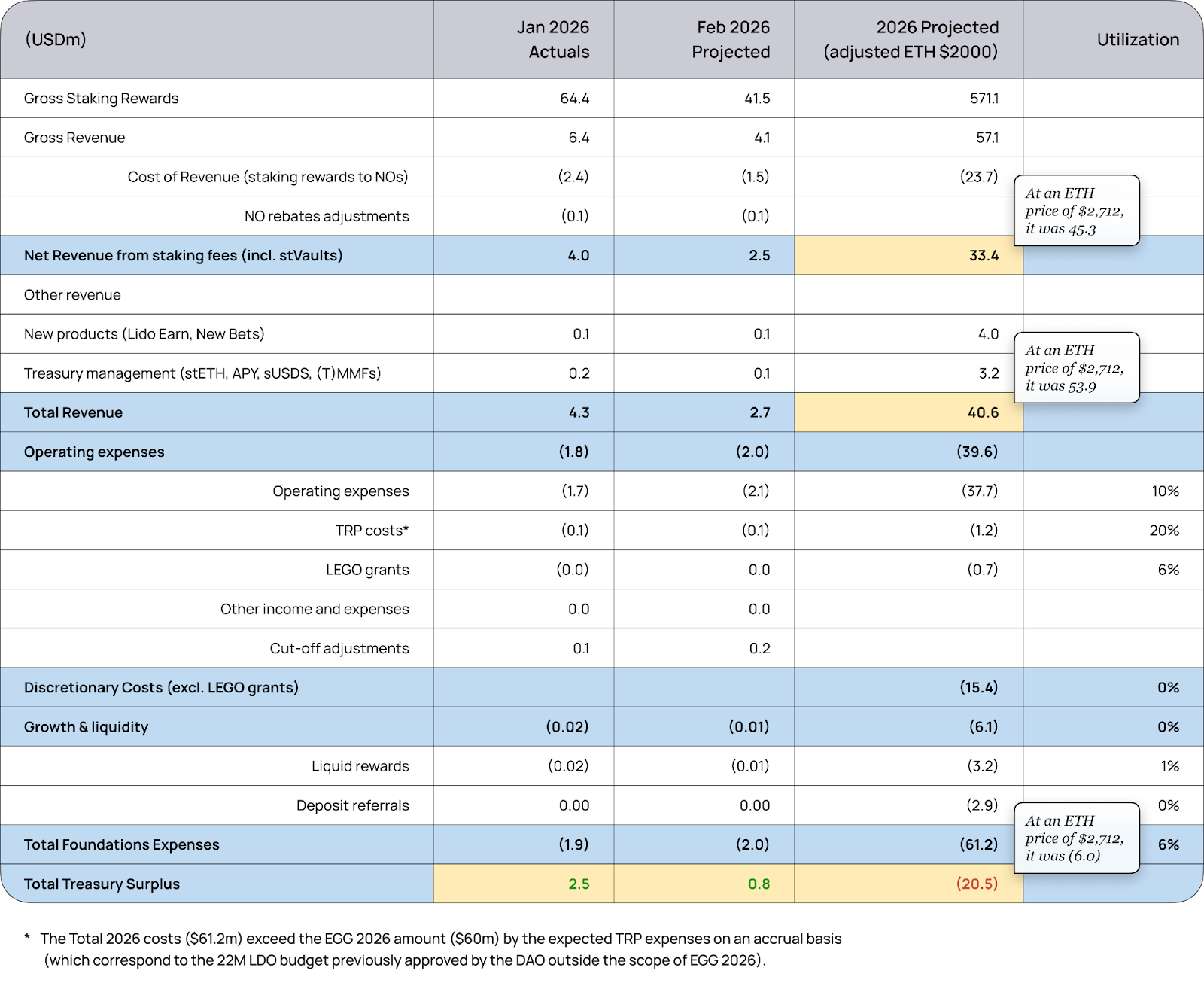
This price depreciation directly impacted the DAO’s anticipated revenue streams. Under the revised ETH valuation of approximately $2,000, the projected net revenue from staking fees, inclusive of stVaults, is expected to decrease from an initial $45.3 million to $33.4 million. Similarly, the total revenue forecast for 2026 saw a reduction from $53.9 million to $40.6 million. Had all originally planned spending been maintained under these new conditions, the DAO would have faced a projected treasury gap of approximately $20.5 million.
In response to this challenging financial outlook, the Lido leadership has emphasized and implemented stringent cost discipline across all operations. This proactive approach has been effective, with February’s actuals closing with a surplus, demonstrating the organization’s agility and commitment to fiscal prudence. The strategy involves a temporary freeze on most spending increases until market stability is restored, while critical growth initiatives and discretionary spending linked to revenue diversification continue to receive support. It is important to note that these 2026 projections serve as illustrative estimates, grounded in current market conditions, and do not constitute forecasts or guarantees of future performance. Actual outcomes may, and often do, differ based on the inherent volatility of the cryptocurrency market.
A Retrospective on 2025: Challenges, Achievements, and Enhanced Transparency
The year 2025 was characterized as a challenging period for the broader staking market, marked by several significant trends: notable ETH outflows from staking protocols, compression of Annual Percentage Rates (APR), and a palpable shift in overall staking demand. Despite these headwinds, Lido DAO demonstrated considerable resilience and strategic adaptability.
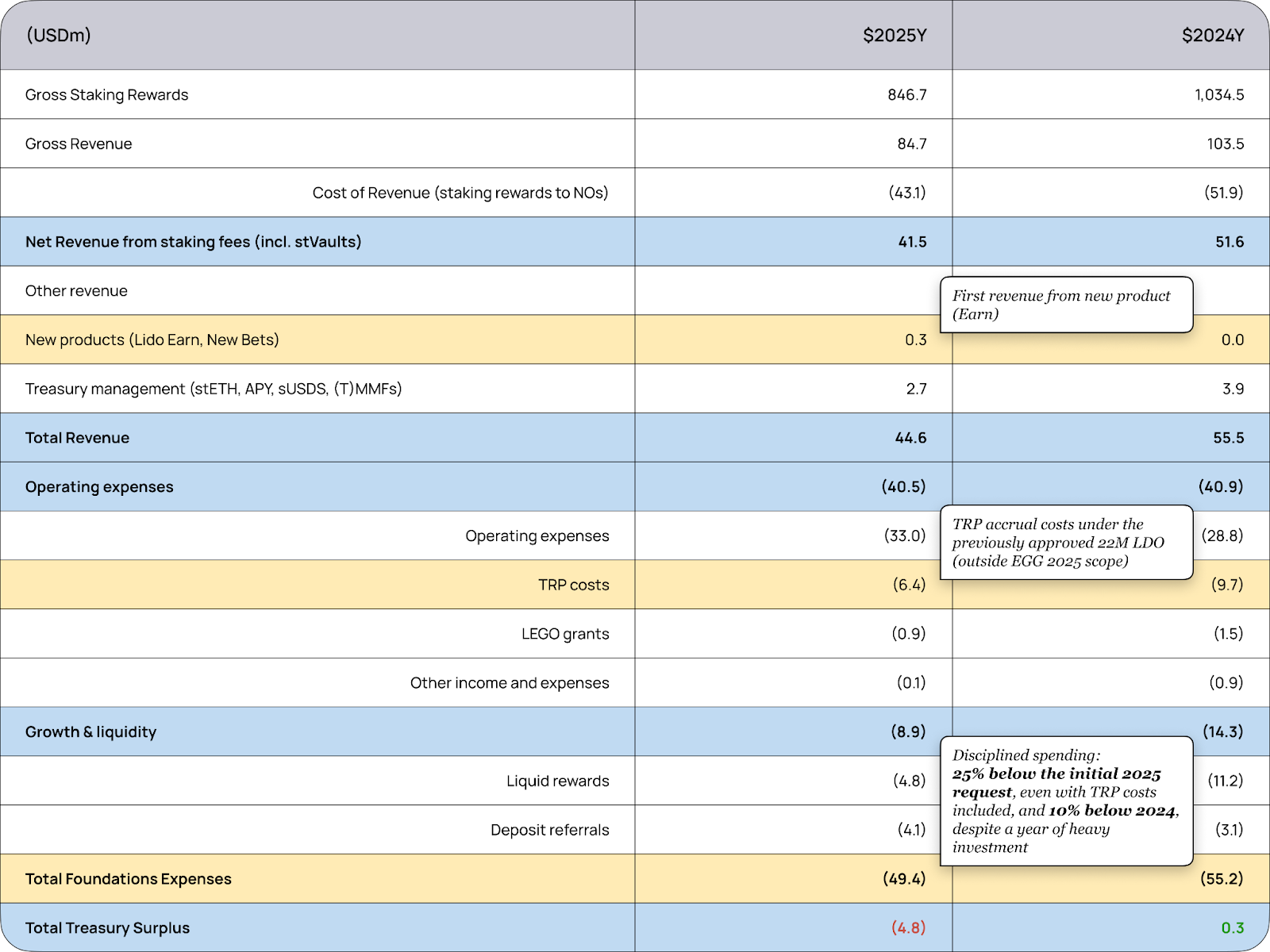
A key revelation from the 2025 financial recap involved a retrospective adjustment to grant reporting. The savings figure initially presented during the February 26 livestream was based on an incomplete aggregation of grant totals. Upon a more comprehensive review, all DAO grants requested amounted to $77 million, excluding the 2023 rewards share specifically allocated for deposit referrals, which are now classified as a Cost of Revenue. With this refined accounting, the total expenses for the Foundations concluded at $45.5 million, marking an impressive 41% below the originally requested amount. This experience prompted a strategic shift towards submitting 2026 grant requests in a consolidated format, a move designed to significantly enhance transparency and prevent similar reporting discrepancies in the future.
Furthermore, the Token Rewards Program (TRP) allocations, which operate under a 22 million LDO ceiling approved by the DAO in 2023, have not been included in annual grant requests since. In 2025, the TRP was formally transferred to the Lido Labs Foundation under amended terms, streamlining its management and allocation.
Beyond financial adjustments, 2025 saw significant strides in staking achievements and a continued reinforcement of governance principles. Lido DAO has consistently prioritized alignment with its tokenholders, a philosophy deeply embedded in its governance architecture. This commitment ensures that LDO holders retain substantial powers and safeguards, including the ability to veto critical proposals, control treasury funds, and participate actively in the protocol’s evolution. This dedication to decentralized governance and tokenholder empowerment has been recognized by independent third-party assessments, such as the Aragon Ownership Token Framework, which highlights Lido’s robust governance structure. The financial results for 2025, which saw total revenue reaching $53.2 million and total expenses at $45.7 million, indicate a net income of $7.5 million, underscoring the protocol’s operational efficiency, excluding certain LDO-denominated LEGO grants that will be reflected in future reports.
Introducing Automated Buybacks: Linking Protocol Performance to LDO Value
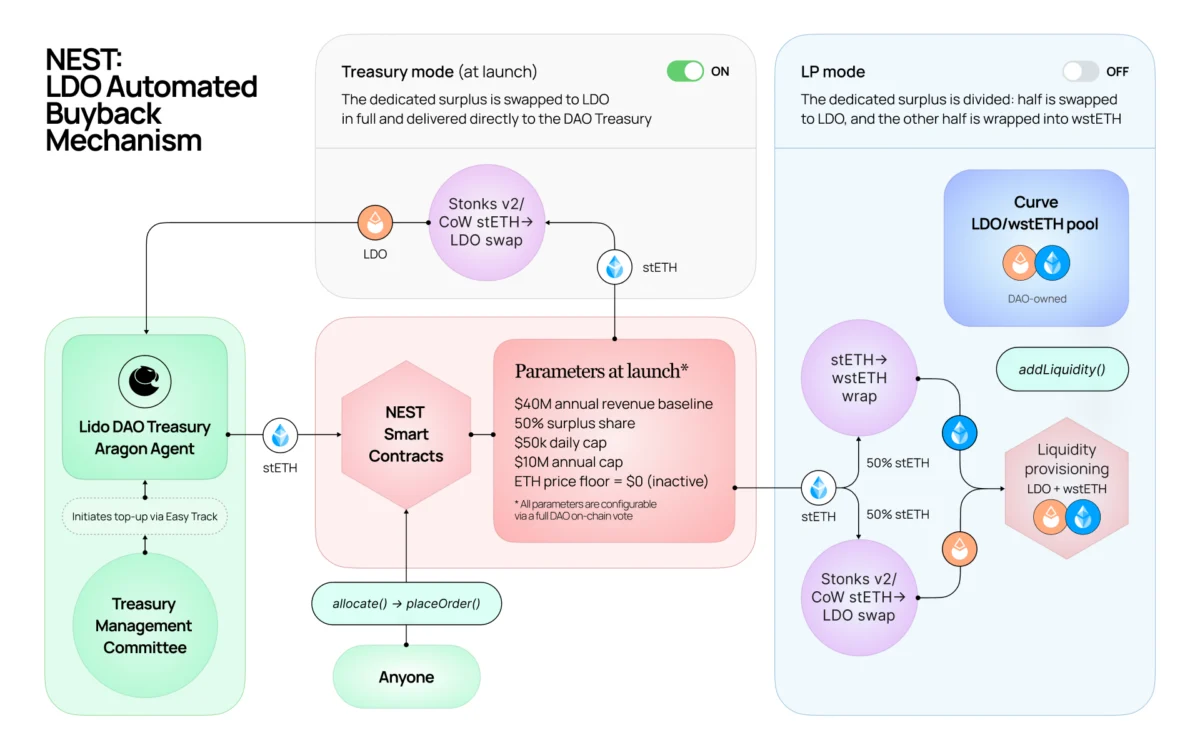
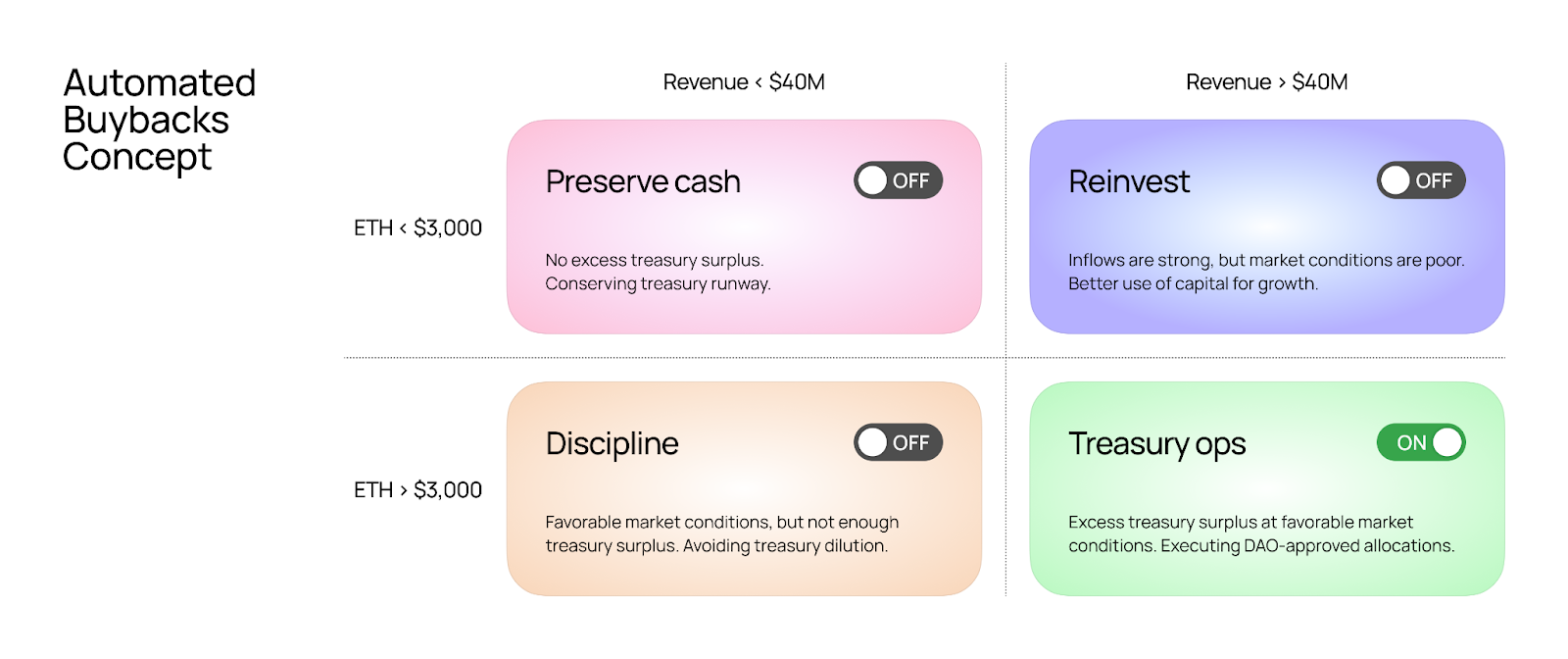
A significant development on the horizon for Lido DAO is the implementation of an automated buyback mechanism, a proposal first introduced on the Lido Research forum in November 2025 and currently slated for development in Q2 2026. This innovative mechanism is designed to create a direct and tangible link between the protocol’s performance and the value of its native LDO token.
The core rationale behind choosing automated buybacks over direct staking of LDO is to mitigate potential unequal outcomes for tokenholders across diverse tax jurisdictions, ensuring a more equitable benefit distribution. The proposed system will leverage protocol-generated staking rewards to acquire LDO tokens. These acquired LDO tokens will then be deployed into an LDO/wstETH liquidity pool (LP) position, which will be held and managed by the DAO through its Aragon Agent.
The activation parameters for this mechanism, which remain subject to DAO approval, are strategically designed. It will activate only when specific market and revenue conditions are deemed favorable, ensuring that buybacks occur during periods of strength. Furthermore, the system is engineered to scale proportionally with the protocol’s success: as the DAO’s revenue grows, so too will the allocation dedicated to the automated buyback program. This strategic move is expected to enhance tokenholder value by creating a direct, performance-driven demand for LDO, aligning the interests of the Foundations with the overall growth and prosperity of the protocol.
Lido’s Evolving Market Position and Institutional Growth
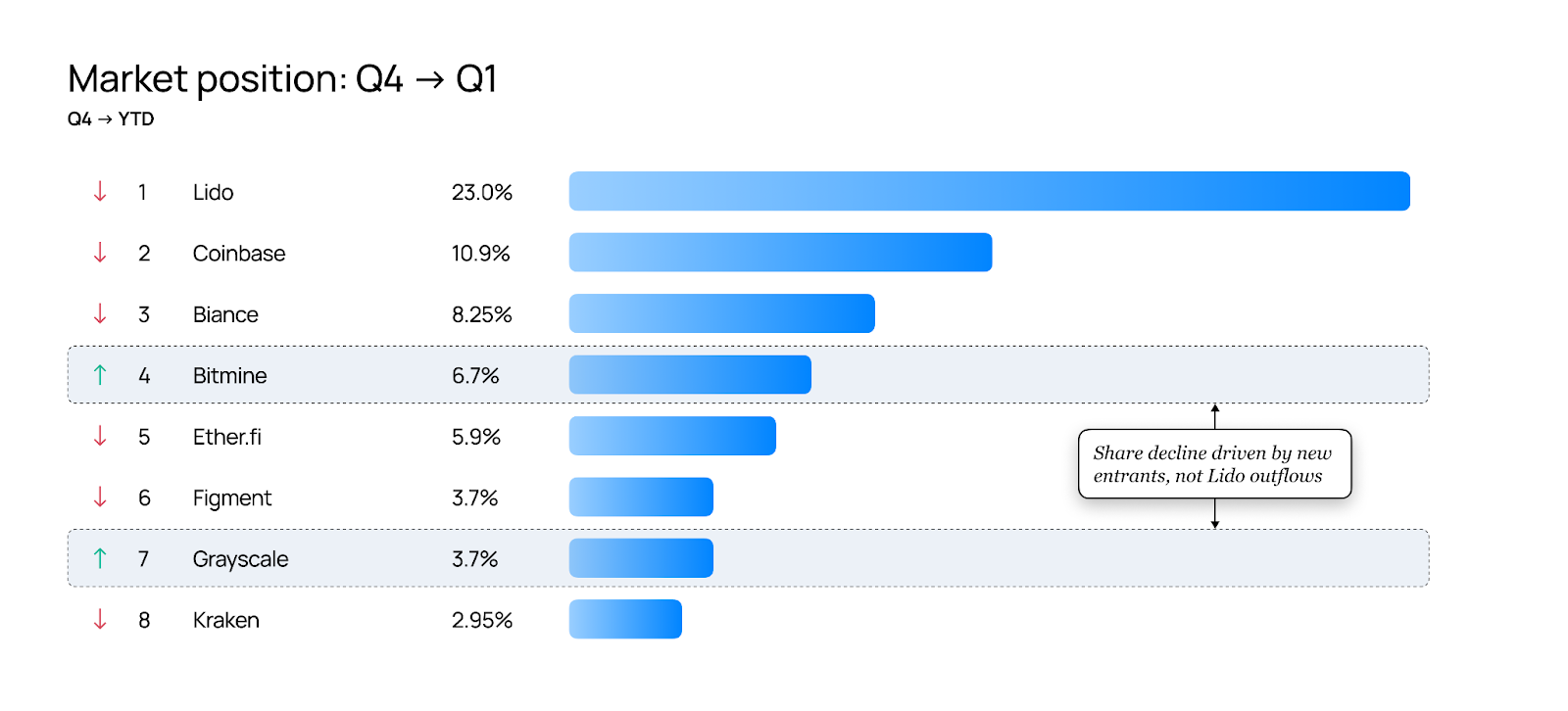
Despite the broader market challenges, Lido maintains its preeminent position as the largest liquid staking protocol on Ethereum. Currently holding a market share of 23%, the slight decrease observed is attributed predominantly to the entry of significant new players into the staking market, such as BitMine and Grayscale, indicating an evolving competitive landscape rather than an erosion of Lido’s core strength.
In absolute terms, Lido’s Total Value Locked (TVL) has shown encouraging growth since Q4 2025, signaling continued user confidence and adoption. The staking segment sizes within the ecosystem have remained stable, with notable expansion occurring within the low-risk institutional segment. This trend is anticipated to continue throughout 2026, further bolstered by the increasing interest from traditional financial behemoths like BlackRock, which is actively exploring staking opportunities for its Ethereum ETF. To capitalize on this burgeoning institutional demand, Lido is strategically focusing its efforts on stVaults and other tailored institutional staking products.
The stVaults initiative has seen significant progress, with Phase 2 going live on January 29 and Phase 3, which enables permissionless minting, launched on March 02. The accompanying DeFi Wrapper is also fully operational. While early adoption of stVaults has been somewhat constrained by factors such as the lengthy staking entry queue (approximately 60 days) and the integration timelines required by channel partners and builders to develop end-user products, Lido has proactively addressed these challenges. A temporary fee holiday on the infrastructure fee has been introduced for vaults exceeding 250 ETH TVL, incentivizing greater participation and accelerating adoption.
Lido Earn, another key product, has demonstrated robust performance, holding approximately 61,000 ETH TVL and generating an impressive $1 million in Annual Recurring Revenue (ARR) as of February 26, 2026. March 2026 saw the launch of two new MetaVaults, one for ETH rewards and another for USD, both powered by Mellow Protocol. These MetaVaults are designed with multi-curator setups and adaptive rebalancing capabilities, offering wallet providers and integrators a streamlined, integration-friendly product. Further cementing its commitment to user security and trust, a DAO proposal was approved to allocate $5 million in treasury funds to Lido Earn vaults. This allocation serves as an on-chain, first-loss alignment mechanism, safeguarding users in severe scenarios and enhancing the overall trustworthiness of the Earn initiative.
Strategic Priorities for Q2 2026: Fueling Growth and Innovation
The overarching objective of the GOOSE-2026 strategic plan is unequivocal: aggressive growth. The second quarter of 2026 is poised to be a period of intense focus on several key priorities designed to achieve this goal. These include the continued development and refinement of stVaults to capture institutional market share, further expansion of the Lido Earn product suite to diversify revenue and attract new users, and strategic initiatives aimed at maintaining and strengthening Lido’s leadership position in the liquid staking domain. The emphasis remains on fostering innovation while maintaining robust security and transparent governance.
Key Insights from the Q&A Session
The Tokenholder Update call concluded with an insightful Q&A session, addressing critical concerns from the community.
One significant query revolved around the potential exposure of Lido’s institutional thesis if VanEck’s ETF approval were to be delayed. The response indicated an estimated exposure of between 25% and 30%. However, it was clarified that Lido’s institutional strategy is multifaceted, extending far beyond a single ETF filing. This includes the WisdomTree ETP in Europe, active interest from other issuers across various geographies, considerations by Decentralized Autonomous Trust (DAT) vehicles for liquid staking holdings, and the foundational role of stVaults in enabling institutional-forward products. Therefore, a delay in one specific approval is more likely to push the realization of the institutional thesis into subsequent years rather than diminishing its aggregate potential over time.
Another question addressed the LDO token holdings of Lido Labs. It was clarified that the Foundations (Lido Labs Foundation and Lido Ecosystem Foundation) do not hold LDO tokens, apart from negligible "dust-level amounts" remaining from operational processes like TRP distribution. Crucially, this means the Foundations do not participate in voting and cannot influence DAO governance decisions, reinforcing the decentralized nature of Lido. Their operations are strictly on a grant-to-grant basis, with the DAO retaining complete control over funding allocations. Individual contributors, however, do receive LDO through the TRP program as part of their compensation.
Finally, the question of potential cost reductions or headcount decreases at Lido Labs in the event of further staking revenue declines was met with a considered response. Leadership stated that reducing headcount is not deemed the appropriate course of action at this juncture. A significant and prolonged drop in ETH price – for instance, to around $1,000, or a sustained period at $2,000 – would necessitate a reevaluation. The current perspective is that the present market conditions represent a temporary setback, and thus, preventive personnel actions are unwarranted. Nonetheless, the commitment to strict cost discipline remains paramount, with spending carefully controlled until market conditions stabilize, while strategic investments in growth initiatives continue selectively.
The Lido Poolside Community calls are a monthly fixture, with the more comprehensive Tokenholder Update calls held quarterly. These sessions serve as vital conduits for transparent communication, ensuring that the DAO’s strategic direction, financial health, and operational advancements are regularly shared with its committed community of tokenholders and the broader ecosystem.
This post is for informational purposes only and should not be construed as investment, financial, legal, tax, or other professional advice. The views expressed are those of the individual contributors and do not necessarily reflect the official position of Lido DAO. Past performance is not indicative of future results. Staking rewards are variable and not guaranteed – values fluctuate based on network conditions. Readers should conduct their own research and consult with qualified professionals before making any decisions. Nothing in this post constitutes a solicitation or offer to buy or sell any securities or other financial instruments.