admin
admin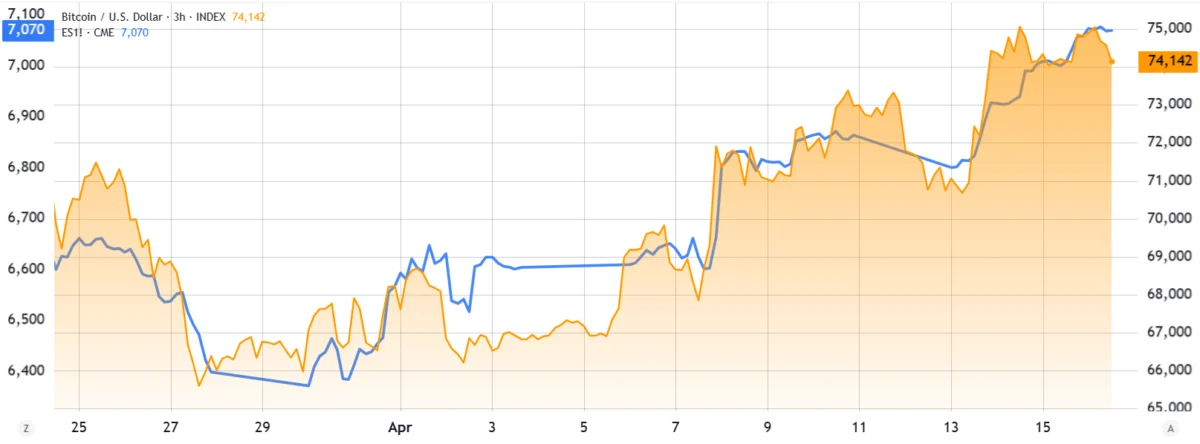
The digital asset market experienced a sharp increase in volatility during the early hours of the United States trading session on Thursday, as Bitcoin (BTC) underwent a rapid sell-off that briefly pushed its valuation below the critical $75,000 support level. This sudden downward movement resulted in the liquidation of approximately $120 million in leveraged long Bitcoin futures positions, catching many optimistic traders off guard. Despite a subsequent price recovery, the underlying market structure remains under scrutiny, particularly as Bitcoin’s funding rates have stayed in negative territory—a trend that has persisted since the beginning of the week. This unusual technical setup suggests a complex tug-of-war between bullish institutional accumulation and bearish short-term sentiment in the derivatives sector.
Chronology of the Market Correction and Liquidation Event
The week began with a cautious tone as Bitcoin struggled to maintain momentum above the $76,000 threshold. On Monday, market participants began to observe a shift in the perpetual futures market, where the funding rate—the periodic fee paid between long and short traders—flipped negative. This was the first significant indication that the demand for bullish leverage was waning. As the week progressed toward the Thursday US market open, the tension culminated in a "flush" of leveraged positions.
At the opening of the New York Stock Exchange, a surge in sell orders hit the Bitcoin spot and futures markets simultaneously. The price of BTC, which had been hovering near $76,000, plummeted within minutes to test the liquidity below $75,000. This move triggered a cascade of automatic liquidations. In the highly leveraged world of crypto derivatives, once a certain price floor is breached, exchanges automatically close out positions that no longer meet margin requirements, further accelerating the downward pressure. By the time the price stabilized and began its rebound, $120 million in long positions had been wiped from the books.

This event followed a broader trend observed since the start of the week. Since Monday, nearly $365 million in bearish short positions had also been forcefully liquidated as Bitcoin attempted various upward breakouts. The combination of these events suggests a "high-churn" environment where both buyers and sellers using high leverage are being penalized by sharp, intraday price swings.
Technical Analysis: The Significance of Negative Funding Rates
The persistence of negative funding rates is perhaps the most notable technical takeaway from the current market environment. In a standard bullish or even neutral market, the funding rate typically ranges between 5% and 10% on an annualized basis. This positive rate exists to compensate for the cost of capital and the inherent risks associated with maintaining long positions on centralized exchanges. When the rate turns negative, it signifies that short sellers (the bears) are paying long holders (the bulls) to keep their positions open.
On most major exchanges, such as Binance, Bybit, and OKX, these rates are calculated and settled every eight hours. While a temporary spike to a -20% annualized rate might seem alarming, it represents a relatively small daily fee of approximately 0.05%. For a trader utilizing 20x leverage, this equates to a 1% daily cost. Consequently, market analysts suggest that the current negative rates do not necessarily reflect a deep-seated conviction among bears that the price will crash. Instead, it likely reflects a lack of appetite for new long positions following the recent $120 million liquidation event.
The data suggests that the bears may not be aggressively "shorting the bottom" but are rather suffering from depleted collateral. Because $365 million in short positions were liquidated earlier in the week, many traders may be hesitant to add new margin, waiting instead for the funding rates to normalize. This creates a technical vacuum where the negative rate becomes a lagging indicator of past losses rather than a leading indicator of future price direction.

Macroeconomic Catalysts and the S&P 500 Divergence
Bitcoin’s recent price action cannot be viewed in isolation from the broader macroeconomic landscape. For the past fortnight, the correlation between Bitcoin and the S&P 500 has tightened significantly. On Thursday, the US stock market reached a new all-time high, driven by a complex "bad news is good news" narrative stemming from recent economic data releases.
The Federal Reserve reported on Thursday that US industrial production decreased by 0.5% in March. This decline was spearheaded by a 2.8% drop in automotive production, highlighting a slowdown in consumer durable goods. Simultaneously, the Department of Labor released figures showing that continuing jobless claims rose by 31,000 to a seasonally adjusted 1.818 million for the week ending April 4.
While these figures suggest a cooling economy and potential recessionary risks, equity markets reacted positively. The prevailing logic among institutional investors is that economic weakness will compel the government and the Federal Reserve to accelerate stimulus measures or pivot more aggressively toward interest rate cuts. Furthermore, the surge in oil prices has reignited concerns regarding inflation, which ironically reduces the incentive for investors to hold fixed-income assets like bonds, driving capital toward "risk-on" assets.
However, Bitcoin has failed to keep pace with the S&P 500’s record-breaking run. While equities soared, Bitcoin remained substantially below its previous peak of $126,200. This divergence is attributed to the repeated failure of BTC to establish a firm foothold above $76,000, leading to a sense of fatigue in the derivatives market.

Institutional Resilience and Spot Market Demand
Despite the turbulence in the futures and options markets, the fundamental demand for Bitcoin remains robust, particularly among institutional players. Data from the options market provides a stabilizing counter-narrative to the liquidation chaos. On the Deribit exchange, the premium paid for put (sell) options has consistently lagged behind call (buy) options over the past week. This "put-to-call" ratio suggests that professional traders are not rushing to buy protection against a massive price collapse.
Supporting this bullish underlying sentiment is the continued inflow of capital into US-listed spot Bitcoin ETFs. Over a five-day period, these instruments saw a staggering $921 million in net inflows. This institutional appetite is further bolstered by corporate accumulation strategies. Companies like MicroStrategy (MSTR) have continued their aggressive acquisition of BTC, signaling long-term confidence that transcends short-term liquidations and funding rate fluctuations.
Market analysts note that the current environment represents a transfer of Bitcoin from over-leveraged retail and "swing" traders to institutional spot holders. While the derivatives market is experiencing a painful deleveraging process, the spot market is absorbing the supply, preventing a more catastrophic breakdown of the price structure.
Broader Market Implications and Future Outlook
The immediate outlook for Bitcoin depends heavily on its ability to reclaim the $76,000 level and flip it into a support zone. The recent liquidations have effectively "cleansed" the market of excess leverage, which often serves as a prerequisite for a more sustainable upward move. When the "weak hands" are forced out through liquidations, the remaining market participants generally have higher conviction and stronger collateral backing.

The negative funding rate, while seemingly bearish, often acts as a contrarian indicator. If the price of Bitcoin begins to move upward while funding is negative, it can trigger a "short squeeze." In this scenario, bears who are paying to keep their positions open are forced to buy back Bitcoin to close their positions as prices rise, adding fuel to a potential rally.
Furthermore, the macro environment remains a double-edged sword. If US economic data continues to deteriorate, the narrative of "fiscal dominance" and the need for monetary debasement will likely strengthen the "digital gold" thesis for Bitcoin. Conversely, if inflation remains stubbornly high due to energy costs, the Federal Reserve may be forced to keep interest rates restrictive for longer, which could limit the liquidity available for speculative assets.
In conclusion, the $120 million liquidation event and the dip below $75,000 appear to be a localized "stop-run" within a broader period of consolidation. The negative funding rates reflect a temporary exhaustion of bullish momentum rather than a fundamental shift in the asset’s long-term trajectory. With institutional inflows remaining positive and corporate accumulation continuing unabated, the structural integrity of the Bitcoin market appears intact, even as it navigates the choppy waters of macroeconomic uncertainty and derivatives-driven volatility. Traders and investors will be closely watching the $76,000 resistance and the next round of US inflation data to determine if Bitcoin can finally break its correlation with the sluggishness of the past week and join the broader equity market in its pursuit of new horizons.