James Watt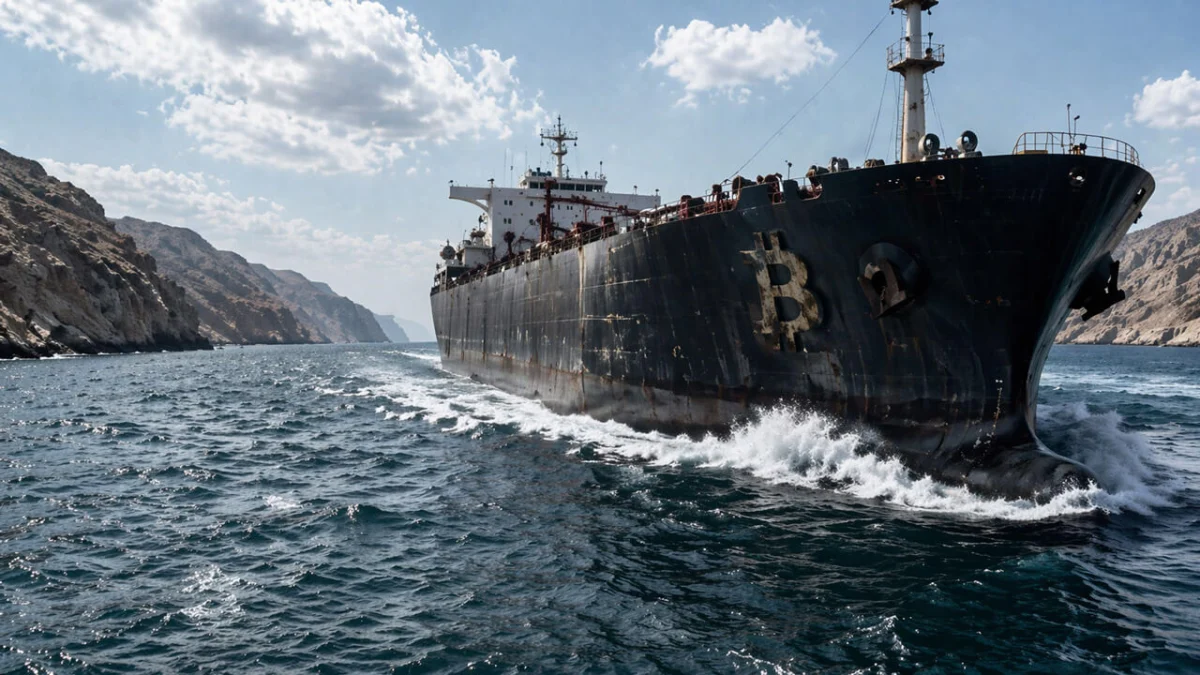
The global cryptocurrency market experienced a significant upward shift on Friday as Bitcoin, the world’s largest digital asset by market capitalization, climbed toward the psychological $80,000 milestone. This bullish momentum followed an official announcement from the Iranian government stating that the Strait of Hormuz, a critical maritime artery for global energy supplies, would be fully reopened to commercial traffic for the remainder of the current ceasefire period. The news effectively dismantled a significant geopolitical risk premium that had been weighing on global markets, sparking a broad "risk-on" sentiment that saw capital flow rapidly back into speculative assets.
According to market data provided by CryptoSlate, Bitcoin surged by approximately 5% shortly after the announcement, reaching an intraday peak of $77,700. This rally marks a decisive recovery for the cryptocurrency, which has gained nearly 7% over the past week after hovering below the $70,000 level. The current price action represents Bitcoin’s strongest performance since the market volatility experienced during the early February crash, signaling a potential trend reversal as macroeconomic pressures begin to subside. At the time of reporting, Bitcoin’s total market capitalization stands at approximately $1.56 trillion, with a 24-hour trading volume exceeding $53 billion.
Geopolitical De-escalation: The Reopening of the Strait of Hormuz
The primary catalyst for the market’s sudden optimism was a statement issued by Iranian Foreign Minister Seyed Abbas Araghchi. In a post shared on the social media platform X on April 17, Araghchi clarified the status of the strategic waterway, which had been a focal point of international tension during recent regional conflicts.
"In line with the ceasefire in Lebanon, the passage for all commercial vessels through the Strait of Hormuz is declared completely open for the remaining period of the ceasefire," Araghchi stated. He further noted that while the passage is open, vessels are required to adhere to a specific, coordinated route established by Iran’s maritime authorities to ensure safety and order within the channel.
The Strait of Hormuz is widely regarded as the world’s most important energy chokepoint. Geographically situated between Oman and Iran, the waterway connects the Persian Gulf with the Gulf of Oman and the Arabian Sea. It is the primary transit route for approximately 20% of the world’s total consumption of oil and liquefied natural gas (LNG). During the recent period of heightened hostilities between the United States and Iran, traffic through the strait was severely restricted, with only a handful of commercial vessels permitted passage each day. This closure had created a "war premium" in energy markets, driving up the cost of crude oil and contributing to global inflationary concerns.
The announcement of the reopening was met with immediate validation from Washington. President Donald Trump confirmed the development via Truth Social, expressing gratitude toward the Iranian government for the move. The diplomatic breakthrough suggests a temporary stabilization in the region, providing a much-needed reprieve for global supply chains and financial markets.
Impact on Energy Markets and Macroeconomic Indicators
The immediate reaction to the reopening of the strait was felt most acutely in the energy sector. Data from oilprices.com indicated that crude oil prices plummeted by more than 11% following the news. This sharp decline effectively erased the risk premium that had been priced into the market during the standoff.
For Bitcoin and the broader cryptocurrency market, the drop in oil prices is a significant bullish indicator. Historically, lower energy costs lead to a reduction in headline inflation figures. As inflation pressures ease, central banks, including the U.S. Federal Reserve, gain more flexibility in their monetary policy decisions. The fear of "sticky" inflation, driven by energy shocks, has been a primary deterrent for investors in risk-sensitive assets like Bitcoin. With the threat of an energy-driven volatility spike reduced, investors have shown an increased appetite for assets that thrive in high-liquidity environments.
Furthermore, the reopening of the strait signals a move toward regional stability, which reduces the "flight to safety" demand for the U.S. dollar. A weaker or stabilizing dollar typically provides a tailwind for Bitcoin, which is often viewed by investors as a hedge against fiat currency fluctuations and geopolitical instability.
Massive Liquidations: A Market Wipeout
The sudden 5% surge in Bitcoin’s price caught many leveraged traders off guard, leading to one of the most significant liquidation events in recent months. Data from CoinGlass, a prominent crypto derivatives analytics platform, revealed that approximately $243 million in leveraged positions were liquidated within a single hour following the news from Iran.
The vast majority of these losses were concentrated among short-sellers—traders who had placed bets that Bitcoin’s price would continue to decline. During the one-hour reporting window, short traders lost more than $100 million. Over a broader 24-hour timeframe, total liquidations across the entire crypto market topped $720 million. This represents the largest market wipeout since mid-March, highlighting the extreme volatility and the "short squeeze" mechanics that often propel Bitcoin higher during unexpected news cycles.
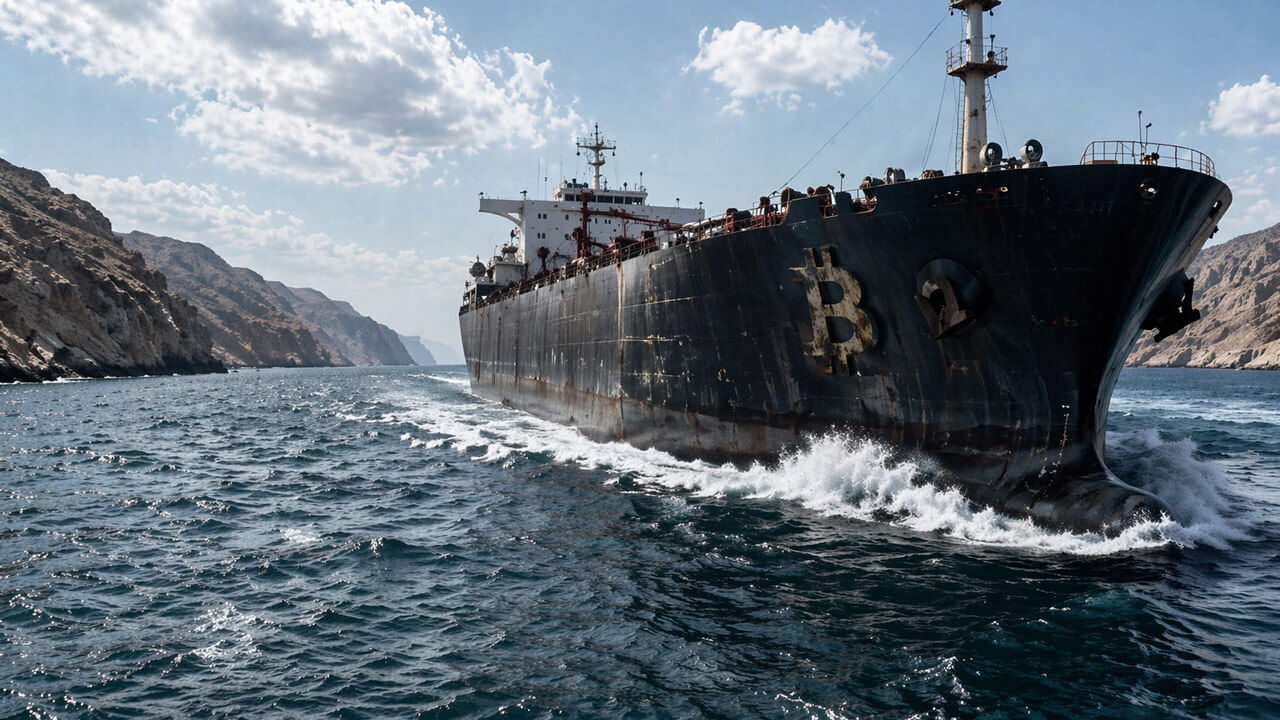
A short squeeze occurs when a rapid increase in an asset’s price forces short-sellers to buy back the asset to cover their positions, which in turn creates additional upward pressure on the price. The scale of the liquidations on Friday suggests that the market was heavily skewed toward a bearish outlook prior to the announcement, making the subsequent rally even more explosive.
The Path to $80,000 and Beyond: Derivatives and Predictions
With the immediate geopolitical threat of a Strait of Hormuz closure removed, market participants are now looking toward the next major price targets for Bitcoin. Analysts point to the derivatives market as a leading indicator of where the price may be headed in the coming weeks.
On the Deribit exchange, which is owned by Coinbase and serves as a primary venue for crypto options trading, the $80,000 call option has emerged as a dominant trade. Current data shows a notional value of more than $1.5 billion tied to this specific strike price. This concentration of bullish bets suggests that institutional and sophisticated retail traders are positioning for a breakout above the $80,000 level in the near term.
Beyond the $80,000 mark, the next significant cluster of bullish positioning is found at the $90,000 strike price, which holds approximately $914 million in notional value. The presence of such large positions at these elevated levels indicates a growing consensus that the "crypto winter" or consolidation phase may be giving way to a sustained bull run.
Sentiment in prediction markets has also shifted dramatically. Data from Polymarket, a decentralized platform where users bet on the outcome of real-world events, shows that the odds of Bitcoin surpassing $80,000 before the end of the calendar year have climbed to over 88%. This represents a sharp increase from previous weeks, when the odds hovered closer to 50-60% amidst the peak of the US-Iran tensions.
Institutional and Political Reactions
The intersection of cryptocurrency and high-level geopolitics has become increasingly prominent. The fact that a diplomatic announcement regarding a maritime chokepoint could trigger a $243 million liquidation event in the crypto market underscores the maturation of Bitcoin as a macro-financial asset.
Financial analysts note that the reaction to the Iran news demonstrates Bitcoin’s sensitivity to global liquidity and trade stability. "Bitcoin is no longer an isolated asset class," said one senior market analyst. "It is behaving as a highly sensitive barometer for global risk. When the Strait of Hormuz opens, trade flows, oil prices drop, and the ‘risk-on’ switch is flipped. Bitcoin is the first place that capital flows when the macro environment clears up."
The involvement of the U.S. administration, specifically President Trump’s public confirmation of the deal, adds a layer of political legitimacy to the market’s recovery. The administration’s focus on stabilizing energy routes and reducing international conflict is being viewed by Wall Street as a pro-growth agenda, which historically benefits equities and digital assets alike.
Conclusion and Future Outlook
The reopening of the Strait of Hormuz has provided a vital "safety valve" for a global economy that was growing increasingly concerned about energy-driven inflation and regional warfare. For Bitcoin, the timing of this de-escalation is critical. By clearing the path toward $80,000, the market has demonstrated its resilience and its ability to capitalize on positive macroeconomic shifts.
However, challenges remain. While the ceasefire in Lebanon and the reopening of the strait are positive developments, the long-term stability of the region remains a subject of intense diplomatic scrutiny. Traders will continue to monitor the "coordinated routes" set by Iranian maritime authorities and the adherence of all parties to the terms of the ceasefire.
In the immediate future, the focus remains on the $80,000 resistance level. If Bitcoin can maintain its current momentum and flip $80,000 from resistance into support, the path toward six-figure valuations becomes a more realistic prospect for 2024. For now, the "Hormuz Rally" stands as a testament to the complex, interconnected nature of modern finance, where a diplomatic post on social media can move billions of dollars in a matter of minutes.