admin
admin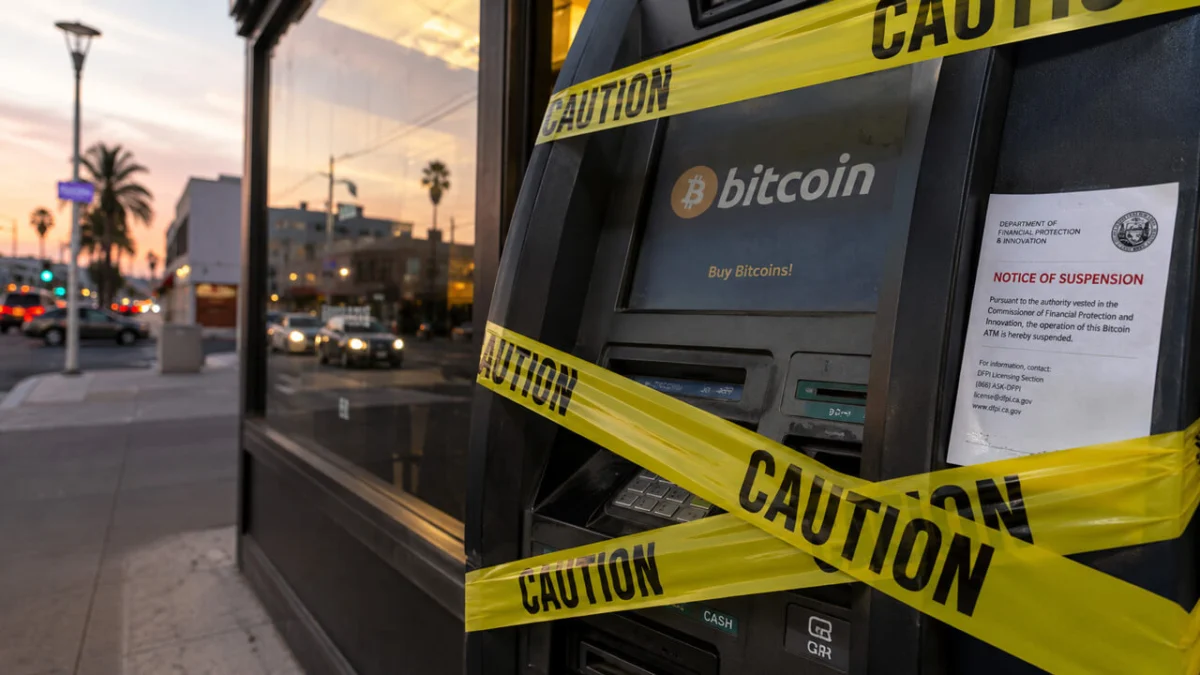
The once-ubiquitous Bitcoin ATM, a physical gateway into the world of cryptocurrency, is facing an existential crisis, underscored by the recent Chapter 11 bankruptcy filing of Bitcoin Depot, formerly North America’s largest operator of these machines. The May 18th filing in the U.S. Bankruptcy Court for the Southern District of Texas, which saw approximately 9,700 machines taken offline, signals a dramatic shift in how the public accesses digital assets and highlights the unsustainable nature of a business model built on convenience and high fees in an increasingly regulated and sophisticated market.
For years, Bitcoin ATMs served as the most tangible and accessible entry point for individuals looking to engage with cryptocurrencies. They demystified the process, transforming the abstract act of buying and selling digital assets on a screen into a concrete, real-world transaction. Users could bypass the traditional financial system, purchasing Bitcoin with cash without the need for extensive verification, a bank account, or a deep understanding of digital asset custody. The simple act of scanning a QR code, inserting bills, and receiving Bitcoin in a digital wallet within minutes offered an immediate sense of ownership and participation in the burgeoning crypto economy. This physical aspect, the ability to hold a virtual currency purchased with physical cash, imbued Bitcoin with a sense of everyday relevance that centralized exchanges struggled to replicate.
However, the recent financial disclosures paint a stark picture of decline. In the first quarter of 2026, Bitcoin Depot’s revenue plummeted by an alarming 49.2% year-over-year, representing a loss of $80.7 million. The collapse in gross profit was even more severe, falling 85.5% from $31.2 million to a mere $4.5 million. What was once a profit of $12.2 million in the prior year’s period had swung dramatically into a net loss of $9.5 million. CEO Alex Holmes attributed this steep deterioration to a business model he candidly described as "unsustainable." The bankruptcy filing has encompassed the company’s Canadian entities under court supervision, with other international operations mandated to wind down according to local legal frameworks.
This dramatic downturn did not occur in a vacuum. As early as this month, CryptoSlate reported on Canadian authorities proposing a complete ban on crypto ATMs, citing them as a primary channel for fraud and money laundering. This move reflects a broader political pivot towards viewing direct access to Bitcoin as a potential liability rather than a financial innovation. Bitcoin Depot’s collapse appears to be a tangible consequence of this evolving regulatory landscape, occurring while authorities are still solidifying their cases and frameworks for oversight.
The Genesis of Physical Crypto Access
The proliferation of Bitcoin ATMs was a direct response to a significant market need in the nascent stages of cryptocurrency adoption. Prior to the widespread availability of user-friendly exchanges and streamlined onboarding processes, acquiring cryptocurrency was a cumbersome and time-consuming affair. Traditional exchanges often involved lengthy verification periods, with waiting times that felt incongruous with the rapid pace of blockchain technology. For an asset designed around a 10-minute block time, waiting days to get funds onto an exchange was a considerable friction point.
Bitcoin ATMs emerged as a solution, offering an immediate and accessible alternative. By establishing machines in accessible locations like convenience stores and gas stations, operators bypassed the lengthy verification and waiting periods inherent in online exchanges. The process was reduced to a familiar cash transaction, making it accessible to a wider demographic. In essence, the primary product offered by these ATMs was not Bitcoin itself, but the convenience of acquiring it instantly. This convenience came at a steep price, with transaction fees often ranging from 10% to 30%, a premium that would be untenable for most traditional financial services but was tolerated by users seeking immediacy.
The Irreversible Flaw: Unforeseen Vulnerabilities
Despite their initial success, the fundamental structural vulnerability of the Bitcoin ATM model lay in the irreversibility of transactions. In traditional banking, when a customer is defrauded, chargebacks and dispute resolution mechanisms can often lead to the recovery of funds. However, once a Bitcoin transaction is confirmed on the blockchain, it is immutable. When funds are sent from an ATM to a wallet controlled by a scammer, there is no central authority capable of reversing the transaction, leaving victims with no recourse.
This inherent irreversibility became a critical weakness exploited by malicious actors. Phone-based social engineering campaigns, where elderly victims were coerced into conducting Bitcoin ATM transactions, became a documented and pervasive issue across numerous states. The sheer scale of financial losses incurred by these victims provided regulators with both the empirical evidence and the political justification needed to implement stricter oversight.
Escalating Fraud and Regulatory Scrutiny
The FBI’s data paints a grim picture of the escalating fraud associated with crypto kiosks. In 2025 alone, the bureau logged 13,460 crypto kiosk fraud complaints, totaling an estimated $389 million in reported losses – a significant 58% increase from the previous year. Alarmingly, individuals aged 60 and older accounted for approximately $257.5 million of these losses, concentrating the harm within a demographic that possesses considerable electoral influence, making crackdowns politically palatable and durable.
Simultaneously, the accessibility of acquiring cryptocurrency evolved dramatically, diminishing the relative convenience of ATMs. By 2025, the advent of spot Bitcoin ETFs had integrated cryptocurrency exposure into standard brokerage accounts. Fintech applications had significantly simplified the onboarding process for digital assets, and the expansion of stablecoin networks offered alternative ways to hold digital assets without direct exposure to price volatility.
Against this backdrop, the substantial fee premium charged by Bitcoin ATMs became increasingly difficult to justify. The users who remained most reliant on these cash-based kiosks were often those most susceptible to scams, a demographic less likely to be aware of or have access to the newer, more regulated, and cost-effective alternatives.
Compliance: The Unforeseen Demise of ATM Profitability
The regulatory crackdown on Bitcoin ATMs began with measures aimed at curbing exorbitant fees and mitigating fraud. California was at the forefront of this movement, enacting the Digital Financial Assets Law. This legislation imposed a daily transaction cap of $1,000 and limited fees to the greater of $5 or 15% of the transaction value. Furthermore, mandatory written disclosures were required before any transaction could proceed. A California court upheld the daily cap in 2024, and the fee and disclosure rules became effective in 2025. For ATM operators whose business model depended on high-volume cash conversions with substantial fees, these regulations compressed revenue per user while simultaneously increasing compliance overhead, effectively attacking margins from both ends.
The regulatory pressure soon extended beyond fee caps. Indiana became the first state to enact a complete ban on crypto ATMs in March 2026, at a time when nearly 900 such machines were operational within its borders. Tennessee’s ban was slated to take effect on July 1, 2026, with Minnesota also approving its own prohibition. By April 2026, the American Bankers Association reported that 20 states had enacted new laws restricting crypto ATM activity, with proposed legislation pending in many others.
Enforcement Actions and Financial Fallout
Beyond legislative measures, enforcement actions have proven equally damaging. In February 2025, Iowa’s attorney general filed a lawsuit against Bitcoin Depot and CoinFlip, alleging that these companies had cost state residents over $20 million. A state fact sheet revealed that an astonishing 98.16% of the money Iowans sent through Bitcoin Depot was linked to scam transactions.
Massachusetts followed suit in February 2026, filing its own lawsuit against Bitcoin Depot. The attorney general’s office stated that data indicated over half of the company’s revenue from Bitcoin ATMs in the state was directly related to scam activities. Maine reached a $1.9 million settlement with Bitcoin Depot to compensate residents who had lost money through its kiosks between 2022 and 2025.
Connecticut took drastic action in March 2026, temporarily suspending Bitcoin Depot’s money-transmission license. The state cited overcharges, refund failures, and a public safety standard deemed serious enough to warrant emergency intervention.
By the time of its Chapter 11 filing, Bitcoin Depot had accumulated over $20 million in legal judgments in the fourth quarter of 2025 alone. Compounding its financial woes, an April cyberattack resulted in the loss of an additional $3.7 million from its crypto wallets.
The Paradox of Protection and Profitability
The cumulative pressure on Bitcoin ATMs highlights a sad paradox: every protection layered onto a transaction designed to safeguard users inherently increases the cost of operating the machine. Mandatory identification checks, blockchain analytics requirements, transaction holds, written warnings, refund rights, fee caps, daily limits, state licensing renewals, and the necessity of litigation reserves all cumulatively burdened a product that was profitable primarily due to its speed, lax oversight, and cash-first approach.
The imposition of these requirements transformed a convenience premium into a compliance trap with no viable exit strategy. Access to Bitcoin has now migrated to infrastructure built with regulation at its core. The retail adoption function once served by Bitcoin ATMs has been effectively absorbed by a new ecosystem comprising ETFs, licensed custodians, regulated exchanges, and user-friendly payment applications.
In 2026, the Bitcoin ATM, once the pioneering and tangible doorway to the world of cryptocurrency, has effectively run its course. Its utility was contingent on a landscape where access to digital assets was scarce and difficult to attain. Today, with the average American able to acquire Bitcoin through a conventional brokerage account within minutes, the unique value proposition of the Bitcoin ATM has evaporated. The physical gateway has been superseded by a more secure, regulated, and integrated digital infrastructure.