admin
admin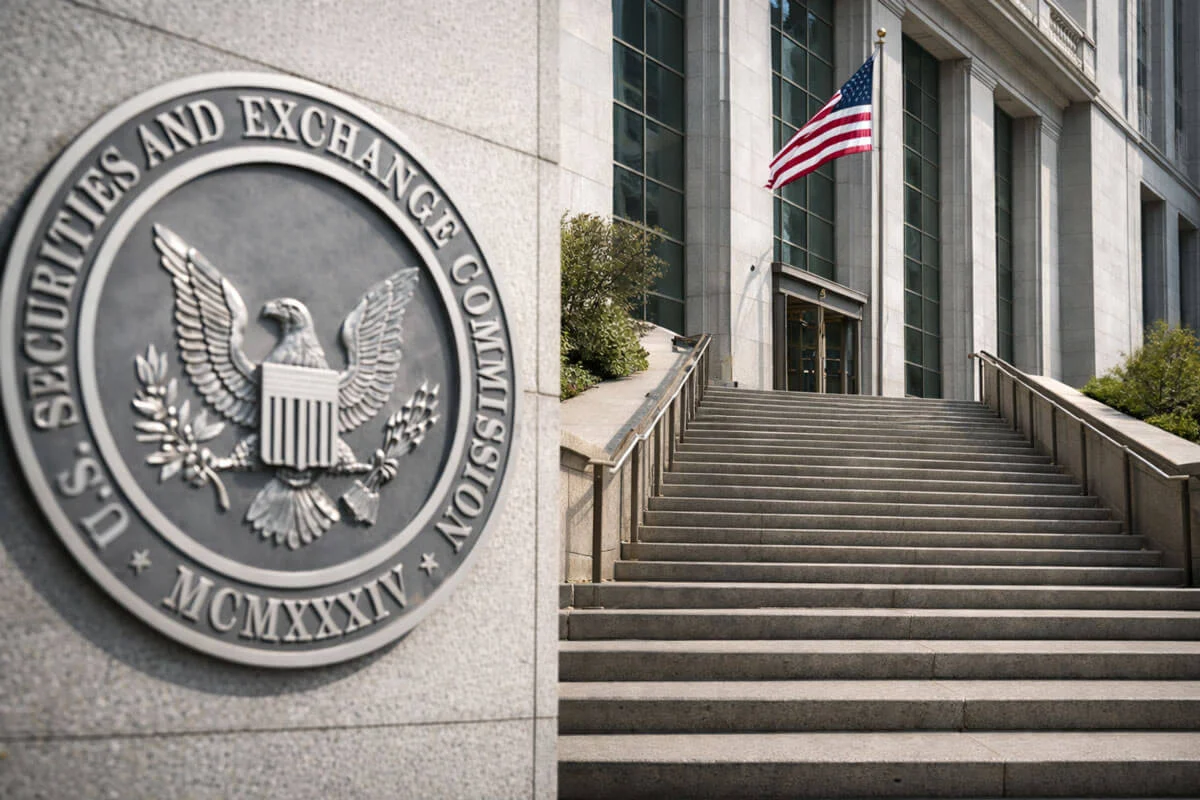
In a striking reversal that signals a fundamental reevaluation of its regulatory strategy, the U.S. Securities and Exchange Commission (SEC) is now publicly distancing itself from the aggressive cryptocurrency enforcement approach it once lauded as a testament to its toughness. The agency’s latest annual review, released recently, implicitly frames several recently dismissed crypto cases not as setbacks, but as evidence that prior leadership pursued volume and headline-grabbing actions over demonstrable investor harm. This strategic pivot represents a significant institutional self-correction, altering the very metrics by which the SEC measured its success in the burgeoning digital asset space.
The contrast between the SEC’s pronouncements in November 2024 and its recent fiscal year 2025 review is stark. In late 2024, the agency proudly announced a record-breaking year, boasting 583 enforcement actions and a staggering $8.2 billion in collected remedies. At the time, the SEC highlighted its robust crypto enforcement as proof of its ability to effectively police emerging threats and safeguard investors in rapidly evolving markets. This narrative positioned the agency as a formidable force, capable of tackling complex and high-profile cases.
However, the SEC’s newly published 2025 review presents a dramatically different perspective. The report explicitly criticizes the prior approach, stating that resources were misapplied and that the pursuit of "media headlines" was a misguided endeavor. The agency characterized the past year as a "necessary course correction," a process that notably included the dismissal of seven crypto registration-related cases. This acknowledgment signals a clear shift towards a more measured and perhaps more targeted enforcement strategy in the crypto sector, moving away from what appears to have been a broad-brush approach.
The agency’s current stance is more than just a subtle recalibration; it’s a public disavowal of the enforcement strategy it was so eager to showcase just over a year ago. This internal reevaluation carries significant implications for the crypto industry, regulatory bodies, and the broader discourse on how to govern novel financial technologies.
The Evolving Narrative: From Volume to Value in SEC Enforcement
The SEC’s fiscal 2024 review was intentionally triumphant. The report trumpeted 583 enforcement actions and $8.2 billion in monetary remedies, setting a new historical high for the agency. Crypto enforcement was prominently featured as a key success story, with the Terraform Labs and Do Kwon case, accounting for approximately 56% of the year’s total remedies, cited as a signature achievement. This emphasis on sheer volume and dollar figures served as a powerful statement of the SEC’s institutional vigor and its relevance in confronting new financial frontiers. Crypto enforcement, in this context, was not merely a component of the agency’s work; it was presented as a flagship initiative, a testament to its proactive and assertive stance.
The fiscal 2025 review, however, reads as if authored by a different agency. The total number of enforcement actions dropped to 456, a decline of over 20% from the previous year. While the headline figure for monetary relief reached $17.9 billion, the SEC itself acknowledged that this number was significantly inflated. The substantial sum was largely attributed to a protracted Stanford litigation case and credits against existing judgments, rather than fresh collections. Stripping away these anomalies, the actual fiscal 2025 total for new monetary relief amounts to approximately $2.7 billion: $1.4 billion in disgorgement and prejudgment interest, alongside $1.3 billion in civil penalties.
The significance of the 2025 report lies not just in the reduced numbers, but in the framing of these figures. The SEC presented the decline in enforcement actions as a deliberate and strategic correction. The agency argued that previous enforcement leadership had overemphasized cases designed to generate high volumes and attract media attention, often at the expense of cases demonstrating direct and measurable investor harm. This critique goes to the core of the SEC’s regulatory philosophy, suggesting that the prior methodology was conceptually flawed rather than simply less effective. The current SEC leadership is, in essence, asserting that its predecessor’s preferred metrics misrepresented the true value of its enforcement efforts. This institutional self-assessment represents a profound shift in how regulatory success is defined and communicated.
The crypto sector serves as the most salient illustration of this paradigm shift. The fiscal 2025 report explicitly grouped the dismissal of seven crypto registration-related cases with other actions, such as those involving off-channel communications and certain "dealer" enforcement actions, as examples of a past regime that prioritized case volume over direct investor protection. The language is pointed, describing these cases as a "misallocation of resources" rather than simply matters that were deprioritized.
This internal critique aligns with a series of high-profile retreats and policy adjustments observed over the past year. In early 2025, the SEC voluntarily dismissed its civil enforcement action against Coinbase. A few months later, the agency dropped its lawsuit against Binance. Furthermore, the SEC closed its investigation into Robinhood’s crypto arm without taking any enforcement action. Alongside these dismissals, the agency established a new crypto task force, signaling a shift from punishing firms for alleged registration failures to providing clearer guidance on what registration requirements entail.
Individually, these developments might have been interpreted as routine fluctuations in enforcement priorities. However, viewed collectively and now ratified by the SEC’s own annual report, they represent a more ambitious and fundamental change. The agency that once used aggressive crypto enforcement to project an image of toughness is now employing the sector to signal restraint and a more considered approach.
A Strategic Reset with Far-Reaching Consequences
The SEC’s pivot on crypto enforcement does not occur in a vacuum. The agency’s enforcement division has navigated a period of significant leadership turnover and staffing reductions. Notably, the director of enforcement resigned, and the division saw an 18% drop in staff during fiscal year 2025. While some level of transition is expected, enforcement experts have interpreted this decline as indicative of a deeper strategic reset, reflecting a broader skepticism towards regulation-by-enforcement embraced by the current administration across various federal agencies.
The recent release of the SEC’s annual report coincided with the appointment of David Woodcock, a former SEC regional office director and a partner at Gibson Dunn, as the new head of enforcement. Woodcock succeeds Margaret Ryan, who reportedly served in the role for only six months before resigning due to disagreements with agency leadership regarding the program’s direction. This internal friction underscores that the course correction has not been without its challenges within the SEC’s own ranks.
This context links the SEC’s self-criticism to a larger debate unfolding in Washington: the appropriateness of using enforcement actions as a primary regulatory tool. The practice of filing lawsuits to establish legal precedent, rather than waiting for congressional action or formal rulemaking, has come under scrutiny. The current SEC leadership appears to be betting that this "regulation-by-enforcement" model is not a sustainable or effective approach, and they are now articulating this position formally.
There is a distinct irony in the SEC’s recent trajectory. In November 2024, high case counts and substantial monetary remedies were the metrics used to demonstrate effective performance. By April 2026, a reduction in case counts and smaller dollar figures serve the same purpose. The agency has fundamentally redefined success and applied this new definition retroactively, effectively discrediting the very accomplishments it celebrated less than two years prior.
The long-term implications of this strategic shift remain to be seen. The true test will lie in whether the SEC can successfully transition from an enforcement-first model to one that relies more on congressional clarity, judicial decisions, and robust rulemaking. The market will be closely observing whether the agency can articulate and implement a credible replacement for the enforcement-driven approach it is now seemingly abandoning. The SEC’s willingness to publicly critique its own past actions in its annual report is a remarkable development, signaling a profound institutional introspection that could reshape its approach to regulating innovative financial markets for years to come. The question now shifts from whether the previous crackdown went too far to whether the agency can successfully define and implement a more constructive path forward.