James Watt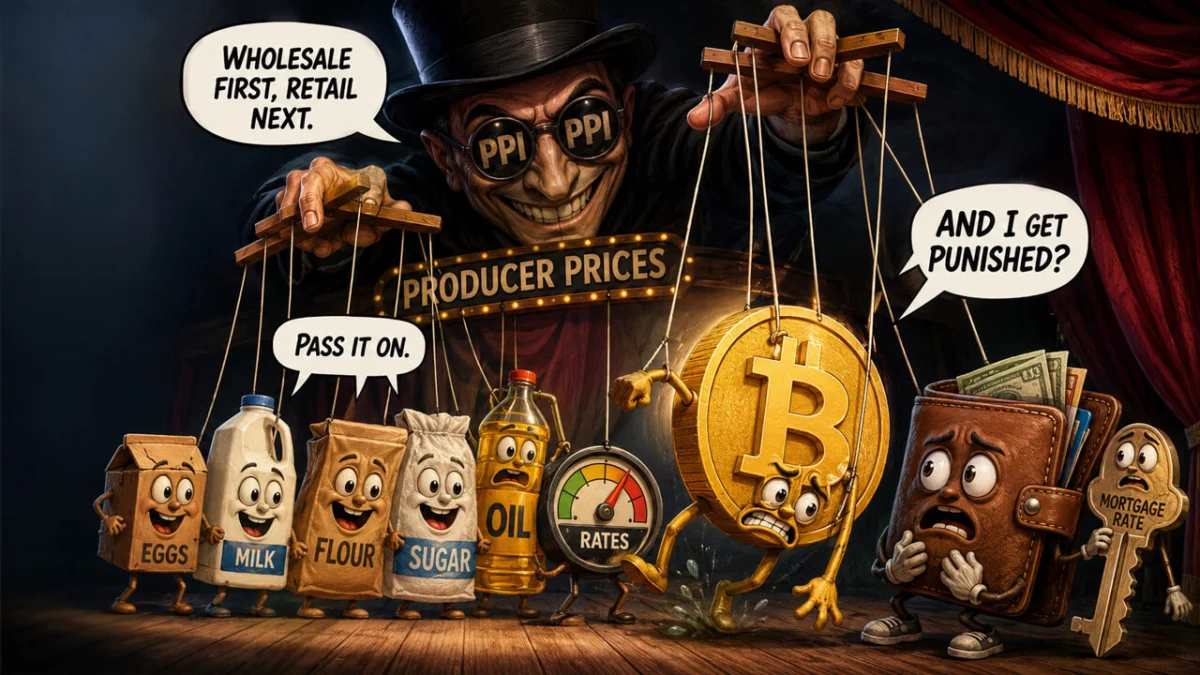
The United States Bureau of Labor Statistics (BLS) released data on Thursday revealing a significant and unexpected acceleration in wholesale inflation for the month of May, a development that has sent ripples through both traditional and digital asset markets. The Producer Price Index (PPI), which measures the average change over time in the selling prices received by domestic producers for their output, rose by 1.1% in May. This monthly increase pushed the annual inflation rate at the producer level to 6.5%, marking the fastest pace of growth since November 2022. The figures caught Wall Street by surprise, as a consensus of economists had projected a more modest monthly gain of 0.7%. The report underscores a persistent inflationary environment that complicates the Federal Reserve’s path toward monetary easing and challenges the prevailing narrative of Bitcoin as an immediate hedge against rising prices.
A Chronology of Escalating Price Pressures
The May PPI report is the latest in a series of data points that have systematically eroded hopes for interest rate cuts in the first half of 2026. The year began with a surprise surge in services inflation in January, which initially forced markets to temper expectations for an early spring pivot by the Federal Reserve. By March, a continued lack of progress in cooling the "core" components of the economy led to a massive repricing in the federal funds futures market, with the probability of a June rate cut plummeting toward zero.
This inflationary trend has coincided with a period of significant transition at the helm of the nation’s central bank. In May, Jerome Powell concluded his tenure as Chair of the Federal Reserve, handed the gavel to Kevin Warsh. The May PPI report represents the first major inflation test for the Warsh-led Fed, arriving just days before the Federal Open Market Committee (FOMC) is scheduled to meet on June 16 and 17. The timeline of these events suggests a hardening of the "higher for longer" interest rate stance, as the transition in leadership occurs alongside a renewed spike in energy and commodity costs.
Dissecting the May PPI Data: Energy and Core Metrics
The primary catalyst for the May surge was a dramatic rise in energy costs, which accounted for a substantial portion of the headline increase. Final demand goods climbed by 2.8% during the month, the largest single-month jump since the current data series began in December 2009. Within this category, energy prices spiked by 10.7%, driven largely by a 23.4% surge in gasoline prices. Market analysts attribute much of this volatility to the ongoing conflict involving Iran, which has placed a significant risk premium on global oil supplies and disrupted traditional shipping routes.
However, the inflationary pressure was not limited to the volatile energy sector. The "core" PPI, which excludes the often-fluctuating costs of food, energy, and trade services, rose by 0.8% in May. On an annual basis, core PPI reached 5.1%, the highest reading since October 2022. This suggests that inflation is becoming deeply embedded in the broader economy, moving beyond raw commodities and into the service and manufacturing sectors.
The report also highlighted significant increases in the "intermediate demand" category. Prices for processed goods sold between businesses—often viewed as a harbinger of future consumer price movements—rose by 13.3% over the past 12 months. This represents the largest annual increase in nearly four years, indicating that the costs feeding into the production of consumer goods are rising at a pace that exceeds current retail price growth.
The Transmission Mechanism: From Producer to Consumer
The Producer Price Index serves as a critical leading indicator because it captures price pressures at the seller’s side of the register, often weeks or months before those costs reach the general public. While the Consumer Price Index (CPI) reflects what households pay for a finished loaf of bread or a gallon of milk, the PPI reflects what the baker paid for flour or what the trucking company paid for diesel.
The transmission of these costs is rarely instantaneous or uniform. According to research from the Richmond Fed, the "pass-through" rate varies significantly by industry. Energy costs, such as gasoline and heating oil, tend to move quickly through the economy, with refiners and distributors adjusting prices at the pump within days of wholesale fluctuations. Conversely, services and manufactured goods move more slowly due to long-term contracts, fixed-rate leases, and annual wage cycles.
Businesses facing the current 15.7% rise in diesel costs and 23.4% jump in gasoline have three primary options: they can absorb the costs by accepting thinner profit margins, they can pass the costs directly to consumers through higher prices and surcharges, or they can attempt to offset the costs through layoffs and reduced capital investment. May’s data suggests that the pass-through is already well underway, as the gap between producer costs and consumer prices begins to narrow.

Official Responses and Federal Reserve Implications
The Federal Reserve’s official target for inflation remains 2%, measured by the Personal Consumption Expenditures (PCE) price index. While the PPI is not the Fed’s primary gauge, it is a vital component of the PCE calculation. Several elements of the producer report, particularly those related to healthcare and financial services, feed directly into the PCE formula.
With April’s PCE reading already hovering at 3.8%—nearly double the central bank’s target—the May energy shock is expected to keep upward pressure on the Fed’s preferred metric. The FOMC, now under the leadership of Kevin Warsh, faces a challenging environment. Prediction markets currently price a "hold" in the 3.50% to 3.75% interest rate range as a near certainty for the June meeting.
Politically, the 6.5% annual producer inflation rate has provided fresh ammunition for debates in Washington. Legislators are increasingly divided over energy policy, the efficacy of recent spending bills, and the impact of trade tariffs on domestic production costs. For the Federal Reserve, the "stagflationary" risk—characterized by stagnant growth and persistent inflation—has moved from a theoretical concern to a central theme of policy discussions.
The Impact on Bitcoin and Digital Asset Liquidity
The reaction of the cryptocurrency market to the PPI report highlights a shifting dynamic in how digital assets are valued. Historically marketed as "digital gold" and a hedge against the debasement of fiat currency, Bitcoin has recently behaved more as a high-beta liquidity proxy. When inflation data comes in "hot," it signals to investors that the Federal Reserve will likely maintain high interest rates to cool the economy.
High interest rates increase the yield on "risk-free" assets like U.S. Treasury bills and money-market funds, making them more attractive than volatile assets like Bitcoin. Furthermore, high rates tend to strengthen the U.S. dollar and reduce the overall pool of global liquidity. As the "cost of money" remains high, the capital available to flow into speculative or emerging asset classes shrinks.
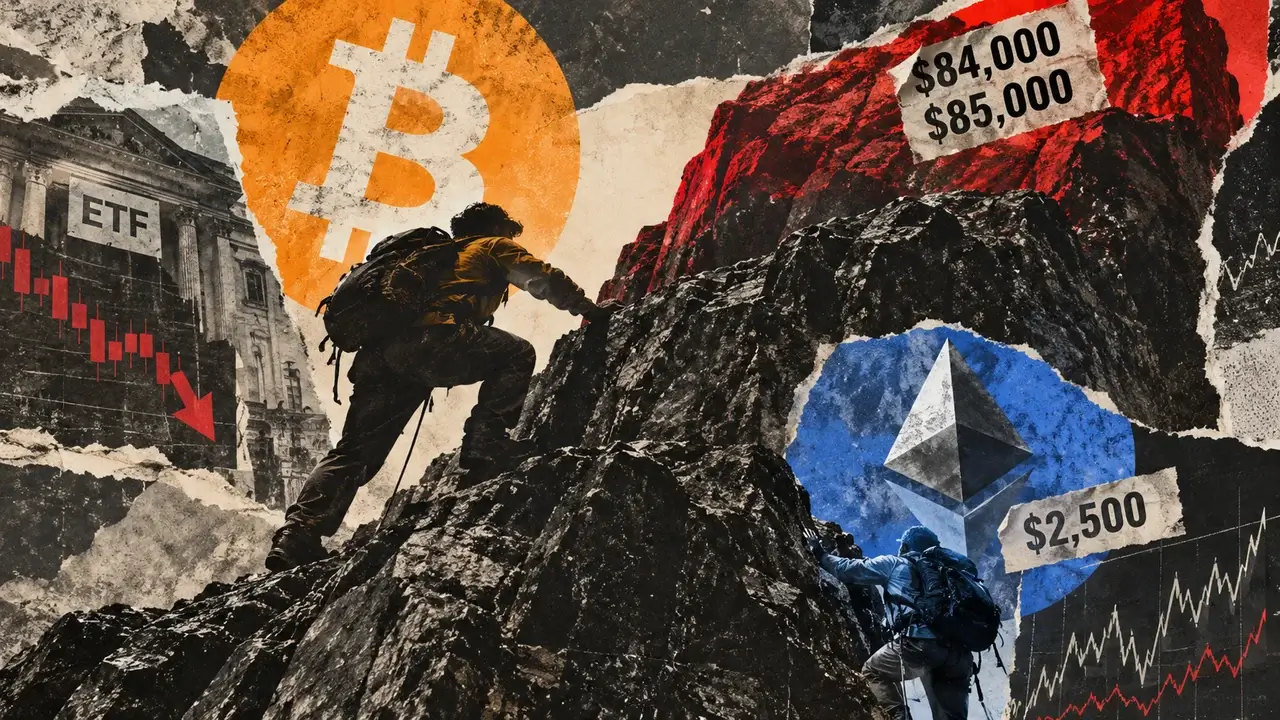
This trend is evidenced by the recent performance of Bitcoin Spot ETFs. Following the May inflation data and the subsequent repricing of rate expectations, the market saw a record streak of outflows totaling approximately $3.45 billion. Bitcoin’s price, which reached record highs in October 2025, has since slid toward the low $60,000s, tracking the deterioration of rate-cut hopes.
Broader Economic Implications and Market Outlook
The persistence of wholesale inflation suggests that the "last mile" of the inflation fight may be the most difficult for policymakers. The divergence between the long-term thesis for Bitcoin—as a fixed-supply asset immune to central bank policy—and its short-term price action remains a point of contention among investors. While persistent inflation theoretically validates the need for a non-sovereign store of value, the immediate liquidity drain caused by the Fed’s response to that inflation continues to weigh on the market price.
As the market looks forward, several key indicators will determine the trajectory of both the economy and the crypto markets:
- The June CPI Report: This will confirm whether the 1.1% jump in producer prices has successfully transitioned into the consumer sector.
- The June 25 PCE Release: This will provide the definitive look at the Fed’s preferred inflation gauge and likely set the tone for the remainder of the summer.
- Geopolitical Developments: Any escalation or de-escalation in the Iran conflict will have an immediate impact on oil prices and, by extension, the headline PPI.
- Kevin Warsh’s Communication: The market will be closely watching the new Fed Chair’s first press conference to gauge his "hawkishness" and his willingness to tolerate a period of higher inflation in exchange for economic stability.
The May PPI report serves as a stark reminder that the post-pandemic inflationary era is not yet over. While producers struggle with rising input costs and consumers brace for higher shelf prices, the financial markets must contend with a Federal Reserve that is boxed in by data. For Bitcoin holders, the current environment is a test of patience; the asset’s structural design may be built for a stagflationary decade, but its daily price remains tethered to the very liquidity cycles the Federal Reserve is currently tightening. Until the central bank can credibly signal a return to easier money, the paradox of "inflation being good for the thesis but bad for the price" is likely to persist.