admin
admin
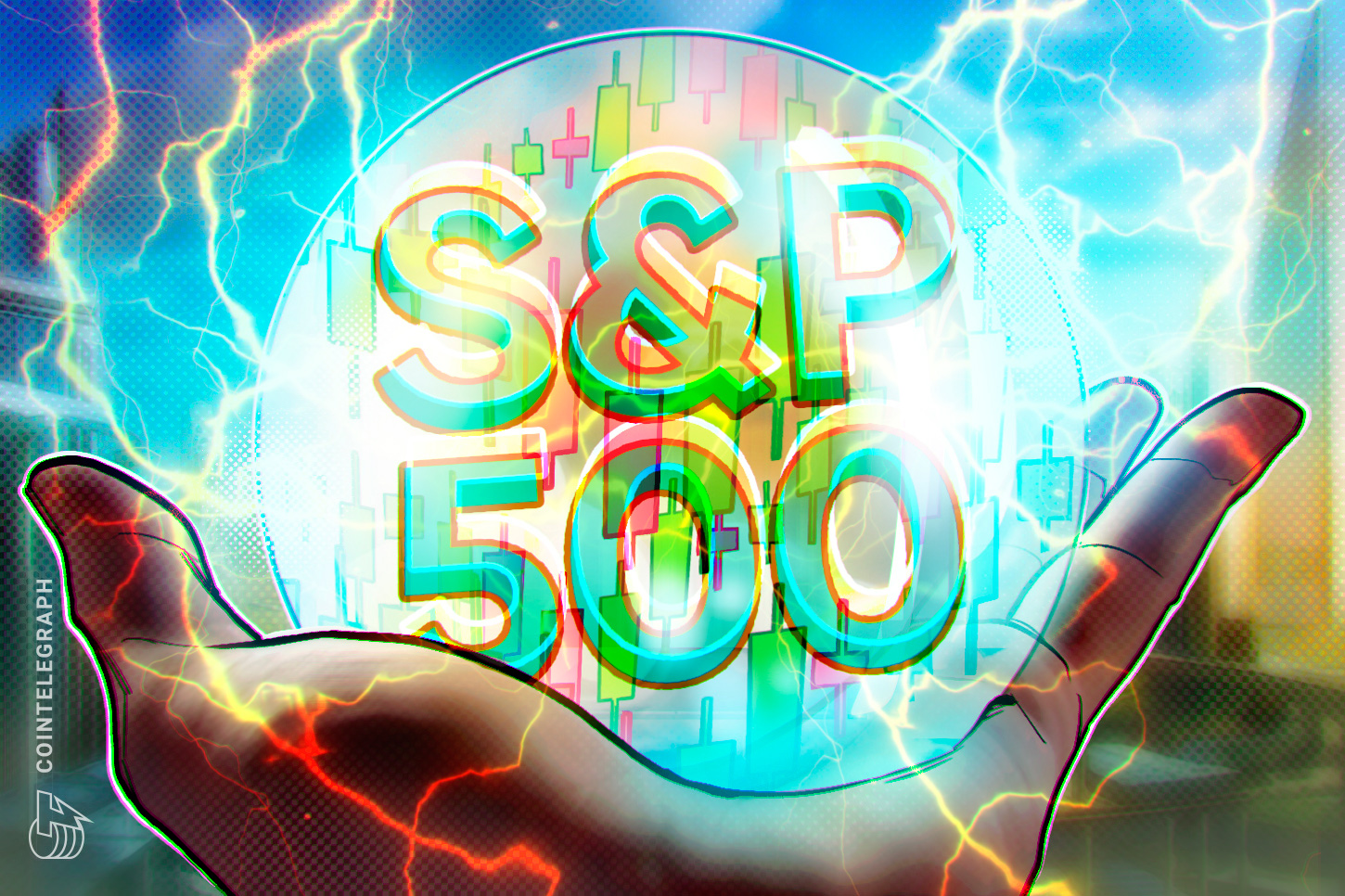
Financial services powerhouse Charles Schwab is reportedly preparing to venture into the rapidly expanding field of prediction markets, signaling a significant shift for the traditional brokerage industry. According to a report from the Wall Street Journal, the multi-trillion-dollar asset manager plans to introduce specialized options contracts that allow retail and institutional customers to place binary "yes-or-no" wagers on the performance of the S&P 500 stock market index. This strategic move, which is expected to debut within the coming months, is being developed in collaboration with Cboe Global Markets. If successful, the initiative would represent Charles Schwab’s first official foray into the prediction market space, a sector that has historically been dominated by niche crypto-native platforms and specialized event-contract exchanges.
The proposed product is designed to be straightforward: users will be able to bet on whether the S&P 500 will close above or below a specific price target at a predetermined time. Unlike traditional equity options, which involve complex Greeks, premiums, and varying strike prices, these event contracts function as binary outcomes. This simplicity is a hallmark of the prediction market model, which has seen a massive surge in popularity over the last year. By integrating these products into its existing ecosystem, Charles Schwab aims to capture the growing demand for "event-driven" trading, a trend that has increasingly blurred the lines between traditional financial speculation and structured betting.
The Evolution of Charles Schwab’s Digital Strategy
The decision to enter the prediction market space does not exist in a vacuum; rather, it is part of a broader, more aggressive modernization strategy at Charles Schwab. For decades, the firm was seen as a conservative pillar of the American brokerage industry, focusing primarily on low-cost stock trading and wealth management. However, recent years have seen the firm pivot toward more speculative and technologically advanced financial products.
In May 2026, Charles Schwab took a landmark step by launching spot Bitcoin and Ether trading for its retail client base. This move was viewed as a direct response to the institutionalization of digital assets and the success of spot crypto ETFs, many of which use Schwab as a primary brokerage or custodial partner. The expansion into digital assets was followed by strong financial performance; the company reported a net income of $2.5 billion for the first quarter of 2026, driven largely by increased client engagement in volatile market sectors.
The move into prediction markets via the S&P 500 is the logical next step in this evolution. By offering binary contracts on the world’s most-watched stock index, Schwab is providing a "gateway" product. While platforms like Polymarket allow users to bet on everything from geopolitical conflicts to celebrity news, Schwab’s initial offering remains rooted in financial indices, maintaining a tether to its core identity as a financial services provider while embracing the mechanics of the "prediction economy."
Analyzing the Prediction Market Landscape
The prediction market industry is currently experiencing a "gold rush" phase. Projections from industry analysts and major financial institutions suggest that the annual volume for event contracts could reach $1 trillion by 2030. This growth is being driven by several factors, including the increasing sophistication of retail traders, the transparency of blockchain-based settlement systems, and a cultural shift toward "gamified" finance.
Currently, the market is divided between regulated US entities and offshore platforms. Kalshi, a Commodity Futures Trading Commission (CFTC)-regulated exchange, has pioneered the legal framework for event contracts in the United States, offering markets on Federal Reserve interest rate hikes, movie box office results, and economic data releases. Meanwhile, Polymarket has captured the global crypto-native audience, processing billions of dollars in volume, particularly surrounding political elections and global events.
Charles Schwab’s entry into this space is significant because it brings institutional-grade credibility and a massive, built-in user base. While platforms like Coinbase have also signaled their intention to move closer to prediction offerings for their 50-state US user base, Schwab’s existing infrastructure and relationship with Cboe Global Markets give it a unique advantage in the regulated financial sphere.
The Role of Cboe Global Markets
The partnership with Cboe Global Markets is a critical component of Schwab’s strategy. As one of the world’s largest exchange holding companies, Cboe provides the regulatory and technical infrastructure necessary to list and clear event contracts. Cboe has been a leader in the "gamification" of indices, having successfully popularized 0DTE (zero days to expiration) options, which now account for a significant portion of daily trading volume in the S&P 500.
By leveraging Cboe’s experience in structured products, Charles Schwab can ensure that its prediction market offerings meet the rigorous standards required by US financial regulators. The collaboration suggests that these contracts will likely be cleared through established clearinghouses, providing a layer of security and capital efficiency that decentralized platforms often lack. This partnership also hints at the potential for future expansion; if the S&P 500 binary contracts are successful, the duo could theoretically launch similar markets for the Nasdaq-100, the Dow Jones Industrial Average, or even specific commodities like gold and oil.
Regulatory Scrutiny and the Legal Battleground
Despite the commercial excitement, the rise of prediction markets has drawn intense scrutiny from lawmakers and regulatory bodies. The US Commodity Futures Trading Commission (CFTC) has been at the center of this debate. Under the leadership of figures like Michael Selig, the agency has maintained a firm stance that many event contracts should be classified as "swaps." This classification grants the CFTC exclusive jurisdiction over the regulation and enforcement of these markets, leading to a series of high-stakes legal battles.
The primary concern for regulators is the potential for "gaming" the system. Many state-level gaming authorities argue that event contracts—particularly those tied to sports or non-financial events—are a form of gambling rather than financial hedging. This has led to a fragmented regulatory landscape where platforms must navigate a patchwork of state and federal laws.
Furthermore, there are significant concerns regarding insider trading. In the halls of Congress, Republican lawmakers have recently proposed bans on insider trading within prediction markets. The focus of this proposed legislation is to prevent individuals with access to nonpublic information—such as corporate executives or government officials—from profiting by placing bets on outcomes they can influence. Notably, some versions of these proposals have faced criticism for not explicitly including White House officials or high-level members of the judiciary, leading to ongoing debates about the ethics of "betting on policy."
Charles Schwab’s decision to limit its initial offering to the S&P 500 is likely a calculated move to mitigate these regulatory risks. Because the S&P 500 is a broad-based index, it is significantly harder for a single individual to manipulate the outcome compared to a niche political event or a specific corporate milestone. This conservative approach allows Schwab to test the waters of prediction markets while staying within the well-defined boundaries of financial index regulation.
Chronology of the Prediction Market Boom
To understand the magnitude of Schwab’s entry, one must look at the timeline of the industry’s recent expansion:
- 2020–2022: Platforms like Polymarket and Kalshi gain traction during the COVID-19 pandemic, as retail traders look for new ways to speculate on global health outcomes and election results.
- January 2022: Polymarket reaches a settlement with the CFTC, agreeing to wind down its US operations and focus on international markets while seeking proper registration.
- 2023: Kalshi successfully launches several high-profile event contracts, including those based on the debt ceiling crisis and Federal Reserve meetings, proving the viability of a regulated US model.
- May 2024: Major traditional finance players begin to take notice. Interactive Brokers launches ForecastEx, a dedicated exchange for event contracts, marking the first major "TradFi" entry.
- May 2026: Charles Schwab launches retail crypto trading, signaling its readiness to offer speculative digital-age products to its millions of clients.
- June 2026: Reports emerge of Schwab’s partnership with Cboe to launch S&P 500 yes-or-no wagers, effectively bridging the gap between mainstream brokerage and prediction markets.
Broader Implications for the Financial Industry
The entry of a titan like Charles Schwab into prediction markets marks a point of no return for the industry. It suggests that "event contracts" are no longer a fringe interest for crypto enthusiasts but are becoming a standard component of a diversified retail portfolio.
There are several key implications for the broader market:
- Liquidity and Accessibility: Schwab’s massive client base will bring unprecedented liquidity to event contracts. This could lead to tighter spreads and more accurate "market-implied" probabilities for economic outcomes.
- The Gamification of Investing: As binary wagers become more common, the psychological profile of the "investor" continues to shift toward that of a "trader" or "player." This has implications for market volatility and the way financial education is delivered to the next generation.
- Pressure on Competitors: Schwab’s move puts immediate pressure on other major brokerages, such as Fidelity, E*TRADE, and Vanguard. If Schwab successfully captures a new revenue stream from event contracts, its competitors will likely be forced to follow suit to prevent client churn.
- Information Discovery: Prediction markets are often touted as the most accurate tools for forecasting future events because they require participants to "put their money where their mouth is." With Schwab entering the fray, the S&P 500 binary markets could become a leading indicator for broader market sentiment, used by economists and analysts to gauge the real-time probability of market moves.
Conclusion and Future Outlook
Charles Schwab’s foray into prediction markets is a defining moment in the convergence of traditional finance and the emerging "betting on everything" economy. By partnering with Cboe Global Markets and focusing on the S&P 500, the firm is attempting to balance the high-growth potential of event contracts with the regulatory safety of established financial indices.
As the product rolls out over the coming months, all eyes will be on the CFTC and state regulators to see how they respond to a mainstream giant offering what many still perceive as a form of sophisticated gambling. If Schwab can navigate the legal hurdles and provide a seamless user experience, it may well catalyze the $1 trillion annual volume projection for prediction markets, forever changing how retail investors interact with the stock market. For now, the move serves as a stark reminder that in the modern financial era, the line between an "investment" and a "wager" is thinner than ever before.