
 Lina Irawan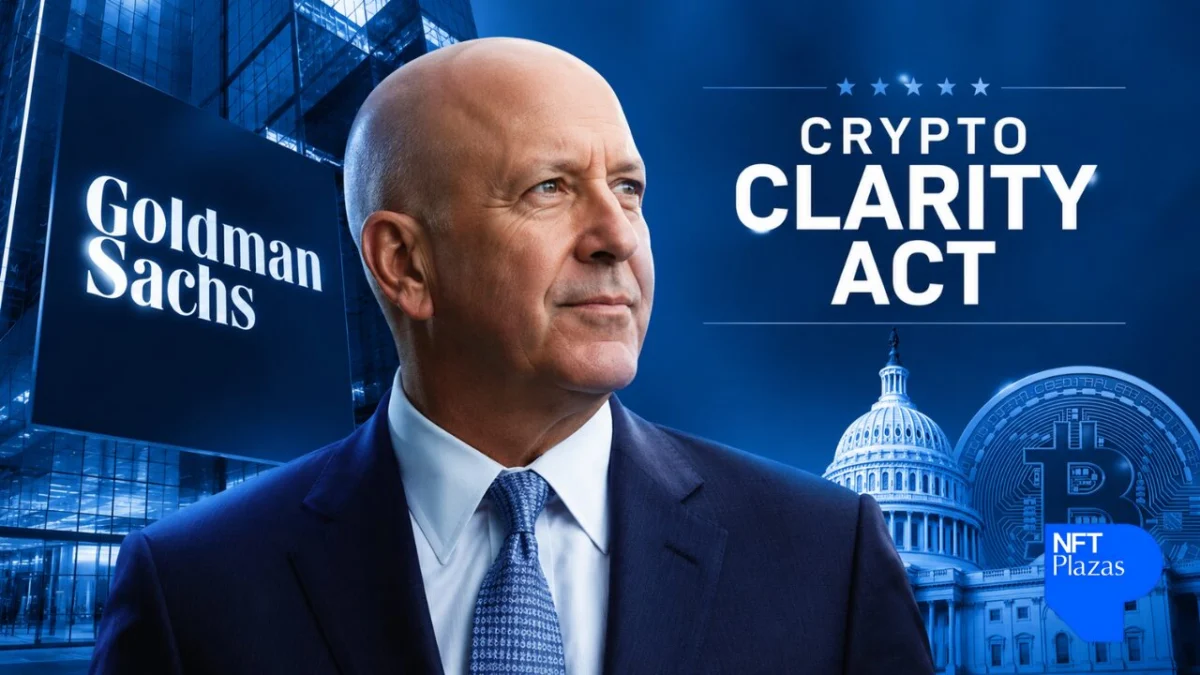
In a significant move that diverges from the prevailing sentiment within much of the traditional banking industry, David Solomon, Chairman and CEO of Goldman Sachs, has publicly voiced his strong endorsement of the Digital Asset Market Clarity Act. This development arrives as U.S. lawmakers inch closer to a potential Senate vote on the landmark cryptocurrency legislation, positioning one of Wall Street’s most influential financial leaders at odds with a growing debate over the regulation of digital assets. While several prominent banks have voiced criticisms of key provisions within the bill, particularly concerning the treatment of stablecoin rewards, Solomon has articulated a clear rationale for his support, emphasizing that regulatory clarity is a fundamental prerequisite for the sustained growth and maturation of the digital asset industry.
Speaking in an interview with Politico, Solomon conveyed his enthusiasm for advancing the CLARITY Act, stating, "I am very supportive of moving the CLARITY Act forward, so we can get some market structure in place and start to move the innovation process along." He candidly acknowledged that the legislation is "not perfect" but highlighted its paramount strength lies in its potential to establish "a level playing field to enhance market stability and allow these markets to develop appropriately." This endorsement from a figurehead of a global investment banking giant carries substantial weight, potentially influencing regulatory discussions and signaling a greater willingness among established financial institutions to engage with the evolving digital asset landscape.
A Crucial Framework for Institutional Integration
The CLARITY Act represents one of the most pivotal pieces of cryptocurrency legislation currently under consideration by Congress. If enacted, it promises to establish a comprehensive regulatory framework for digital assets, meticulously defining the distinct roles and responsibilities of the Securities and Exchange Commission (SEC) and the Commodity Futures Trading Commission (CFTC) in overseeing this burgeoning market. A core tenet of the legislation involves classifying the majority of decentralized cryptocurrencies as commodities rather than securities. This classification would significantly curtail the SEC’s oversight authority over a substantial portion of the market, shifting regulatory focus to the CFTC for these assets.
Furthermore, the bill includes crucial protections for decentralized software developers, aiming to foster innovation without the immediate threat of regulatory enforcement actions. It also addresses the complex rules surrounding stablecoin reward programs, a provision that has emerged as one of the most contentious aspects of the legislation. Solomon’s belief, as relayed to Politico, is that such clearer regulations would serve as a powerful catalyst for increased institutional participation in digital assets. This aligns with Goldman Sachs’ own strategic trajectory, as the firm has demonstrably expanded its involvement in the digital asset space through various initiatives in recent years.
The Stablecoin Rewards Conundrum: A Deepening Divide on Wall Street
The most significant point of contention and a primary driver of the division within Wall Street revolves around the concept of stablecoin yield. Stablecoins are a distinct category of digital tokens meticulously designed to maintain a stable value, typically through a one-to-one peg with a fiat currency, most commonly the U.S. dollar. These digital assets have become indispensable tools in the cryptocurrency ecosystem, widely employed for facilitating cryptocurrency trading, enabling cross-border payments, and powering a growing array of decentralized finance (DeFi) applications.

Prominent cryptocurrency firms, such as Coinbase, have implemented reward programs that offer users annual returns on certain stablecoin holdings, including those backed by Circle’s USDC. These returns frequently range between 3% and 5%, a figure that significantly outpaces the interest rates typically available on traditional savings accounts offered by conventional banks. Proponents of these reward programs argue that they provide consumers with access to more competitive and attractive financial products, fostering greater financial inclusion and offering alternative avenues for yield generation.
However, critics, particularly within the traditional banking sector, contend that these stablecoin reward programs bear a striking resemblance to traditional bank deposits. The core of their objection lies in the fact that these crypto firms offering such yields often operate without adhering to the same stringent regulatory standards and capital requirements imposed on established banks. This disparity in regulatory oversight, they argue, creates an uneven playing field and potentially introduces systemic risks.
Banking Industry’s Resistance: A Defense of Traditional Models
Solomon’s forward-looking stance starkly contrasts with the public pronouncements of other influential banking leaders, most notably JPMorgan Chase CEO Jamie Dimon. Dimon has emerged as one of the most vocal critics of the CLARITY Act, particularly its provisions related to stablecoin yields. In earlier public statements, Dimon argued that permitting crypto companies to offer yield on stablecoins without the equivalent level of banking oversight would constitute an unfair competitive advantage for these nascent entities.
"The banks will not accept it that way," Dimon asserted, warning that such products, operating outside the purview of traditional banking regulations, could eventually precipitate significant financial risks. This sentiment has been amplified by various banking trade groups, which have actively urged lawmakers to strengthen the legislation. Their primary concern is that stablecoin rewards could incentivize consumers to withdraw their deposits from traditional banks, thereby eroding a critical source of funding for conventional lending activities and potentially impacting the broader financial system.
Leaders within the cryptocurrency industry, however, offer a different perspective. Coinbase CEO Brian Armstrong, for instance, has countered these arguments by suggesting that banks are lobbying against stablecoin rewards not due to genuine consumer protection concerns, but rather because these offerings pose a direct threat to their established deposit-based business models. This highlights a fundamental clash in perspectives regarding innovation, regulation, and market competition.
The Senate Vote Approaches: A Critical Juncture for Crypto Legislation
Solomon’s endorsement of the CLARITY Act arrives at a pivotal moment, coinciding with Republican senators releasing an updated version of the bill in anticipation of a potential floor vote in the Senate. The revised draft seeks to maintain the bill’s proposed market structure while incorporating new ethics provisions specifically designed to govern digital asset activities undertaken by certain government officials. Despite these revisions, Democratic lawmakers have expressed reservations, arguing that the changes do not sufficiently address their concerns. These concerns are particularly acute regarding potential conflicts of interest and the influence of President Donald Trump’s business interests in the cryptocurrency space.

Negotiations among lawmakers are ongoing, with several critical issues remaining unresolved. These include the precise nature of stablecoin oversight, the establishment of robust consumer protection mechanisms, and the definitive rules governing yield-bearing products. The successful resolution of these outstanding matters will be crucial for the legislation to advance through the legislative process.
A Widening Chasm in Crypto Regulation: Implications for the Financial Landscape
Goldman Sachs has steadily and strategically expanded its footprint in the digital asset ecosystem. This expansion has manifested through various avenues, including the provision of trading services, the exploration of tokenization initiatives, and strategic investments in blockchain technology. Solomon’s public remarks represent one of the most unequivocal endorsements of comprehensive crypto legislation from the chief executive of a major global financial institution.
His support can also be interpreted as indicative of a broader recalibration among certain financial institutions. Increasingly, these entities appear to view regulatory certainty not as an impediment to innovation, but rather as the indispensable bedrock upon which institutional adoption of digital assets can be built. This perspective shift acknowledges the inherent complexities and risks associated with digital assets and recognizes that a clear, defined regulatory environment is necessary to attract and safeguard substantial institutional capital.
The ultimate fate of the CLARITY Act in its current form remains uncertain. However, Solomon’s influential backing underscores a palpable and growing divide within Wall Street itself. While some established banks continue to perceive cryptocurrency legislation primarily as a competitive threat to their traditional business models, others are beginning to recognize that a well-defined regulatory framework is essential for unlocking the significant potential of digital asset markets. This includes channeling substantial institutional capital into the sector and propelling the next evolutionary phase of the industry’s growth and integration into the global financial system. The implications of this divide extend beyond the immediate legislative battle, pointing towards a future where the financial industry grapples with the transformative power of digital assets, shaped by differing visions of regulation, innovation, and market structure. The dialogue initiated by Solomon’s endorsement is likely to reverberate through financial corridors, influencing strategic decisions and regulatory approaches for years to come.









