James Watt
Lido Finance, a leading entity in the decentralized finance (DeFi) ecosystem, announced on July 9, 2026, a comprehensive suite of updates and new features for its Lido V3 stVaults, a groundbreaking modular staking primitive designed to offer enhanced flexibility, security, and capital efficiency for Ethereum stakers, particularly institutions. These advancements signify a pivotal moment in the evolution of liquid staking, providing a robust infrastructure that supports optional stETH minting and addresses critical operational challenges faced by large-scale participants in the Ethereum network.
The Evolution of Ethereum Staking and Lido’s Role
The transition of the Ethereum network to a Proof-of-Stake (PoS) consensus mechanism, culminating in the Merge in September 2022 and further refined by the Shapella upgrade in April 2023, fundamentally reshaped how participants secure the network and earn rewards. Staking ETH directly requires a minimum of 32 ETH, along with significant technical expertise for running and maintaining a validator node. This barrier to entry, coupled with the illiquidity of staked ETH, led to the rise of liquid staking protocols like Lido Finance.
Lido allows users to stake any amount of ETH and receive stETH (staked ETH) in return. stETH is a liquid token that represents a user’s staked ETH and accumulated rewards, allowing participants to retain liquidity and participate in other DeFi protocols while their ETH is locked for staking. This innovation democratized access to Ethereum staking, but as the network matured and institutional interest surged, there arose a demand for more customized, robust, and secure staking solutions that could integrate seamlessly into existing institutional frameworks.
This is where Lido V3’s stVaults enter the picture. Introduced as a modular staking infrastructure, stVaults offer a paradigm shift, allowing entities to build and operate their own custom staking vaults with configurable parameters, including the option to mint stETH. This modularity is crucial for institutions that require specific operational controls, regulatory compliance, and tailored risk management strategies that off-the-shelf liquid staking solutions might not fully accommodate. The latest updates aim to refine this offering, making it even more accessible and secure for a diverse range of users.
Navigating the Ethereum Validator Entry Queue: A Chronological Analysis
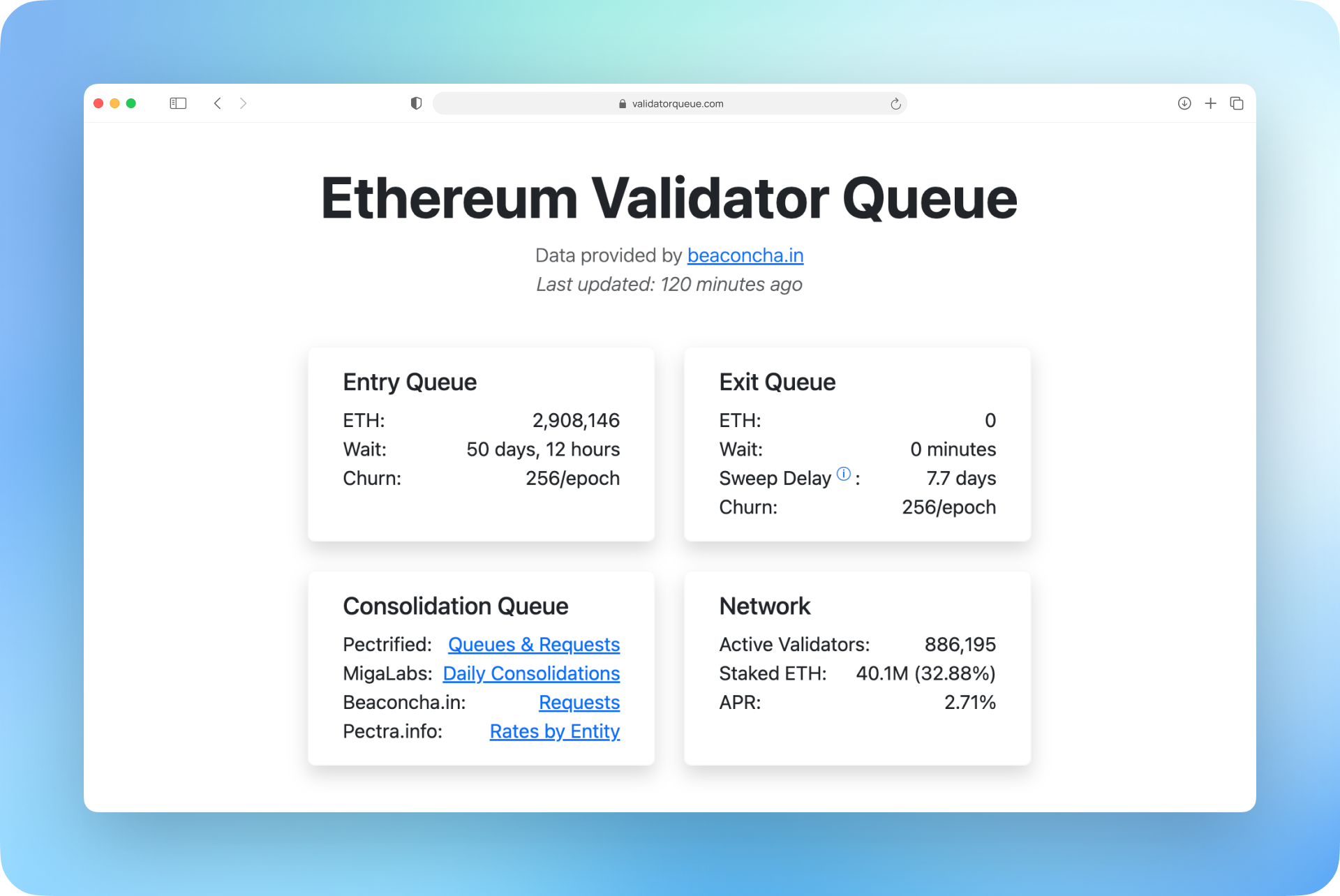
A persistent challenge within the Ethereum staking landscape has been the fluctuating length of the validator entry queue. This queue dictates the waiting period before new validators can become active on the network, a bottleneck that can significantly impact the timing of staking rewards and capital deployment strategies. Throughout May 2026, the Ethereum validator entry queue witnessed a notable surge, extending beyond 60 days. This increase was attributed to a combination of factors, including sustained institutional interest in staking yields, a stable market environment encouraging long-term capital commitments, and potentially network-wide upgrades or events that spurred validator onboarding. The prolonged queue highlighted the network’s growing popularity but also presented an operational hurdle for new stakers.
However, June brought a modest reprieve, with the average entry queue length easing to approximately 50 days. While still a considerable waiting period, this slight reduction offered some relief. The dynamics of this queue are closely monitored by staking providers and institutions alike, as they directly influence the return on investment timelines and the efficiency of capital allocation. For institutions managing significant capital, a multi-month waiting period can be a substantial deterrent, tying up funds without generating immediate rewards.
Validator Consolidation: A Strategic Solution to Queue Congestion
To mitigate the impact of the prolonged entry queue, Lido V3 promotes "validator consolidation" as a highly capital-efficient migration strategy for existing validators looking to transition to stVaults. This method allows source validators to continue accruing rewards throughout the migration process, ensuring uninterrupted yield generation. Upon successful consolidation, stakers gain access to stETH, which immediately unlocks a myriad of benefits: enhanced DeFi composability, enabling participation in lending, borrowing, and other yield-generating protocols; potentially higher rewards through optimized staking strategies; and crucially, improved liquidity for large staking positions that would otherwise remain illiquid.
Further sweetening the proposition, Lido has announced an extension of the stVaults infrastructure fee waiver through the end of August 2026. This waiver acts as a significant incentive, reducing the initial operational costs for new stVault participants and further enhancing the economic viability of migrating to this advanced staking primitive. This move underscores Lido’s commitment to fostering adoption and supporting its user base during the early phases of stVaults’ expansion.
Expanding the stVaults Ecosystem: The Products Overview Hub
The growing ecosystem built around stVaults is now prominently showcased on the dedicated stVaults Products Overview hub. This centralized platform highlights a diverse array of new products and innovative use-cases that leverage the modularity and flexibility of stVaults. From institutional-grade staking services offered by qualified custodians to specialized DeFi applications and custom treasury management solutions, the hub serves as a testament to the versatility and growing adoption of the stVaults infrastructure. It acts as a beacon for potential vault builders and owners, illustrating the breadth of possibilities and inspiring further innovation within the Lido V3 ecosystem. The platform encourages new developers and entities to feature their stVault-powered solutions, fostering a collaborative environment that drives the overall utility and reach of the primitive.
Enhanced User Experience and Operational Efficiency: The stVaults Web UI
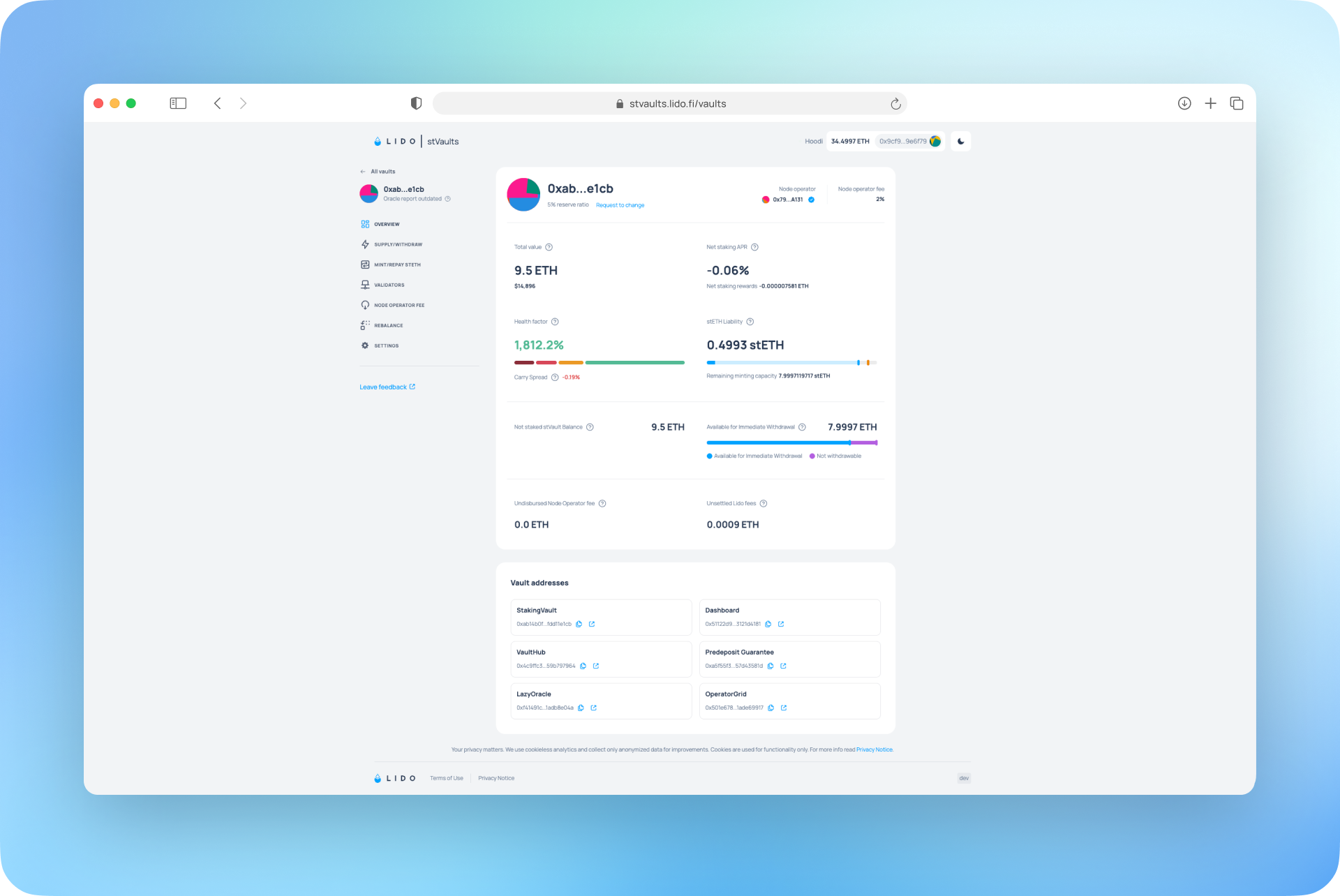
The stVaults Web User Interface (UI) has received significant upgrades, transforming it into a more intuitive and powerful tool for vault builders and owners. Designed to simplify the setup and ongoing monitoring of stVaults, these recent additions address critical aspects of security, operational efficiency, and user control.
-
Anti-Scam Protections for Stakers: In an environment constantly targeted by malicious actors, security is paramount. The updated Web UI now integrates robust anti-scam protections. It actively warns stakers about potentially risky transactions and, more critically, blocks certain operations if the vault’s setup configuration presents vulnerabilities that could allow third-party actors to exploit or scam stakers. This proactive security layer is a vital defense mechanism, building greater trust and confidence among participants, especially institutional clients who prioritize safeguarding their assets above all else. This feature represents a significant step towards a more secure and resilient staking experience.
-
Streamlined Lido Fee Settlement: Previously, settling Lido fees, a prerequisite for certain stVault actions, often required navigating command-line interfaces (CLI) or direct smart contract interactions. The latest Web UI update revolutionizes this process by enabling Vault Owners and Node Operators to review and settle fees directly within the user interface. As fee settlement is permissionless, this integration drastically simplifies operational workflows, reducing technical overhead and allowing for faster, more efficient management of vault activities. This improvement is particularly beneficial for institutions with complex internal approval processes, as it centralizes critical operations within a user-friendly environment.
-
Effortless Rebalancing in the Web UI: One of the most impactful new features is the direct support for rebalancing within the Lido stVaults Web UI. Rebalancing involves repaying stETH liability using ETH directly from the vault’s own balance. For institutions, this functionality profoundly simplifies the redemption fulfillment process. When a redemption request is fulfilled by minting stETH from the stVault and subsequently swapping it for ETH, an stETH liability is incurred. This liability can now be efficiently covered by rebalancing the position through the intuitive web interface. This eliminates the previous necessity of using the command-line interface or interacting with smart contracts directly, which often required specialized technical expertise and additional security protocols. With the UI integration, vault owners can perform this crucial operation themselves, seamlessly integrating it into their existing approval and custody setups. This not only enhances operational autonomy but also significantly improves the speed and efficiency of managing institutional staking positions, aligning with best practices for treasury and risk management.
Strengthening Institutional Support: The stVaults Doc Center
Complementing the UI enhancements, the stVaults Doc Center has been significantly expanded with more comprehensive custodian guides. These guides provide detailed instructions and best practices for integrating stVaults with various qualified custodian solutions, ensuring that institutions can manage their staked assets securely and compliantly. The Qualified Custodians overview within the Doc Center now also conveniently lists all necessary stVaults smart-contract addresses that require whitelisting before any interaction. Centralizing this critical information in one accessible location drastically reduces the administrative burden for institutions, streamlining their due diligence and onboarding processes. This meticulous attention to documentation is crucial for fostering broader institutional adoption, as clear guidelines and robust support are fundamental requirements for compliance and operational security.
Broader Impact and Implications for the Staking Landscape
These recent advancements in Lido V3’s stVaults carry significant implications for the broader Ethereum staking ecosystem and institutional participation.
- Accelerated Institutional Adoption: The modularity, enhanced security features, and streamlined operational workflows (especially fee settlement and rebalancing) are tailor-made for institutional requirements. By reducing technical complexities and providing robust control mechanisms, stVaults lower the barrier for traditional financial entities, asset managers, and corporate treasuries to engage with Ethereum staking, potentially driving a new wave of capital into the network.
- Decentralization and Customization: While Lido is a dominant force in liquid staking, stVaults promote a form of decentralized customization. By allowing individual entities to operate their own vaults with specific configurations, Lido is not merely offering a pooled service but a foundational layer upon which diverse staking strategies can be built, potentially fostering greater decentralization of validator operations over time.
- Enhanced Capital Efficiency: The validator consolidation strategy, coupled with the infra fee waiver, directly addresses capital efficiency concerns. Institutions can optimize their capital deployment, avoid long queues, and immediately access the liquidity and composability benefits of stETH, leading to more attractive risk-adjusted returns.
- Security as a Cornerstone: The emphasis on anti-scam protections and detailed custodian guides reflects a maturing industry where security is not just an add-on but a fundamental design principle. This focus is crucial for building trust and ensuring the long-term sustainability and credibility of decentralized staking solutions.
- Competitive Advantage: By continuously innovating and refining its offerings, Lido solidifies its position as a leader in the liquid staking space. These updates provide a significant competitive edge, particularly in attracting sophisticated institutional clients who demand enterprise-grade solutions.
According to a Lido spokesperson, "The latest stVaults enhancements are a direct response to the evolving needs of our institutional partners and the broader staking community. Our focus remains on delivering unparalleled flexibility, security, and operational ease. Features like in-UI rebalancing and robust anti-scam measures are pivotal in empowering users and fostering broader, more secure participation in Ethereum’s proof-of-stake economy. We anticipate these updates will significantly accelerate institutional engagement with Lido V3 and the stETH ecosystem."
Looking ahead, the trajectory of Lido V3’s stVaults suggests a future where Ethereum staking is not only more accessible but also highly adaptable to diverse financial and operational requirements. The ongoing commitment to user experience, security, and modularity positions stVaults as a critical primitive in the maturation of the digital asset landscape, bridging the gap between traditional finance and the innovative frontiers of decentralized networks. For entities considering a foray into Ethereum staking, the latest advancements from Lido V3 present a compelling and increasingly refined proposition.