admin
admin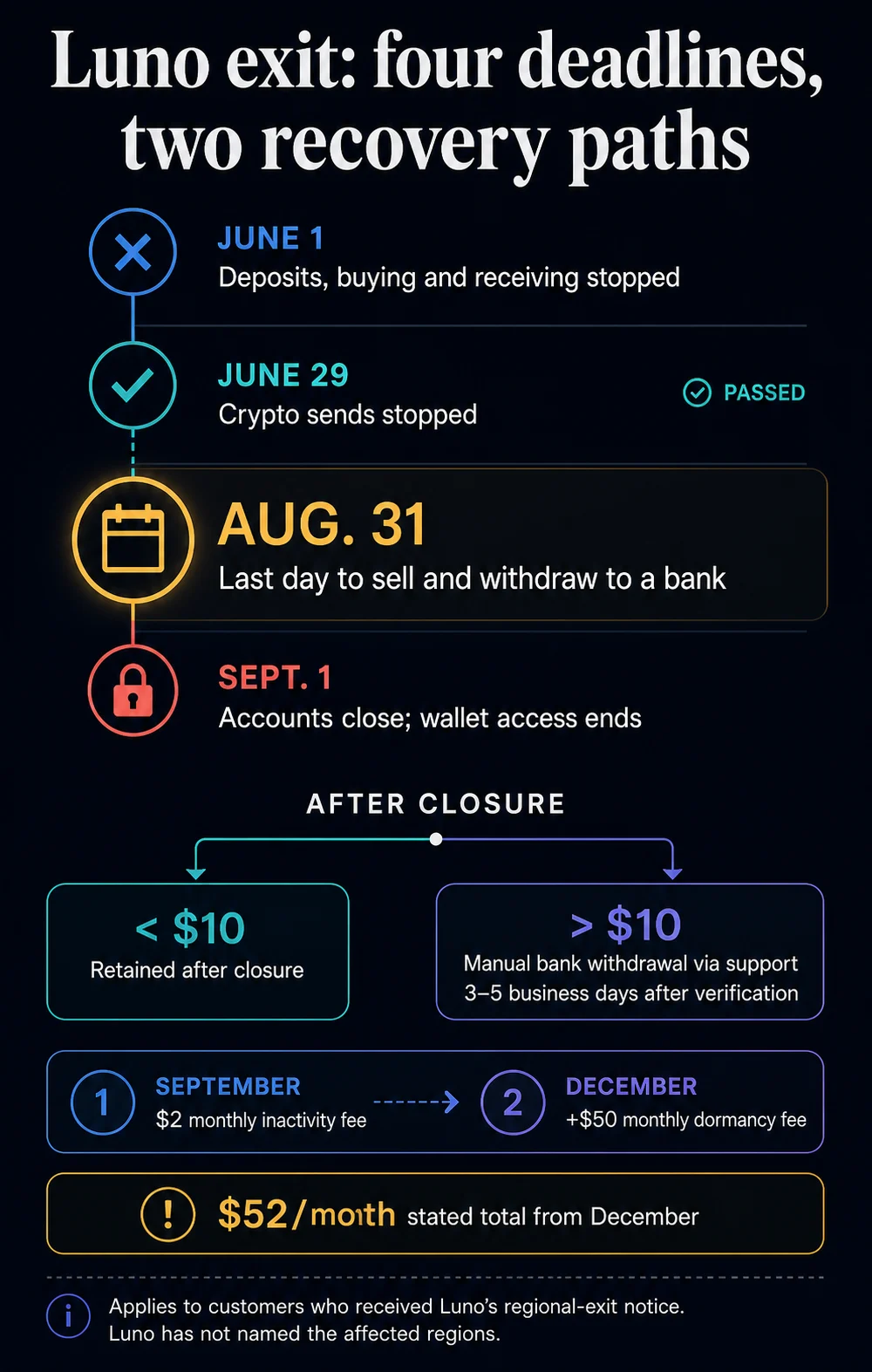
Crypto platform Luno has implemented a significant restriction for a segment of its user base, effectively halting all incoming and outgoing cryptocurrency transfers. This move, effective since June 1 for deposits and purchases and June 29 for crypto transfers, leaves affected customers with a narrow window to liquidate their holdings and withdraw fiat currency before their accounts are permanently closed on September 1. The company’s stated rationale for these actions centers on a strategic regional exit, though specific affected territories remain undisclosed.
The implications of Luno’s decision are far-reaching for the impacted users. With the ability to move their digital assets to alternative wallets or exchanges now extinguished, the sole remaining avenue for accessing their funds is to convert them into traditional currency and initiate a bank withdrawal. This process must be completed by August 31, a deadline that looms large for individuals who may have been holding cryptocurrencies on the platform for investment or other purposes. Failure to meet this deadline not only means losing the opportunity to self-custody their assets but also exposes them to escalating fees that will begin to accrue on remaining balances after the September 1 account closure.
A Tightening Timeline: From Deposit Halt to Transfer Blockade
The restrictions implemented by Luno have been phased, creating a progressively more challenging situation for the affected users. The initial phase, commencing on June 1, saw Luno disable deposits, crypto purchases, and incoming crypto transactions for customers identified in its regional-exit notices. This measure was a precursor to the more impactful restriction on outgoing transfers, which was enforced starting June 29. For users who held their digital assets on Luno and had not yet moved them, this date marked the definitive end of their ability to transfer their holdings in kind to another platform.
Consequently, the primary and now almost exclusive method for affected users to retrieve their funds is to sell their cryptocurrency holdings directly on Luno and then withdraw the resulting fiat currency to their linked bank accounts. This standard bank withdrawal process remains an option until the end of August. However, the cessation of crypto transfers signifies a loss of flexibility and control for users who may have preferred to maintain their assets in digital form or leverage alternative platforms with different fee structures or services.
Undisclosed Regions, Unclear Scope

Luno has maintained a degree of opacity regarding the specific regions from which it is withdrawing services and the exact number of customers affected by these restrictions. While a country availability page on Luno’s website currently lists Kenya, Nigeria, South Africa, Indonesia, and Malaysia as supported regions, it also presents a list of 33 "unsupported countries." This creates a broad category of locales not explicitly detailed, leaving a considerable number of potential unaddressed territories where users might be impacted.
The regional-exit guidance, initially published on May 28 and subsequently updated on July 29, lacks granular detail on which specific passages were altered. This lack of transparency makes it difficult for users to ascertain the precise reasons for their region’s exclusion or to understand the full scope of Luno’s operational adjustments. Without a clear public statement detailing the criteria for these regional exits, users are left to infer the circumstances, which can lead to increased uncertainty and anxiety.
The Escalating Cost of Inaction: Fees and Minimum Thresholds
For users who fail to liquidate their holdings and withdraw their funds by the August 31 deadline, the financial implications become increasingly severe. Luno has outlined a tiered fee structure that will apply to accounts that remain active or dormant after the September 1 closure. Balances below the equivalent of $10 will not be processed for withdrawal and will be retained by Luno. This policy means that small holdings are effectively lost to the user, with no recourse for retrieval.
For users with balances exceeding $10, a manual withdrawal process becomes available after account closure. However, this requires users to proactively contact Luno’s support team and provide verified bank details or a recent bank statement. While Luno states that manual withdrawals typically take three to five business days to complete, they do not reinstate ordinary account access, which ceases on September 1.
The most significant financial deterrent for leaving funds on the platform is the imposition of escalating monthly fees. Starting in September, accounts with remaining funds will be subject to a $2 monthly inactivity fee. This charge escalates substantially in December, with an additional $50 monthly dormancy fee being applied for continued storage. This brings the total monthly cost for holding assets on Luno to a considerable $52. While Luno has not definitively confirmed whether this exact fee schedule applies uniformly across all unnamed affected jurisdictions, the stated figures represent a substantial drain on any remaining funds, incentivizing swift action from users.
Luno’s Strategic Rationale and Broader Market Context

In its communications regarding the regional exits, Luno has indicated that the decision is driven by a strategic focus on its core markets in Africa and Southeast Asia. The company has not publicly attributed its withdrawal to insolvency, a security breach, or specific regulatory mandates. This suggests a business-driven decision to streamline operations and concentrate resources in regions perceived as having greater growth potential or where Luno already holds a significant market share.
This move by Luno is not an isolated incident within the broader cryptocurrency landscape. The industry has seen various platforms re-evaluate their global presence and service offerings in response to evolving regulatory environments, market dynamics, and the pursuit of profitability. Companies often make strategic decisions to consolidate operations in more established or lucrative markets, leading to service discontinuations in other territories. For users in these affected regions, this can necessitate a rapid adaptation to new platforms or a complete withdrawal from cryptocurrency participation.
The lack of explicit communication regarding the specific reasons for these regional exits can create a vacuum of information, potentially leading to speculation and mistrust among affected users. Transparency from platforms like Luno is crucial in maintaining user confidence, especially when significant changes impacting their assets are implemented.
Analysis of Implications
The implications of Luno’s actions extend beyond the immediate financial concerns of its affected users.
- Loss of User Control: The inability to transfer crypto in kind represents a significant loss of user autonomy. Users are forced into a fiat conversion, which may trigger capital gains taxes in their respective jurisdictions and removes the option of holding assets in a potentially more volatile but also potentially more rewarding digital form.
- Increased Operational Burden: For users who still hold funds on Luno, the need to actively engage with customer support for manual withdrawals, or to ensure timely sales and bank transfers, adds a considerable operational burden, especially for those less familiar with financial processes.
- Market Sentiment: While Luno claims no insolvency or regulatory issues, such broad service withdrawals can, in some instances, contribute to negative sentiment in specific markets, particularly if communication is perceived as lacking. This can impact user trust not only in Luno but potentially in the broader crypto ecosystem within those regions.
- Regulatory Scrutiny: The manner in which such regional exits are handled can also attract regulatory attention. Regulators are increasingly focused on consumer protection within the digital asset space, and the clarity and fairness of platform policies during service terminations are often scrutinized.
In conclusion, Luno’s decision to block crypto transfers for certain users presents a critical juncture for those affected. With the clock ticking down to August 31, the imperative is clear: sell holdings and withdraw fiat or face a diminishing return on remaining assets due to escalating fees. The lack of detailed public information about the affected regions and the specific reasons for these strategic shifts underscores the importance of proactive communication from cryptocurrency platforms when enacting significant changes that directly impact user funds and access.