Lina Irawan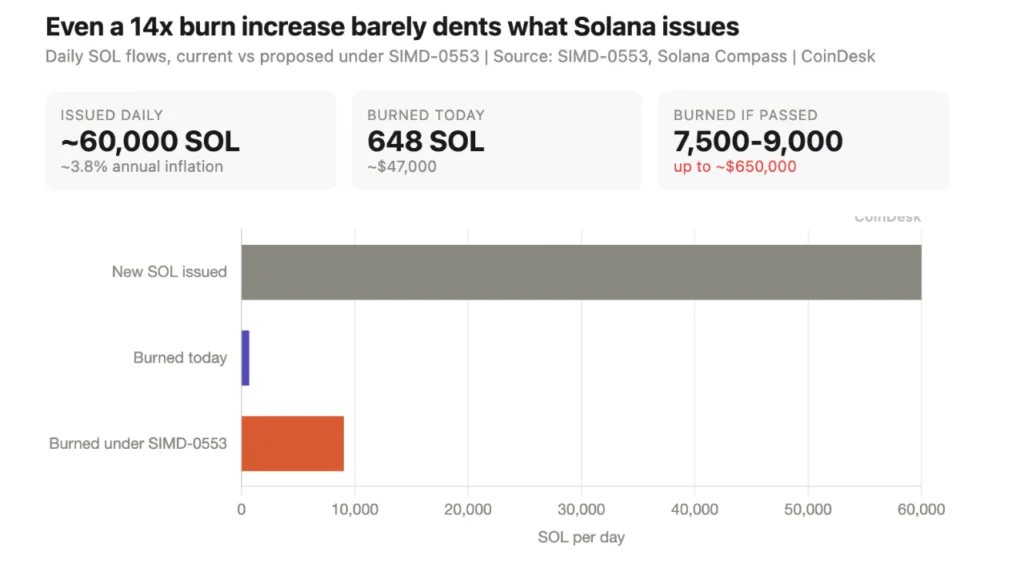
Solana’s validator community is on the cusp of approving a significant governance proposal, SGP-0003, which stands to fundamentally reshape the network’s tokenomics by drastically increasing the amount of its native cryptocurrency, SOL, permanently removed from circulation, while simultaneously accelerating the reduction of new token issuance. This dual-pronged approach aims to tighten the overall supply of SOL, potentially bolstering its long-term value proposition. The proposal, currently in its crucial signaling phase, consolidates two previously introduced Solana Improvement Documents (SIMDs) – SIMD-0553 and SIMD-0550 – into a single, comprehensive package designed to create a more restrictive supply dynamic for the blockchain’s native asset. If it successfully navigates the governance process, SGP-0003 would lead to a more than tenfold increase in daily SOL burns and expedite the network’s journey towards its predetermined lower inflation targets.
The current signaling phase is a critical juncture in Solana’s decentralized governance. It requires a specified percentage of the network’s staked SOL to express support before a proposal can advance to a formal, binding vote. SGP-0003 has garnered considerable traction within the validator community, attracting backing from several prominent validators and key infrastructure providers. As of this report, support is steadily approaching the necessary threshold, indicating a strong consensus among network operators for this proposed shift in monetary policy. The successful progression of this proposal would mark one of the most substantial changes to Solana’s economic framework since its inception.
Merging Initiatives for Enhanced Supply Control
At its core, SGP-0003 is an amalgamation of two distinct but complementary proposals, SIMD-0553 and SIMD-0550, each addressing a different facet of SOL’s supply dynamics.
SIMD-0553: A Resource-Based Transaction Fee Model
The first component, SIMD-0553, introduces a paradigm shift in how transaction fees are structured on the Solana network. It proposes moving away from Solana’s historically uniform fee structure towards a more dynamic, resource-based model. Under this new system, users would be charged transaction fees commensurate with the actual network resources their transactions consume. This means that more computationally intensive operations, such as complex smart contract interactions or large-scale data transfers, would incur higher fees compared to simpler, less resource-demanding transactions.
A significant consequence of this fee restructuring lies in the network’s burn mechanism. Solana, like several other blockchains, burns a portion of the transaction fees it collects. By increasing the overall fees paid by users on more resource-heavy transactions, SIMD-0553 is projected to dramatically elevate the volume of SOL permanently removed from circulation. Current estimates suggest that daily SOL burns could surge from approximately 650 SOL to an impressive range of 7,500 to 9,000 SOL. This represents a substantial increase in the value of tokens being destroyed daily, potentially rising from around $48,000 to as much as $668,000, with the exact figure fluctuating based on daily network activity and SOL’s market price. This heightened burn rate is a direct mechanism to reduce the circulating supply of SOL.
SIMD-0550: Accelerating the Disinflation Schedule

The second key element of SGP-0003, SIMD-0550, focuses on the issuance side of SOL’s supply equation, aiming to reduce the rate at which new tokens enter circulation. This proposal seeks to accelerate Solana’s disinflationary path by doubling the annual reduction rate of new token issuance from the current 15% to 30%. This aggressive pace is designed to guide the network towards its long-term inflation floor of 1.5% significantly faster than previously planned. Under the current roadmap, Solana was projected to reach this 1.5% inflation rate by 2032. However, with the implementation of SIMD-0550, this target could be achieved as early as 2029, shaving three years off the timeline.
The projected impact of this accelerated disinflation schedule is substantial. Developers estimate that over the next six years, this faster reduction in new token emissions would lead to a decrease in the total number of SOL tokens issued by approximately 18.9 million. At current market prices, this reduction translates to a staggering value of around $1.36 billion that will not enter circulation. By issuing fewer new SOL tokens, this proposal directly addresses the supply side, working in tandem with increased burns to create a tighter overall token supply.
The Synergistic Effect: Beyond Higher Burns
While the prospect of a tenfold increase in daily token burns is noteworthy, it is crucial to understand that this measure alone would not render SOL deflationary in the immediate term. The Solana network currently issues an average of approximately 60,000 SOL tokens per day through its inflation schedule. Even if daily burns were to reach the projected maximum of 9,000 SOL, the number of newly issued tokens would still significantly exceed those permanently removed from circulation.
This is precisely why SGP-0003 combines SIMD-0553 and SIMD-0550. The synergistic effect of these two proposals is designed to narrow the gap between supply entering and leaving the market. While SIMD-0553 acts as a powerful engine for token destruction, SIMD-0550 acts as a governor on the issuance rate, ensuring that the net effect is a significant reduction in the overall growth of SOL’s circulating supply.
Solana’s current inflation rate stands at approximately 3.8%. This rate has been steadily declining since the network’s launch, when the initial inflation rate was set at 8%. The existing disinflation model has been a gradual process, but SGP-0003 proposes a more aggressive acceleration of this trend.
Growing Validator Momentum Towards Approval
The path to implementing SGP-0003 involves a multi-stage governance process. Before any network-wide vote can take place, the proposal must first successfully navigate Solana’s validator signaling process. According to governance rules established by the Solana Foundation, a proposal needs to secure support equivalent to at least 15% of the network’s staked SOL to advance to the discussion phase and subsequently to a formal vote.
This signaling phase has witnessed a steady increase in support for SGP-0003 throughout the week. Data from the Solana Validator Governance dashboard reveals that the proposal has garnered backing from approximately 63 million SOL. This represents just over 14.4% of the network’s total staked supply, placing it on the brink of clearing the required threshold. To reach the necessary 65.16 million SOL mark before the signaling deadline of August 18, an additional approximately 3 million SOL in staked support is needed.
The breadth of support is also a significant indicator of the proposal’s potential success. SGP-0003 has already secured backing from 73 validators, including many influential players within the Solana ecosystem. Notable among these are Helius, Jupiter, Staking Facilities, Drift, OtterSec, and Solana Compass. The participation of these entities underscores the perceived importance and potential benefits of the proposed tokenomic changes.

Helius, in particular, has been a substantial contributor to the pledged support early in the signaling process. Further drawing attention to the proposal, the lead engineer responsible for drafting SIMD-0550 is an integral part of the Helius team, suggesting a deep understanding and strategic vision behind the proposed reforms.
If SGP-0003 successfully meets the required support threshold within the stipulated timeframe, it will formally move into the discussion phase. This stage allows for further deliberation and refinement before it is put to a final, binding validator vote.
Potential Implications for SOL’s Value and Adoption
The approval and implementation of SGP-0003 would represent a landmark moment for Solana’s monetary policy. Proponents of the proposal argue that the combined effect of increased token burns and accelerated inflation reduction will lead to greater scarcity of SOL over the long term. While the proposal does not offer any guarantees regarding future price appreciation, a more constrained supply, coupled with continued growth in network adoption and sustained investor demand, could create a more favorable environment for SOL’s underlying economic fundamentals.
However, it is essential to acknowledge that SOL’s market performance will continue to be influenced by a multitude of factors beyond its tokenomics. Broader cryptocurrency market conditions, the participation of institutional investors, the level of on-chain activity, and overall sentiment across the digital asset sector will all play crucial roles in determining SOL’s trajectory.
Currently, SOL is trading in the vicinity of $74, contributing to a market capitalization of approximately $43 billion. While the token has experienced modest gains in recent trading sessions, it remains significantly below its all-time high of around $293, which was established during the previous market cycle’s peak.
Market sentiment, as reflected in various indicators, continues to exhibit a degree of caution. For instance, prediction markets like Myriad, developed by Dastan (the parent company of Decrypt), suggest approximately a 70% probability that SOL could see a price decline to $40 before potentially recovering to $160. This sentiment highlights that despite the proposed supply reforms, uncertainty persists regarding immediate market reactions and broader economic influences.
With less than two weeks remaining until the August 18 signaling deadline, the continued momentum of validator support will be the deciding factor in whether SGP-0003 progresses to the subsequent stages of Solana’s governance process. Should it ultimately be approved, the proposal would usher in one of the network’s most consequential tokenomic shifts to date, fundamentally altering SOL’s supply dynamics by simultaneously burning substantially more tokens and issuing fewer new ones. This strategic recalibration aims to foster an environment of increased scarcity, potentially enhancing SOL’s long-term value proposition within the competitive blockchain landscape. The coming days will be pivotal in determining the future of Solana’s economic model.