James Watt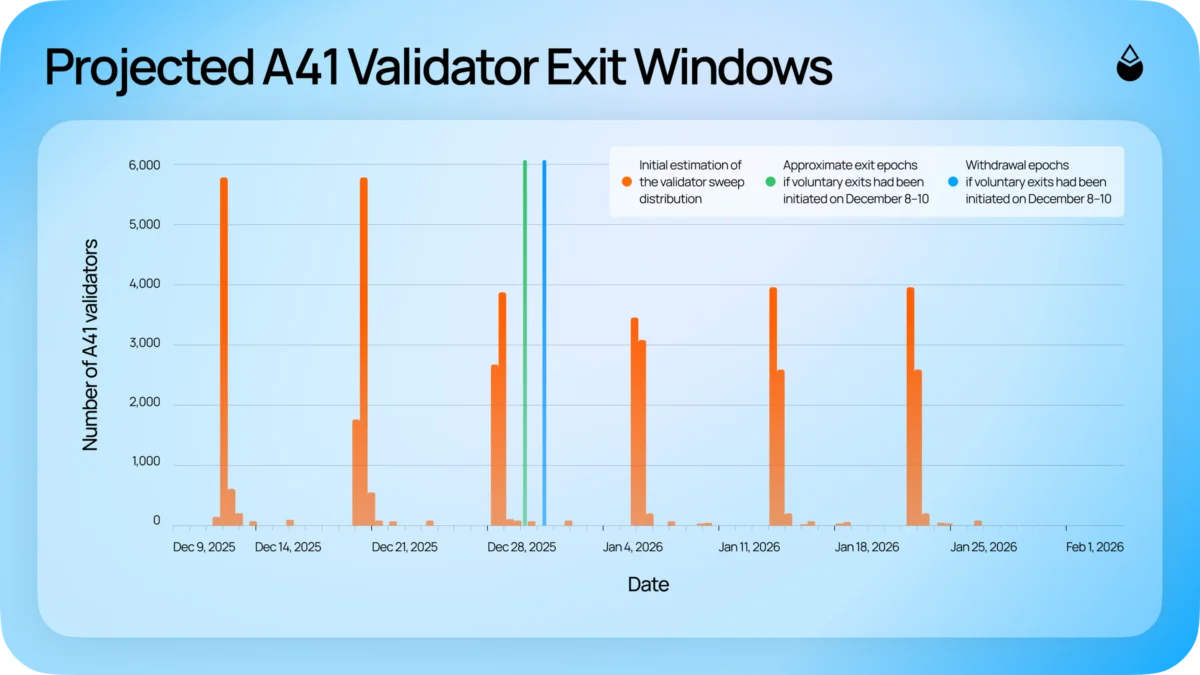
In a significant demonstration of sophisticated operational management within the Ethereum staking ecosystem, Lido, a leading liquid staking protocol, successfully facilitated the strategic exit of 6,918 validators operated by A41, a curated node operator. This large-scale withdrawal, representing over 200,000 ETH, was executed with remarkable precision between December 2025 and January 2026, setting a new benchmark for efficiency in validator lifecycle management and substantially reducing potential staking reward losses. The coordinated effort involved advanced analytical modeling, batch execution, and sweep-cycle-aware timing, culminating in the complete deprecation of A41’s infrastructure by the requested deadline of January 31, 2026.

Background: The Imperative for a Coordinated Exit
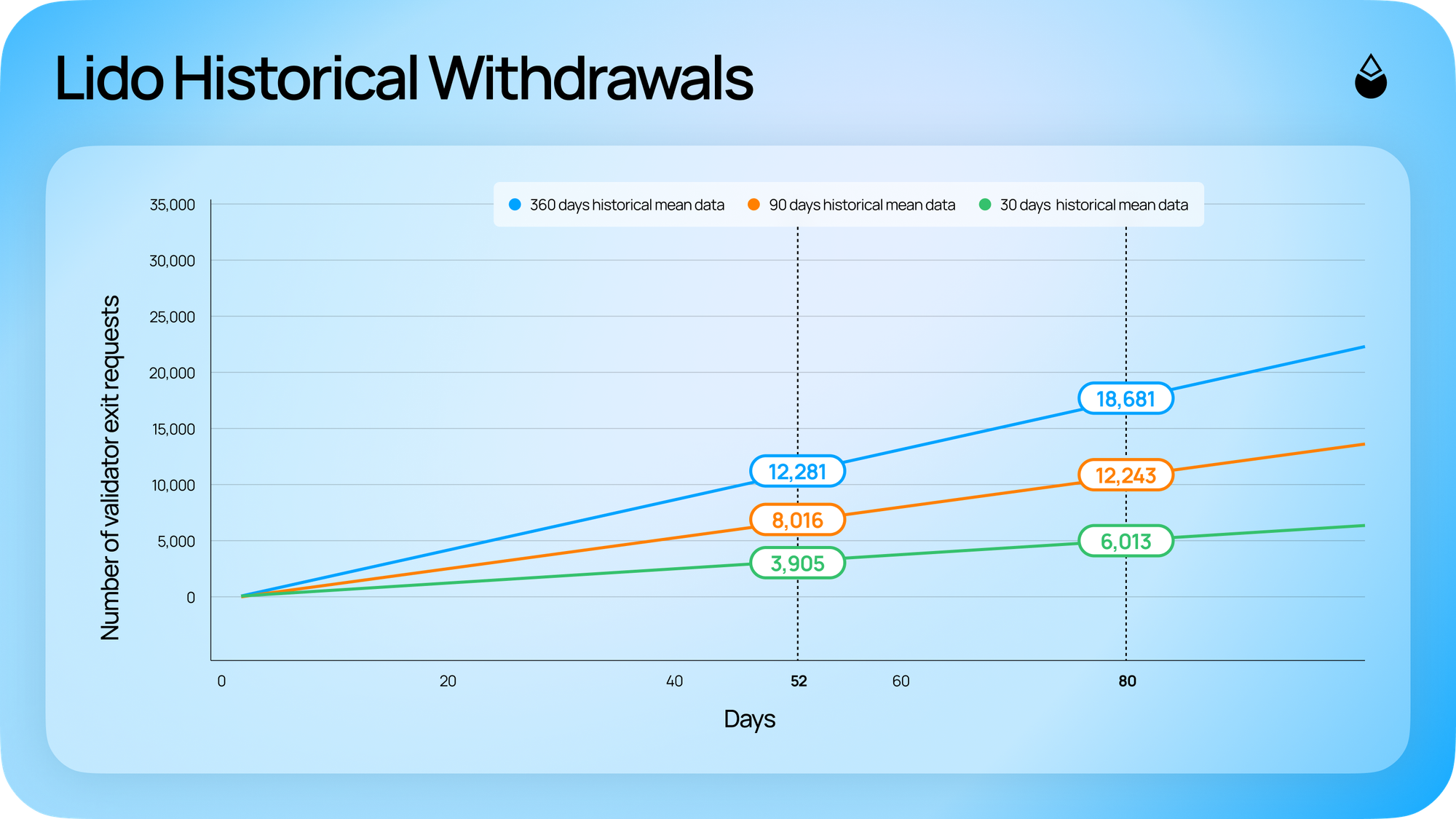
The journey began in December 2025 when A41, a valued participant in Lido’s Curated Node Operator (NO) module, publicly announced its decision to wind down its validator operations. This strategic shift necessitated A41’s conclusion of its role within the Lido ecosystem. While A41 provided a reasonable heads-up, it requested an ambitious timeline for infrastructure deprecation, aiming to cease all operations by January 31, 2026. This deadline presented a considerable challenge, as the 52-day window from the announcement to the requested wind-down date was significantly shorter than the estimated 80 days required for an organic, unmanaged exit of such a large validator set.

Lido, as a decentralized autonomous organization (DAO), relies on a network of professional node operators like A41 to run and maintain the validators that secure the staked ETH. When an operator decides to exit, the protocol must ensure a smooth transition to safeguard the integrity of the staked assets and minimize any disruption to staking rewards for its users. Recognizing the urgency and scale of A41’s withdrawal, Lido contributors, particularly from the Analytics workstream, immediately initiated a comprehensive planning phase to devise an optimized exit strategy. This involved engaging the Lido DAO through a governance process, which promptly approved setting A41’s targetValidatorsCount parameter to 0. This crucial parameter adjustment signaled the protocol’s allocation mechanism to direct exit requests specifically to the validators managed by A41, initiating the formal withdrawal process.
Understanding Ethereum’s Withdrawal Mechanics
The ability to withdraw staked ETH and exit validators is a relatively recent feature, enabled by the momentous Shanghai and Capella network upgrades (often referred to collectively as "Shapella") on Ethereum in April 2023. Prior to these upgrades, staked ETH was locked, and validators could not exit the network. Shapella introduced a sophisticated withdrawal mechanism, which operates based on several dynamic network parameters critical to understanding the A41 exit strategy:
- Validators: Entities responsible for proposing and attesting to blocks on the Ethereum blockchain, requiring a stake of 32 ETH.
- Exit Queue: A queue that forms when validators signal their intent to exit. Validators must wait in this queue before their withdrawal can be processed. The length of this queue fluctuates based on the number of validators wishing to exit.
- Activation Queue: Conversely, new validators entering the network must also wait in an activation queue before they can begin performing their duties and earning rewards.
- Sweep Cycle: Ethereum’s withdrawal process includes a "sweep cycle." The blockchain systematically sweeps through the entire validator set, starting from index 0, and in each slot identifies up to 16 validators eligible for withdrawal (either partial or full). This process continues sequentially, cycling back to index 0 once the last validator is reached.
- Skimming Time: The period a validator spends waiting between becoming withdrawable (i.e., its exit is processed from the exit queue) and being "skimmed" by the sweep cycle for actual withdrawal. Minimizing this time is crucial to reducing lost rewards.
- Epochs: Ethereum’s time unit, with each epoch lasting approximately 6.4 minutes and comprising 32 slots.
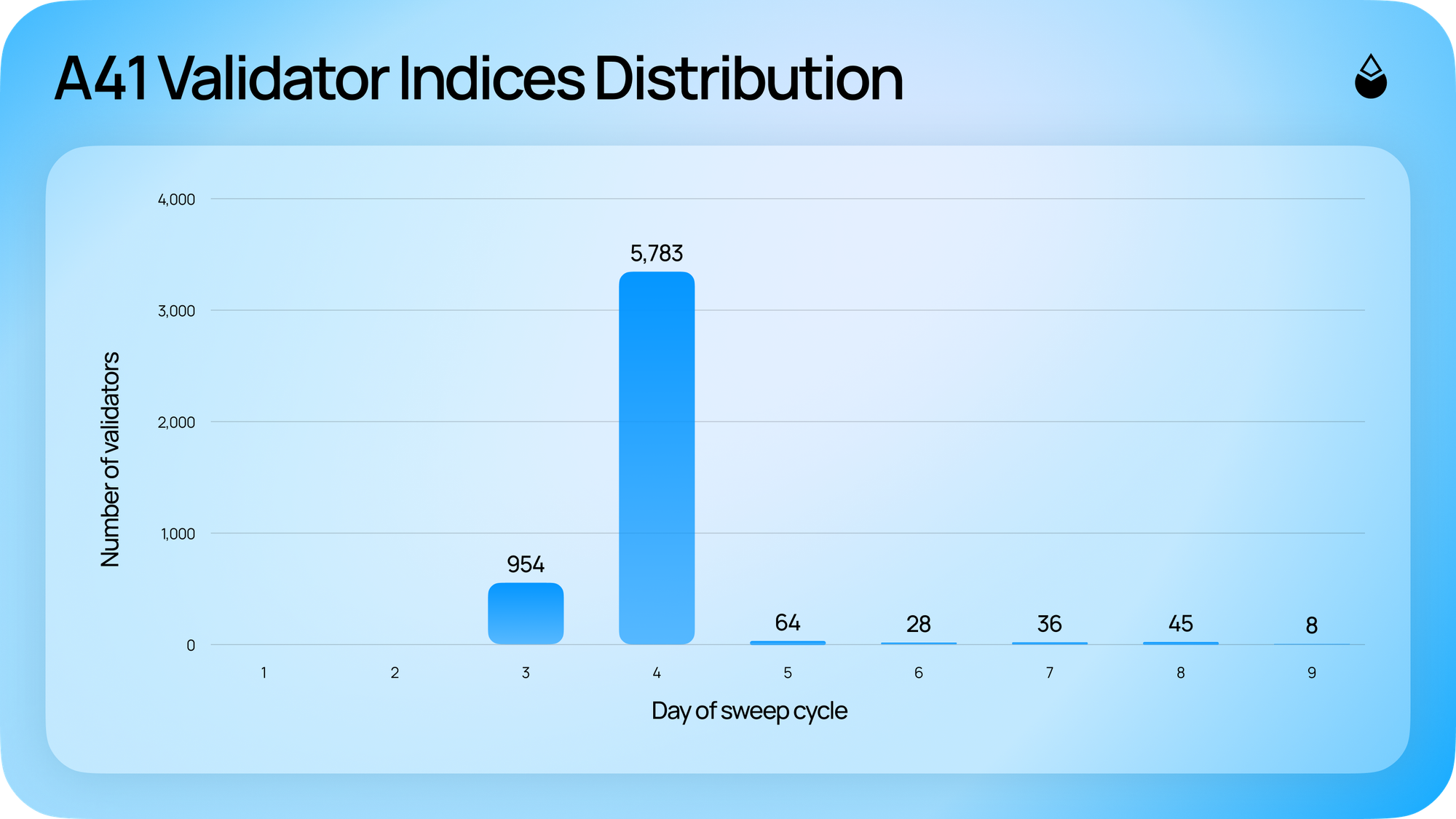
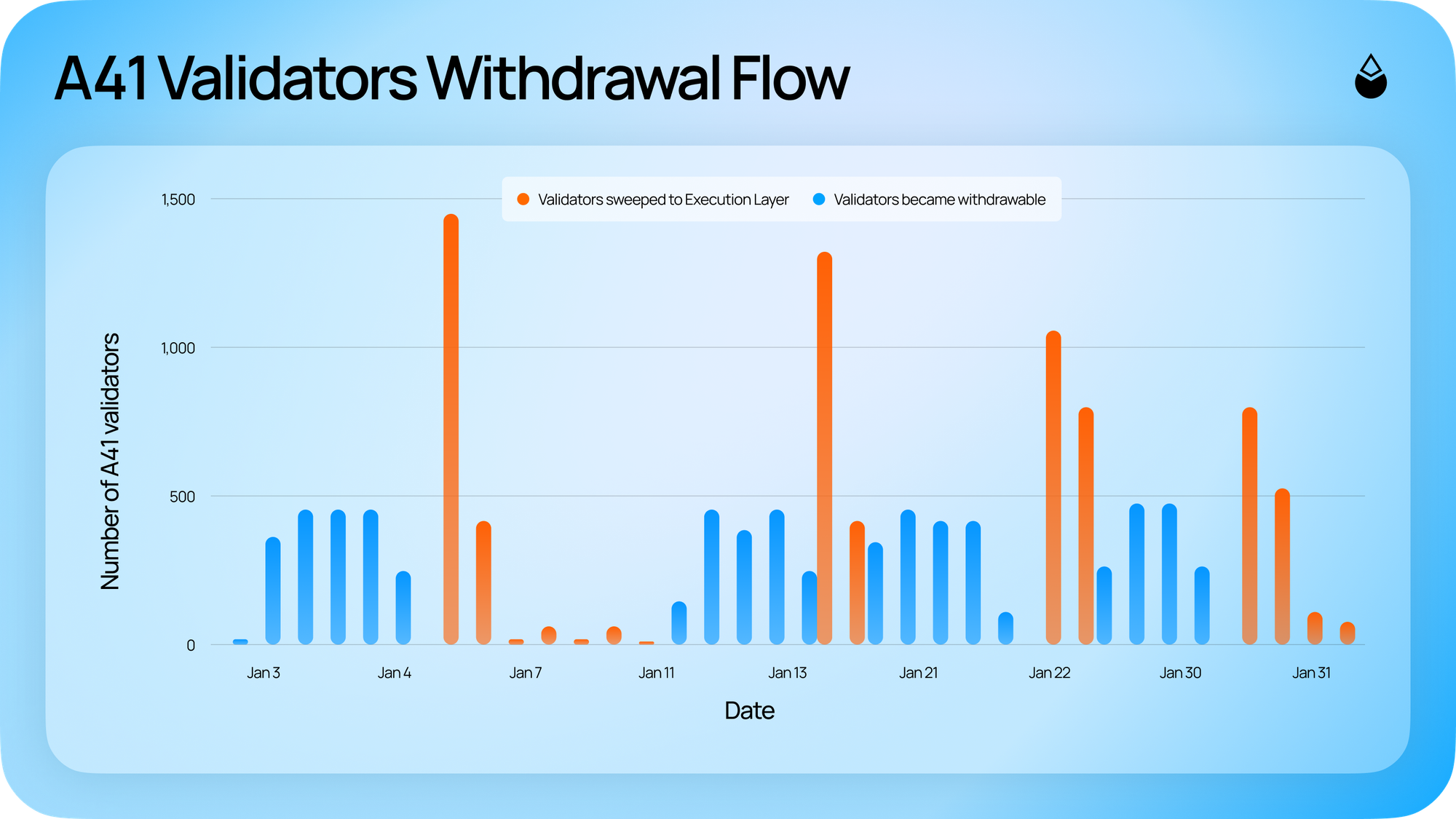
At the time of A41’s announcement, the operator managed 6,918 active validators, constituting approximately 2.51% of Lido’s total deposited validators. A significant characteristic of A41’s validator set was its clustered index range, meaning a large portion of its validators would become eligible for withdrawal at roughly the same point in the sweep cycle—around the transition from the third to the fourth day of the cycle. This concentration, while presenting a potential bottleneck for organic exits, also offered a unique opportunity for synchronized, efficient withdrawals if managed correctly.
The Strategic Planning Phase: Modeling for Efficiency
To meet A41’s aggressive wind-down timeline and minimize staking reward loss for the Lido protocol and its users, the Lido Analytics workstream undertook an exhaustive modeling and planning exercise. The primary objective was to determine the most efficient exit strategy.
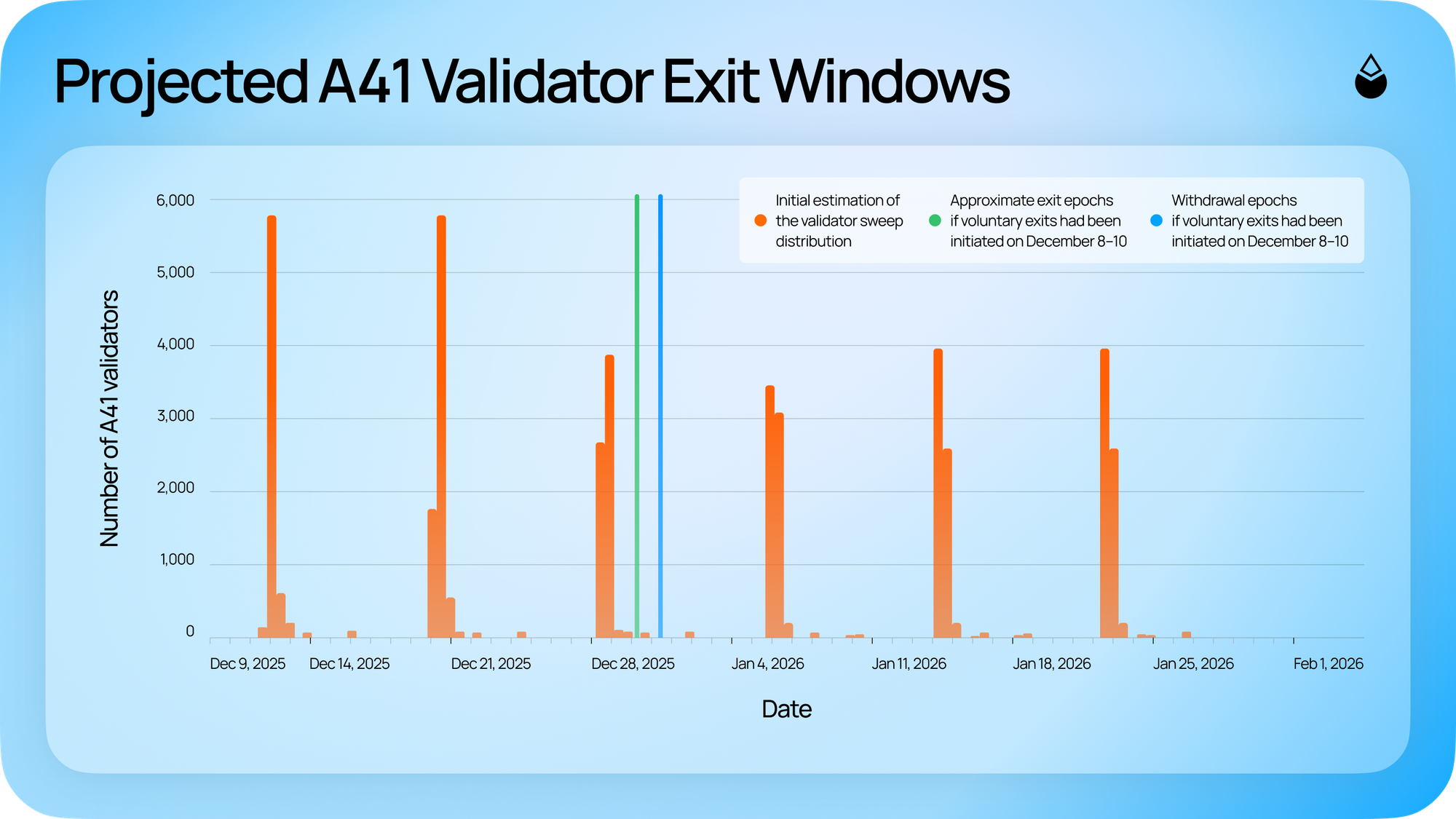
- Organic Exit Capacity Analysis: Initial simulations, based on 30-day historical Lido withdrawal data and 1,000 simulations, revealed that relying solely on organic exits would take approximately 80 days to fully withdraw the A41 validator set. This timeframe significantly exceeded the 52 days available until the January 31, 2026 deadline, making organic exits an unviable option. Longer historical datasets, while yielding higher projections, were deemed less representative of current network dynamics. This confirmed the necessity of a proactive, coordinated approach.
- Exit Optimization Strategy: The team then explored various voluntary exit scenarios. A baseline scenario, assuming all A41 validators would immediately begin exiting, projected a total missed reward of approximately 78 ETH. This figure represented about 10.5% of Lido’s daily protocol rewards at the time, a substantial sum that the protocol aimed to mitigate. Given the clustered nature of A41’s validator indices, poorly timed exits could drastically increase the time validators spent waiting to be skimmed, leading to unnecessary reward losses.
- Key Optimization Objective: The core of the strategy was to minimize the delay between a validator becoming "withdrawable" and its actual "sweep epoch." By precisely timing voluntary exit requests, validators could be scheduled to enter the exit queue just before their segment of the sweep cycle, thus reducing idle time and maximizing reward accrual. Simulations indicated that precisely timed exits could reduce missed rewards to between 15 and 20 ETH.
- Batch Exit Design: While individual, precisely timed exits were theoretically optimal, executing nearly 7,000 such exits manually would be operationally impractical and prone to errors. Therefore, contributors proposed a sophisticated batch-based approach. This design balanced precision, operational safety, and simplicity. It defined several parameters, including the maximum number of validators per batch (to manage network load and operational complexity), a minimum number of days between batches, and specific "exit windows" for each batch, aligning with the projected sweep cycles.
- Exit Scheduling Tooling: To implement this batch approach, the Analytics contributors developed a specialized script. This tool incorporated real-time network parameters, such as the current exit and activation queue lengths, the validator sweep pointer’s position, and the number of active validators. A crucial innovation was the introduction of a "skimming acceptance level" of 0.5 days (12 hours). This parameter allowed the script to identify validators for exit when their projected waiting time between becoming withdrawable and being skimmed fell below this threshold, further refining the timing and reducing projected exit losses by an estimated 8.6 ETH. The script generated an optimized exit distribution order, which, after review, could be exported for A41 to execute.
Execution: Exiting 200,000+ ETH Through Coordinated Batches
With the strategic plan in place, the operational phase commenced. A41 implemented its own script to initiate batch voluntary exits, triggered manually during the predefined exit windows. Before proceeding with the full-scale operation, a test batch was executed to validate the entire workflow and tooling.
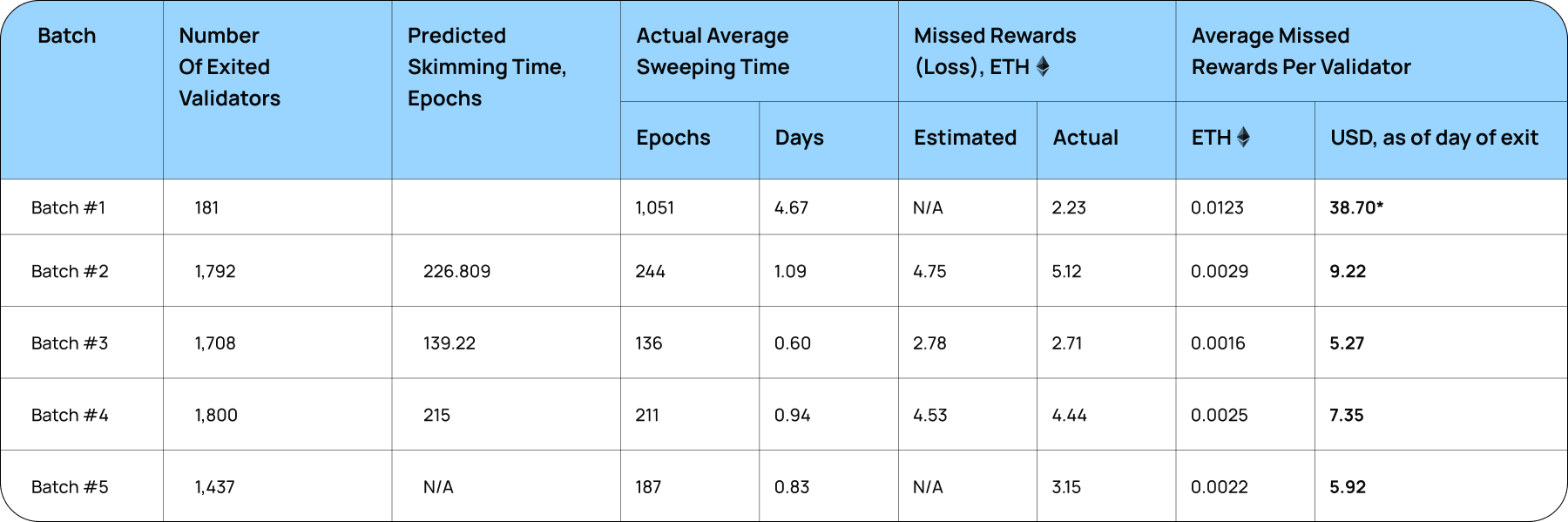
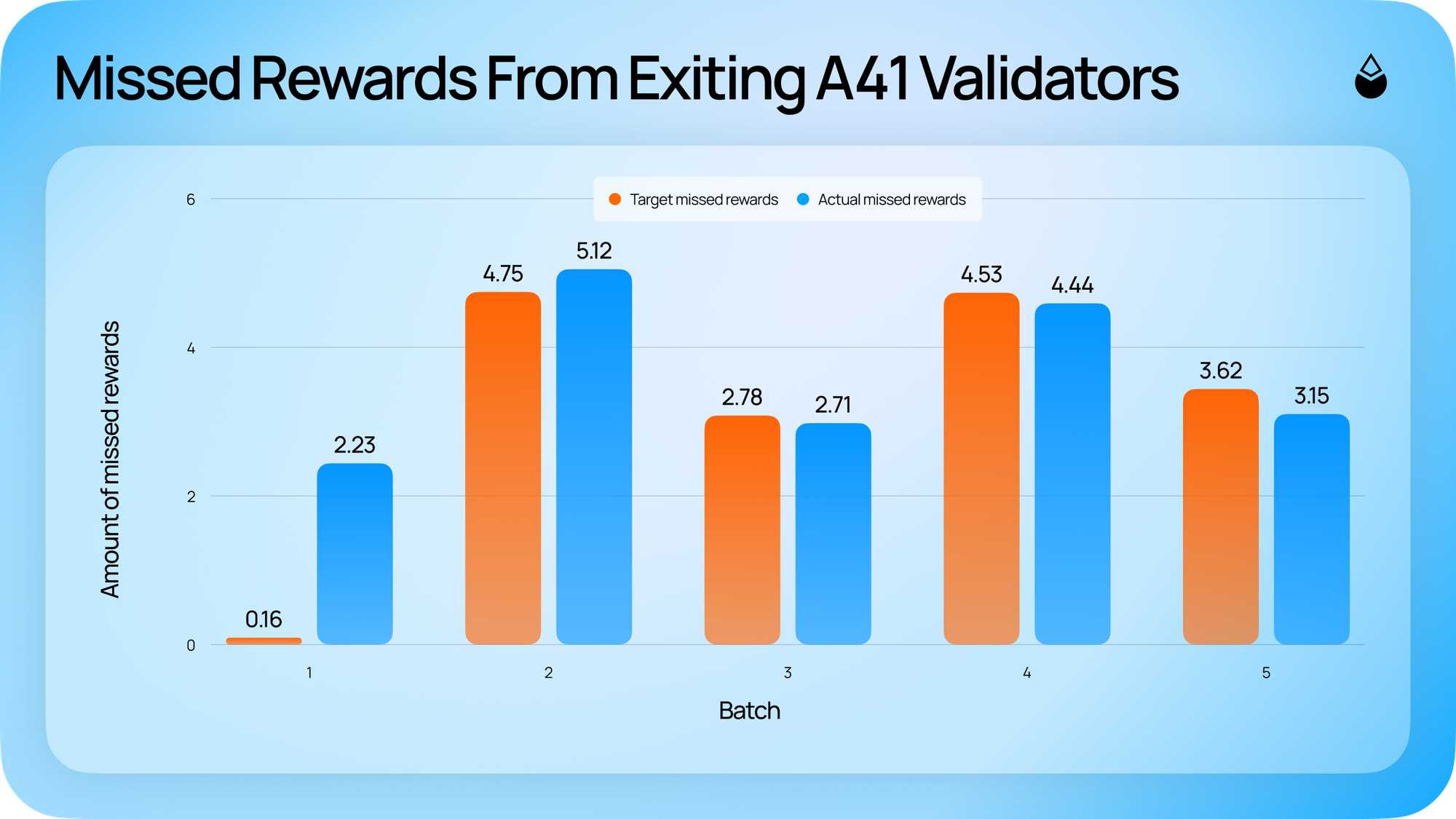
- The Test Batch: The inaugural batch comprised 181 validators, intentionally selected with highly dispersed indices to rigorously test the script’s robustness across varied validator positions. This test run proved successful, processing the non-sequential validator set flawlessly. The actual missed rewards for this batch totaled 2.23 ETH, confirming the accuracy of the modeling and the efficacy of the approach.
- Coordinated Batch Execution: Following the successful test, four additional batches were planned and executed in close coordination between Lido Analytics and the A41 team. The operational workflow was meticulous: Lido Analytics provided A41 with the optimized exit schedule, A41 executed the voluntary exits, and both teams continuously monitored the network and validator behavior.
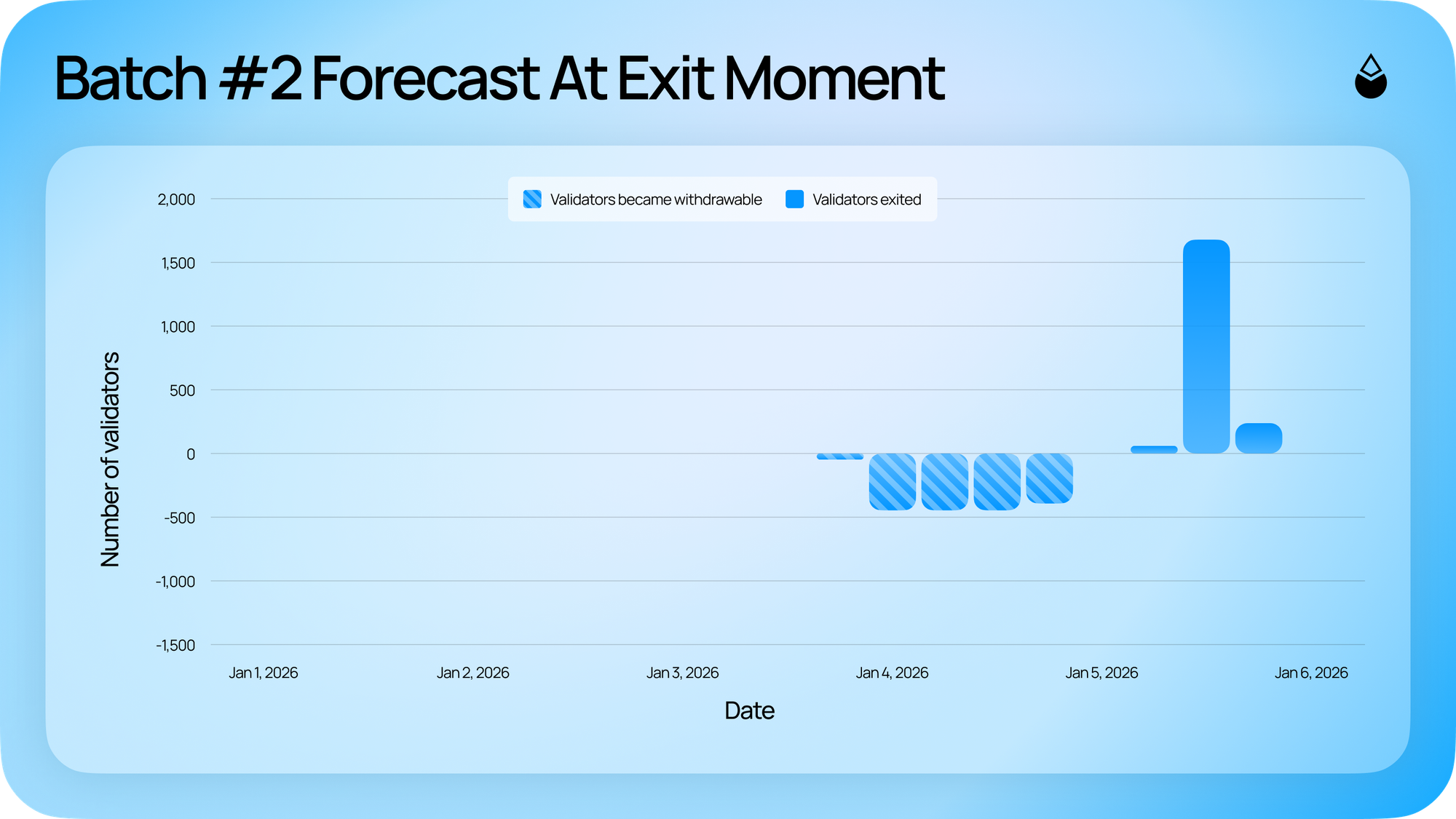
- Batch #2: Executed one day after the test, this batch included 1,792 validators. The model predicted an average skimming wait time of approximately 226.8 epochs; the actual wait time closely matched this at 244 epochs, demonstrating strong alignment between theoretical models and real-world network conditions.
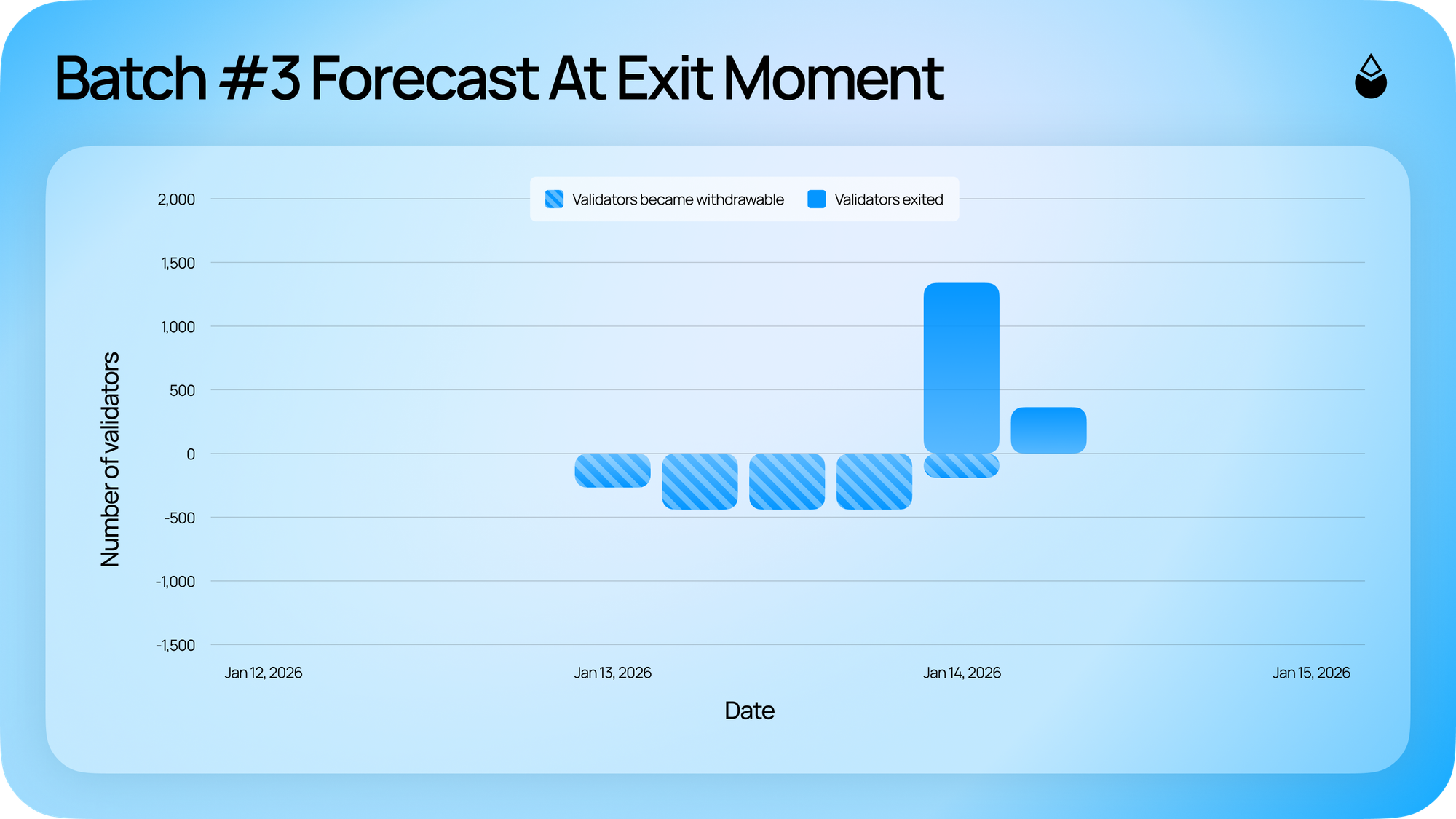
- Batch #3: Scheduled for mid-January, this batch involved 1,708 validators, with an estimated missed reward of 2.78 ETH.
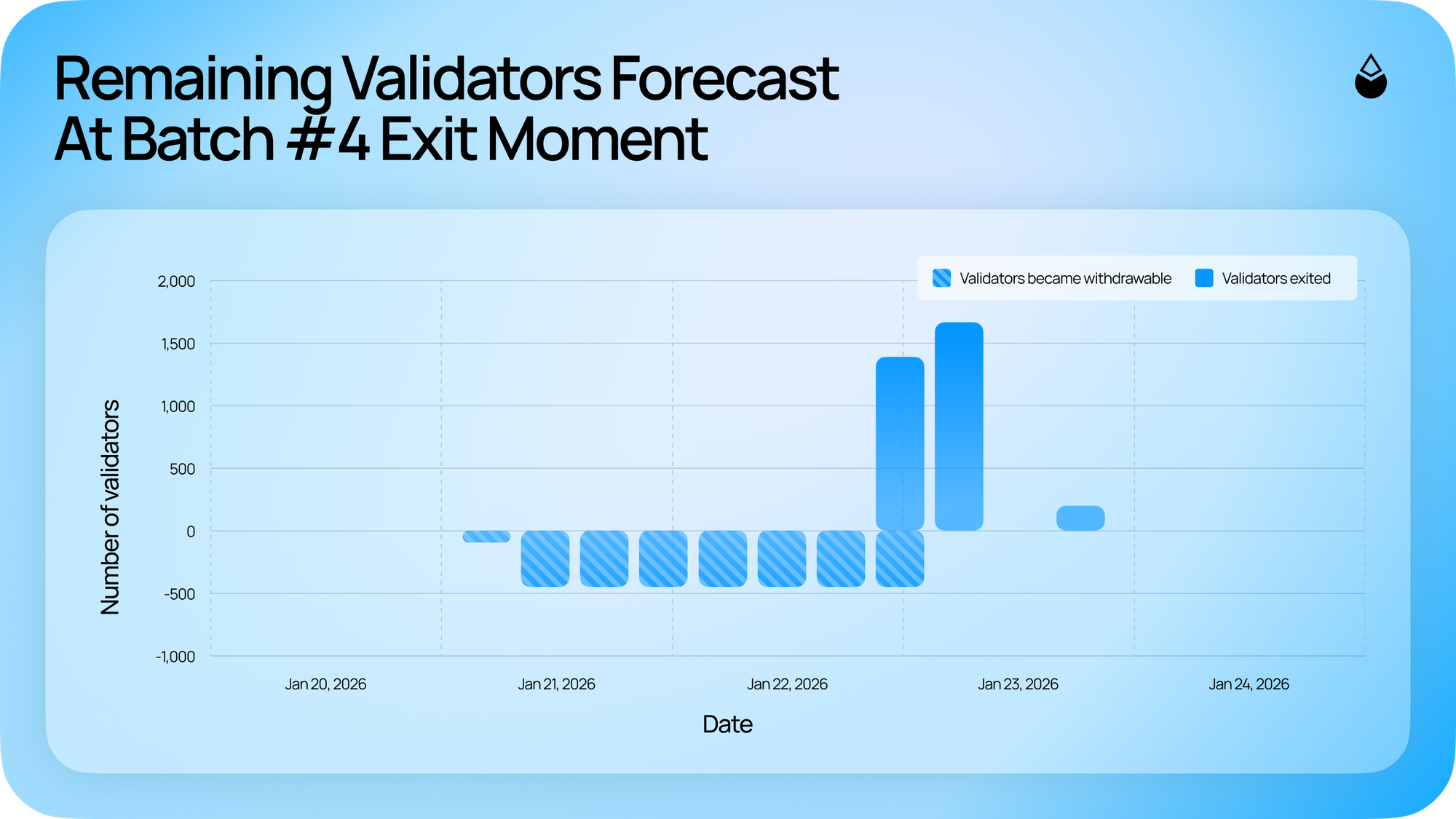
- Batch #4: The largest batch, consisting of 1,800 validators. Predicted skimming time was 215 epochs, with actual results showing 211 epochs, leading to 4.37 ETH in missed rewards. Initial scenarios considered exiting all remaining 3,237 validators in this batch, but simulations indicated this would result in ~8.16 ETH missed rewards.
- Batch #5: To further optimize and align exits with the sweep cycle, the remaining validators were split into a final batch. This decision reduced the final batch’s missed rewards to 3.15 ETH, bringing the operation to a close.
Quantifying Success: Drastically Reduced Reward Leakage
The coordinated exit process yielded exceptional results, validating the meticulous planning and execution. The total foregone rewards across all batches amounted to a mere 18.23 ETH. This figure represents a remarkable 76.6% reduction compared to the estimated 78 ETH that would have been lost had the validators exited organically.
Key metrics underscoring the success include:
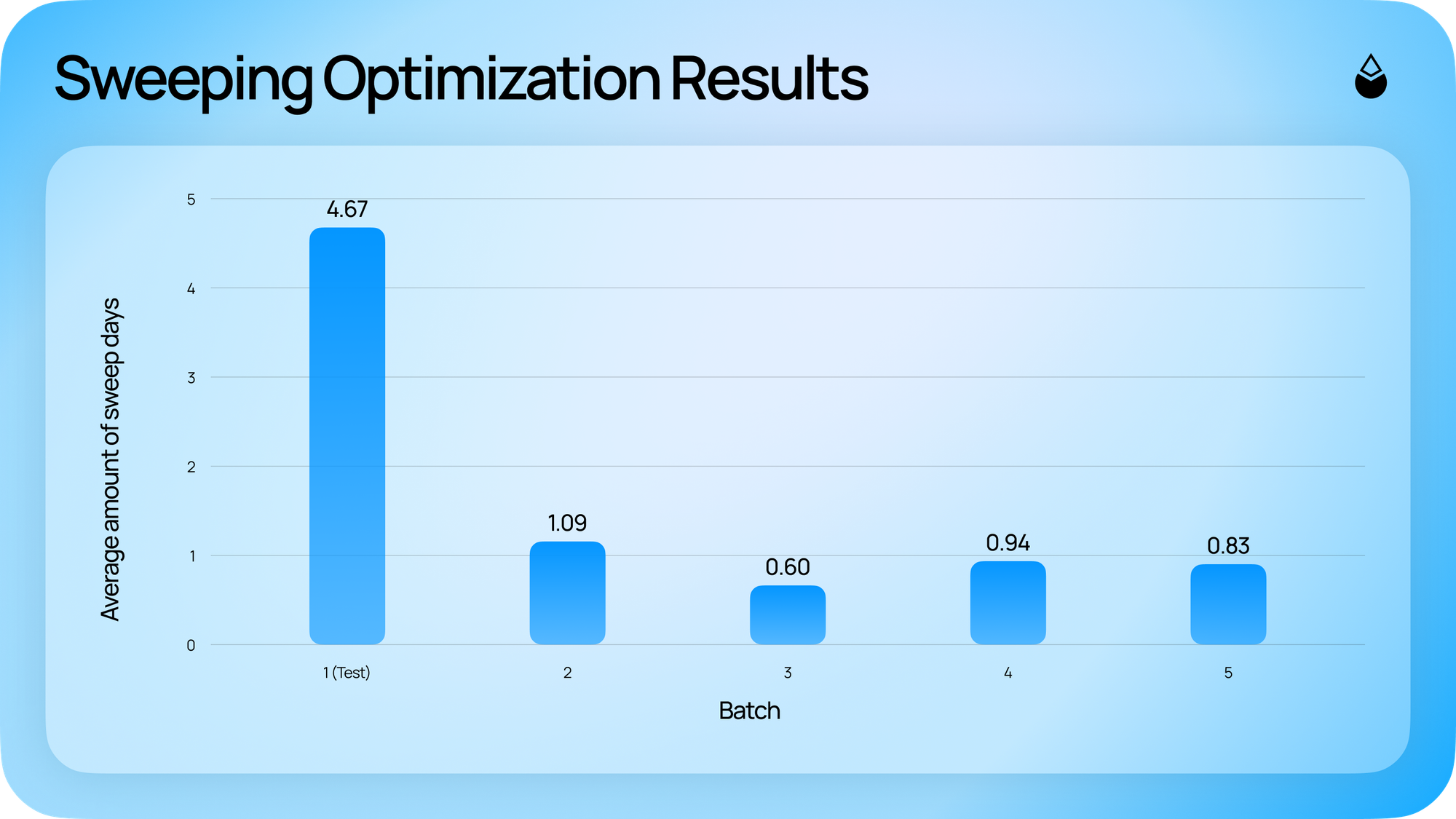
- Average Skimming Wait Time Reduction: The average time validators spent waiting between becoming withdrawable and being skimmed was dramatically reduced from an estimated 4.5 days (for organic exits) to a mere 0.8 days.
- Completion Rate: A staggering 99.9% of A41’s validators successfully exited by the January 31, 2026 deadline, showcasing the operational precision and effectiveness of the strategy.
- Total ETH Withdrawn: Over 200,000 ETH was safely and efficiently withdrawn from the network.
This outcome demonstrates that proactive, data-driven management of validator exits can significantly mitigate financial impact for staking protocols and their participants. The predictable and well-distributed pattern of validator exits over the intended timeframe provided operational stability and confidence.
Navigating Network Volatility: The Unpredictable Queues
While the internal optimization of skimming time was a resounding success, the A41 exit case also highlighted the inherent unpredictability of broader Ethereum network parameters, particularly the validator queues. At the time the exit plan was designed in December 2025, the estimated exit queue was approximately 18.64 days. However, by the time the actual execution began in early January 2026, the exit queue had unexpectedly decreased to less than one day. This fortunate development allowed for even more accurate timing of voluntary exit initiations, further enhancing the efficiency of the withdrawal process.
Conversely, the activation queue, which governs how quickly new validators can join the network, moved in the opposite direction. When the first test batch was exited, the activation queue had already increased to 18.88 days. As the exit process unfolded, this queue continued to expand significantly, reaching an average of approximately 42.8 days before new validators could be activated. This unforeseen growth in the activation queue, while not impacting the efficiency of A41’s withdrawals, underscored a critical lesson: even highly optimized validator exit strategies remain subject to the broader, dynamic parameters of the network. The impressive gains made in reducing skimming wait times were, to some extent, offset by the extended activation queue if the goal was to immediately redeploy the ETH into new validators.
Broader Implications and Future Outlook
The A41 validator exit stands as a pioneering case study with far-reaching implications for the entire Ethereum staking ecosystem. While the approach was tailored to specific circumstances, its underlying principles are broadly applicable and offer invaluable lessons for various stakeholders:
- For Liquid Staking Protocols: The methodology provides a robust framework for managing node operator transitions, infrastructure migrations, and large-scale rebalancing efforts.
- For Solo Stakers: The insights into optimizing exit timing and understanding sweep cycles can help individual stakers minimize reward loss during voluntary withdrawals.
- For Institutional Staking Providers: Large institutions managing significant ETH stakes can leverage these strategies to enhance operational efficiency and financial returns during lifecycle events.
The estimated difference between organic exit behavior and precisely timed exits, as demonstrated in this case, translates into substantial financial savings. For instance, exiting 100 validators organically could lead to approximately 0.2 ETH in missed rewards, while a timed exit could reduce this to 0.05 ETH. Scaling up, 1,000 validators could save over 1.5 ETH, and for the 6,918 validators in the A41 case, the savings were a remarkable 59.77 ETH. As the volume of staked ETH continues to grow into hundreds of thousands and even millions, these efficiency gains become critically important for the sustainability and profitability of staking operations.
The A41 exit case provides five crucial operational insights that will shape future validator lifecycle management:
- Exit Timing Matters: Validator exits are not instantaneous. The precise timing between an exit request, skimming by the sweep cycle, and final withdrawal processing directly impacts forfeited rewards. Strategic timing is paramount.
- Validator Index Distribution Impacts Exits: Understanding how validators are indexed within the Ethereum network is key. This distribution dictates when validators become eligible for withdrawal during the sweep cycle and is vital for planning efficient batch schedules and exit sequencing.
- Batching Improves Operational Efficiency: For large-scale operations involving thousands of validators, attempting individual exits is neither cost-efficient nor operationally feasible. Batch-based strategies offer a balanced approach, aligning exits with sweep cycles while maintaining operational simplicity and manageability.
- Data-Driven Coordination Improves Outcomes: The success of the A41 exit was fundamentally rooted in combining historical Ethereum data analysis with continuous, real-time monitoring. This data-driven approach allowed for adaptive adjustments to network dynamics, effectively minimizing lost rewards.
- Network Queues Remain Unpredictable: Despite sophisticated modeling, dynamic network variables like validator activation and exit queues can shift rapidly and unexpectedly. Planning must always incorporate monitoring, flexibility, and buffers for unforeseen delays, rather than relying solely on static projections.
Closing Thoughts
The coordinated exit of nearly 7,000 validators by Lido and A41 stands as a landmark achievement in the evolving landscape of Ethereum staking. It unequivocally demonstrates that careful modeling, intelligent batch scheduling, and proactive, real-time coordination can drastically reduce reward loss compared to organic, unmanaged flows, all while maintaining predictable and robust validator operations. As Ethereum staking continues its exponential growth, with more ETH being staked and more validators joining and exiting the network, similar sophisticated approaches will become increasingly indispensable. This blueprint for efficient validator lifecycle management—encompassing validator rotations, infrastructure migrations, organic withdrawals, and large-scale exits—will be crucial for fostering a mature, resilient, and economically optimized staking ecosystem. The lessons learned from the A41 exit will undoubtedly serve as a foundational guide for future innovations in this critical domain.