James Watt
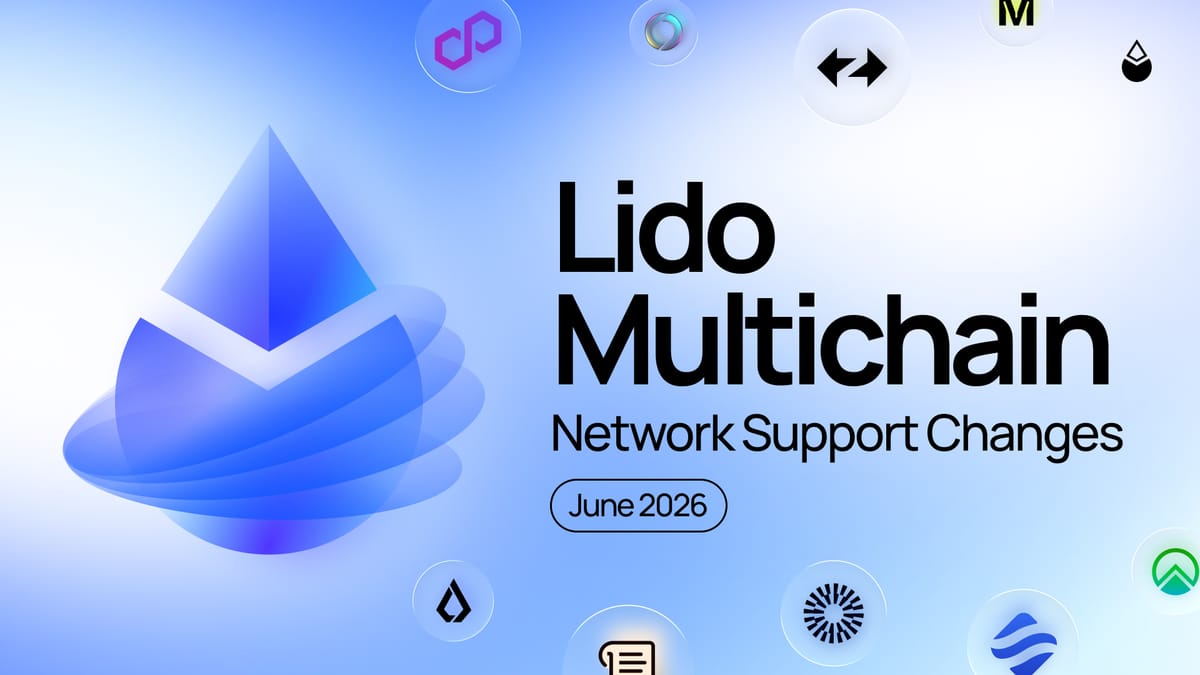
Following a pivotal Lido DAO Snapshot vote, the canonical status of wstETH bridge endpoints has been officially revoked on nine distinct networks: zkSync Era, Mode, Scroll, Mantle, Swell, Zircuit, Soneium, Polygon PoS, and Lisk. This strategic decision marks a significant shift in Lido’s multichain strategy, signaling a refined focus on resource allocation and ecosystem development for its flagship liquid staking derivative, wrapped stETH (wstETH). While the revocation represents a governance-driven recalibration of Lido’s support infrastructure, it is crucial for holders to understand that their funds remain secure and accessible on these networks, requiring no immediate action. The underlying bridge mechanisms and token validity are unaffected; rather, the change pertains to the level of official monitoring, security oversight, and integration support provided by Lido contributors. This comprehensive article delves into the intricacies of canonical recognition, the implications of its revocation for users and the broader ecosystem, the strategic rationale behind these changes, and the forward-looking adjustments to Lido’s governance processes.
Understanding Canonical Recognition in the DeFi Landscape
In the complex and often fragmented world of decentralized finance (DeFi), "canonical recognition" serves as a critical designation, especially for cross-chain assets. When a bridge endpoint and its associated token contract are formally recognized as canonical through Lido DAO governance, it effectively labels that deployment as the official, most trusted, and sanctioned version of wstETH on a particular network. This recognition is far more than a mere label; it underpins a comprehensive suite of active support mechanisms from Lido contributors. These include continuous security monitoring to identify and mitigate potential vulnerabilities, rigorous security oversight of the bridging infrastructure, a dedicated incident response team poised to act in emergencies, proactive integration support for decentralized applications (dApps) looking to incorporate wstETH, and ongoing communication channels to keep the community informed and address concerns.
The importance of canonical status cannot be overstated, particularly for an asset like wstETH. As a wrapped version of stETH, Lido’s liquid staking token, wstETH represents staked Ethereum and accrues staking rewards. Its integrity and trustworthiness across multiple blockchains are paramount for user confidence and the stability of the DeFi protocols that integrate it. The commitment of Lido’s extensive resources—human capital, technical expertise, and financial investment—to maintain this high standard across numerous networks is substantial. It is precisely this resource intensity that has prompted the DAO’s recent decision to strategically concentrate its efforts where wstETH demonstrates the most significant utility and adoption.
The Genesis of Lido’s Multichain Vision and its Evolution
Lido DAO’s journey into the multichain ecosystem began with an ambitious vision: to make wstETH a pervasive and easily accessible asset across the rapidly expanding landscape of Layer 2 (L2) networks and alternative Layer 1 (alt-L1) blockchains. The "Lido Multichain program" was initiated to extend the utility and liquidity of staked Ethereum beyond the Ethereum mainnet, recognizing the growing user base and innovative DeFi opportunities emerging on these scaling solutions. The goal was to provide stakers with greater flexibility, lower transaction costs, and access to a broader array of DeFi strategies, all while maintaining the security and trust associated with the Lido brand.
Over time, Lido has established canonical wstETH deployments on several prominent networks, fostering integrations and actively supporting their ecosystems. This expansion was a testament to the belief that a vibrant multichain presence for wstETH would enhance its value proposition and reinforce Lido’s position as a leading liquid staking provider. However, the rapid proliferation of new L2s and sidechains has also presented unique challenges. Each new integration requires dedicated resources for ongoing maintenance, security audits, developer relations, marketing, and user support. As the ecosystem matured, it became evident that a more targeted approach was necessary to ensure the sustainability and effectiveness of Lido’s multichain strategy. The recent Snapshot vote reflects this evolution, moving from a broad expansion phase to a more concentrated, impact-driven resource allocation model.
Implications for Existing wstETH Holders: Funds are Safe
For individuals holding wstETH on any of the nine affected networks—zkSync Era, Mode, Scroll, Mantle, Swell, Zircuit, Soneium, Polygon PoS, and Lisk—the immediate and most important message is reassurance: your funds are unequivocally safe and fully accessible. The revocation of canonical status is a governance decision related to resource allocation and strategic focus, not a technical alteration that disables any bridge, invalidates any token, or affects the underlying smart contract functionality. Holders retain complete control over their assets and can continue to hold, transfer, or bridge their wstETH back to Ethereum or to other canonically supported networks at any time, using the existing infrastructure and bridges.
This means that the technical pathways for moving wstETH, such as the official Lido bridges or third-party bridge solutions that support wstETH, will remain operational. The decision does not introduce any technical impediment to asset movement or ownership. Consequently, no action is required from existing holders. However, for those who might prefer to consolidate their assets on networks with ongoing canonical support, the option to bridge their wstETH back to Ethereum or to a different supported chain remains open, without any prescribed deadline.
A crucial nuance to consider pertains to wstETH deployed within third-party DeFi protocols—such as lending markets, liquidity pools, or yield aggregators—on the affected networks. While these positions are not directly impacted by Lido’s governance vote, their governance and operational integrity are solely dependent on the respective protocols. Lido contributors will no longer actively monitor or provide direct support for wstETH on these chains, meaning that users with such positions are advised to independently review and assess their risk exposure and the long-term viability of these integrations. This shift underscores the importance of due diligence in the decentralized space, where reliance on official support and monitoring can significantly influence perceived security.
Strategic Rationale: Concentrating Resources on "Meaningful Adoption"
The primary driver behind the revocation of canonical status is Lido DAO’s strategic imperative to concentrate its valuable resources on networks where wstETH demonstrates "meaningful adoption." This criterion is multi-faceted, encompassing factors such as the total value locked (TVL) of wstETH on a given chain, the number of active users, the depth of its integration into key DeFi protocols, and the overall transaction volume involving wstETH. Supporting a canonical bridge endpoint is not a one-time setup; it entails continuous, resource-intensive commitments. These include:
- Active Monitoring: Constant surveillance of the bridge and token contracts for any anomalies, potential exploits, or performance issues.
- Security Oversight: Regular audits, vulnerability assessments, and proactive measures to maintain the highest security standards.
- Incident Response: Readiness to act swiftly and effectively in the event of a security breach or critical operational failure.
- Integration Support: Providing technical assistance and guidance to dApps seeking to integrate wstETH, ensuring seamless and secure implementations.
- User Support and Communication: Addressing user queries, resolving issues, and maintaining transparent communication channels.
Given these significant ongoing costs, the DAO concluded that allocating resources to networks where wstETH adoption has not met established thresholds no longer aligns with its strategic objectives of maximizing value and efficiency. By streamlining its focus, Lido aims to bolster the security, liquidity, and overall ecosystem health of wstETH on its core supported chains, ultimately benefiting the broader liquid staking community. This move reflects a maturing governance model that prioritizes sustainability and impact over a broad, undifferentiated presence.
The Affected Networks: A Snapshot of the Multichain Landscape
The nine networks from which wstETH’s canonical status has been revoked represent a diverse cross-section of the multichain ecosystem, from established Layer 2 solutions to newer, more experimental chains.
- zkSync Era, Mode, Scroll: These are prominent Ethereum Layer 2 solutions, primarily optimistic and ZK-rollups, designed to scale Ethereum by processing transactions off-chain. While highly anticipated and actively developing, the adoption of wstETH on these specific deployments may not have reached the critical mass observed on other L2s.
- Mantle: A modular Layer 2 network built on Ethereum, Mantle has been gaining traction with its unique architecture. However, like others, its wstETH integration might not have achieved the desired level of activity.
- Swell, Zircuit, Soneium: These represent newer or more specialized platforms. Swell Network is itself a liquid staking protocol, which could lead to complex interactions or less direct demand for wstETH. Zircuit is a ZK-rollup, and Soneium appears to be a more nascent project. For such emerging networks, building significant wstETH adoption can be challenging amidst intense competition.
- Polygon PoS: As a major sidechain compatible with Ethereum, Polygon PoS boasts a vast ecosystem and widespread adoption. Its inclusion in this list is notable, suggesting that even on a highly active chain, wstETH’s specific utility and demand might not have met Lido’s internal benchmarks for canonical support relative to other assets or chains.
- Lisk: A long-standing blockchain application platform, Lisk operates on a somewhat different technological stack and ecosystem compared to the more EVM-centric L2s. Its inclusion highlights the broad scope of Lido’s initial multichain exploration and the subsequent refinement of its focus.
The common thread among these networks, from Lido’s perspective, is the absence of "meaningful adoption" for wstETH, thereby making the continuation of dedicated canonical support an inefficient use of resources.
Operational Changes and Future Governance: The Network Expansion Committee (NEC)
Going forward, the revocation entails several operational changes. Active monitoring, dedicated marketing support, and ecosystem development efforts for wstETH on the affected networks will be sunset. Official references to these networks will be updated across Lido’s primary information channels, including the Lido Multichain page, Lido Docs, and the Help Center, to reflect their non-canonical status. Importantly, the underlying bridge infrastructure that facilitates wstETH movement will remain operational, ensuring that existing holdings are unaffected and users can still bridge their assets.
A significant aspect of this DAO vote is the authorization granted to the newly established Network Expansion Committee (NEC). This committee is now empowered to handle similar revocations in the future, streamlining the process and reducing the operational overhead associated with full DAO-wide votes for every such decision. To maintain transparency and accountability, any future revocation initiated by the NEC will require unanimous committee support and a public forum announcement detailing the rationale behind the decision. This mechanism aims to strike a balance between governance efficiency and community oversight.
Furthermore, the decision also outlines a pathway for affected networks seeking renewed canonical recognition. Should any of these networks demonstrate a substantial increase in wstETH adoption or a compelling case for reintegration, they can re-apply through the NEC, subject to the endorsement principles and criteria in place at that time. This provides a clear framework for potential future collaborations, emphasizing that the current revocation is a strategic pause rather than an irreversible severance.
Broader Implications for the DeFi Ecosystem and DAO Governance
Lido DAO’s decision carries broader implications for the decentralized finance ecosystem and the evolving landscape of DAO governance.
- Resource Optimization Trend: This move underscores a growing trend within mature DAOs to optimize resource allocation. As projects scale, the initial exuberance of broad expansion often gives way to a more pragmatic, data-driven approach to deploying capital and human resources. This sets a precedent for other large protocols managing complex multichain strategies.
- Competition Among L2s and Alt-L1s: The decision highlights the intense competition among L2s and alt-L1s to attract liquidity and users. For these networks, securing canonical support from major protocols like Lido can be a significant validator of their ecosystem’s health and future potential. The withdrawal of such support may prompt affected networks to redouble efforts to cultivate organic adoption and robust DeFi ecosystems.
- User Trust and "Canonical" Status: While Lido has clearly communicated that funds are safe, the revocation of "canonical" status might subtly influence user perception. The term itself implies a stamp of official approval and heightened security, and its removal, even if technically benign, could shift user preferences towards networks with active canonical support.
- Evolving Governance Models: The establishment of the Network Expansion Committee (NEC) reflects a maturation in DAO governance. As DAOs grow in complexity and scope, delegating specific operational decisions to specialized committees can improve efficiency and agility, provided sufficient transparency and accountability mechanisms are in place. This move by Lido could serve as a model for other large DAOs grappling with similar governance challenges.
- Impact on DeFi Protocols: Third-party DeFi protocols on the affected chains that heavily relied on wstETH as collateral or liquidity might face adjustments. While not directly impacted, the absence of Lido’s official monitoring and support could introduce perceived risks, potentially leading to a gradual shift of liquidity or a re-evaluation of integration strategies by these protocols.
In conclusion, Lido DAO’s decision to revoke canonical status for wstETH on nine networks represents a strategic pivot driven by the need for efficient resource allocation and a focused approach to multichain expansion. It underscores the dynamic nature of the DeFi ecosystem, where protocols continuously adapt to market realities and competitive pressures. While reassuring existing holders of the safety and accessibility of their assets, this move sets a clear direction for Lido’s future multichain endeavors, prioritizing impactful engagement over broad, undifferentiated presence, and signaling a new era of optimized governance within the leading liquid staking protocol.
The information provided on this page is for general informational purposes only and does not constitute financial or legal advice. Bridging involves significant risks, and individuals should conduct their own thorough research and seek advice from qualified professionals before participating. For more detailed information, please refer to our Terms of Use and the Lido FAQ.