Lina Irawan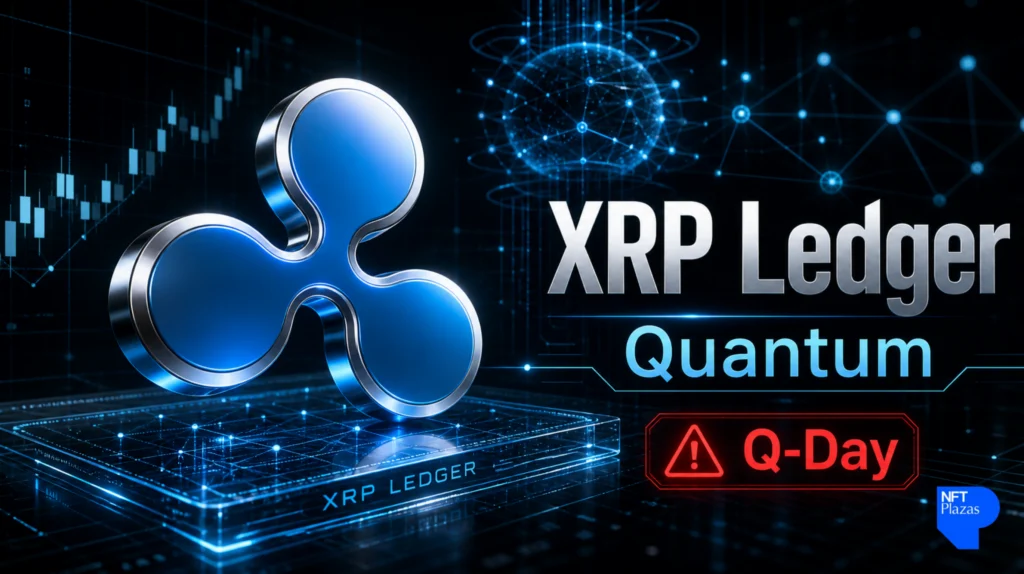
Ripple is proactively fortifying the XRP Ledger (XRPL) against the impending threat of quantum computing, outlining a comprehensive strategy to achieve "post-quantum" readiness by 2028. This ambitious timeline, announced in April 2026, addresses the potential vulnerability of current digital signatures to advanced quantum algorithms, a scenario often referred to as "Q-Day." The initiative aligns with broader industry-wide efforts to adapt to new cryptographic paradigms, influenced by advancements in quantum research from entities like Google Quantum AI and the standardization efforts of NIST.
Ripple’s Strategic Post-Quantum Roadmap
Ripple’s strategic roadmap for post-quantum readiness on the XRP Ledger, unveiled on April 20, 2026, sets a clear objective: to ensure the network’s full preparedness by the end of 2028. This is not envisioned as a singular, abrupt cryptographic overhaul, but rather a multi-faceted upgrade process. The company emphasizes that this transition will encompass enhancements across performance, storage capabilities, user experience, cryptographic algorithms, and the fundamental protocol design of the XRPL.
Ayo Akinyele, senior director of engineering at Ripple, articulated the rationale behind this proactive approach to CoinDesk, stating that the plan is designed to facilitate the adaptation of financial infrastructure before quantum computing poses a direct, disruptive threat. This contrasts with a reactive strategy that could jeopardize the integrity of XRPL systems, its diverse digital assets, and its user base. The phased implementation of this roadmap is crucial for a network that facilitates high-volume, low-latency transactions.
While specific details of the four main phases of Ripple’s roadmap were not fully elaborated in the initial announcement, insights from Project Eleven, a collaborative initiative focused on XRPL’s quantum security, shed light on key components. This collaboration involves a thorough evaluation of the XRPL’s validator, custody, networking, and wallet layers. A critical aspect of the plan includes the deployment of hybrid signature schemes, which combine current cryptographic methods with emerging quantum-resistant ones, alongside rigorous benchmarking on the XRPL Devnet. Furthermore, the development of custody wallet prototypes that demonstrably support post-quantum security is a significant undertaking within this framework.
The Imminent Threat of "Q-Day"
"Q-Day" is a term coined by researchers to denote the hypothetical point in time when quantum computers achieve sufficient computational power to break the encryption algorithms that currently safeguard a vast array of digital systems. In the context of blockchain technology, the primary vulnerability lies not in the ability to "break the entire blockchain" in a generalized sense, but specifically in the compromise of digital signatures and the associated public keys. Many contemporary blockchain networks, including the XRP Ledger, currently rely on elliptic-curve cryptography for transaction verification. The XRPL, for instance, presently supports digital signatures generated using secp256k1 and Ed25519 algorithms.
The inherent mechanism of transaction signing on a blockchain creates a potential risk. When an account initiates a transaction, its corresponding public key is often recorded on the ledger. Should a quantum computer with cryptographically relevant capabilities emerge, an adversary could theoretically leverage this publicly accessible key to derive the associated private key. This would grant the attacker unauthorized control over the assets held within that account. Consequently, accounts that have previously engaged in outgoing transactions are considered more susceptible than those that have predominantly received assets. Accounts holding significant long-term value are thus identified as the most critical group requiring early migration planning and execution.
The urgency surrounding this issue has been amplified by recent research published in March 2026 by Google Quantum AI. Their findings suggest that an attack targeting the "elliptic-curve discrete logarithm" problem—the fundamental mathematical challenge underpinning the security of many current blockchain signatures, including those based on secp256k1—could be feasible with as few as 1,200 logical qubits and 90 million Toffoli gates. Alternative estimations within the same research propose slightly higher requirements, around 1,450 logical qubits and 70 million Toffoli gates. Under certain hardware models, these figures translate to a requirement of fewer than 500,000 physical qubits, a substantially lower estimate than many prior projections, indicating a potentially accelerated timeline for quantum adversaries.
While Google’s estimates do not indicate an immediate operational risk to major blockchains, they significantly complicate any strategy of indefinitely postponing migration plans. The transition to new cryptographic standards for networks with millions of users, encompassing a vast ecosystem of wallets, exchanges, validators, and custody providers, is an inherently complex and time-consuming process. Such cryptographic transitions are multi-year endeavors, requiring meticulous planning, development, testing, and deployment, and cannot be effectively managed as a short-term reaction.
Industry-Wide Shift Towards Post-Quantum Standards
Ripple’s proactive stance is emblematic of a broader industry-wide movement towards post-quantum cryptography. A significant milestone in this transition occurred on August 13, 2024, when the U.S. National Institute of Standards and Technology (NIST) officially approved the first three post-quantum cryptography standards: FIPS 203 for CRYSTALS-Kyber (ML-KEM), FIPS 204 for CRYSTALS-Dilithium (ML-DSA), and FIPS 205 for Falcon (SLH-DSA). Among these, ML-DSA and SLH-DSA are digital signature standards directly relevant to the security of transactions, digital wallets, and the integrity of digital identities, making them crucial for blockchain applications.
The Ethereum Foundation has also integrated post-quantum cryptography into its official security roadmap. A dedicated research team is actively exploring and developing quantum-resistant solutions, with the Lean Ethereum roadmap targeting approximately 2029 for the protection of its core infrastructure. Bitcoin, the largest cryptocurrency by market capitalization, is also witnessing discussions and proposals related to quantum-resistant addresses and signatures, notably through initiatives like BIP-360 and BIP-361. However, a concrete official transition schedule for Bitcoin has not yet been established.
The emergence of AI-assisted cryptanalysis is another evolving factor in the post-quantum security landscape. In July 2026, Anthropic reported that its Claude AI model, in a preview phase known as Claude Mythos, was able to identify a more efficient attack vector against HAWK, a post-quantum signature candidate that was under additional evaluation by NIST. This AI-driven discovery reduced the estimated computational difficulty of attacking HAWK-256 from approximately 2^64 to 2^38, a reduction of about 67 million times. While this development highlights the potential of AI to accelerate cryptographic research, it is important to note that it did not impact NIST’s finalized standards for post-quantum cryptography.
Unique Advantages and Challenges in XRPL’s Migration
The XRP Ledger possesses a distinct architectural advantage in its account management system that could simplify its transition to post-quantum cryptography. Users on the XRPL have the flexibility to change the cryptographic key that controls an account without needing to create a new account address. This "regular key" mechanism and the ability to rotate keys effectively decouple an account’s address from the specific key pair used to sign transactions. This inherent design feature may streamline the migration process, as users might be able to adopt new quantum-resistant signatures without the necessity of migrating all their assets to entirely new addresses, a process that can be cumbersome and prone to error.
However, this structural advantage does not render the XRPL "quantum-proof" in its current state. Ripple faces the significant challenge of validating the stability and efficiency of new cryptographic algorithms within the XRPL ecosystem. This involves rigorous testing across a spectrum of critical parameters, including the size of signatures, the computational cost of verification, data storage requirements, and the overall impact on wallets, exchanges, and custody providers. For a blockchain designed for rapid payments and settlement, where ledger closing times are measured in mere seconds, any modification at the signature layer demands exhaustive testing to ensure it does not impede network performance before deployment to the mainnet.
A further complexity in XRPL’s migration lies in its protocol amendment process. Changes to the XRPL protocol require the approval of a supermajority of validators and the broader ecosystem of supporting infrastructure. Consequently, the success and timeline of Ripple’s post-quantum roadmap are not solely dependent on the selection of appropriate quantum-resistant algorithms. They are equally contingent on the collaborative efforts and readiness of wallets, exchanges, custody providers, and node operators to adapt to the new cryptographic standards, underscoring the distributed nature of security in a decentralized network.