
 admin
admin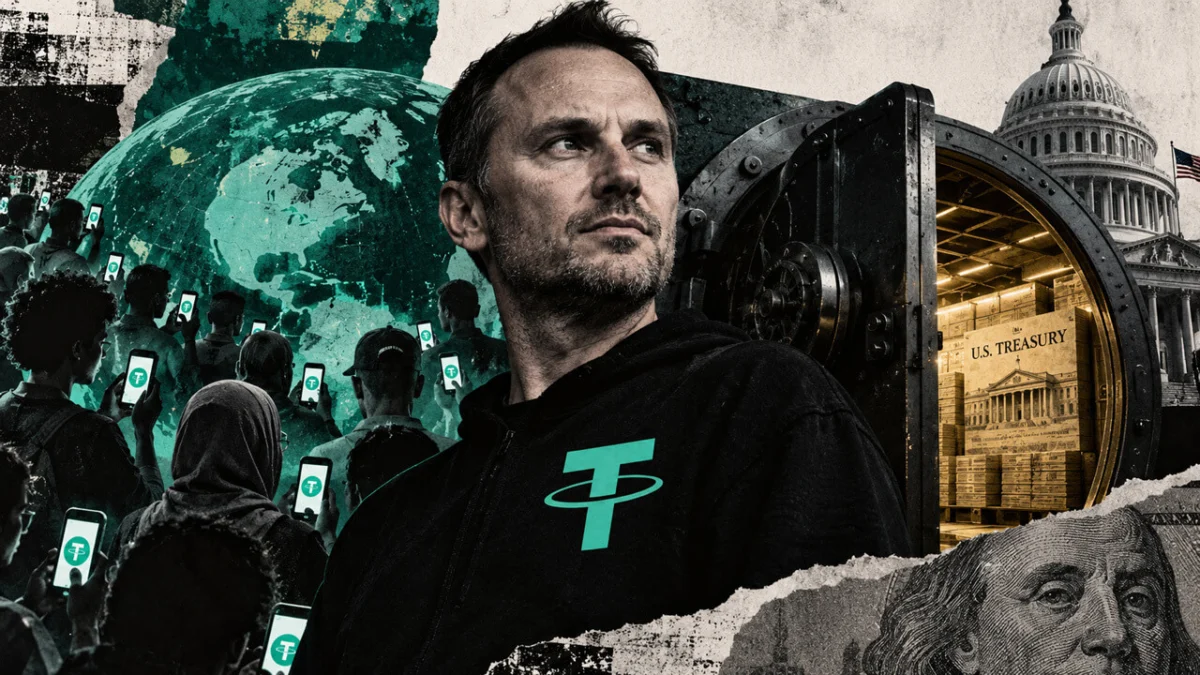
In a recent interview that has sent ripples through both the cryptocurrency and traditional finance spheres, Paolo Ardoino, the CEO of Tether, proposed a novel solution to a persistent challenge facing the United States: the concentration of foreign ownership in U.S. debt. Ardoino suggested that hundreds of millions of stablecoin users could, in effect, replace these concentrated foreign buyers, thereby decentralizing the ownership of U.S. Treasuries. While the macroeconomic intuition behind this idea holds weight, a closer examination of Tether’s operational structure and user agreements reveals a more nuanced reality regarding who truly owns what.
The provocative assertion was made during an August 31st episode of The Wolf of All Streets podcast. Ardoino articulated that Tether had facilitated "the decentralized ownership of the US debt" by enabling "650 million people who were basically holding some US Treasuries." The core of his argument hinged on mitigating concentration risk. Unlike a foreign government, which could theoretically orchestrate a mass sell-off of U.S. debt on short notice, a vast and dispersed base of individual stablecoin users is far less likely to act in unison, thus providing a more stable demand for U.S. government securities.
This perspective suggests that the demand for Tether’s USDT stablecoin generates significant capital that Tether then invests in a reserve portfolio heavily weighted towards U.S. Treasuries. However, characterizing these token users as direct "owners" of government debt conflates several distinct financial and contractual relationships. According to Tether’s own documentation, users own USDT tokens, eligible verified customers possess a personal contractual right to redeem these tokens, and it is Tether International that ultimately owns and manages the underlying reserve assets.
The figure of 650 million users, presented as evidence of this decentralized ownership, originates from Tether itself and has not been independently verified as a count of distinct Treasury investors. In an August 13th audit announcement, Tether stated that over 650 million users across emerging markets rely on Tether daily. Crucially, the company did not publish a detailed methodology for how this figure was derived, leaving room for interpretation regarding its precise meaning.
Tether’s past disclosures shed light on why the term "users" requires careful qualification. A 2024 methodology note from Tether treated on-chain addresses or accounts as a proxy and an upper-bound estimate for user numbers. This approach acknowledged the reality that a single individual can control multiple digital wallets. The company then supplemented these on-chain figures with estimates of individuals holding USDT through centralized exchanges and other services. Employing this broad methodology, Tether’s fourth-quarter 2025 report estimated the total user base to be approximately 534.5 million by the end of that year. While these metrics are valuable for understanding the reach and scale of Tether’s network, they do not necessarily equate to 650 million unique individuals, 650 million active holders at any given moment, or 650 million customers with direct redemption capabilities with Tether. Rather, they represent the scale that Tether attributes to its ecosystem.
What USDT Holders Actually Own: A Deep Dive into the Contractual Relationship
To understand the true nature of the relationship between USDT holders and the U.S. debt, it is essential to examine Tether’s official terms and conditions. The current terms explicitly define the right to purchase or redeem tokens as a "personal contractual right." Furthermore, Tether states that the issuance and redemption processes are administered by the company and necessitate customer verification.
Tether International’s Relevant Information Document provides a clearer allocation of control and ownership. Once a verified customer exchanges fiat currency for USDT tokens, Tether holds or invests these funds in a basket of reserve assets. The composition of this reserve portfolio is subject to change at Tether’s sole discretion. The company primarily manages these assets through banks and licensed financial institutions.
The company’s latest Financial Figures and Reserves Report, dated June 30, 2026, uses similarly direct accounting language. It describes the reserve assets as belonging to Tether International, while the issued tokens are classified as refund liabilities, recorded at their contractual redemption value. This structure fundamentally differs from direct ownership of a Treasury bill via a brokerage account or holding a beneficial interest in a fund that distributes portfolio economics. USDT holders possess transferable tokens, while the reserve assets are held on the issuer’s balance sheet.
| Relationship | What Tether’s Documents Provide |
|---|---|
| USDT Holder | Ownership or control of a transferable token denominated in U.S. dollars. |
| Eligible Direct Customer | A personal contractual right to redeem tokens with Tether, subject to its stipulated terms. |
| Reserve Owner and Manager | Tether International owns the reserve assets and exercises sole discretion over portfolio composition. |
| Reserve Investment Gains | Holders are not entitled to any gains exceeding the token’s face value. |
These documents do not negate holder rights; rather, they precisely define their scope. The Relevant Information Document specifies that eligible redemptions are paid at the token’s face value in fiat currency, minus applicable fees. It also explicitly states that holders are not entitled to any appreciation in the reserve value beyond the token’s face value. Consequently, the income and capital gains generated by the reserve portfolio do not automatically accrue to USDT holders simply because Treasuries form part of the backing.
Limited Direct Redemption Pathways and Issuer Control
The ability to directly redeem USDT with Tether is also more constrained than the token’s extensive global circulation might suggest. Tether’s fee schedule indicates a minimum threshold of $100,000 for direct acquisitions or redemptions. For redemptions, the fee is the greater of $1,000 or 0.1% of the redemption amount. Prospective customers must undergo a verification process, and Tether reserves the absolute discretion to approve or reject applications to become verified customers.
Furthermore, Tether’s legal terms grant the company the right to delay or suspend services, including redemptions, under various circumstances. These include suspected prohibited use of the token, legal requirements, government directives, ongoing investigations, unauthorized access, or any risks that Tether deems unacceptable. The company also reserves the right to modify its fee structure.
While direct redemption is one avenue, USDT holders can also sell their tokens on secondary markets, such as cryptocurrency exchanges. However, this process is governed by the rules, liquidity, and operational procedures of those specific platforms. Such a transaction represents a market exit rather than a direct exercise of the issuer contract. It may result in the token being transferred to another buyer, rather than reducing Tether’s outstanding liabilities.
This distinction also has implications for creditor priority. Tether’s public disclosures establish an issuer liability and a redemption right for eligible customers. They do not, however, define a universal insolvency ranking that applies to all secondary-market holders across all jurisdictions.
The Tangible Treasury Exposure: Scale and Implications
Despite the complexities surrounding direct ownership, the economic significance of Tether’s reserve portfolio, particularly its substantial holdings of U.S. Treasuries, is undeniable. The reliability and stability of USDT are intrinsically linked to Tether’s capacity to meet its obligations, and the composition and liquidity of its reserves are paramount to this ability.
As of June 30, 2026, Tether International reported total reserve assets amounting to $187.751 billion against liabilities of $183.642 billion. Within this reserve, direct U.S. Treasury bills constituted a significant portion, valued at $114.961 billion. Additionally, the company reported $18.626 billion in overnight reverse-repurchase agreements, which were collateralized by approximately $18.596 billion of U.S. Treasuries. It is crucial to recognize that these are distinct positions: directly owned Treasury bills and Treasury collateral backing a repurchase agreement should not be conflated, as they represent different legal relationships and risk profiles.
The sheer scale of Tether’s Treasury holdings provides context for Ardoino’s framing. The broad demand for USDT can indeed foster widespread economic dependence on a company whose reserve allocation strategies create substantial demand for short-term government debt. Previous analyses by CryptoSlate have explored the implications of Tether’s extensive Treasury holdings, highlighting the risks embedded within U.S. debt markets and examining how stablecoin issuers can emerge as marginal buyers as traditional investors retreat from U.S. debt.
Reassessing the "Decentralized Ownership" Narrative
While Ardoino’s vision of decentralized ownership through stablecoin users is compelling from a macroeconomic perspective, the legal and operational realities paint a more centralized picture. Tether effectively decentralizes the distribution of a dollar-denominated claim that is ultimately mediated by the issuer. The resulting funding demand for U.S. debt is geographically dispersed across its user base. However, the legal title to the reserves, the control over portfolio management, and the economic benefits exceeding the token’s face value remain centralized within Tether. Ardoino’s macro-economic intuition points towards a meaningful directional trend in market dynamics, but the intricate legal and economic mechanisms underpinning this relationship are firmly issuer-mediated.
The implications of this structure are far-reaching. As stablecoin issuers like Tether become increasingly significant players in the U.S. debt market, their operational decisions and reserve management strategies can have a tangible impact on market stability and liquidity. The concentration of U.S. Treasury holdings within these entities, regardless of the number of end-users, necessitates ongoing scrutiny from regulators and market participants alike. The debate initiated by Ardoino’s statement underscores the need for greater clarity and transparency regarding the precise nature of ownership, redemption rights, and the ultimate control of assets within the rapidly evolving stablecoin ecosystem.








