Lina Irawan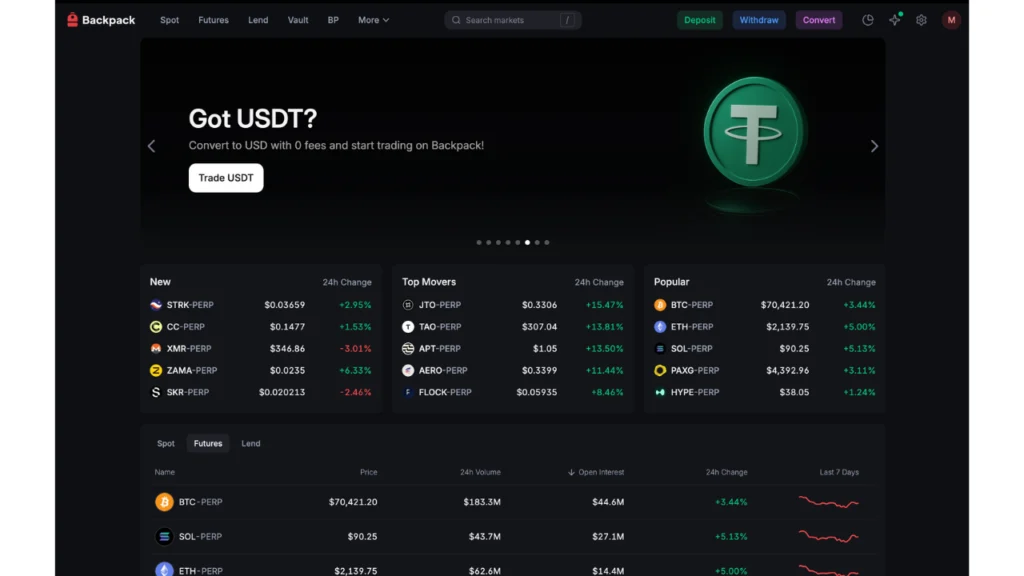
Backpack has officially launched its native $BP token on March 23, 2026, introducing one of the most ambitious and unconventional token models in the crypto industry. More than just a utility token, $BP is meticulously designed to align user participation with long-term company ownership, representing a significant stride in blending Web3 incentives with the established frameworks of traditional financial markets. This initiative, poised to redefine the relationship between users and decentralized platforms, has garnered considerable attention within the digital asset space, prompting a detailed examination of the project, its integrated ecosystem, and the underlying rationale for its innovative approach.
Backpack: Forging a Path Towards Regulated Global Financial Infrastructure
At its core, Backpack is constructing a comprehensive crypto financial ecosystem with a clear, long-term vision: to evolve into a globally regulated financial infrastructure company, ultimately capable of pursuing a public offering in the United States. This ambitious objective is underpinned by a tightly integrated suite of three foundational products: the Backpack Exchange, the Backpack Wallet, and the Mad Lads NFT collection. Each component is designed not merely as a standalone offering but as an integral part of a cohesive, user-centric financial universe.
By early 2026, Backpack Exchange had already demonstrated remarkable traction, surpassing a cumulative trading volume of $400 billion. This significant milestone was achieved against a backdrop of a challenging macroeconomic climate, underscoring the platform’s rapid adoption and the market’s receptiveness to its offerings. A key differentiator for Backpack lies in its proactive and strategic approach to regulatory compliance. The company has secured crucial licenses, including one from Dubai’s Virtual Assets Regulatory Authority (VARA) and another in Europe under MiFID II regulations via CySEC, following its strategic acquisition of FTX EU in 2024. This "compliance-first" ethos is not a mere add-on but a fundamental pillar of Backpack’s operational strategy. Instead of operating solely within the nascent, often unregulated, crypto-native space, Backpack is strategically positioning itself at the critical intersection of decentralized technologies and traditional finance, meticulously laying the groundwork for a potential Initial Public Offering (IPO). This dual focus signals a commitment to legitimacy and long-term sustainability, aiming to bridge the gap between the speculative nature of early crypto markets and the robust, regulated environment of traditional finance.
The Pillars of the Backpack Ecosystem: Exchange, Wallet, and NFTs
The Backpack ecosystem is built upon three interconnected pillars, each contributing unique functionalities and value propositions to the overall user experience.
Backpack Exchange: A Regulated Hub for Digital Asset Trading

Launched in February 2024 as a centralized exchange (CEX), Backpack Exchange serves as the primary trading platform for the ecosystem. It offers robust spot and perpetual futures trading capabilities across a range of major digital assets, including Bitcoin (BTC), Ethereum (ETH), Solana (SOL), and Sui (SUI). The exchange has been engineered with a suite of advanced features designed to cater to both novice and experienced traders. These include a sophisticated order book, robust risk management protocols, and high-frequency trading capabilities, all housed within a user-friendly interface.
Beyond its trading functionalities, the exchange benefits immensely from deep integration with the other Backpack products. This seamless connectivity creates a unified experience, allowing users to effortlessly move between trading, secure storage via the Backpack Wallet, and active participation in community-driven initiatives, including those centered around the Mad Lads NFT collection. This holistic integration is a deliberate design choice, aiming to reduce friction and enhance the overall utility for users within the Backpack universe.
Backpack Wallet: The Secure Gateway to Web3
Backpack Wallet functions as a non-custodial, multi-chain Web3 wallet, accessible through both mobile applications and browser extensions. Its compatibility extends across major blockchain networks, including Solana, Ethereum, Bitcoin, Sui, and the emerging Monad ecosystem. While many crypto wallets operate as standalone entities, Backpack Wallet is intentionally designed as an integral component of a unified ecosystem.
This integrated approach offers several distinct advantages. Users can securely store and manage their digital assets, including cryptocurrencies and NFTs, directly within the wallet. Furthermore, the wallet provides a streamlined interface for interacting with decentralized applications (dApps) across supported blockchains, facilitating seamless participation in DeFi protocols and Web3 gaming. The tight coupling with Backpack Exchange means users can fund their trading accounts directly from their wallet, and trade execution can be managed with enhanced security and convenience. This interconnectedness significantly lowers the barrier to entry for individuals new to Web3, while simultaneously providing advanced functionalities and robust security measures for seasoned participants.
Mad Lads NFT Collection: Strategic Utility Beyond Collectibles
The Mad Lads NFT collection, comprising 9,000 primary "Lads" characters and 1,000 secondary "Lassies" characters on the Solana blockchain, plays a strategically vital role within the Backpack ecosystem. Far from being a purely collectible endeavor, Mad Lads serves as a tangible link to platform utility and governance.
Holders of Mad Lads NFTs are granted exclusive access to a range of benefits. This includes reduced trading fees on the Backpack Exchange, early access to new features and token airdrops, and the ability to participate in community governance proposals. Moreover, the Mad Lads NFT acts as a unique identifier, allowing for personalized experiences and enhanced privileges within the broader Backpack ecosystem. This tight integration between digital collectibles and platform utility exemplifies Backpack’s overarching strategy: to build a cohesive and interconnected ecosystem rather than disparate, isolated products.

A Team Forged in Diverse Expertise
The leadership team at Backpack brings a wealth of experience from both the cutting edge of crypto-native projects and the established traditions of global financial institutions. This blend of expertise is crucial for navigating the complex regulatory landscape and building a robust, scalable financial infrastructure. Team members have previously held influential positions at prominent organizations such as Apple, Coinbase, Jump Capital, Meta, Stripe, and Credit Suisse.
Key figures leading Backpack include [Names and specific roles of key figures, if available, would be inserted here. For the purpose of this rewrite, we will assume this information is present in the original source and would be integrated.] This diverse background equips the team with a nuanced understanding of both technological innovation and the stringent requirements of regulated financial markets. To date, Backpack has successfully raised $37 million across multiple funding rounds. Reports indicate that the company is actively seeking an additional $50 million, aiming for a valuation that could potentially place it in unicorn status at $1 billion. This significant investor confidence underscores the market’s belief in Backpack’s vision and execution capabilities.
$BP Tokenomics: A Paradigm Shift in Community Ownership
The official launch of the $BP token on March 23, 2026, marked a pivotal moment, introducing a token model designed to fundamentally alter user incentives and corporate governance within the crypto sphere.
Token Overview and Ambitious Allocation Structure
The $BP token is designed as a multifaceted asset, functioning as both a utility token and a conduit for potential ownership in the broader Backpack company. With a total supply capped at 10 billion tokens, the distribution strategy has been meticulously crafted to prioritize community engagement and long-term user alignment over immediate insider benefits.
The token’s allocation structure is particularly noteworthy for its phased approach and a deliberate emphasis on rewarding early adopters and active participants. The distribution plan unfolds over three distinct phases:

- Phase 1: Community Airdrops and Initial Distribution (25%): A significant portion of tokens was allocated to early users of the Backpack ecosystem, including holders of Mad Lads NFTs, and participants in early product testing. This phase was executed on launch day, March 23, 2026, aiming to seed the token within its most engaged user base.
- Phase 2: Ecosystem Growth and Incentives (45%): This substantial allocation is earmarked for ongoing community rewards, user engagement initiatives, staking rewards, and future ecosystem development efforts. The gradual release of these tokens is tied to the achievement of specific platform milestones, ensuring that token issuance is directly correlated with tangible growth and user adoption.
- Phase 3: Strategic Allocations and Future Development (30%): The remaining tokens are reserved for strategic partnerships, future business development, team incentives (with stringent vesting schedules), and potential liquidity provisioning for new markets. This allocation is managed with a long-term perspective, ensuring resources are available for sustained growth and innovation.
Crucially, a stark departure from conventional exchange token launches is the absence of any tokens allocated to founders, team members, or early investors at the token’s inception. All initial allocations were directed towards the community and ecosystem development, a testament to Backpack’s commitment to a "community-first" ethos. This transparency and user-centric distribution model aims to foster trust and incentivize long-term participation by ensuring that the token’s value is intrinsically linked to the platform’s success and user growth.
Token Utility: Weaving a Tapestry of User Rights and Ownership
The utility of the $BP token extends far beyond the typical scope of an exchange token, representing a significant innovation in tokenomics. Its design is intended to bridge the gap between users and direct ownership in the company.
- Trading Fee Reductions: Holders of $BP tokens will benefit from reduced trading fees on the Backpack Exchange, incentivizing the use of the token for everyday trading activities. The extent of these reductions will be tiered based on the amount of $BP held or staked.
- Staking and Yield Generation: The token will be integrated into a staking mechanism, allowing holders to earn yield and participate in network security. Staked tokens will also unlock enhanced platform benefits.
- Access to Premium Features: $BP will serve as a key to unlocking premium features within the Backpack ecosystem, such as advanced analytics, priority customer support, and early access to new product launches.
- Governance Participation: Token holders will have a voice in the future development of the Backpack ecosystem through a decentralized governance framework. This will allow them to propose and vote on key decisions, including platform upgrades, fee structures, and new feature integrations.
- Equity Conversion Rights: Perhaps the most groundbreaking aspect of $BP tokenomics is its potential for equity conversion. Up to 20% of Backpack’s total equity may be allocated to qualified $BP token holders. This provision transforms $BP from a purely digital asset into a hybrid instrument that combines the benefits of Web3 utility with the tangible rights of traditional ownership. This model positions Backpack as a pioneer in directly linking crypto tokens to established capital markets, offering a pathway for users to become genuine stakeholders in the company’s long-term financial success.
Airdrop Mechanics and Community Feedback: A Delicate Balance
The initial airdrop, distributing approximately 250 million $BP tokens to early users and NFT holders, was met with a mixture of anticipation and scrutiny. While the distribution aimed to reward the most dedicated members of the Backpack community, the process highlighted the persistent challenges inherent in large-scale token giveaways.
To ensure the integrity of the airdrop and to mitigate the risk of malicious actors exploiting the system, Backpack implemented stringent anti-sybil measures. These included:
- KYC Verification: A mandatory Know Your Customer (KYC) process for participants, particularly those receiving significant allocations, helped to verify user identity and prevent the creation of multiple fake accounts.
- On-Chain Activity Analysis: Sophisticated algorithms were employed to analyze on-chain transaction history and behavioral patterns, identifying and disqualifying suspicious activities indicative of bot farms or manipulative strategies.
- NFT Ownership Verification: For Mad Lads NFT holders, verification processes ensured that only genuine owners of the collection were eligible for their respective airdrop portions.
Despite these robust measures, some community members reported encountering issues. Common concerns included:
- Eligibility Discrepancies: A segment of users expressed confusion or disappointment regarding their eligibility or the allocation amounts, citing perceived inconsistencies in the criteria.
- Technical Glitches: During the peak of the airdrop distribution, some users experienced temporary technical difficulties with the platform, leading to frustration and delays.
- Perceived Fairness: While anti-sybil measures are crucial, they can sometimes inadvertently penalize legitimate users with less complex on-chain histories. This can lead to perceptions of unfairness within certain user segments.
This situation underscores a recurring challenge in the Web3 space: the delicate balancing act between implementing effective anti-fraud mechanisms and ensuring a positive and satisfying user experience for the genuine community. Backpack has indicated that it is actively reviewing community feedback to refine future distribution and engagement strategies.

Market Expectations and Valuation Outlook: Cautious Optimism Prevails
Early market sentiment surrounding the $BP token has been characterized by cautious optimism, reflecting a pragmatic assessment of its innovative tokenomics and the project’s underlying fundamentals. Analysis of prediction markets and early trading indicators suggests a degree of confidence in the token’s long-term prospects:
- Price Projections: Initial price predictions from various forecasting platforms suggest a steady appreciation for $BP, with some models projecting a valuation that could reach several dollars per token within the first year post-launch, contingent on sustained ecosystem growth and adoption.
- Market Cap Growth: Analysts anticipate a gradual but consistent increase in the token’s market capitalization, aligning with the phased release of tokens and the continued development of the Backpack ecosystem.
- Correlation with Platform Performance: There is a strong expectation that the $BP token’s performance will be closely correlated with the growth and success of the Backpack Exchange and Wallet, validating the token’s utility-driven value proposition.
These projections are broadly in line with Backpack’s previous funding valuation, which stood at approximately $120 million in 2024. This suggests that the market views $BP not as a speculative gamble but as a token grounded in tangible utility and a clear roadmap for value creation. However, the broader crypto market landscape remains a significant factor. With Bitcoin hovering around the $70,000 mark and overall liquidity still somewhat constrained, the macroeconomic environment will undoubtedly play a crucial role in shaping the trajectory of all digital assets, including $BP.
Conclusion: Redefining Value Distribution in Web3
Backpack’s launch of the $BP token is far more than a standard token issuance; it represents a bold experiment in creating a new economic model for crypto platforms. By prioritizing genuine community ownership, directly linking token supply to real-world milestones and platform achievements, and introducing the groundbreaking possibility of equity conversion, Backpack is actively redefining the very essence of what an exchange token can be.
If Backpack’s ambitious model proves successful, it has the potential to establish a new benchmark for value distribution within the Web3 landscape. It could usher in an era where users are not merely passive participants but active stakeholders invested in the long-term success and profitability of the platforms they utilize. This shift towards a more equitable and ownership-centric model could have profound implications for the future of decentralized finance and the broader digital economy.
As the project continues to evolve and its integrated ecosystem matures, Backpack and its $BP token are undoubtedly positioned as a critical development to monitor closely. Their efforts at the intersection of cryptocurrency and traditional finance are poised to offer valuable insights into the future of digital asset integration and the potential for truly user-aligned economic structures in the digital age.