admin
admin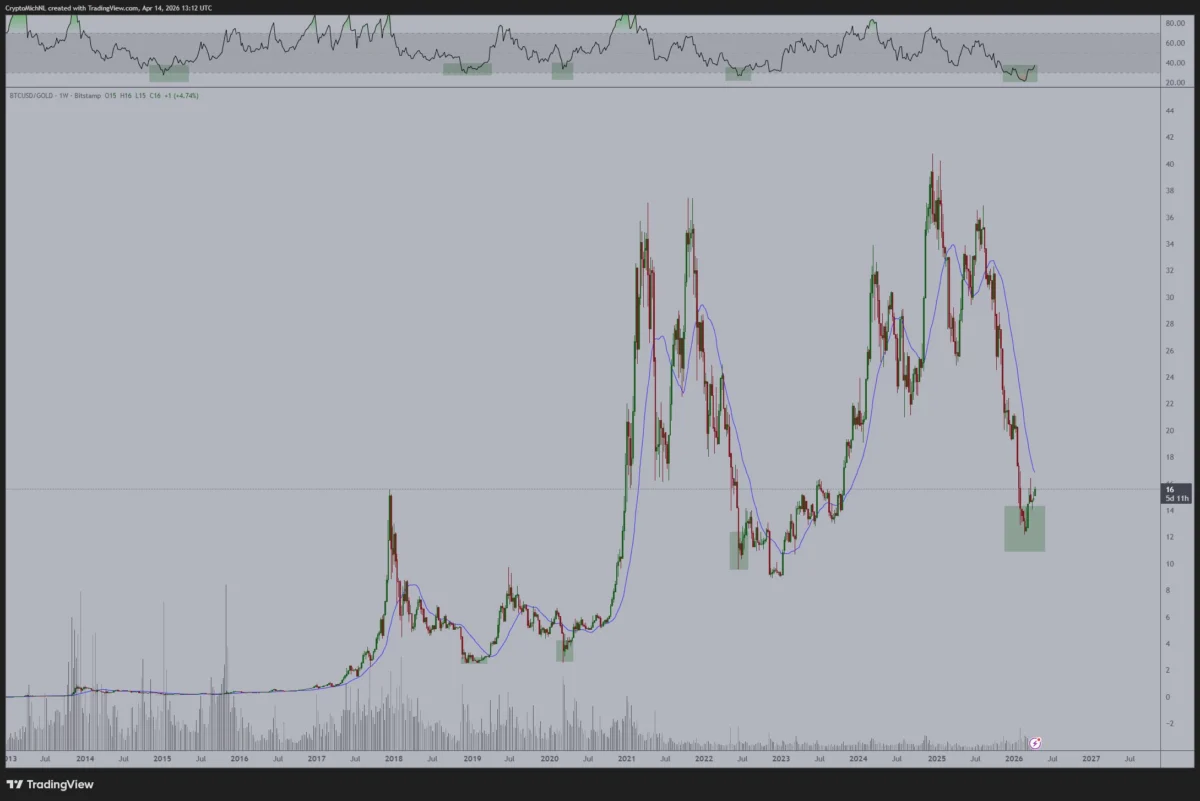
The global financial landscape is witnessing a significant paradigm shift as Bitcoin (BTC) increasingly asserts itself as a primary contender to gold’s long-standing status as the world’s premier store of value. Matt Hougan, the Chief Investment Officer of Bitwise Asset Management, recently posited that the total addressable market for Bitcoin is likely significantly larger than the $30 trillion to $38 trillion market capitalization currently held by gold. This assertion comes at a time of heightened geopolitical tension and fluctuating macroeconomic indicators, suggesting that Bitcoin’s utility as an "apolitical alternative" to traditional fiat systems is gaining unprecedented traction among institutional and sovereign actors alike.
The Decoupling of Bitcoin from Traditional Risk Assets
Historically, Bitcoin has been categorized by mainstream analysts as a "risk-on" asset, meaning its price movements were expected to correlate closely with equities and move inversely to the U.S. dollar and safe-haven assets like gold during times of crisis. However, recent market data suggests a fundamental break from this narrative. Since the escalation of geopolitical conflicts involving the United States, Israel, and Iran, Bitcoin has displayed a resilience that has caught many traditional market participants off guard.
According to data analyzed by Bitwise, since the commencement of specific airstrikes and military engagements on February 28, Bitcoin has surged by approximately 12%. In stark contrast, the S&P 500—the benchmark for the U.S. equity market—has retreated by 1%, and gold, the traditional hedge against war and inflation, has seen a surprising decline of 10%. This divergence marks a critical moment in the evolution of digital assets, as Bitcoin appears to be absorbing the capital flight that traditionally would have flowed into bullion or defensive stock positions.

Hougan noted that the common explanations for this behavior—such as the idea that war leads to increased money printing and subsequent inflation—only scratch the surface. While the inflationary nature of conflict-related spending does favor Bitcoin in the long term, the immediate driver appears to be Bitcoin’s unique position as a neutral, non-state-controlled financial layer.
A Chronology of Geopolitical Influence on Digital Assets
To understand the current trajectory of Bitcoin, it is essential to trace the timeline of events that have reshaped the global perception of "safe" money.
In February 2022, the onset of the Russia-Ukraine conflict led to the unprecedented decision by Western nations to disconnect major Russian banks from the SWIFT (Society for Worldwide Interbank Financial Telecommunication) network. This "weaponization" of the global financial infrastructure served as a wake-up call for nations that operate outside of the immediate U.S. or European sphere of influence. Hougan argues that this event opened a conceptual space for Bitcoin, as countries began to fear the potential for their dollar-denominated reserves to be frozen or rendered inaccessible due to political disagreements.
By 2024, this trend has intensified. Iran, currently facing a combination of stringent financial sanctions and an oil blockade, has reportedly begun exploring the use of cryptocurrency for international settlements. Specifically, reports indicate that crypto "tolls" are being considered or utilized for transit through the Strait of Hormuz, a vital chokepoint for global energy supplies. This practical application of Bitcoin as a tool for bypassing traditional financial blockades reinforces its value proposition as a decentralized alternative to the dollar-based system.

Throughout early 2024, Bitcoin’s price action has reflected these macro shifts. After a period of consolidation, the asset rallied to $76,000 this week, reaching two-month highs. This rally was supported not only by geopolitical "relief" but also by domestic economic data in the United States. Cooler-than-expected Producer Price Index (PPI) inflation numbers provided a "Goldilocks" environment for Bitcoin—high enough to justify a store-of-value hedge, but low enough to suggest the Federal Reserve might pause or reverse aggressive interest rate hikes.
Comparative Market Analysis: Bitcoin vs. Gold
The comparison between Bitcoin and gold is not merely academic; it is a fundamental driver of institutional investment strategies. Gold has been the standard for wealth preservation for over five millennia, with a current market cap estimated between $13 trillion (for private holdings) and $38 trillion (including all known reserves and institutional holdings).
Hougan’s thesis that Bitcoin’s market is "probably a lot bigger" than gold’s rests on the digital asset’s dual nature. While gold is purely a store of value, Bitcoin functions as both a store of value and a global, 24/7 settlement network. Unlike gold, Bitcoin can be transmitted across borders in seconds without the need for physical transport or specialized security. Furthermore, Bitcoin’s absolute scarcity—capped at 21 million units—contrasts with gold, where the total supply continues to increase through mining, and massive untapped deposits (such as those on the ocean floor or in space) could theoretically devalue the asset in the distant future.
The "Total Addressable Market" (TAM) for Bitcoin includes the $30+ trillion gold market, but it also extends into the markets for international remittances, offshore banking, and sovereign reserve assets. If nations begin to hold Bitcoin in their central banks as a hedge against the "weaponization" of the dollar, the influx of capital could dwarf the current valuations of the entire cryptocurrency sector.

Technical Outlook and the "Mean Reversion" Theory
From a technical perspective, Bitcoin is currently emerging from what many analysts have described as a "crypto winter"—a prolonged period of depressed prices and low volatility following the 2022 market crashes. However, the recovery against gold is particularly telling for technical traders.
Crypto trader and analyst Michaël van de Poppe has highlighted that the recent correction of Bitcoin relative to gold is one of the most severe in the asset’s history. Van de Poppe utilizes a "mean reversion" model, which suggests that after an asset deviates significantly from its historical average performance relative to another asset, it tends to snap back aggressively toward the mean.
Van de Poppe’s analysis of historical drawdowns indicates that following similar periods of underperformance relative to gold, Bitcoin has historically seen returns of 350% to 450% over the subsequent 12 months. Based on a baseline price of $60,000, such a reversion would project a Bitcoin price target of approximately $275,000. In the more immediate term, Van de Poppe expects Bitcoin to trade within the $87,500 to $90,000 range within the next three months, provided the current momentum holds.
Broader Economic Implications and Institutional Adoption
The implications of Bitcoin surpassing gold’s market cap extend far beyond the wealth of individual investors. It signifies a fundamental shift in the "trust architecture" of the global economy. For decades, the U.S. dollar and gold were the two pillars of global finance. The emergence of a third pillar—decentralized, digital, and apolitical—challenges the hegemony of central banks.

Institutional adoption has been a key catalyst in this transition. The approval and successful launch of Bitcoin Spot ETFs (Exchange-Traded Funds) in the United States have provided a regulated pathway for trillions of dollars in pension funds and institutional portfolios to enter the market. As these entities begin to reallocate even 1% to 5% of their gold holdings into Bitcoin, the upward pressure on price becomes a mathematical inevitability due to the asset’s fixed supply.
Furthermore, the "apolitical" nature of Bitcoin is becoming its most marketable feature. In a world increasingly divided into competing economic blocs—primarily the U.S.-led Western system and the China-led BRICS+ system—Bitcoin offers a "neutral ground." It allows for trade and value storage without requiring participants to pledge allegiance to a specific sovereign currency that may be used as a tool of foreign policy.
Conclusion: The Future of the Digital Reserve
As the world navigates a period of profound geopolitical instability and economic transition, the role of Bitcoin is being redefined. No longer viewed merely as a speculative vehicle for retail traders, it is increasingly recognized as a sophisticated financial instrument capable of outperforming traditional safe havens.
The data presented by industry leaders like Matt Hougan and technical analysts like Michaël van de Poppe points toward a future where Bitcoin’s valuation reflects its utility as the world’s first truly global, digital reserve asset. While the path to a $30 trillion market cap remains fraught with regulatory challenges and volatility, the current decoupling from traditional markets suggests that the "digital gold" narrative is not only intact but is expanding into a much larger economic reality. For investors and nation-states alike, the "moral of the story," as Van de Poppe suggests, may simply be to recognize the current dip as a generational opportunity to allocate into the emerging foundation of the next global financial era.