admin
admin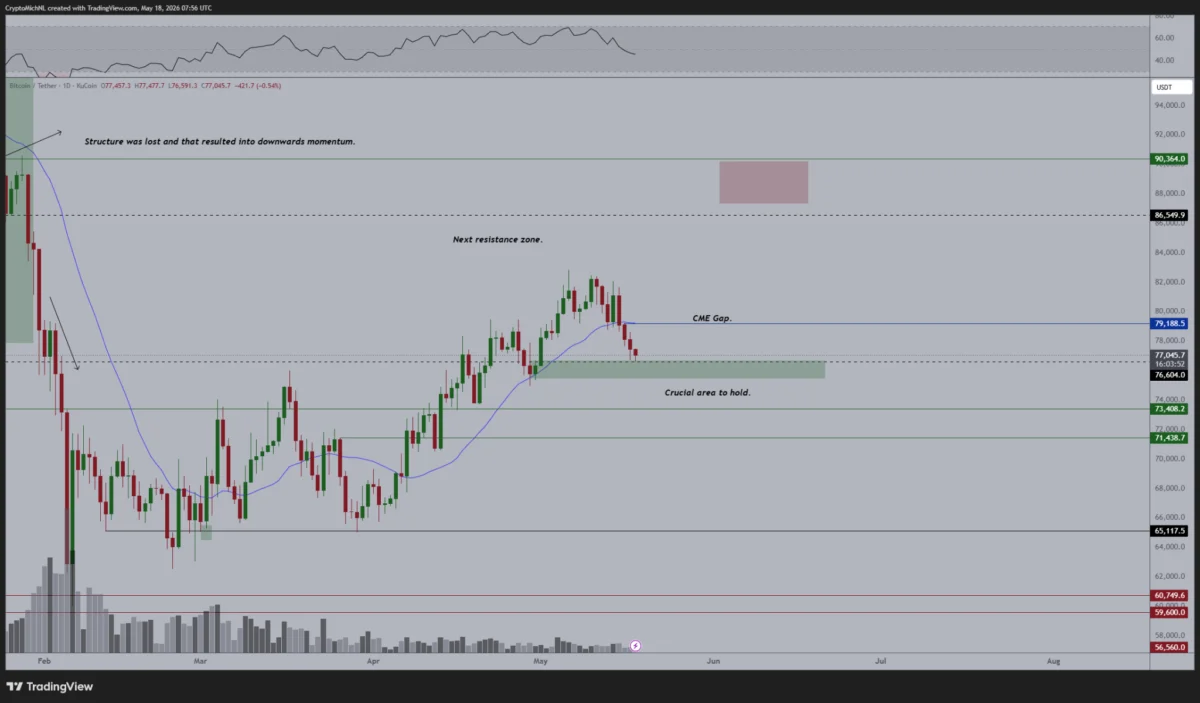
The global cryptocurrency market faced a sharp contraction during the early Asian trading hours on Monday, as Bitcoin (BTC) retreated to the $76,000 level, marking a significant departure from the bullish momentum observed earlier in the month. This downward trajectory, which saw the premier digital asset shed approximately 7% of its value over a 72-hour window, appears to be primarily driven by a resurgence in geopolitical instability between the United States and Iran. The sudden price correction has effectively erased nearly all gains accrued since the beginning of May, catching many over-leveraged traders off guard and triggering a cascade of liquidations across various digital asset exchanges.
Geopolitical Catalysts and the "Clock is Ticking" Warning
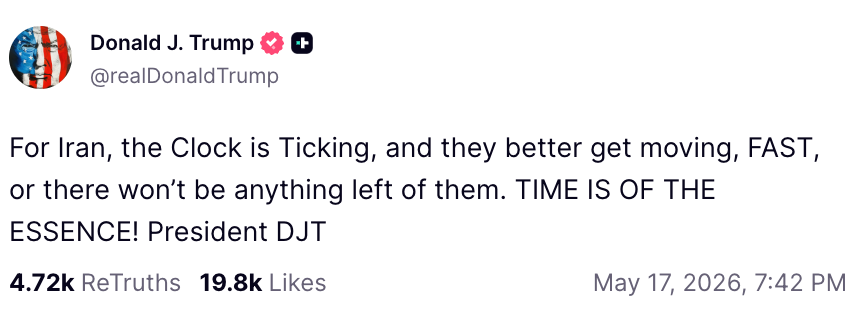
The primary catalyst for the market’s sudden pivot toward a "risk-off" posture was a series of provocative statements issued by U.S. President Donald Trump. On Sunday, the President utilized his Truth Social platform to issue a stern ultimatum to Tehran regarding perceived delays in a proposed peace agreement. Trump’s assertion that the “clock is ticking” was interpreted by global intelligence analysts and market participants as a signal that the diplomatic window may be closing, potentially paving the way for renewed military posturing or direct kinetic action.

Industry analysts were quick to connect the dots between the President’s rhetoric and the ensuing market volatility. CryptoRover, a prominent market commentator on the social media platform X, noted that the U.S. is allegedly preparing for a potential new military operation against Iran. He characterized the development as “extremely dangerous” for Bitcoin’s short-term price action. In times of heightened geopolitical friction, speculative assets often face immediate sell-offs as investors migrate toward traditional safe havens or liquidate positions to cover potential losses in other sectors of their portfolios.
The timing of these threats is particularly sensitive given the fragile state of Middle Eastern diplomacy. The threat of military escalation in the region historically leads to immediate volatility in energy markets, which in turn creates a ripple effect throughout the global financial system. For Bitcoin, which has increasingly been traded as a high-beta version of the Nasdaq and other tech-heavy indices, the threat of war represents a significant headwind to the "digital gold" narrative that some proponents advocate during times of crisis.
A Cascade of Liquidations: The $677 Million Correction
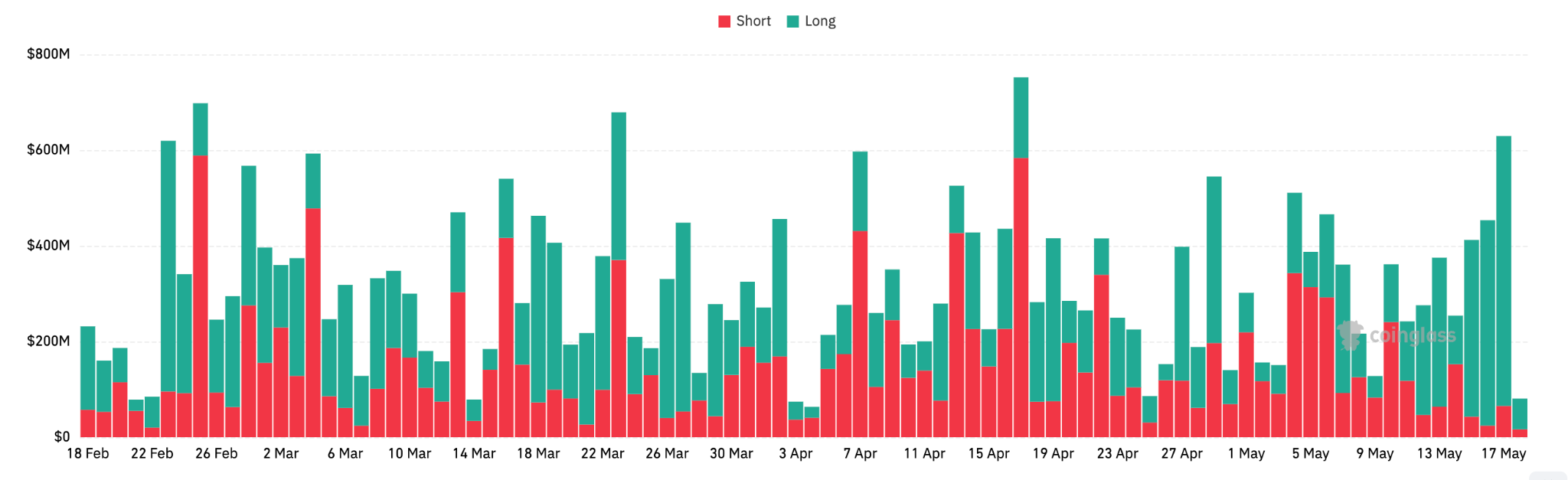
As the spot price of Bitcoin began its descent from the $83,000 resistance level, the impact was magnified by the clearing of leveraged positions. According to data from the crypto-analytics platform CoinGlass, the market witnessed a staggering $677 million in total liquidations over a 24-hour period. Of this total, long positions—bets that the price would continue to rise—accounted for approximately $607 million. Bitcoin-specific long liquidations alone reached $190 million, illustrating the extent to which the market was positioned for a continued rally.
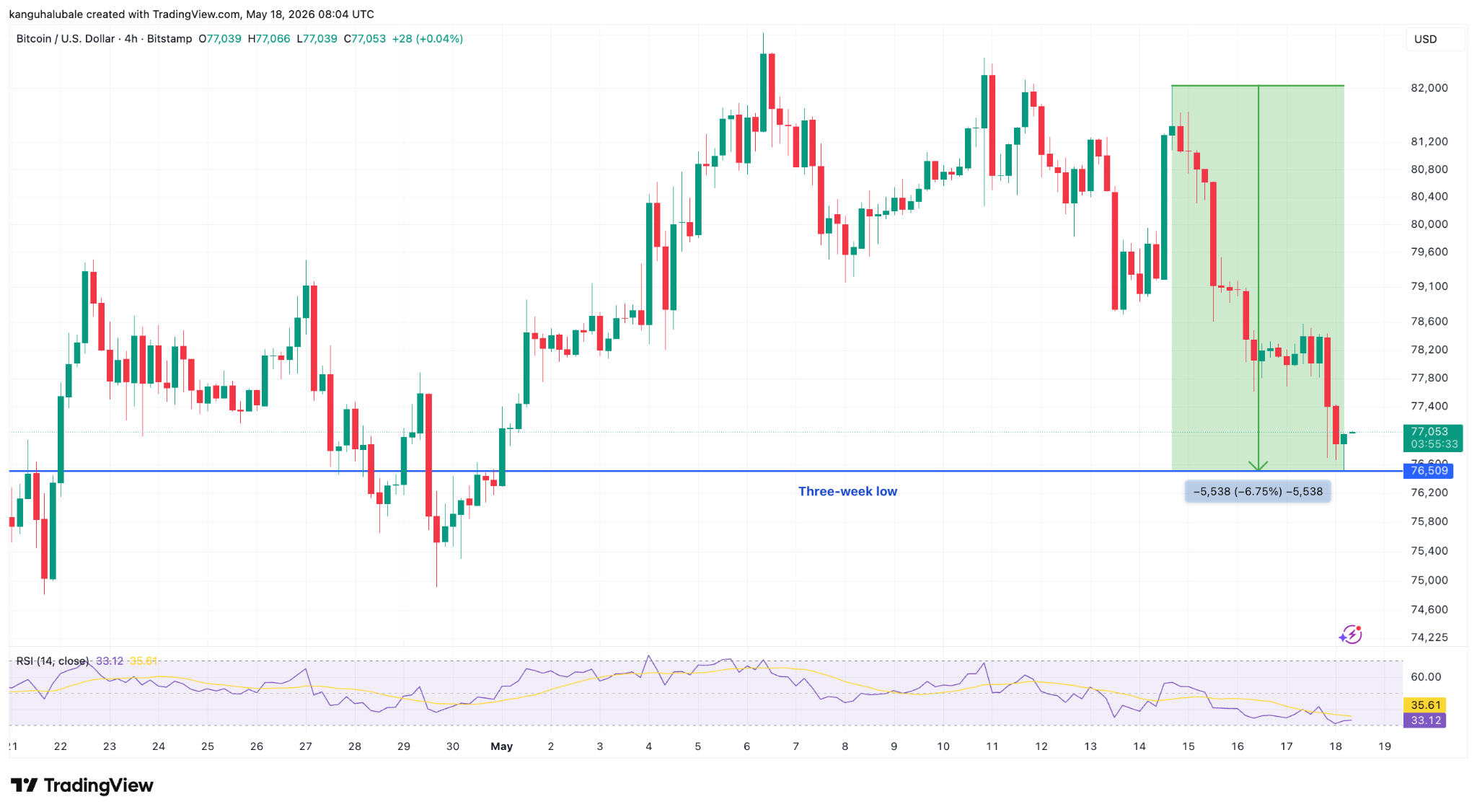
Liquidations occur when an exchange forcibly closes a trader’s leveraged position due to a partial or total loss of the trader’s initial margin. When a large number of long positions are liquidated simultaneously, it creates a "long squeeze," where the forced selling puts additional downward pressure on the price, triggering further liquidations in a self-reinforcing cycle. This mechanical selling was a major contributor to Bitcoin’s rapid drop to $76,500, a level not seen in three weeks.
The magnitude of these liquidations serves as a stark reminder of the risks associated with high-leverage trading in the cryptocurrency space. Following the recent surge to 13-week highs near $83,000, which was fueled by record inflows into spot exchange-traded funds (ETFs) and optimism regarding the U.S. CLARITY Act, market sentiment had reached levels of extreme greed. This euphoria often leads to the accumulation of "weak-handed" leveraged positions that are easily disrupted by external shocks, such as the sudden shift in U.S. foreign policy.
The Energy Link: Oil Volatility and Inflationary Fears
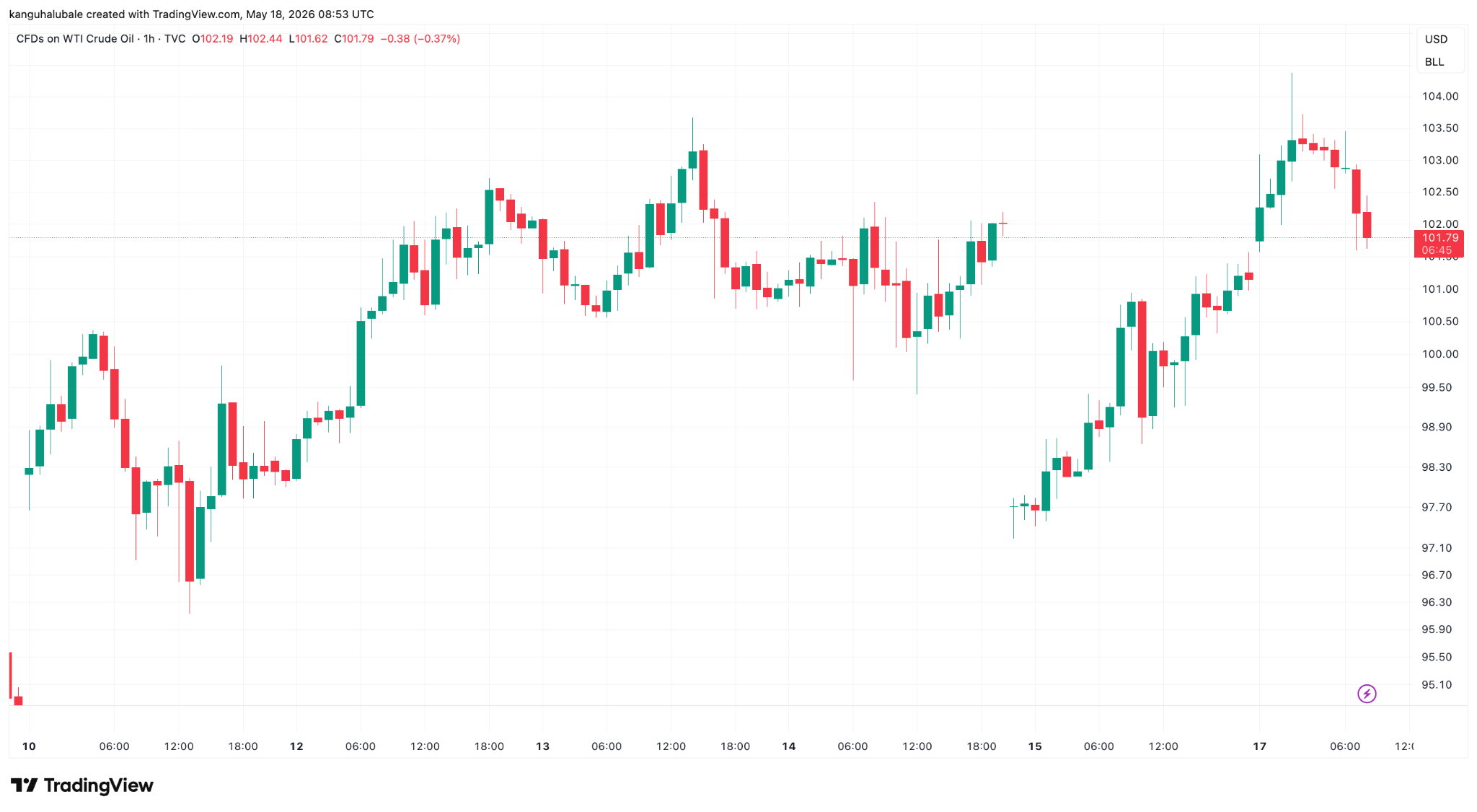
The tension between Washington and Tehran did not only impact digital assets; it sent shockwaves through the commodities sector. West Texas Intermediate (WTI) crude oil experienced intense volatility, surging over 3% within a few hours to hit $104 per barrel. Although it later corrected to approximately $101, the spike underscored the market’s anxiety regarding global supply chains.
The trading resource Capital.com highlighted several factors contributing to the energy crunch. Beyond the direct threats from the U.S. administration, the market is grappling with the expiration of a waiver for Russian crude sales and ongoing disruptions in the Strait of Hormuz—a critical chokepoint for global oil transit. These factors combined to create a "supply fear" premium on oil prices.
The broader economic implication of rising oil prices is the renewed threat of "sticky" inflation. As energy costs rise, they permeate through the supply chain, increasing the cost of goods and services. This scenario complicates the Federal Reserve’s monetary policy path. Higher energy prices reinforce the "higher-for-longer" interest rate narrative, as the Fed may be forced to keep rates elevated to combat inflationary pressures. For Bitcoin, higher interest rates and a strengthening U.S. dollar are traditionally bearish signals, as they increase the opportunity cost of holding non-yielding assets and drain liquidity from the financial system.
Technical Analysis: Bears Reclaim the Driver’s Seat
From a technical perspective, the pullback was not entirely unexpected by some seasoned traders. Analyst CryptoJelleNL pointed to a bearish divergence on the Relative Strength Index (RSI) as Bitcoin approached the $82,000-$83,000 range. A bearish divergence occurs when the price of an asset reaches a new high while the momentum indicator (RSI) fails to do so, suggesting that the upward move is losing steam. This technical signal, combined with the geopolitical "black swan" event, provided the necessary momentum for bears to seize control.
Michael van de Poppe, founder of MN Capital, identified the $76,000 level as a critical line in the sand. According to his analysis, it is imperative that Bitcoin maintains this support level to prevent a broader market-wide crash. If the $76,000 floor fails to hold, the next major demand zone lies between $71,000 and $73,000.
A more pessimistic outlook suggests that if the current correction mirrors previous cycles, Bitcoin could revisit its local low of $65,000. This target aligns with an "inverted V-shaped" pattern currently visible on the daily charts. A drop to $65,000 would represent a 16% decline from current prices and would mirror a similar correction seen in April 2025, when the BTC/USD pair was rejected by its 200-day moving average. The 200-day moving average is a widely watched indicator of long-term trend health; staying below it for an extended period could signal the start of a multi-month bearish phase.
Chronology of the Recent Market Cycle
To understand the current downturn, one must look at the timeline of the preceding weeks:
- May 1–May 15: Bitcoin begins a steady ascent from the mid-$60,000s, driven by institutional interest and the stabilization of ETF outflows.
- May 18: BTC breaks through the $80,000 barrier for the first time in months, bolstered by the introduction of the U.S. CLARITY Act, which promised a clearer regulatory framework for digital assets.
- May 20: Bitcoin reaches a 13-week high of approximately $83,000. Spot ETF inflows exceed $1 billion in a single week, fueling a sense of "up-only" price action.
- May 22: Signs of exhaustion appear on the technical charts. RSI begins to diverge from price action.
- May 25 (Sunday): President Trump issues the "clock is ticking" threat against Iran via Truth Social.
- May 26 (Monday): During Asian trading hours, Bitcoin prices gap down to $76,000. Oil prices spike, and over $600 million in long positions are liquidated within hours.
Broader Implications for the Crypto Ecosystem
The current price action has wider implications for the cryptocurrency ecosystem beyond Bitcoin. Ethereum and various large-cap altcoins have seen similar or even more pronounced percentage drops, as they often exhibit higher volatility than Bitcoin during market downturns. The total crypto market liquidation of $677 million suggests that the "deleveraging" event was widespread, affecting everything from decentralized finance (DeFi) protocols to meme coins.
Furthermore, the reaction of the market to geopolitical news highlights Bitcoin’s evolving role in the global economy. While often touted as "digital gold," its current correlation with risk assets suggests that in the immediate aftermath of a crisis, it is still treated as a source of liquidity. Investors facing uncertainty often sell their most liquid and profitable assets first to raise cash, and Bitcoin’s 24/7 market makes it an easy target for such moves.
As the week progresses, market participants will be closely watching for any further communications from the White House or Tehran. Any signs of de-escalation could lead to a rapid "relief rally," while further military posturing could see Bitcoin testing the lower support levels identified by analysts. Additionally, the upcoming U.S. economic data releases, including inflation figures, will be scrutinized to see if the recent oil price spike is already beginning to impact the broader macro environment. For now, the "bull trap" at $76,500 remains a cautionary tale for those who ignored the warning signs of an overextended market.