Lina Irawan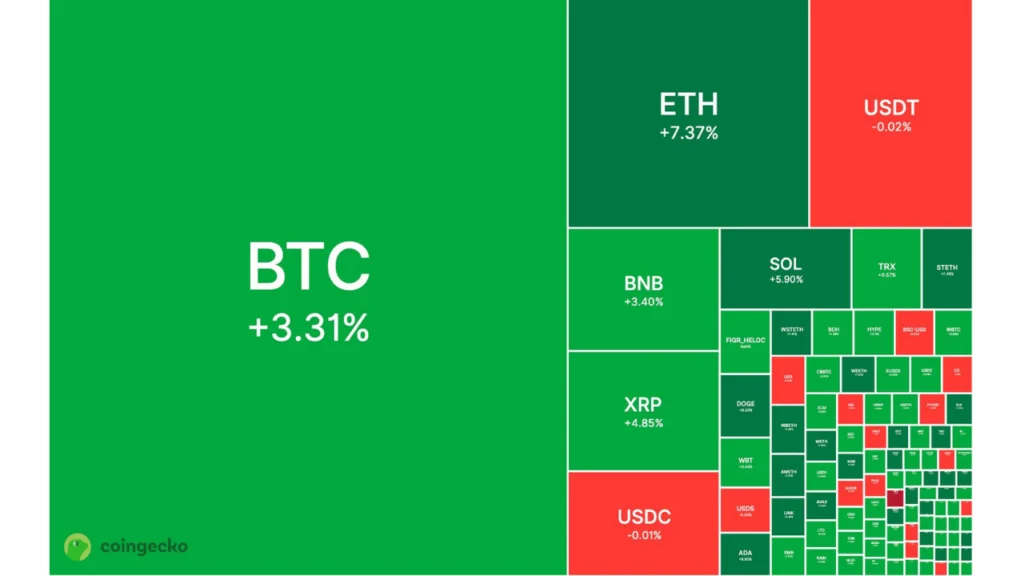
Bitcoin has once again seized the market’s attention, achieving its longest winning streak in over two years with eight consecutive green daily candles. This impressive run has propelled the cryptocurrency to approximately $74,300, a significant rebound from recent lows and a potent catalyst for renewed debate surrounding the potential initiation of a new bullish phase. The rarity of such a sustained period of daily gains, last witnessed in early 2024 prior to a broader market expansion, makes the current rally particularly noteworthy. Against a far more intricate global geopolitical and economic backdrop, this latest surge is under intense scrutiny from traders, analysts, and institutional investors alike.
The Technical Catalyst: A Breakout Above Resistance
The immediate trigger for this remarkable ascent appears to be a decisive technical breakout. For weeks, Bitcoin had encountered formidable resistance around the $72,500 level, a psychological and technical barrier that repeatedly stifled upward momentum. The breach of this resistance zone was met with an immediate and dramatic reaction in derivatives markets. A significant wave of short liquidations cascaded through the system, compelling traders who had bet on a price decline to buy back their positions to cover their losses. In total, approximately $143 million in Bitcoin-specific short positions were wiped out, with an additional $200 million in short positions across the broader cryptocurrency market experiencing similar fates.
This cascade of forced buying created a classic short squeeze, a phenomenon where a rapid price increase forces short sellers to buy, further accelerating the price rise. The scale and persistence of this particular squeeze, however, suggest that more than just technical mechanics are at play. The swiftness with which the market absorbed the selling pressure following the breakout indicates a growing underlying demand that is actively absorbing liquidity. This event, occurring on or around March 15th, 2024, marked a critical inflection point, transforming a period of consolidation into a period of significant upward price discovery.

Beyond the Squeeze: Unpacking Underlying Demand
While the short squeeze undoubtedly played a pivotal role in igniting the rally, evidence suggests that improving fundamental demand is providing a more sustainable foundation for the price appreciation. A key indicator of this underlying strength lies in the consistent inflows into U.S.-based spot Bitcoin Exchange-Traded Funds (ETFs). As of mid-March 2024, these institutional investment vehicles have recorded net inflows totaling approximately $1.3 billion for the month. This sustained influx of capital from institutional investors, often associated with longer-term strategic positioning rather than speculative short-term trading, signals a renewed confidence in Bitcoin as an asset class.
The approval of these spot Bitcoin ETFs in January 2024 by the U.S. Securities and Exchange Commission (SEC) was a landmark event, opening the doors for traditional financial institutions and retail investors to gain exposure to Bitcoin through familiar brokerage accounts. The consistent net inflows since their inception, particularly the significant figures observed in March, indicate that this newfound accessibility is translating into tangible demand. This institutional adoption is crucial, as it not only provides capital but also lends greater legitimacy and stability to the Bitcoin market, potentially laying the groundwork for a more enduring upward trend. Analysts at firms like BlackRock and Fidelity, which manage prominent Bitcoin ETFs, have noted increasing interest from a diverse range of clients, from wealth management firms to family offices.
Bitcoin’s Resilience Amidst Geopolitical Turmoil
Bitcoin’s recent performance during periods of heightened global uncertainty has further bolstered its narrative among investors. In late February 2024, as geopolitical tensions in the Middle East escalated, global markets experienced significant volatility. Bitcoin initially mirrored this sentiment, experiencing a sharp decline to around $63,000 as investors sought safer havens. However, the subsequent recovery was remarkably swift. Within a fortnight, Bitcoin had rebounded by approximately 17%, a performance that outpaced many traditional assets during the same turbulent period.
Crucially, each subsequent sell-off or period of price consolidation has found support at progressively higher levels. Prices that previously dipped below $65,000 are now consistently holding above the $70,000 mark, demonstrating a pattern of rising lows. This suggests that buyers are increasingly willing to enter the market earlier during periods of weakness, a characteristic often indicative of a strengthening market structure and growing conviction among investors. This resilience, even in the face of significant external shocks, positions Bitcoin as a unique digital asset capable of not only hedging against traditional market volatility but also capitalizing on it. The ability to recover rapidly from significant price drops underscores its growing role as a potentially uncorrelated asset within a diversified portfolio.

Macroeconomic Tailwinds Providing Support
Beyond the immediate technical and institutional drivers, broader macroeconomic conditions are also contributing positively to Bitcoin’s current rally. A discernible easing in oil prices, coupled with improving economic indicators in several major economies, has helped to restore a greater appetite for risk among investors. This shift has facilitated the redirection of capital back into riskier assets, including equities and cryptocurrencies.
Bitcoin’s recent correlation with U.S. technology stocks further exemplifies this trend. Both markets appear to be responding to similar macro-economic drivers, including positive expectations surrounding economic growth, technological innovation, and potentially a more stable interest rate environment. This alignment with traditional risk assets highlights Bitcoin’s evolving integration into the global financial system, moving beyond its initial perception as a fringe digital asset to becoming a more recognized component of the broader investment landscape. The anticipation of potential interest rate cuts by central banks later in the year also plays a significant role, as lower borrowing costs generally encourage investment in growth-oriented assets.
A Market Navigating Cautionary Signals
Despite the robust price action and the eight-day winning streak, sentiment among professional traders and institutional players remains notably cautious. Data derived from derivatives markets reveals that futures premiums, a measure of the premium paid for future Bitcoin contracts over the spot price, are still below typical bullish thresholds. Furthermore, options positioning indicates a continued demand for downside protection, with traders hedging against potential price declines. Funding rates in perpetual futures markets also remain negative, suggesting that a significant portion of traders are still positioned for potential price drops, betting on a reversal.
This divergence between strong price performance and cautious sentiment creates an unusual market dynamic. While the price is unequivocally moving higher, the underlying conviction among a segment of professional traders has not fully caught up. In some market conditions, such a disconnect can actually support further gains, as bearish positioning may be forced to unwind rapidly if the rally persists, exacerbating upward price momentum. This "fear of missing out" (FOMO) among short-sellers and cautious traders could fuel additional upside if current price levels are sustained.

The Emerging AI Debate and its Impact on Mining
Adding another layer of complexity to the current market narrative is a burgeoning debate surrounding the future of Bitcoin mining in the context of the accelerating artificial intelligence (AI) revolution. Some prominent figures within the cryptocurrency mining industry have voiced concerns that AI development is emerging as a significant competitor for energy resources. They argue that AI infrastructure can offer substantially higher returns per megawatt of energy consumed compared to traditional Bitcoin mining operations. This has led to reports of several large-scale mining firms beginning to pivot their strategic focus and capital allocation towards AI-related infrastructure projects, raising questions about potential declines in network participation and, consequently, network security.
However, this perspective is not universally shared. A significant contingent of industry experts dismisses these fears, emphasizing Bitcoin’s inherent and robust difficulty adjustment mechanism. This sophisticated algorithmic system is designed to automatically recalibrate the mining difficulty of the Bitcoin network, ensuring that new blocks are mined at a consistent rate regardless of the total hashing power employed. This mechanism ensures that the network remains functional and economically viable even as participants enter or exit the mining ecosystem. Proponents of this view also highlight Bitcoin mining’s inherent flexibility, particularly its capacity to utilize surplus, stranded, or otherwise underutilized energy resources. This characteristic, they argue, may limit direct competition with AI infrastructure for primary energy sources in the long term. The ongoing dialogue underscores the evolving nature of Bitcoin’s operational ecosystem and its interaction with emerging technological paradigms.
The Defining Characteristic: Bitcoin’s Persistent Recovery
Bitcoin’s ability to recover with remarkable speed from recent market shocks has emerged as a defining characteristic of the current market cycle. Unlike previous bull and bear cycles, where significant downturns often led to prolonged periods of weakness and stagnation, the most recent corrections have been comparatively short-lived. Each instance of price depreciation has been met with renewed and substantial buying interest, strongly suggesting that demand is quietly but persistently building beneath the surface.
This consistent resilience has led some market analysts to reframe Bitcoin’s role, moving away from the traditional "safe-haven" asset narrative. Instead, they propose characterizing Bitcoin as a "24/7 global liquidity instrument." This conceptualization highlights its unique ability to react instantaneously to external economic and geopolitical events, stabilizing far more rapidly than most traditional markets. This rapid liquidity provision and price discovery mechanism makes Bitcoin a unique asset in the global financial ecosystem.

Critical Levels to Monitor for Future Direction
As Bitcoin continues to hover in the vicinity of the $74,000 mark, market participants are keenly focused on the $72,000 to $75,000 range. This price band has emerged as a critical battleground that will likely dictate the immediate direction of the market. A sustained hold above this zone would significantly reinforce the argument for a continued uptrend, potentially paving the way for further price discovery and the testing of new all-time highs. Conversely, a decisive break below this critical support level could signal that the recent rally was primarily driven by transient short-term factors, such as the short squeeze, rather than enduring underlying demand, potentially leading to a retest of lower price points. The ability of Bitcoin to consolidate and build upon its current gains within this range will be a key determinant of its short-to-medium term trajectory.
Conclusion: A Complex Landscape Signaling Shifting Tides
Bitcoin’s impressive eight-day winning streak has delivered a powerful and unequivocally bullish signal, but it has also illuminated the multifaceted and often complex nature of the current market environment. On one hand, the confluence of robust technical strength, sustained institutional inflows, and improving macroeconomic conditions strongly points towards building momentum and the potential for further upside. On the other hand, the cautious positioning observed among a significant segment of professional traders, coupled with ongoing structural debates surrounding mining and AI, underscores the persistent undercurrent of uncertainty.
The crucial question that remains unanswered is whether this period of sustained upward price action represents the nascent stages of a new, extended bullish phase or merely a temporary surge driven by specific market mechanics. The answer will undoubtedly unfold in the coming days and weeks as the market navigates these competing forces. For the time being, one aspect is unequivocally clear: Bitcoin is once again moving with decisive momentum, capturing the unwavering attention of the global financial market.