admin
admin
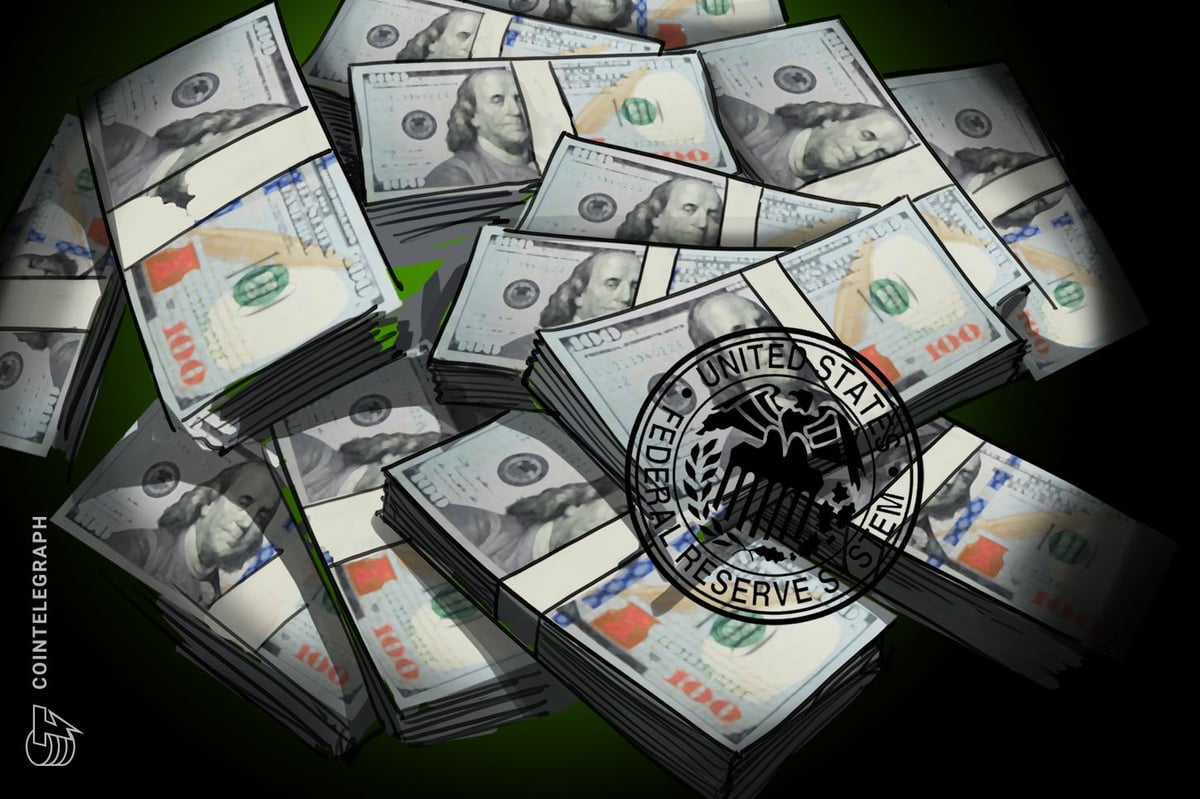
The global financial landscape is bracing for a potential paradigm shift as the US Federal Reserve considers transitioning from its hawkish monetary stance to a policy of easing to facilitate the financing of escalating military engagements in the Middle East. According to a detailed analysis released on Monday by BitMEX co-founder Arthur Hayes, the historical correlation between United States military intervention and central bank intervention suggests a forthcoming surge in liquidity. This influx of capital, intended to support "Pax Americana’s latest bout of Middle Eastern adventurism," is widely expected to serve as a massive catalyst for the cryptocurrency markets, particularly Bitcoin and high-cap digital assets.
Hayes’ assessment comes in the wake of significant geopolitical escalations involving the United States, Israel, and Iran. Over the recent weekend, coordinated airstrikes reportedly resulted in the death of Iran’s Supreme Leader, Ali Khamenei. President Donald Trump has since signaled a commitment to continued military operations in the region, a move that Hayes argues will necessitate a dramatic shift in how the US Federal Reserve manages the national money supply. The core of Hayes’ thesis rests on the observation that every US president since 1985 has initiated military actions in the Middle East, and in each instance, the Federal Reserve has historically lowered interest rates and expanded the money supply to accommodate the associated fiscal burdens.
Historical Precedents of War-Time Monetary Easing
The relationship between the cost of conflict and the cost of money is a cornerstone of Hayes’ argument. He highlights several key periods in modern American history where military escalations were followed by a softening of the Federal Reserve’s monetary policy. During the Gulf War in 1990, the US central bank initiated rate cuts to stabilize the economy and support the logistical requirements of the conflict. This pattern repeated with greater intensity following the September 11, 2001, terrorist attacks and the subsequent Global War on Terrorism. The invasion of Iraq and the sustained presence in Afghanistan required massive federal spending, which was facilitated by a low-interest-rate environment.
Furthermore, Hayes points to the 2009 "surge" in Afghanistan under the Obama administration. During this period, the Fed engaged in aggressive monetary easing, which not only supported the government’s military objectives but also injected significant liquidity into global financial markets. Hayes contends that the current situation with Iran follows this established blueprint. "The longer Trump engages in the extremely costly activity of Iranian nation-building, the higher the likelihood that the Fed lowers the price and increases the quantity of money," Hayes noted in his blog post. This "nation-building" effort, which could potentially cost billions or even trillions of dollars, creates a fiscal deficit that traditionally forces the central bank to intervene by printing money or lowering the yields on government debt.
Geopolitical Escalation and Market Sentiment
The recent strikes on Iranian territory have sent ripples through global markets, though the immediate reaction in traditional finance has been somewhat muted compared to the rhetoric on social media. Data from Santiment indicates a significant spike in social media mentions of "World War 3" following the news of the strikes and the death of the Iranian Supreme Leader. Despite the digital hysteria, the volume of these mentions remains below the peaks seen in June 2025, when a 12-day conflict erupted over strikes on Iran’s nuclear and military infrastructure.
Market analysts, including those from The Kobeissi Letter, have observed that the financial markets are not yet pricing in a global catastrophe. US stock futures opened with only marginal losses on Monday morning, and the S&P 500 index saw a decline of less than 1%. Similarly, oil prices, which often serve as a barometer for Middle Eastern stability, erased nearly half of their initial opening gains shortly after the trading session began. This discrepancy between public alarm and market stability suggests that investors are currently adopting a "wait-and-see" approach, mirroring the strategy advocated by Hayes.
The Strategic "Wait-and-See" Approach for Crypto Investors
While Hayes remains long-term bullish on the impact of war-time liquidity on Bitcoin, he cautions against impulsive entries into the market. He emphasizes that the timing of the Federal Reserve’s pivot is the critical variable. "We do not know how long Trump will remain interested in spending billions, if not trillions, of dollars reshaping Iran’s politics to his liking," Hayes stated. He suggests that the prudent course of action for investors is to wait for clear signals of monetary expansion before "backing up the truck" to purchase Bitcoin and what he characterizes as "high-quality shitcoins."
The rationale behind this strategy is rooted in the mechanics of fiat currency devaluation. When the Federal Reserve prints money to fund government spending, the purchasing power of the dollar tends to decrease, leading to inflationary pressures. In such environments, "hard assets" with fixed supplies—most notably Bitcoin—historically outperform traditional equities and bonds. Hayes posits that the immediate aftermath of a Fed rate cut or the announcement of new quantitative easing measures to support the Iran conflict will be the optimal entry point for crypto-focused investors.
Broader Economic Frameworks and Previous Theories
This latest theory from Hayes is part of a broader macroeconomic framework he has developed over several months. He has consistently argued that the Federal Reserve is searching for any viable reason to return to a regime of quantitative easing. Previously, Hayes identified several potential triggers for this shift:

- Reserve Management Purchases (RMP): Hayes suggested that a new liquidity tool could serve as a "stealth" form of money printing, allowing the Fed to inject capital into the system under the guise of technical balance sheet management.
- The Japanese Bond Crisis: He has argued that the Fed might be forced to print money to alleviate pressure on the Japanese bond market, which is a critical pillar of the global financial system.
- The AI Credit Crisis: In another analysis, Hayes theorized that the rapid displacement of jobs by artificial intelligence could lead to a systemic credit crisis, eventually necessitating a massive central bank bailout and monetary easing.
The common thread in all these theories is the belief that the current fiat financial system is inherently fragile and requires constant liquidity injections to survive. The conflict in Iran, in Hayes’ view, provides the most politically palatable justification for the Federal Reserve to abandon its fight against inflation in favor of supporting the state’s geopolitical objectives.
Implications for the Global Economy and Pax Americana
The concept of "Pax Americana"—the period of relative peace in the Western Hemisphere supported by US military and economic hegemony—is at a crossroads. Financing a prolonged conflict and the subsequent "nation-building" in Iran would place an unprecedented strain on the US Treasury. If the Federal Reserve chooses to monetize this debt, the implications for global inflation are profound.
Economic analysts have already begun adjusting their forecasts. Some reports suggest that if oil prices react aggressively to continued instability, the US could see inflation forecasts rise to as high as 5%. This would put the Fed in a difficult position: maintaining high interest rates to fight inflation while simultaneously needing to lower rates to fund the war effort. Historically, the need for war financing has almost always taken precedence over inflation targets.
Conclusion and Market Outlook
As the situation in the Middle East continues to evolve, the focus of the investment community is shifting from the front lines of the conflict to the boardrooms of the Federal Reserve. If Hayes’ historical analysis holds true, the transition from a hawkish to a dovish monetary policy is not a matter of "if" but "when." For the cryptocurrency market, which thrives on global liquidity and serves as a hedge against fiat instability, this potential pivot represents a significant fundamental tailwind.
While the "World War 3" narrative dominates social media, the marginal drops in futures markets suggest that the financial world is waiting for the next move from the US administration and the central bank. Investors are encouraged to monitor the Fed’s upcoming meetings and official statements for any indications of rate cuts or balance sheet expansion. According to the BitMEX co-founder, the moment the "money printer" is activated to support the conflict in Iran, the conditions for a major crypto rally will be firmly in place. Until then, the market remains in a period of high-stakes observation, balancing the risks of geopolitical instability against the potential rewards of a massive liquidity injection.