Nila Kartika Wati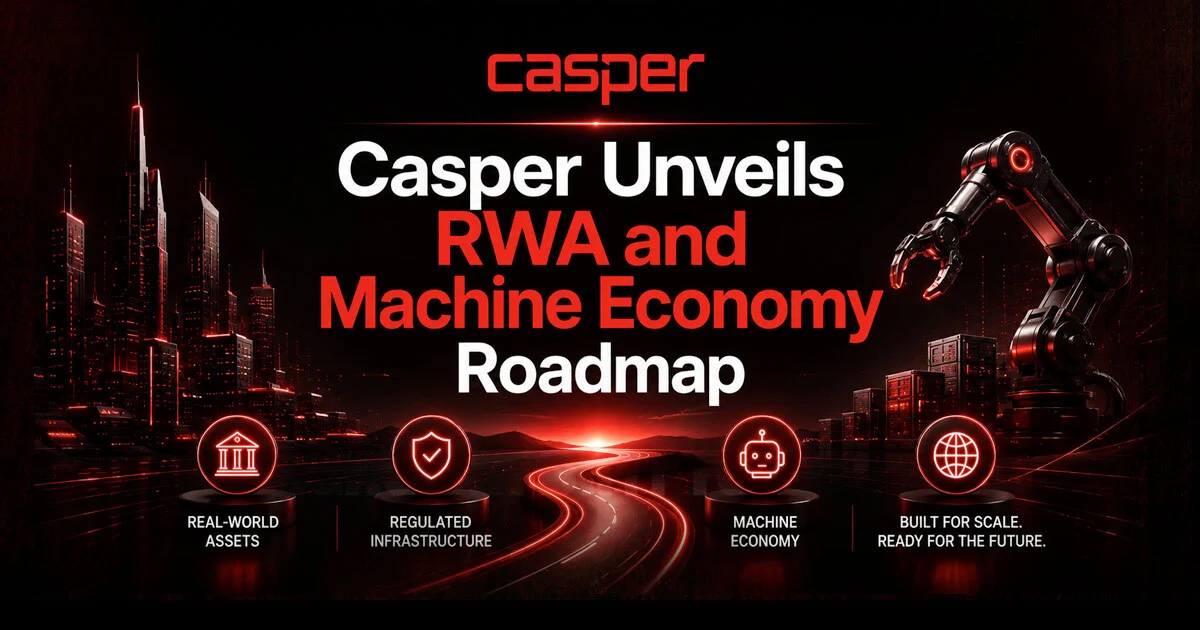
The Casper Network is charting a bold course for the future of blockchain technology, eschewing the volatile realm of memecoins to focus on a strategic vision centered on regulated real-world assets (RWAs), advanced AI-driven payments, and robust infrastructure designed for institutional and machine-level integration. This forward-looking strategy was formally unveiled by Michael Steuer, President and CTO of the Casper Association, at the recent Digital Finance Forum held in Bermuda. The cornerstone of this initiative is the "Casper Manifest," a comprehensive multi-year roadmap outlining a series of significant technological advancements and ecosystem developments.
The Manifest details a suite of features aimed at bridging the gap between nascent blockchain technology and mainstream enterprise adoption. Key among these are full Ethereum Virtual Machine (EVM) compatibility, enabling developers to leverage existing Ethereum tools and Solidity smart contracts without costly rewrites. This move is strategically significant, capitalizing on Ethereum’s dominant developer ecosystem. Additionally, the roadmap prioritizes compliant private transactions, a gasless user experience (UX) to abstract away blockchain complexities, and the implementation of smart accounts capable of supporting advanced authentication methods like biometrics. The vision extends to enabling AI-powered micropayments and even incorporating post-quantum cryptographic signatures, a critical step in preparing for the future of cybersecurity.
A Paradigm Shift: Making Blockchain Invisible for Enhanced User Experience
The current landscape of blockchain technology is often characterized by a steep learning curve and inherent complexities, posing significant barriers to widespread adoption. Wallet pop-ups, the necessity of managing gas fees, and intricate onboarding processes are persistent friction points that deter many potential users and businesses. Casper’s strategic direction directly confronts these challenges, aiming to render blockchain interactions as seamless and intuitive as conventional digital applications.
The Casper Manifest explicitly addresses these usability issues through the introduction of gasless transactions and batch operations. These innovations are designed to abstract away the underlying blockchain mechanics, allowing users to interact with decentralized applications (dApps) without direct exposure to transaction fees or the need to pre-fund wallets with cryptocurrency for gas. This is further bolstered by the integration of smart accounts, which are envisioned to support advanced features such as biometric authentication. The objective is to create an environment where interacting with dApps feels as effortless as a single tap on a familiar mobile application.
The inclusion of full EVM compatibility is another pivotal element in Casper’s strategy to foster developer adoption and streamline application migration. By enabling developers to utilize Solidity, the most prevalent smart contract programming language, alongside familiar tools like MetaMask and other Ethereum-based development kits, Casper significantly lowers the barrier to entry for a vast pool of existing developers. This move acknowledges the foundational role Ethereum has played in the blockchain space and aims to attract developers and projects from this established ecosystem, potentially accelerating dApp development on the Casper Network. The implications of this are substantial, as it allows for the seamless porting of established dApps and the development of new ones without the need for extensive code re-engineering, thereby tapping into the largest blockchain developer community currently in existence.

Bridging Privacy and Compliance: A Dual Approach for Institutional Trust
A long-standing dichotomy in blockchain development has been the perceived trade-off between privacy and regulatory compliance. Historically, many blockchain platforms have leaned towards one or the other, making it challenging for regulated entities to fully embrace decentralized technologies. Casper is actively working to dismantle this perceived barrier by developing a network that aims to support both privacy and compliance simultaneously.
The roadmap highlights the integration of compliant security token functionality, leveraging the ERC-3643 standard. This widely adopted standard already governs billions of dollars in tokenized assets, providing a robust framework for the issuance and management of regulated digital securities. By supporting ERC-3643, Casper positions itself as a viable platform for institutions looking to tokenize traditional assets, such as real estate, equities, or debt instruments, in a compliant manner.
Concurrently, Casper is investing in confidential transaction infrastructure. This advanced technology allows for transactions to be conducted with a high degree of privacy, obscuring sensitive details from public view. However, critically, it retains the capability for authorized auditors and regulators to verify compliance when necessary. This dual approach is crucial for building trust with institutional players who operate under strict regulatory frameworks. As more financial institutions explore the potential of tokenized assets and on-chain finance, the ability to offer both privacy for everyday transactions and verifiable compliance for regulatory oversight becomes an indispensable feature. This capability could unlock significant capital and adoption from traditional finance sectors, moving beyond the speculative applications often associated with cryptocurrencies.
Fortifying the Future: AI-Powered Economies and Post-Quantum Security
The Casper Manifest looks beyond the immediate needs of the current market, addressing emerging technological trends and future security challenges. A significant focus is placed on enabling machine-to-machine (M2M) payments, particularly for AI-driven applications. The roadmap includes support for the X402 payment standard, which is designed to facilitate automated transactions between AI agents. This could revolutionize how AI systems interact and transact, allowing them to autonomously pay for APIs, computational resources, or data access using cryptocurrency. This envisions a future where AI agents can operate as economic actors, driving new forms of automated commerce and digital economies.
Perhaps one of the most forward-thinking aspects of the Casper roadmap is its commitment to post-quantum security. The advent of quantum computing poses a potential threat to current cryptographic standards, as powerful quantum computers could theoretically break the encryption that secures much of today’s digital infrastructure. Casper plans to proactively address this threat by introducing hybrid accounts that can support both traditional cryptography and quantum-resistant keys. This is a significant undertaking, as no major smart contract platform has fully implemented such a solution to date.
The initial rollout of post-quantum security features is expected to commence within weeks, with the X402 micropayments standard being an early beneficiary. This will be followed by the broader implementation of EVM compatibility and compliant security tokens later in 2026. The development of privacy features and quantum-safe infrastructure will continue throughout 2027, indicating a phased and strategic approach to integrating these advanced capabilities. This long-term perspective on security and emerging technologies signals Casper’s ambition to build a resilient and future-proof blockchain ecosystem.

Strategic Positioning and Future Implications
Casper’s strategic pivot towards institutional adoption, RWAs, and advanced technological integration represents a clear differentiation strategy in a crowded blockchain market. By focusing on practical, enterprise-grade solutions and anticipating future technological shifts, Casper aims to capture a significant share of the evolving digital economy. The emphasis on making blockchain feel "invisible" addresses a critical usability gap that has hindered mainstream adoption, while the commitment to both privacy and compliance offers a compelling value proposition for regulated industries.
The success of this ambitious roadmap hinges on several factors, most notably the willingness of institutions and developers to adopt Casper’s proposed solutions. The ability to attract developers from the established Ethereum ecosystem through EVM compatibility is a strong starting point. Furthermore, the proactive approach to post-quantum security and AI-driven payments positions Casper as a leader in anticipating and addressing future technological challenges and opportunities.
The implications of Casper’s strategy are far-reaching. If successful, it could accelerate the tokenization of real-world assets, foster new models for AI-driven commerce, and establish a more secure and user-friendly foundation for decentralized applications. This positioning suggests a future where blockchains are not merely platforms for speculation but integral components of global financial systems, machine economies, and advanced digital infrastructure. The network’s commitment to building a robust, compliant, and secure ecosystem signals a serious intent to move beyond the hype cycles of the crypto industry and establish itself as a foundational layer for the next generation of the internet.
The Digital Finance Forum in Bermuda provided a significant platform for the unveiling of these strategic objectives. Such forums typically convene key stakeholders from the financial industry, technology sector, and regulatory bodies, offering an ideal environment for presenting forward-looking initiatives and fostering dialogue. Michael Steuer’s presentation of the Casper Manifest at this event underscores the network’s intention to engage directly with the established financial ecosystem and demonstrate its readiness for institutional integration. The response from attendees and the broader industry will be a critical indicator of the roadmap’s potential impact.
The journey ahead for Casper Network involves significant technical development, ecosystem building, and strategic partnerships. However, the clarity of vision presented in the Casper Manifest, coupled with the tangible roadmap, suggests a deliberate and well-considered approach to shaping the future of blockchain technology. By prioritizing real-world utility, institutional trust, and future-proofing its infrastructure, Casper is positioning itself as a formidable contender in the ongoing evolution of decentralized systems. The coming years will reveal whether this ambitious vision translates into widespread adoption and a tangible impact on the global digital economy.