Nila Kartika Wati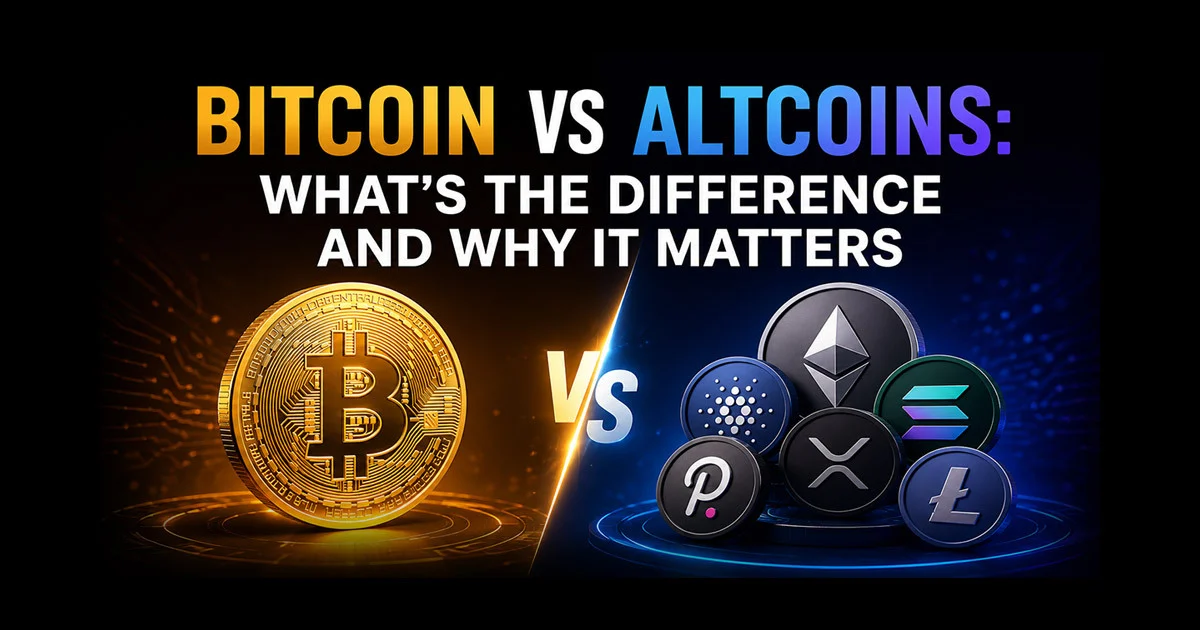
The cryptocurrency landscape, a dynamic and rapidly evolving sector, often presents newcomers with a fundamental question: what is the core difference between Bitcoin and every other digital currency? While the answer begins with Bitcoin, its implications extend far beyond a simple historical distinction. Today, the market boasts thousands of cryptocurrencies, each designed with unique objectives, ranging from powering decentralized finance (DeFi) and facilitating blockchain gaming to enabling the tokenization of real-world assets and advancing artificial intelligence applications. Yet, Bitcoin continues to serve as the industry’s bedrock, consistently commanding approximately half of the total cryptocurrency market capitalization. Anything outside of Bitcoin is collectively termed an "altcoin," and the distinctions between these digital assets are profound, encompassing their underlying purpose, technological architecture, and the specific problems they aim to address.
Bitcoin: The Foundational Pillar of Digital Currency
Launched in 2009, Bitcoin ushered in the revolutionary concept of decentralized digital money, fundamentally altering the financial paradigm. Over a decade later, it retains its position as the largest and most universally recognized cryptocurrency. This widespread recognition has been instrumental in driving real-world adoption. Businesses venturing into cryptocurrency payments frequently prioritize Bitcoin integration due to its familiarity and established trust among users.
A pertinent example of Bitcoin’s practical application can be observed in the online gaming sector. Numerous crypto casinos facilitate swift and secure Bitcoin deposits, enabling players to engage with their favorite games without delay. This trend extends to traditional casino environments as well. Bitcoin has emerged as a preferred payment method for blackjack enthusiasts seeking expedited deposit and withdrawal processes, all while preserving the familiar gaming experience. Even as many platforms evolve to support a broader array of cryptocurrencies, Bitcoin frequently remains the initial choice, a testament to its enduring global recognition and well-established reputation.
The genesis of Bitcoin can be traced back to the aftermath of the 2008 global financial crisis, a period marked by widespread distrust in traditional financial institutions. Satoshi Nakamoto, a pseudonymous individual or group, published the Bitcoin white paper in October 2008, proposing a peer-to-peer electronic cash system that operated independently of central banks and financial intermediaries. The network went live in January 2009 with the mining of the genesis block. This foundational event laid the groundwork for a new class of digital assets, emphasizing decentralization, censorship resistance, and transparency. Bitcoin’s limited supply, capped at 21 million coins, has also contributed to its narrative as a store of value, often drawing parallels to digital gold.
The Diverse Landscape of Altcoins: Innovation and Specialization
Altcoins, encompassing every cryptocurrency other than Bitcoin, represent a vast and heterogeneous category. Ethereum, the pioneering platform for smart contracts, stands as the most prominent example. However, the altcoin universe extends to numerous other significant networks, including Solana, XRP, Cardano, Avalanche, and a multitude of other projects, each with its distinct technological underpinnings and strategic objectives.
In contrast to Bitcoin’s primary focus on being a store of value and medium of exchange, many altcoins are engineered with specific, often more specialized, goals in mind. Some are meticulously designed to achieve significantly faster transaction speeds, aiming to overcome the scalability limitations sometimes associated with older blockchain protocols. Others are dedicated to reducing transaction costs, enhancing overall network scalability, or enabling entirely novel blockchain applications.
One of the most transformative innovations introduced by many altcoins is the concept of smart contracts. These are self-executing programs where the terms of the agreement between buyer and seller are directly written into lines of code. The code and the agreements contained therein exist across a distributed, decentralized network, ensuring that the contract executes automatically when predefined conditions are met. This groundbreaking technology has empowered developers to build a wide array of decentralized applications (dApps), including decentralized exchanges (DEXs), sophisticated lending platforms, vibrant non-fungible token (NFT) marketplaces, immersive blockchain-based games, and countless other applications that transcend the scope of simple peer-to-peer payments. This inherent flexibility has positioned altcoins as the primary drivers of innovation within the burgeoning blockchain industry, fostering an ecosystem of experimentation and continuous development.
The development of Ethereum, initiated by Vitalik Buterin and launched in 2015, marked a pivotal moment in the evolution of blockchain technology beyond simple digital currency. Ethereum’s introduction of smart contract functionality opened the door for programmable money and the creation of complex decentralized applications, laying the foundation for the DeFi revolution and the proliferation of NFTs. Subsequently, projects like Solana have focused on achieving extremely high transaction throughput through innovative consensus mechanisms and architecture, while Cardano has emphasized a research-driven, peer-reviewed approach to development, prioritizing security and sustainability.

Divergent Architectures for Distinct Objectives
Bitcoin has maintained a remarkable degree of consistency throughout its operational history. Its core tenets revolve around security, decentralization, and the preservation of a predictable monetary policy. Major upgrades to the Bitcoin protocol are undertaken with extreme caution, requiring broad consensus and rigorous testing to ensure the integrity and confidence in the network are upheld. This deliberate pace of evolution prioritizes long-term stability and robustness.
Altcoins, conversely, often adopt a more experimental and iterative approach to development. Many actively explore novel consensus mechanisms (such as Proof-of-Stake variations, Delegated Proof-of-Stake, or Proof-of-Authority) to enhance efficiency or decentralization. They also experiment with diverse governance models, innovative scaling solutions (like layer-2 networks or sharding), and intricate token economics designed to incentivize network participation and growth. The spectrum of altcoin designs is broad, catering to a wide array of use cases. Some are engineered for enterprise-level applications, providing robust solutions for businesses seeking to leverage blockchain technology. Others are tailored for consumer use, aiming for ease of adoption and accessibility. Developers building decentralized applications also find specific platforms that cater to their needs. Even seemingly whimsical projects like memecoins have carved out a niche within the ecosystem. While many originate as internet jokes or social experiments, some have managed to cultivate highly engaged communities, demonstrating the power of collective interest and eventually achieving substantial market valuation. Each altcoin serves as a tangible representation of the unique vision and objectives of its founding team and the community that supports it, making the altcoin sector one of the most rapidly advancing frontiers in technology.
The underlying consensus mechanisms are a primary differentiator. Bitcoin’s Proof-of-Work (PoW) system, while highly secure and decentralized, is energy-intensive. Many altcoins have adopted Proof-of-Stake (PoS) or its variants, which are generally more energy-efficient and can support higher transaction throughput. For example, Ethereum’s transition to PoS in September 2022, known as "The Merge," significantly reduced its energy consumption and laid the groundwork for future scalability upgrades.
The Accelerating Pace of Innovation in the Altcoin Space
Another significant divergence lies in the pace of development. Bitcoin’s evolution is a deliberate process, driven by broad community consensus and a meticulous approach to protocol upgrades. This slower methodology prioritizes stability and security over rapid iteration. In stark contrast, altcoin ecosystems typically exhibit a much faster tempo of development. Dedicated development teams frequently release substantial upgrades, introduce and test novel features, and actively experiment with emerging technologies. While this accelerated environment fosters fertile ground for innovation and the rapid realization of new ideas, it can also introduce additional layers of risk due to the inherent uncertainties associated with cutting-edge development.
Furthermore, the role of communities in altcoin projects is paramount. Developers, validators (in PoS systems), investors, and end-users all contribute to the ongoing improvement and evolution of their respective networks. A strong and active community often becomes a critical determinant of a blockchain project’s long-term success, providing essential feedback, driving adoption, and contributing to the network’s resilience. This collaborative ethos is a hallmark of many successful altcoin projects.
The rapid iteration seen in altcoins is often driven by the need to address specific market demands or technological limitations. For instance, the rise of DeFi and NFTs necessitated blockchains capable of handling a high volume of complex transactions and supporting intricate smart contract interactions, leading to the development of platforms like Solana and Avalanche. The pursuit of scalability solutions has also spurred innovation, with projects exploring various layer-2 scaling technologies like rollups (optimistic and zero-knowledge) and sidechains to enhance transaction speed and reduce costs without compromising decentralization.
Distinct Roles Within the Broader Crypto Economy
Bitcoin is widely perceived as a digital store of value, akin to a digital commodity, and a hedge against inflation. Its fixed supply and long track record have solidified this perception, leading many investors to refer to it as "digital gold." This narrative has been reinforced by its performance during periods of economic uncertainty and its increasing adoption by institutional investors.
Altcoins, on the other hand, fulfill a far more diverse array of functions within the cryptocurrency economy. Some are integral to powering the burgeoning decentralized finance (DeFi) ecosystem, enabling lending, borrowing, and trading without intermediaries. Others are specifically designed to facilitate blockchain gaming, create immersive virtual worlds, or enable the development of artificial intelligence applications that leverage decentralized infrastructure. The tokenization of real-world assets, such as real estate or art, is another area where altcoins are playing a crucial role, promising to unlock new avenues for investment and liquidity. Digital identity solutions and advanced cross-border payment systems are also being explored and implemented using altcoin technologies. Furthermore, enterprise-focused blockchains are actively being developed to assist businesses in exploring novel applications of distributed ledger technology, streamlining operations, enhancing supply chain transparency, and improving data security.
Crucially, altcoins are not necessarily designed to replace Bitcoin but rather to expand the utility and capabilities of blockchain technology. They represent an ongoing evolution, pushing the boundaries of what is possible with decentralized systems and demonstrating the versatility of the underlying technology across a multitude of industries and applications.

The interplay between Bitcoin and altcoins is often characterized by a symbiotic relationship. Bitcoin’s stability and established network effects provide a foundational layer of trust and liquidity for the entire ecosystem. Altcoins, with their diverse functionalities and rapid innovation, then build upon this foundation, creating specialized use cases and driving the adoption of blockchain technology into new domains. This dynamic creates a rich and multifaceted digital economy, with each component contributing to the overall growth and maturation of the industry.
Concluding Perspectives on a Complementary Ecosystem
In summation, Bitcoin unequivocally stands as the foundational pillar of the cryptocurrency industry. Its enduring simplicity, robust security, and unparalleled global recognition continue to establish it as the benchmark against which all other digital assets are measured. Altcoins, in turn, build upon this established foundation by introducing novel technologies, enabling specialized use cases, and fostering a climate of rapid innovation. Collectively, they forge an ecosystem that is in perpetual motion, constantly evolving and maturing with each passing year.
Rather than viewing Bitcoin and altcoins as direct competitors vying for market dominance, it is often more insightful to perceive them as complementary components of a unified digital economy. Each asset class plays a distinct and vital role in shaping the future of finance and technology. Bitcoin provides the secure, decentralized bedrock, while altcoins offer the specialized tools and innovative applications that drive progress and broaden the impact of blockchain technology. This intricate relationship ensures a vibrant and dynamic landscape, ripe with opportunities for continued development and widespread adoption.
For those interested in exploring one of Bitcoin’s increasingly prominent real-world applications, further information can be found regarding bitcoin casino blackjack, highlighting its integration into entertainment and gaming platforms.
The information discussed by Altcoin Buzz is not financial advice. This is for educational, entertainment, and informational purposes only. Any information or strategies are thoughts and opinions relevant to the accepted levels of risk tolerance of the writer/reviewers and their risk tolerance may be different than yours. We are not responsible for any losses that you may incur as a result of any investments directly or indirectly related to the information provided. Bitcoin and other cryptocurrencies are high-risk investments so please do your due diligence.
This post is sponsored by Thunderpick.
Copyright Altcoin Buzz Pte Ltd.