
 James Watt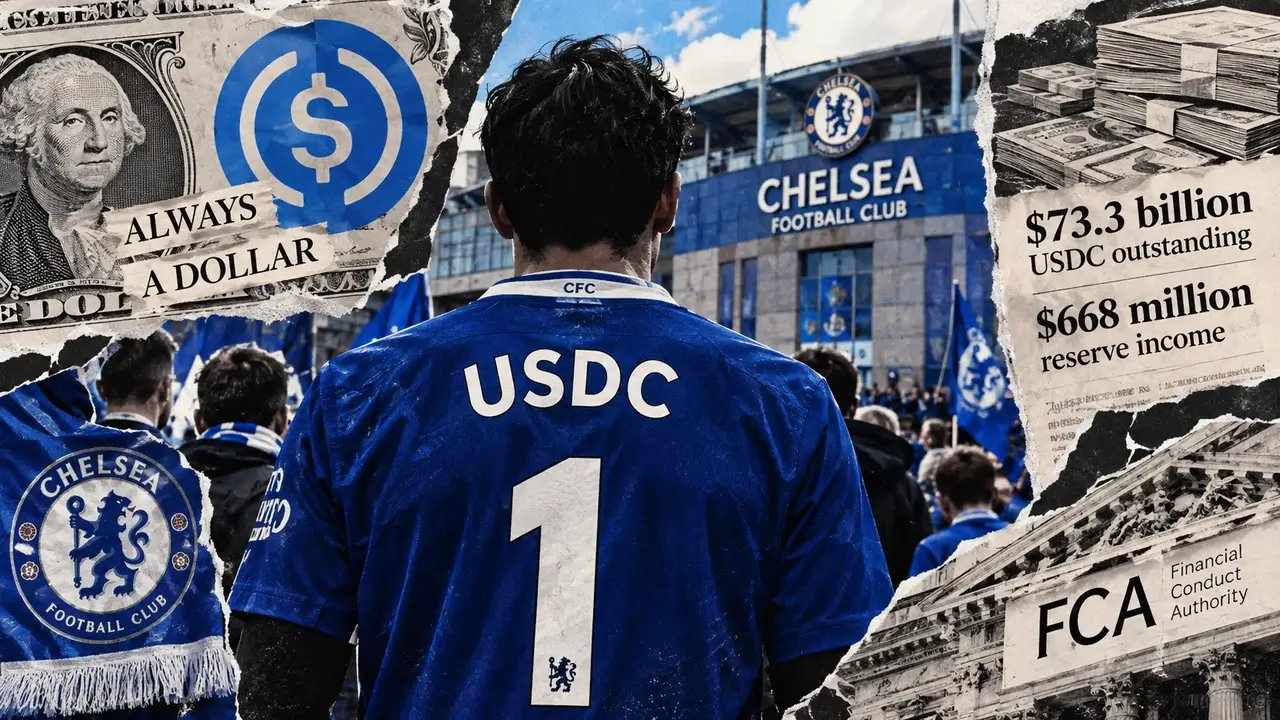
On August 28, 2024, Chelsea Football Club and Circle Internet Financial announced a landmark long-term partnership that will see the USDC brand featured as the primary front-of-shirt sponsor for the club’s men’s, women’s, and academy teams. This agreement, which officially commences with the 2026/27 season, represents a significant shift in the Premier League’s commercial landscape as clubs begin to pivot away from traditional gambling sponsors in favor of global financial technology firms. The deal positions USDC, a leading digital stablecoin pegged to the U.S. dollar, at the forefront of one of the most recognizable brands in global sports, targeting an audience of hundreds of millions of football fans worldwide.
The Strategic Foundations of the Partnership
The collaboration between Chelsea FC and Circle is designed to bridge the gap between traditional sports engagement and the evolving digital economy. USDC, issued by Circle, is a digital currency fully backed by cash and short-duration U.S. Treasuries, designed to maintain a 1:1 parity with the U.S. dollar. Unlike volatile cryptocurrencies such as Bitcoin or Ethereum, USDC’s value proposition lies in its stability and utility for cross-border payments, decentralized finance (DeFi), and as a digital store of value.
For Circle, the partnership serves as a high-visibility vehicle for brand normalization. By placing the USDC logo on Chelsea’s matchday shirts, the company aims to move the stablecoin from a niche financial tool used by crypto enthusiasts into the mainstream consciousness. The objective is to achieve a level of cultural familiarity comparable to traditional payment processors like Visa or Mastercard. In a crowded marketplace of digital assets, Circle is betting that the emotional investment of football fans can be leveraged to build long-term trust and recognition.
A Chronology of Chelsea’s Sponsorship Evolution
The agreement with Circle marks the latest chapter in what has been a period of significant transition for Chelsea’s commercial department. To understand the importance of this deal, it is necessary to examine the club’s recent sponsorship history:
- 2020–2023: Chelsea’s primary shirt sponsor was the telecommunications giant Three. The relationship faced complications in 2022 following the sanctions imposed on the club’s previous owner, Roman Abramovich, leading to a temporary suspension of the partnership.
- 2023–2024: After the expiration of the deal with Three, Chelsea entered the 2023/24 season without a front-of-shirt sponsor for several weeks before securing a short-term agreement with Infinite Athlete.
- 2024–2025: The club has continued to navigate a complex regulatory and commercial environment, seeking long-term stability under the ownership of BlueCo (the Todd Boehly-led consortium).
- August 2024: The announcement of the Circle partnership provides a clear roadmap for the 2026/27 season, coinciding with major regulatory shifts in the Premier League regarding gambling advertisements.
Financial Performance and the Stablecoin Business Model
The economics of the Circle-Chelsea deal are rooted in the massive scale of Circle’s reserve management. According to the company’s second-quarter 2024 financial results, Circle reported total revenue and reserve income of $701 million. A deeper analysis of these figures reveals that reserve income—the interest earned on the assets backing USDC—accounted for approximately $668 million, or roughly 95% of the total.
As of June 30, 2024, there was approximately $73.3 billion of USDC in circulation. Circle’s business model relies on the delta between the interest earned on its $73 billion-plus reserve fund and the zero-interest nature of the USDC tokens held by users. Per Circle’s explicit terms of service, holders of USDC do not have a claim on the interest generated by the underlying reserves. Consequently, Circle’s profitability is directly tied to the total volume of USDC in circulation; the more the brand is recognized and utilized, the larger the reserve pool grows, and the higher the potential for reserve income.
By investing in a Premier League front-of-shirt sponsorship—estimated by industry experts to be worth tens of millions of pounds annually—Circle is reinvesting its reserve income to ensure the continued expansion of its user base.
The Dual Crypto Strategy: Circle and BingX
Interestingly, Circle is not Chelsea’s sole partner in the digital asset space. The club recently renewed its partnership with BingX, a prominent cryptocurrency exchange, for the 2026/27 season. This creates a bifurcated marketing strategy:
- BingX: Serves as the official training-kit partner. Its branding focuses on "Trained on Greatness" campaigns, targeting active traders and individuals interested in the high-performance, fast-paced world of crypto exchanges.
- Circle (USDC): Serves as the match-kit partner. Its branding is focused on stability, global reach, and "digital dollars," targeting a broader, more general audience that may be wary of trading but open to digital payment innovations.
This "dual-track" approach allows Chelsea to monetize two different segments of the blockchain industry simultaneously, reflecting the increasing specialization within the sector.
Regulatory Context and the Premier League Gambling Ban
The timing of the Circle-Chelsea deal is strategically aligned with the Premier League’s collective agreement to withdraw gambling sponsorship from the front of matchday shirts. In April 2023, Premier League clubs voluntarily agreed to phase out gambling companies as principal shirt sponsors by the end of the 2025/26 season.
This policy shift has left a significant revenue gap for many clubs, as betting firms have historically been among the highest-paying sponsors in English football. Financial technology and digital asset companies are increasingly filling this void. For Chelsea, the move to Circle represents a transition toward a more "reputationally safe" sector that aligns with global financial regulations, contrasting with the often-criticized gambling industry.
However, the financial sector is not without its own regulatory hurdles. The UK’s Financial Conduct Authority (FCA) has intensified its scrutiny of financial promotions within professional sports. In July 2024, the FCA revealed it had communicated with 21 football clubs regarding their sponsorship arrangements with financial providers. While the FCA noted that most reviewed arrangements did not show evidence of illegality, the authority remains vigilant about ensuring that fans are not misled by complex financial products advertised through sports.
Analysis of Implications for Global Sports Marketing
The partnership between Circle and Chelsea FC signifies a new era of "educational marketing" in sports. Unlike traditional consumer goods, a stablecoin requires a level of baseline understanding that most fans do not currently possess. Circle’s strategy acknowledges that a football shirt cannot explain the mechanics of short-term U.S. Treasuries or blockchain settlement. Instead, the goal is "top-of-funnel" awareness.
When a consumer eventually encounters USDC within a fintech application or a digital wallet, the previous years of seeing the brand on a Chelsea shirt provide a "veneer of legitimacy." This psychological phenomenon, known as the mere-exposure effect, suggests that people tend to develop a preference for things merely because they are familiar with them.
Furthermore, this deal highlights the growing importance of the "digital dollar" in international markets. While the U.S. dollar remains the world’s primary reserve currency, access to it can be difficult in certain emerging markets. By partnering with a globally supported club like Chelsea, Circle is advertising USDC as a borderless version of the dollar to fans in Asia, Africa, and the Americas, where Premier League viewership is exceptionally high.
Official Responses and Future Outlook
While specific financial terms of the deal remain confidential, the sentiment from both organizations emphasizes innovation and global connectivity. In the official announcement, Circle highlighted its commitment to using the partnership to "bring USDC to the global game." Chelsea FC leadership echoed this, noting the club’s desire to partner with "pioneers" in the technology and financial sectors.
As the 2026/27 season approaches, the success of this partnership will likely be measured by the growth of USDC’s market share relative to its main competitor, Tether (USDT). While Tether currently holds a larger market capitalization, Circle’s focus on transparency, regulatory compliance, and high-profile Western marketing through Chelsea FC suggests a long-term play for the "regulated" side of the digital asset world.
In conclusion, the Chelsea-Circle agreement is more than a simple branding exercise; it is a calculated move to integrate digital currency into the fabric of global culture. By leveraging the immense reach of the Premier League and navigating the changing regulatory landscape of sports sponsorship, Circle is attempting to transform USDC from a technical financial instrument into a household name. For Chelsea, the deal provides financial security and a forward-looking partner as the club continues its pursuit of domestic and international success.









