
 admin
admin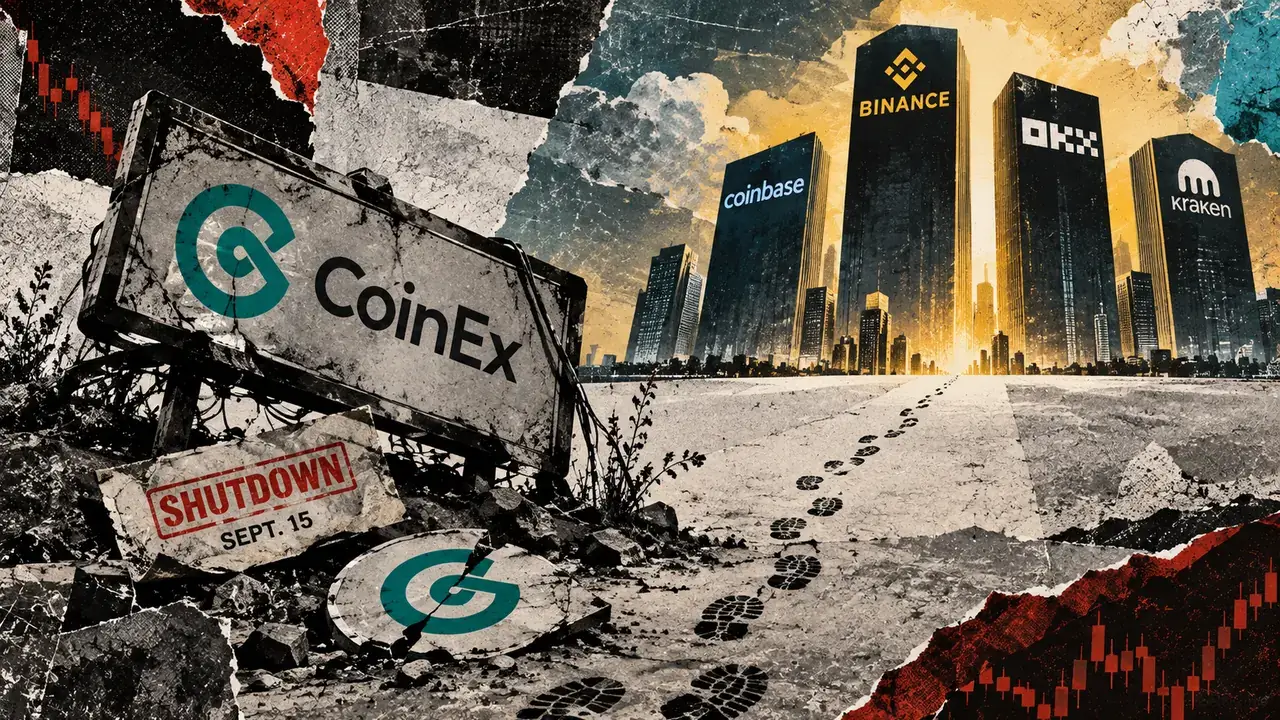
The cryptocurrency exchange CoinEx announced its impending closure on September 15th, bringing an end to its nine-year operational run. The decision, attributed to a combination of shrinking revenue streams and the escalating costs associated with regulatory compliance, signals a significant shift in the competitive landscape of centralized digital asset trading platforms. CoinEx will be winding down its operations in a phased approach, with spot trading scheduled to conclude on September 29th, followed by the cessation of withdrawal services on December 22nd.
This strategic retreat from the market highlights the growing pressures faced by cryptocurrency exchanges, particularly those operating outside the absolute top tier of trading volume. Founder Haipo Yang articulated the rationale behind the shutdown, stating that the exchange had failed to ascend to a leading position within the industry. This inability to achieve critical mass meant that the company was burdened with substantial security and compliance obligations that could no longer be sustainably justified against its generated revenue. Yang’s poignant statement, "Revenues can decline, responsibility does not," underscores the stark reality of operating in a highly regulated and competitive environment, where the cost of maintaining robust operational integrity can outweigh the financial returns for smaller players. He further elaborated, "Carrying unlimited risk for limited revenue is no longer a rational choice."
The exchange also cited a prolonged contraction in overall crypto trading volume and liquidity as a significant factor contributing to its diminished financial viability. This downturn, coupled with increasingly stringent regulatory requirements across major global jurisdictions, created an untenable operating environment. CoinEx’s struggles are emblematic of a broader trend affecting the cryptocurrency sector, where regulatory scrutiny has intensified significantly over the past few years.
A Trail of Regulatory Challenges and Market Realities
CoinEx’s decision to cease operations follows a history of navigating complex regulatory landscapes. In 2023, the exchange was compelled to withdraw its services from the United States after reaching a settlement with the New York Attorney General’s office. The settlement stemmed from accusations that CoinEx had been operating within the state without the requisite registration as a securities and commodities broker-dealer. As part of the agreement, CoinEx committed to refunding over $1.1 million to 4,691 New York-based investors and paying more than $600,000 in penalties. This regulatory action served as a clear indicator of the increasing enforcement actions targeting crypto exchanges operating without full compliance.
The financial and operational burdens imposed by such regulatory actions, combined with ongoing security exposures and a limited scale of operations compared to industry giants, are becoming increasingly visible across exchanges that do not rank among the very largest. This dynamic is forcing a consolidation within the market, pushing smaller or less dominant players towards exits or mergers.
Broader Industry Consolidation: More Than Just CoinEx
The closure of CoinEx is not an isolated incident but rather part of a discernible trend of consolidation and strategic repositioning within the cryptocurrency exchange market. Other prominent platforms have also announced significant operational changes or outright shutdowns in recent months, reflecting similar pressures.
BitMEX, once a dominant force in the cryptocurrency derivatives market, announced it would terminate its exchange services on September 23rd, after more than 11 years in operation. HDR Global Trading, the owner of BitMEX, stated in July that this decision was the outcome of a comprehensive strategic review of the company and the broader cryptocurrency industry. This move signaled a shift away from direct exchange operations for a platform that had historically been at the forefront of crypto trading innovation.
AscendEX has taken an even more drastic step. The exchange ceased normal operations on July 1st, citing the implementation of the European Union’s Markets in Crypto-Assets (MiCA) framework, alongside considerable financial and operational pressures. The company later disclosed that a crucial recapitalization transaction had failed, leading to preparations for a potential formal insolvency process. The MiCA framework, designed to create a harmonized regulatory approach for crypto assets across the EU, represents a significant regulatory milestone that has undoubtedly added to the compliance overhead for exchanges seeking to operate within the bloc.
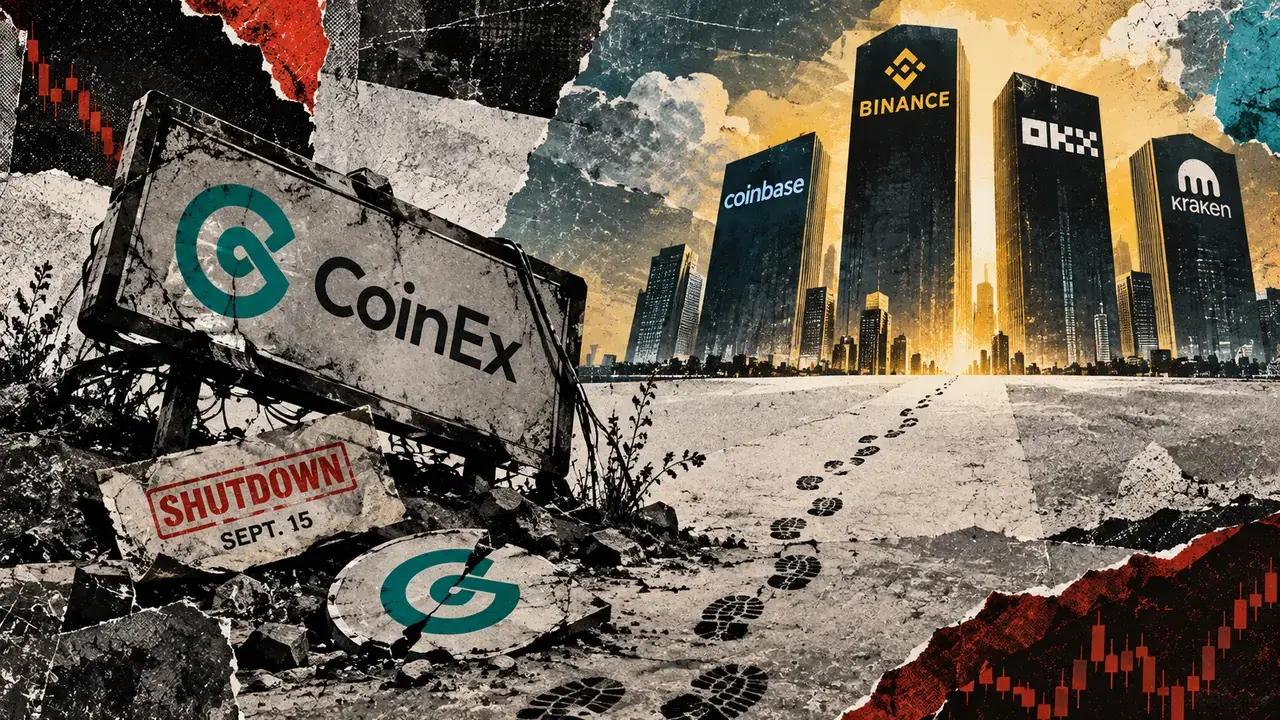
While the specific circumstances leading to the closure or operational cessation of these platforms differ, their exits collectively contribute to a landscape where long-standing venues are disappearing from a market that is simultaneously experiencing a recovery in trading activity and a marked concentration of that activity among the largest operators.
Trading Rebounds, But Liquidity Concentrates Among Giants
Despite the challenges faced by individual exchanges like CoinEx, the broader cryptocurrency market has witnessed a rebound in trading activity. In August, eleven major centralized exchanges tracked by CoinMarketCap collectively handled $4.23 trillion in spot and derivatives volume, marking a 12.3% increase from July, fueled by a recovery in crypto asset prices.
However, this surge in overall trading volume has done little to loosen the grip of the largest venues on market share. The top five exchanges—Binance, OKX, MEXC, Bybit, and Gate—accounted for approximately 88% of all trading activity within CoinMarketCap’s tracked cohort. Binance, in particular, continued its dominance, capturing a record 43.3% of the market share for the third consecutive month.
Binance processed an astounding $1.83 trillion in August, dwarfing the $681.3 billion recorded by the second-ranked exchange, OKX. MEXC followed with $469.5 billion, Bybit with $410.3 billion, and Gate with $314.7 billion. This increasing concentration of trading volume, even as all venues in the dataset benefited from the market rebound, underscores the significant competitive advantage held by the leading platforms.
CoinEx was not included in CoinMarketCap’s sample of eleven major exchanges, meaning these figures do not directly quantify its lost market share. Nevertheless, they vividly illustrate the environment in which Haipo Yang made his decision to exit: a market where trading revenues are recovering, but the overwhelming majority of that activity is flowing to a select few dominant platforms.
The Unwinding of Operations and Asset Management
The departure of CoinEx necessitates a complex unwinding of its operations, with hundreds of millions of dollars currently linked to its wallets. Data from Nansen indicated that approximately $253.6 million was held across CoinEx-labeled wallets following the shutdown announcement. Bitcoin constituted more than half of this total, amounting to roughly $134.4 million. Significant amounts were also deployed in decentralized finance protocols, with $27.6 million allocated through Aave. USDT and Ether (ETH) combined accounted for over $50 million of the assets.
It is important to note that these on-chain balances do not necessarily equate to customer liabilities, as exchange-labeled wallets can encompass operational funds and other assets held by the company. However, the sheer scale of these holdings highlights the substantial on-chain footprint CoinEx maintained as users begin the process of moving their funds to alternative platforms.
CoinEx has committed to keeping withdrawal services available until December 22nd, providing customers with nearly three months after the cessation of spot trading to retrieve their assets. The exchange has reiterated that customer assets are fully backed and has urged users to initiate withdrawals early to mitigate potential congestion or delays as the deadline approaches.
The immediate impact of CoinEx’s closure will be felt by its remaining traders, market makers, and token projects. Once spot markets are switched off on September 29th, these participants will be compelled to seek alternative venues for their trading activities. This migration will inevitably push another pool of cryptocurrency liquidity into an already highly concentrated market, further reinforcing the dominance of the top exchanges. The trend suggests a future where a smaller number of very large, highly capitalized exchanges will handle the vast majority of cryptocurrency trading, while smaller players will continue to face immense pressure to either scale up significantly or exit the market. The closure of CoinEx serves as a stark reminder of the evolving dynamics and stringent demands of the modern cryptocurrency exchange landscape.








