Reza Arap Oktovian
The Ethereum network, a cornerstone of the decentralized finance ecosystem with hundreds of billions of dollars in assets dependent on its functionality, is on the cusp of a monumental transition. Scheduled for mid-2022, this pivotal event, known as "The Merge," will see Ethereum migrate from its current Proof-of-Work (PoW) consensus mechanism to a more energy-efficient Proof-of-Stake (PoS) model. This undertaking is often likened to changing the engine of an airplane while it’s in flight, as Ethereum must maintain continuous operation and the ability to produce valid blocks without interruption.
Unlike many other major blockchains, such as Bitcoin, Ethereum’s development philosophy, actively encouraged by the Ethereum Foundation (EF) and prominent community figures, embraces a multi-client architecture. This strategy involves developing several distinct software implementations that adhere to the Ethereum protocol. These clients are differentiated by their programming languages and the independent development teams behind them, a crucial element for ensuring network resilience.
Understanding The Merge: A Bifurcation of Node Responsibilities
The transition itself is not a simple replacement but a "merge" of the existing Ethereum network with the Beacon Chain, which has been operational since December 2020. Post-Merge, the roles of network nodes will be bifurcated. Currently, nodes on the Ethereum network are responsible for both executing transactions and validating them. Following The Merge, this responsibility will be divided into two distinct types of nodes:

- Execution Nodes: These nodes will continue to interface with users and smart contracts, managing the Ethereum Virtual Machine (EVM). They will execute transactions and forward them to validator nodes for validation. Essentially, their core duties will remain similar to their current functions, but the ultimate validation power will shift.
- Validator Nodes: These nodes will reside on the consensus layer (the Beacon Chain) and will be solely responsible for validating transactions submitted by execution nodes. This separation of duties is a deliberate architectural enhancement designed to bolster the network’s robustness and security.
While execution and validator clients share some code, particularly if developed in the same programming language, execution clients will require minor modifications to accommodate the merge. Key components like the EVM are largely reusable with these adjustments. Ultimately, execution clients may shed legacy code related to PoW validation. The "merge" is therefore less about two chains becoming one and more about a defined block height where current nodes cease validation, handing over this critical function to the new set of validators. This layering approach is a classic strategy for improving system resilience.
The Imperative of Client Diversity: A Critical Vulnerability
The fundamental rationale behind developing multiple client implementations is to mitigate the risk posed by single points of failure. If a bug, vulnerability, or fault exists within one client’s codebase, it is unlikely to affect other clients that are written in different programming languages or have distinct architectures. This contrasts with the Bitcoin network, where a simpler protocol and a more unified implementation have historically reduced the need for extensive client diversity.
Ethereum’s complexity, however, necessitates this approach. Its intricate design inherently increases the potential for vulnerabilities and expands the attack surface. The success of this strategy hinges on a balanced distribution of network participation across these diverse clients. A critical threshold exists: if any single client controls more than 33% of the network’s staking power, the network’s resilience is compromised. This concern is amplified if a client commands over 66% of the staking power, rendering the core principle of client diversity largely ineffective.

The implications of an uneven distribution are significant:
- Less than 33% Staking Power: A bug in a client with a minority stake would likely have minimal impact. The network would continue to operate smoothly, the bug would be addressed, and normalcy would be restored.
- Between 33% and 50% Staking Power: A fault in a client within this range would be more serious but likely manageable through automated network mechanisms, with minimal disruption to users.
- More than 50% Staking Power: A critical bug in a client dominating over half the staking power would trigger automated recovery mechanisms, but these would likely involve network complications and disturbances, impacting users.
- More than 66% Staking Power (Supermajority): This scenario presents the most severe risk. A bug in a client with a supermajority of staking power could lead to a consensus failure. The network could effectively be captured by the buggy chain. The only recourse for non-buggy clients would be to either permanently fork the chain, creating two separate Ethereums, or to join the compromised chain and accept the consequences of the bug.
The Prysm Predicament: A Dominant Force Under Scrutiny
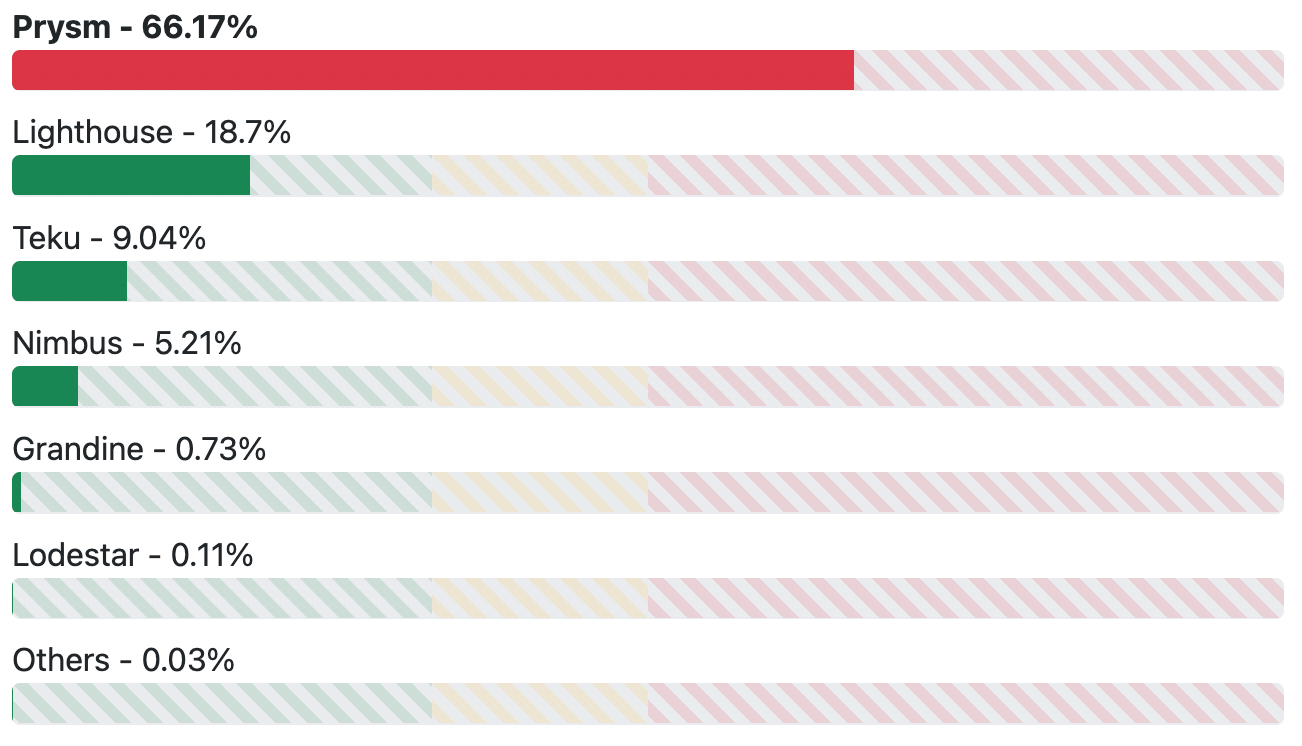
As of early 2022, a significant portion of Ethereum’s staking power, approximately 66%, was being utilized by the Prysm client, developed by Prysmatic Labs. This concentration of power in a single client implementation raises considerable concern, particularly in the event of a critical bug or exploit that could lead to a network-wide consensus failure. While such a scenario is considered unlikely, it remains a non-zero risk that jeopardizes the very foundation of The Merge’s security model.
The competitive landscape of Ethereum consensus clients includes several other prominent players: Lighthouse, Teku, and Nimbus. Two other clients, Grandine and Loadstar, have negligible market shares, with Grandine being the only one operating under a closed-source license. The distribution of consensus client usage at the time of this reporting showed Prysm’s dominance far exceeding optimal levels, although it remained marginally below the critical 66% threshold. For real-time data and resources on client diversity, the community relies on platforms like clientdiversity.org.
Explaining Prysm’s Ascendancy: A First-Mover’s Advantage
The overwhelming adoption of the Prysm client is attributed to a confluence of factors, as explained by Marius van der Wijden, an Ethereum core developer working on the Geth (Golang Ethereum) Proof-of-Work client. He highlighted a combination of "first-mover advantage, tooling, and the choice of programming language" as key drivers of Prysm’s success.
Prysm was among the earliest prototype implementations of a Beacon Chain client. This early start allowed its developers to optimize the client and dedicate resources to creating supplementary tools, such as a user-friendly web interface, and to develop comprehensive documentation. Furthermore, Prysm’s development in Golang (Go) proved advantageous. Golang is known for its performance, ease of development, and readability, making it accessible to developers familiar with Go-ethereum (Geth), another prominent client written in the same language. This familiarity facilitated easier auditing and understanding of Prysm’s codebase by the broader developer community.
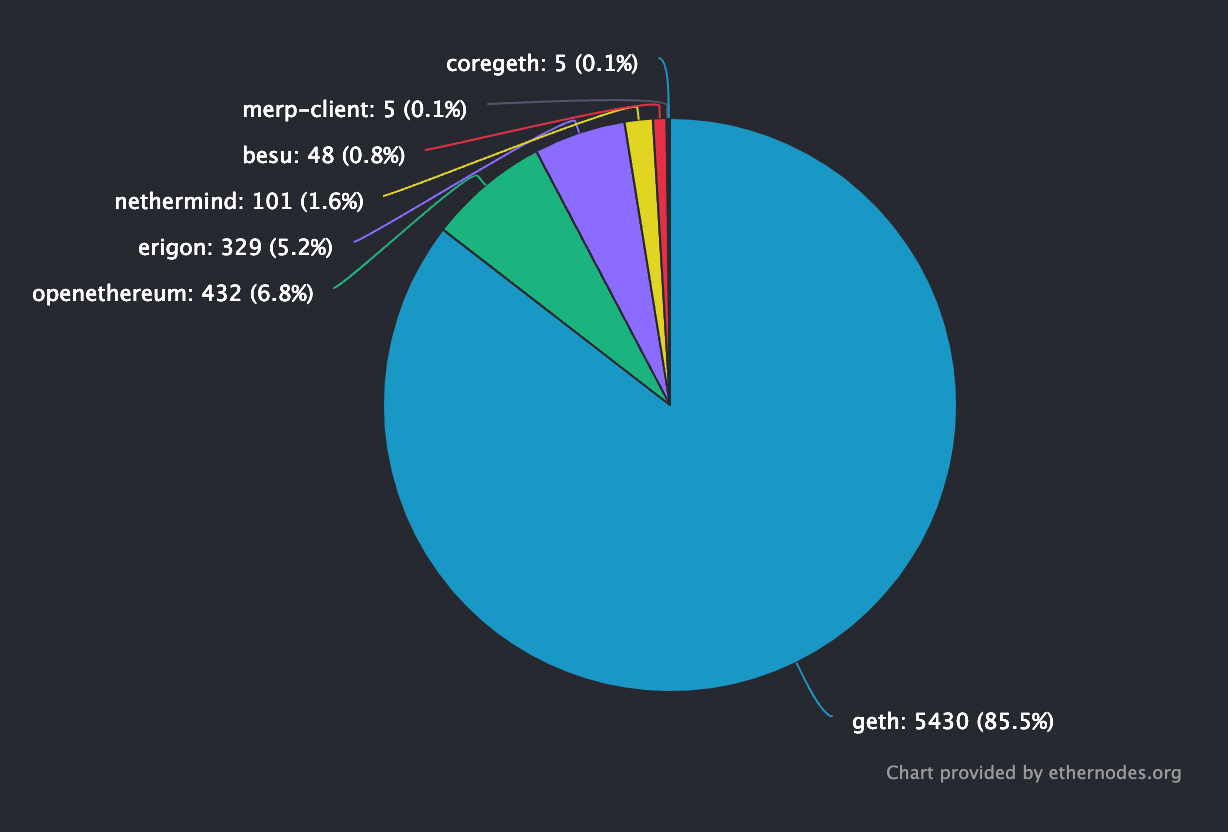
It’s important to note that the client diversity issue is less pronounced on the execution layer. Currently, Geth holds a dominant market share of over 85% among Proof-of-Work execution clients. However, post-Merge, the security implications of this concentration are lessened, as execution nodes will primarily focus on transaction processing rather than network security. As van der Wijden noted, "It will be a bit better post-merge since stakers can run multiple execution layer clients, with one beacon client, in order to always end up on the correct chain."
The Role of Major Exchanges in Prysm’s Dominance
The client diversity issue is significantly exacerbated by the choices made by major staking services and pools. These entities operate a substantial number of validator nodes, and their collective preference for Prysm is a primary contributor to its dominance. These services, which enable users to stake Ether without needing to deposit the full 32 ETH required for individual validation, are key players in the network’s decentralization.
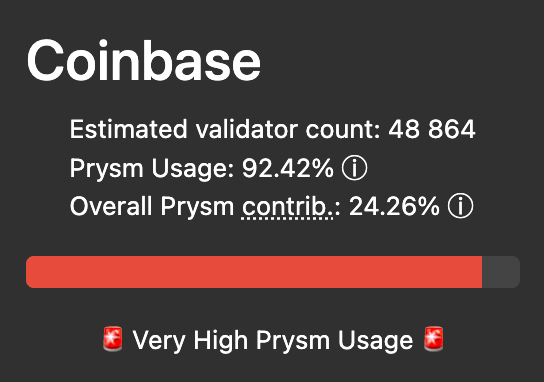
Prominent among these are Coinbase, Kraken, and Binance. Coinbase, with a significant portion of its 278,407 validator nodes running Prysm (92.4% of its validators), contributes approximately 24.3% to the overall Prysm concentration. When queried about their client diversity strategy, Coinbase pointed to a statement from Coinbase Cloud, emphasizing security as the primary driver for selecting Prysm. They cited Prysm’s support for "remote signers" as a crucial security feature, allowing validator keys to be stored in isolated environments, thereby enhancing protection against compromises. Coinbase Cloud also noted their support for Lighthouse and efforts to integrate remote signer capabilities into it.
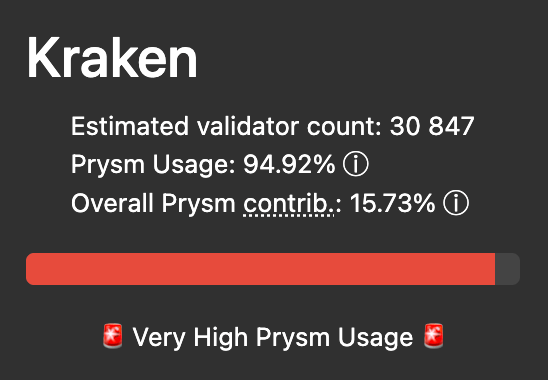
Kraken, another major staking provider with 30,847 validators, reported that 94.9% of its nodes utilize Prysm, contributing 15.7% to the overall Prysm usage. Brian Hoffman, Senior Product Manager at Kraken, stated that Prysm was initially chosen for its "maturity and stability." However, Kraken, in collaboration with Staked, has begun deploying new validators on the Teku client and migrating some existing ones to enhance diversity and offer a more resilient staking service.
Binance, with 24,410 validators and 76.6% Prysm usage, did not respond to requests for comment.
Lido, the third-largest staking service, with 50,274 validators, presents a slightly more diversified picture. While it has a substantial number of validators, its Prysm usage stands at 42.8%, contributing 11.5% to the overall Prysm dominance.
Decentralized Alternatives: A Glimmer of Hope
In contrast, decentralized staking pools like Rocket Pool demonstrate a much healthier client distribution. Rocket Pool operates 2,100 validators, with only 10.6% utilizing Prysm, contributing a mere 0.12% to the Prysm dominance. This highlights a path towards greater decentralization and resilience.
The potential to alleviate the Prysm concentration lies with these major staking services. Fortunately, discussions are ongoing between these entities and the Ethereum Foundation. Marius van der Wijden described the progression of these talks as "good," indicating a willingness to address the issue.
"Big staking pools are working on switching parts of their infrastructure to other clients," van der Wijden explained. "They need to update their metrics and monitoring infrastructure for the new clients, so it might take longer for them to switch than home validators." He also emphasized that switching client software is generally not risky or difficult for individual node operators, provided they follow proper procedures, particularly concerning the slashing database.
The Path Forward: Proceeding with Calculated Caution
With The Merge mere months away, the Ethereum community may have to accept a less-than-ideal client distribution, with the probability of Prysm’s dominance falling below the critical 33% threshold appearing low. However, this situation does not deter Ethereum’s core developers from proceeding with the planned transition.
"I think it’s safe to pursue," stated van der Wijden. "The chances of a consensus failure happening are very small in my opinion. We have great testing and fuzzing infrastructure that runs permanently to find differences between clients. Even if a consensus failure occurs, we will be able to push out new releases and resolve forks quickly and easily."
Crucially, van der Wijden also reiterated a strong consensus within the development community: "We also have strong consensus that we will not bail out stakers that run a majority client if their clients misbehave." This stance underscores the commitment to the principles of decentralization and the acceptance of responsibility by individual stakers. While the client diversity issue presents a significant challenge, the ongoing efforts and the community’s commitment to addressing it provide a degree of confidence as Ethereum embarks on its most transformative upgrade to date.