Layla Zulfa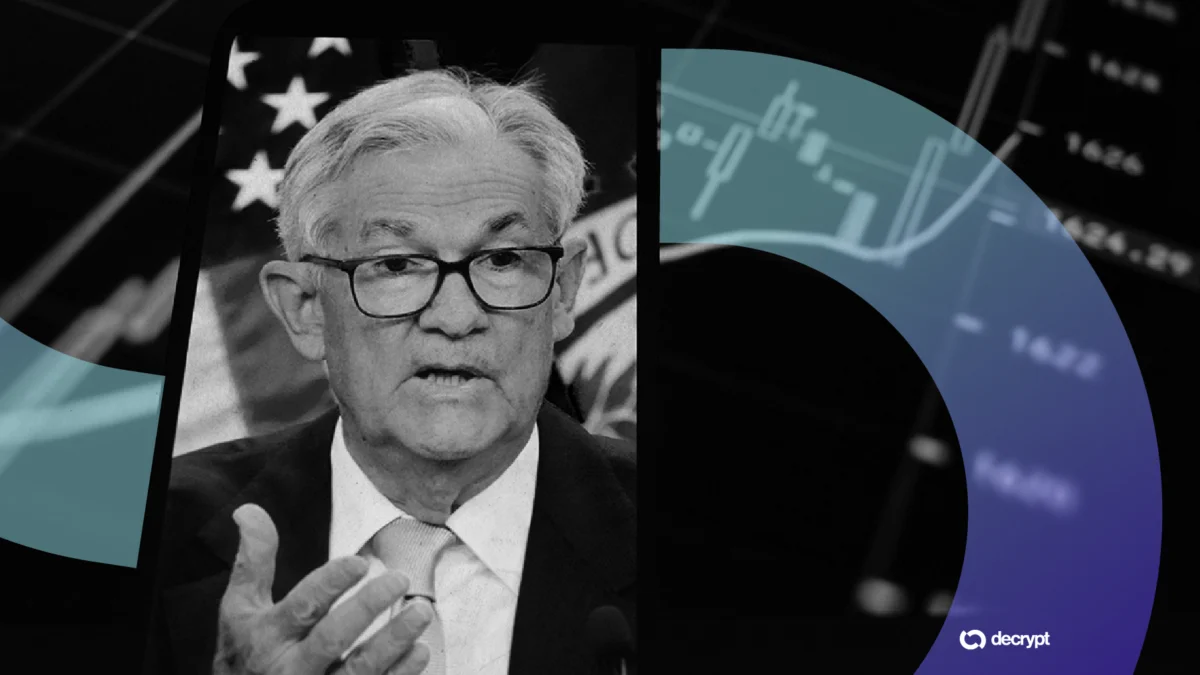
The Federal Reserve’s Federal Open Market Committee (FOMC) concluded its two-day policy meeting on Wednesday by electing to keep the federal funds rate at its current target range of 3.50% to 3.75%, a move that signals a continued commitment to a cautious monetary stance. This decision marks the second consecutive meeting where the central bank has opted for a pause, extending a period of stability that began following the conclusion of the January session. The move comes as the U.S. central bank navigates a complex economic landscape characterized by cooling labor conditions on one hand and a resurgence of energy-driven price pressures on the other. By maintaining the status quo, the Fed is attempting to anchor inflation expectations without prematurely stifling an economy that is showing visible signs of a slowdown in the hiring sector.
The FOMC Decision and the Internal Divide
The decision to hold rates steady was not unanimous, reflecting an increasingly visible divergence of opinion among the voting members of the FOMC. For the sixth consecutive policy meeting, the committee was split, highlighting the difficulty of achieving a consensus in an environment where economic data offers conflicting signals. While the majority of the committee rallied behind the "wait-and-see" approach established earlier this year, Stephen Miran emerged as a vocal dissenter. Miran advocated for a 25-basis-point interest rate cut, arguing that the cooling labor market requires immediate support to prevent a more significant economic downturn.
Despite Miran’s advocacy for easing, the broader committee remains concerned about the stickiness of inflation. In its official statement, the FOMC noted that "inflation remains somewhat elevated," a phrase that has become a staple of recent communications but carries renewed weight given recent spikes in energy costs. The committee’s stance underscores a data-dependent philosophy, where future adjustments to the federal funds rate will depend entirely on the trajectory of incoming economic indicators rather than a pre-set schedule.
Economic Indicators: A Balancing Act Between Inflation and Employment
The Federal Reserve’s dual mandate—to promote maximum employment and stable prices—is currently under significant strain. The latest data points to a labor market that is losing steam. In February, the national unemployment rate ticked up to 4.4%, a figure that, while historically moderate, represents a notable increase from the lows seen in the previous year. Furthermore, job gains have remained consistently low, suggesting that the aggressive tightening cycle of late 2023 has successfully dampened the demand for labor.
However, the progress on the inflation front appears to have stalled. The Personal Consumption Expenditures (PCE) Price Index—the Fed’s preferred gauge for measuring inflation—rose by 3.1% in the 12 months ending in January. This was an increase from the 3% recorded in December, indicating that price pressures are not yet fully contained. The Fed typically focuses on "core" PCE, which strips out the volatile categories of food and energy, to understand underlying trends. Nevertheless, the recent surge in "headline" inflation, driven by energy costs, cannot be ignored as it influences consumer expectations and overall cost-of-living adjustments.
Geopolitical Tensions and the Energy Market Catalyst
The backdrop of the Fed’s latest deliberations was dominated by escalating geopolitical instability in the Middle East. The ongoing conflict involving the United States, Israel, and Iran has introduced a significant "risk premium" into global energy markets. A critical turning point occurred earlier on Wednesday following reports that the world’s largest gas field, located in Iran, had been struck. This event sent shockwaves through energy commodities, causing oil and gas prices to jump sharply.
The FOMC explicitly addressed these developments in its statement, noting that "uncertainty about the economic outlook remains elevated" and that the "implications of developments in the Middle East for the U.S. economy are uncertain." For the Fed, rising energy prices represent a "cost-push" inflationary force that is difficult to combat with traditional interest rate hikes. Higher fuel costs act as a tax on consumers and businesses, reducing discretionary spending while simultaneously pushing up the cost of transporting goods. This creates a "stagflationary" risk—a scenario where growth slows down while inflation remains high—which is a primary concern for central bankers.
Cryptocurrency and Financial Market Reactions
The intersection of monetary policy and geopolitical news triggered immediate volatility across financial markets, with the cryptocurrency sector experiencing notable declines. Bitcoin, which has increasingly been viewed as a barometer for global liquidity and risk sentiment, fell 3.6% over a 24-hour period to trade at approximately $71,870. This decline occurred in tandem with a broader sell-off in U.S. equities as investors reacted to the Iranian gas field strike and the Fed’s hawkishly cautious tone.
Ethereum, the second-largest cryptocurrency by market capitalization, saw an even steeper decline, falling 5.3% to settle around $2,215. Despite these short-term pullbacks, both assets have maintained a positive trajectory on a weekly basis, with Bitcoin up 1.6% and Ethereum up 7.2% over the last seven days. Analysts suggest that the crypto market remains highly sensitive to the Fed’s "dot plot" and future rate expectations. When the Fed maintains high interest rates, the opportunity cost of holding non-yielding assets like Bitcoin increases, often leading to a temporary exit from riskier positions into the safety of U.S. Treasuries or cash.
A Chronology of Federal Reserve Policy Shifts
To understand the current "pause" in interest rate adjustments, it is necessary to look back at the trajectory of Fed policy over the past year.
- Late 2023: The Pivot. Following a historic series of rate hikes to combat post-pandemic inflation, the Fed began a series of interest rate cuts toward the end of 2023. These cuts were intended to facilitate a "soft landing," where inflation would return to the 2% target without triggering a deep recession.
- January 2024: The First Pause. At the conclusion of the January policy meeting, the FOMC shifted its tone. Citing a need to evaluate the lagging effects of previous policy changes, the committee held rates steady, introducing the "data-dependent" and "wait-and-see" rhetoric.
- February 2024: Labor Market Softening. Economic data released in February showed the unemployment rate rising to 4.4%, providing ammunition for those within the committee who believe the Fed has done enough to cool the economy.
- March 2024: Geopolitical Escalation. The current meeting concludes against the backdrop of direct military actions in Iran, complicating the Fed’s inflation fight by introducing new supply-side shocks in the energy sector.
Analysis of Implications: What Lies Ahead?
The Federal Reserve’s decision to maintain rates at 3.50% to 3.75% suggests that the "last mile" of the inflation fight may be the most difficult. Central bankers are wary of repeating the mistakes of the 1970s, where premature rate cuts led to a second, more aggressive wave of inflation. By holding steady, Fed Chair Jerome Powell and the majority of the committee are signaling that they are willing to tolerate a slightly higher unemployment rate if it ensures that inflation expectations remain anchored.
However, the risk of a "policy error" is growing. If the Fed keeps rates too high for too long, the current 4.4% unemployment rate could quickly spiral into a more systemic labor market contraction. Conversely, if energy prices continue to rise due to the Middle East conflict, the Fed may find itself in a position where it is forced to raise rates again—even as the economy weakens—to prevent headline inflation from leaking into the broader economy.
Market participants are now looking toward the next FOMC meeting for more clarity. The "wait-and-see" approach has bought the Fed time, but the window for a perfectly executed "soft landing" appears to be narrowing. The interaction between U.S. monetary policy and global geopolitical events has created a high-stakes environment where every data point, from monthly payrolls to the price of a barrel of crude oil, will be scrutinized for hints of the Fed’s next move.
For the digital asset market, the path forward remains tied to the broader macro environment. As long as the Fed maintains a restrictive stance, crypto assets may face headwinds. However, if the geopolitical situation stabilizes and the Fed eventually shifts toward the rate cuts advocated by members like Stephen Miran, the resulting increase in market liquidity could provide the catalyst for the next leg of the bull market. For now, the global economy remains in a state of uneasy equilibrium, waiting for the next move in a complex game of economic and geopolitical chess.