
 admin
admin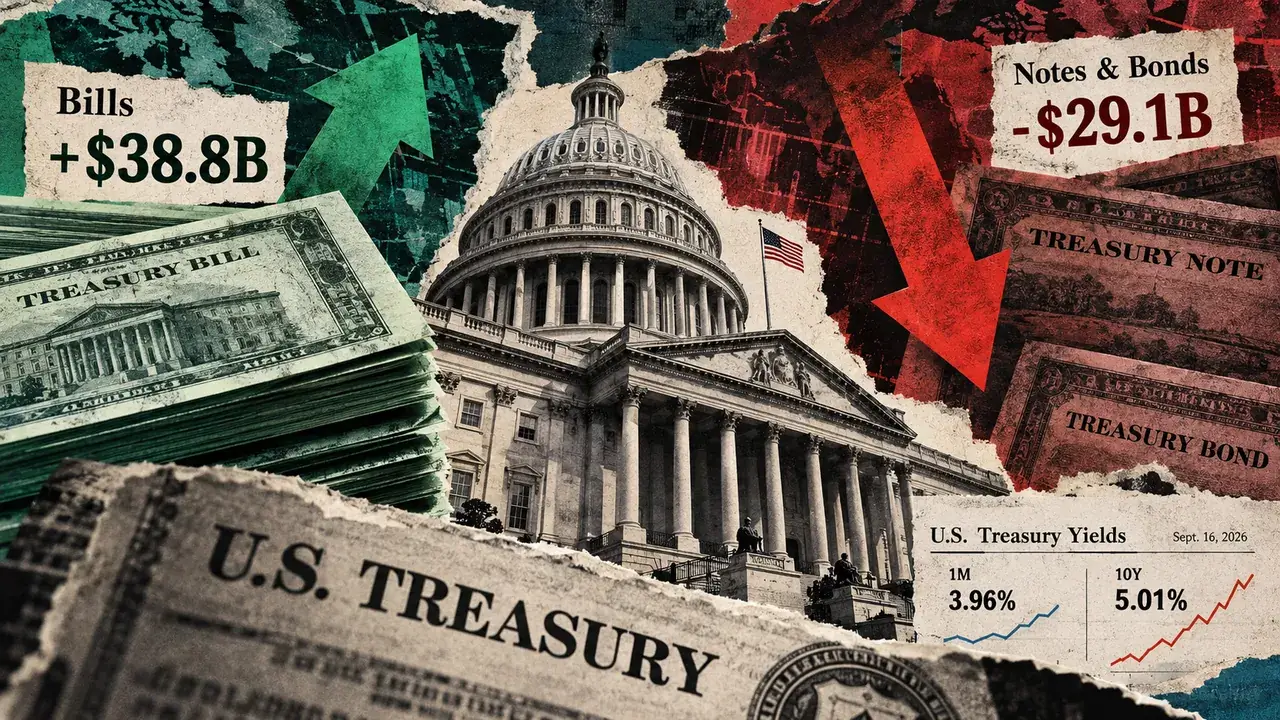
Foreign buyers re-entered the U.S. Treasury bill market in July 2026, a move that, while indicating a resurgence in demand for short-term government debt, did not signal a broader endorsement of longer-dated securities. This nuanced shift in international investment flows carries significant implications for risk assets like Bitcoin, as the persistent elevation of long-term Treasury yields continues to shape the landscape of borrowing costs and the attractiveness of safer investment alternatives. The July data, released by the Treasury Department, reveals a bifurcated market where official institutions bolstered their holdings of longer-term notes and bonds, effectively counterbalancing a notable outflow of capital from these maturities by private foreign investors. This divergence highlights a cautious approach by private capital towards the duration risk inherent in longer-term debt, a sentiment that can ripple through to the cryptocurrency market.
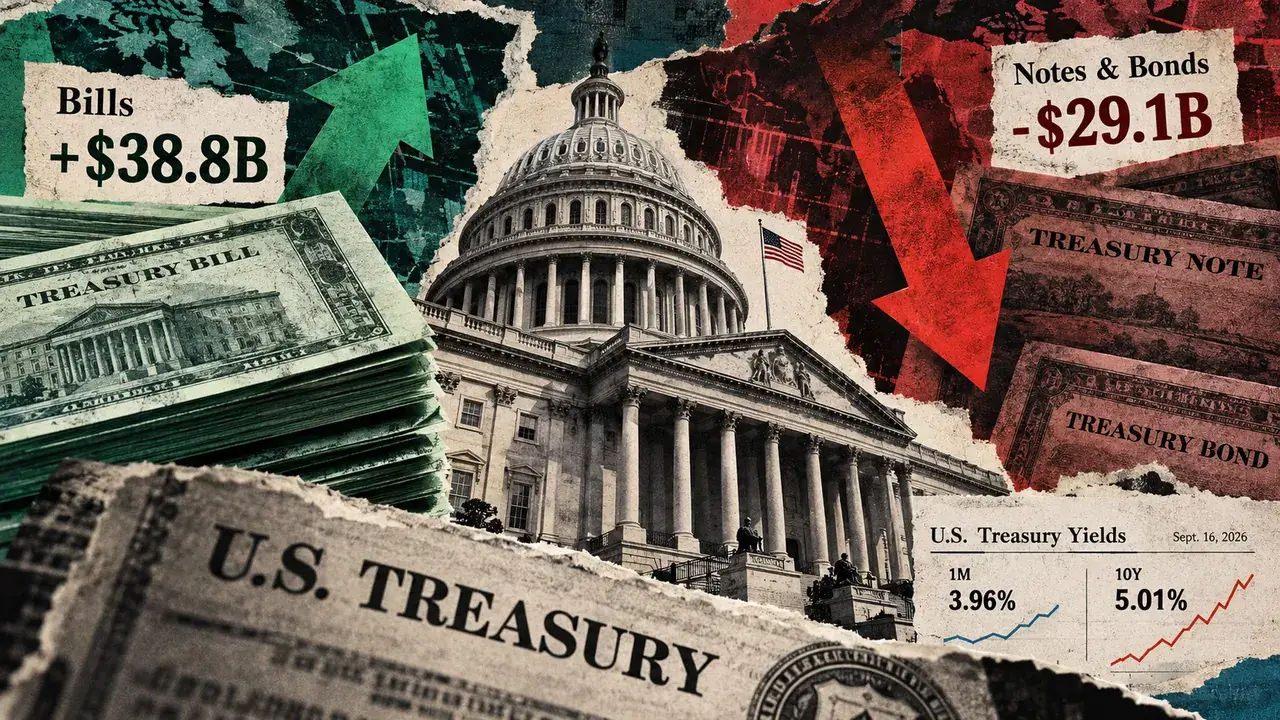
The Treasury International Capital (TIC) data, which meticulously tracks cross-border portfolio transactions and banking flows, indicated that foreign residents purchased a net $38.8 billion of Treasury bills in July, a marked recovery from the $29 billion sold in June. However, a deeper dive into the data unveils a more complex narrative. While private foreign investors were net buyers of bills to the tune of $45 billion, they simultaneously divested $29.1 billion from Treasury notes and bonds. Conversely, foreign official institutions adopted an opposing strategy, selling $6.3 billion of bills while increasing their exposure to notes and bonds by $25.5 billion. This interplay of opposing forces resulted in official buying offsetting the majority of private selling in longer-duration assets, leading to a slightly negative net flow for the combined notes and bonds category. Consequently, the headline TIC inflow of $83.7 billion did not translate into an equally robust picture for longer-term securities. After accounting for U.S. purchases of foreign securities and other adjustments, the net foreign acquisition of all long-term securities registered a deficit of $27.9 billion.
A Divided Appetite: Short-Term Safety vs. Long-Term Uncertainty
The distinction between Treasury bills, notes, and bonds is crucial to understanding the market sentiment. Treasury bills mature within one year, offering a high degree of liquidity and capital preservation. Treasury notes typically have maturities ranging from two to 10 years, while Treasury bonds extend to 20 to 30 years, carrying greater interest rate risk due to their longer duration. The July TIC data clearly demonstrates that foreign private investors were favoring the "cash-like" safety of bills over the extended maturities of notes and bonds. This preference for shorter-duration assets, while not definitively proving a direct rotation from one maturity bucket to another within the same investor group, strongly suggests a strategic allocation towards less volatile instruments.
This sentiment of caution regarding longer-term debt was mirrored in the broader market pricing of Treasury securities throughout July. From the first to the last trading day of the month, the yield on the benchmark 10-year Treasury note climbed from 4.48% to 4.75%. Simultaneously, the yield on the 30-year Treasury bond experienced a more significant ascent, rising from 4.97% to 5.27%. In contrast, the yield on the three-month Treasury bill saw a modest decline, inching down from 3.85% to 3.83%. By September 16, 2026, this trend of elevated long-term yields persisted. The Treasury yield curve indicated a yield of 3.96% for one-month maturities and a substantial 5.01% for 10-year maturities, creating a significant spread of 1.05 percentage points between short-term and long-term borrowing costs. This widening gap underscores the market’s expectation of sustained higher interest rates or a persistent inflation premium embedded in longer-dated debt.
It is important to note that the July flow data and the September yield curve are separate observations and do not necessarily represent a direct causal relationship. The Treasury Department itself cautions that its monthly long-term holdings data are primarily custody-based, which can sometimes obscure the ultimate beneficial owner’s country of origin. Furthermore, the July flow table is not seasonally adjusted, and the TIC system excludes direct investment flows, meaning the reported figures represent portfolio investments and other financial transactions rather than direct ownership of physical assets or businesses.
The Broader Economic Context: Elevated Yields and Their Ripple Effects
The sustained high levels of long-term Treasury yields are a consequence of a complex interplay of macroeconomic factors. The Federal Reserve’s aggressive monetary policy tightening cycle, aimed at combating persistent inflation, has significantly influenced short-term rates. However, long-term yields are also influenced by market expectations regarding future inflation, economic growth, and the trajectory of monetary policy over extended periods. Factors such as robust government borrowing to finance deficits, potential geopolitical instability, and global supply chain disruptions can also contribute to upward pressure on long-term yields.
The Federal Reserve’s own research has identified foreign demand as a significant factor influencing Treasury term premiums, which are the additional yield investors demand for holding longer-term debt. However, this relationship is endogenous, meaning that demand itself is influenced by yield levels, and it is challenging to isolate the precise impact of a single month’s flow data on specific yield movements. Nonetheless, the persistent elevated yields signal that the market is pricing in a higher cost of capital for the foreseeable future.
Bitcoin’s Sensitivity to Financial Conditions: The Rate Risk Channel
The elevated long-term Treasury yields have a profound impact on the broader financial conditions, and consequently, on risk assets like Bitcoin. The Federal Reserve’s financial conditions framework encompasses not only Treasury yields but also private borrowing rates, equity market performance, and the strength of the U.S. dollar. When risk-free returns, as represented by Treasury yields, increase, the opportunity cost of holding non-yielding assets such as Bitcoin rises. Investors are presented with more attractive alternatives for deploying their capital, potentially leading to a reallocation away from assets that do not generate immediate income.
Moreover, tighter credit conditions, often associated with higher interest rates, can reduce the availability of capital for investment in riskier assets. This can dampen speculative activity and constrain the inflow of new money into markets like cryptocurrencies. The mechanism through which higher yields translate into pressure on Bitcoin is thus multifaceted: it increases the attractiveness of safer alternatives and can simultaneously reduce the overall liquidity available for riskier investments.
While the July TIC data and the subsequent performance of Bitcoin are not in a direct causal chain, the underlying trend of elevated long-term borrowing costs creates a challenging environment for assets that are sensitive to financial conditions. The sustained preference for short-term Treasury bills by private foreign investors, coupled with their divestment from longer-dated debt, points to a prevailing sentiment of risk aversion. For Bitcoin to experience its next significant rally, a more comprehensive signal of improving financial conditions would be necessary. This would likely involve a sustained decline in long-term Treasury yields coupled with a broader return of private foreign capital to Treasury notes and bonds, indicating a renewed appetite for duration risk. Merely observing another month of increased bill buying by foreign entities, without a corresponding shift in their allocation towards longer-term debt, would suggest that the underlying headwinds for risk assets remain in place.
Historical Context and Future Outlook
The period leading up to July 2026 saw a significant recalibration of global monetary policy. Central banks worldwide, including the Federal Reserve, had been actively raising interest rates to combat inflation that surged in the aftermath of the COVID-19 pandemic. This tightening cycle led to a general increase in bond yields across developed markets. The U.S. Treasury market, being the deepest and most liquid in the world, serves as a bellwether for global interest rate trends.
The data from July 2026 can be viewed within this broader context of a higher-rate environment. The rebound in Treasury bill demand reflects a pragmatic approach by some investors to navigate this landscape by prioritizing capital preservation and short-term liquidity. However, the simultaneous selling of longer-dated securities signals a reluctance to commit capital to instruments that are more susceptible to interest rate fluctuations and potential future inflation surprises.
Looking ahead, several factors will shape the future demand for U.S. Treasury securities and, by extension, influence the environment for Bitcoin. The trajectory of inflation will be paramount. If inflation moderates significantly, central banks may begin to signal a pause or even a pivot towards rate cuts, which would likely lead to a decline in Treasury yields. Conversely, if inflation proves to be more persistent, higher yields could become the new normal.
Geopolitical events also play a critical role in the demand for safe-haven assets like U.S. Treasuries. Escalating international tensions can drive capital towards perceived havens, increasing demand for U.S. debt. However, the source of geopolitical risk can also impact global economic growth and risk appetite, creating a complex web of influences.
The behavior of foreign official institutions versus private investors will continue to be a key indicator. Official institutions, often acting with broader reserve management mandates, may exhibit different risk tolerances and investment horizons than private investors who are more sensitive to market sentiment and short-term opportunities.
For Bitcoin enthusiasts and investors, the signal from the Treasury market remains a critical one. A sustained period of declining long-term yields and a broadening of foreign private investor demand into longer-duration Treasury securities would likely be interpreted as a positive development, suggesting a shift towards a more risk-on environment. Until such a shift is clearly evident, the cautious stance observed in the July 2026 TIC data suggests that Bitcoin and other risk assets may continue to face headwinds from elevated borrowing costs and a preference for safer, shorter-term investments. The market is essentially waiting for a more definitive signal that the era of sustained high long-term rates is abating, and that risk appetite is beginning to return to the financial system.








