Layla Zulfa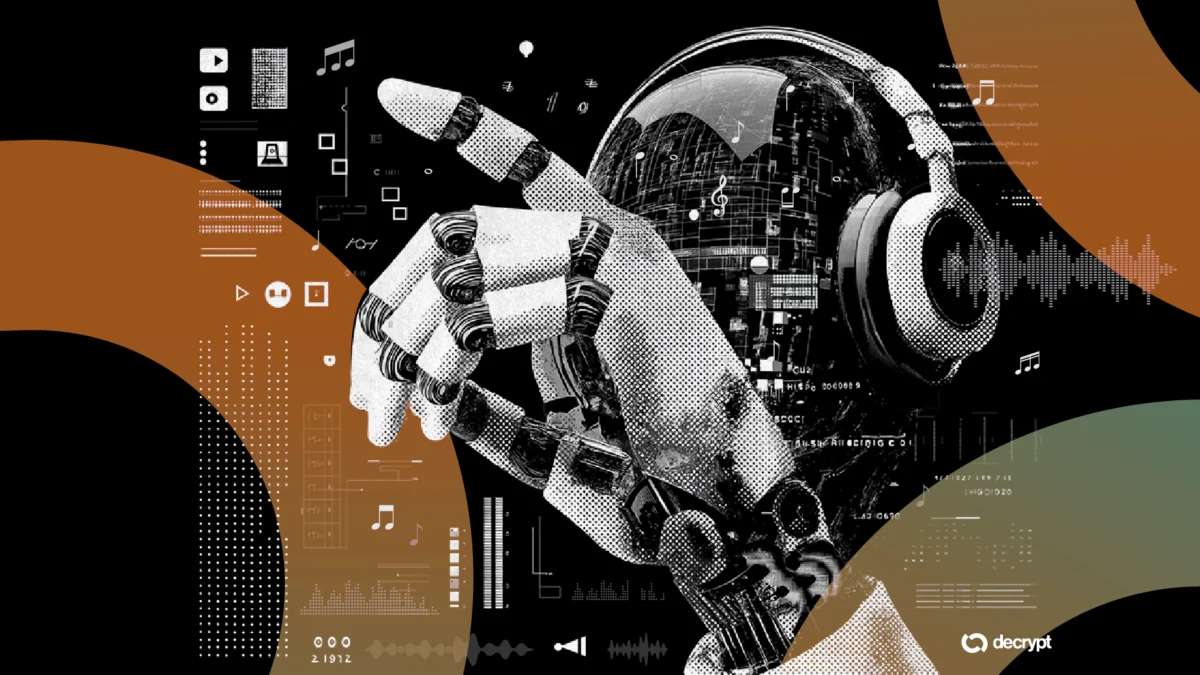
The Munich Regional Court has issued a significant ruling against the generative artificial intelligence startup Suno, marking a pivotal moment in the ongoing legal conflict between the tech industry and traditional creative sectors. The court found that Suno, a prominent player in the AI-generated music space, infringed upon copyright laws by utilizing protected works from the catalog of GEMA, the German performance rights organization, to train its sophisticated machine learning models. This decision mandates that AI companies must secure explicit licenses for the commercial utilization of GEMA’s extensive repertoire, a requirement that extends to both the foundational training of AI models and the subsequent generation of music.
The legal battle centered on several iconic compositions, including Boney M.’s global hits "Daddy Cool" and "Rasputin," Alphaville’s "Forever Young," and Lou Bega’s "Mambo No. 5." GEMA, which represents the rights of approximately 90,000 songwriters and composers in Germany along with millions of rights holders worldwide, alleged that Suno had systematically ingested these copyrighted recordings without authorization or compensation. The court’s findings affirm the music industry’s long-standing contention that the "black box" nature of AI training does not exempt companies from established intellectual property frameworks.
The Core of the Legal Dispute
The lawsuit brought by GEMA was built on the premise that Suno’s technology is not merely inspired by existing music but is functionally dependent on the unauthorized reproduction of copyrighted works. In its defense, Suno argued that its platform was designed to empower users—ranging from professional artists to casual fans—to create entirely new musical works. The company maintained that its models are trained to understand the patterns and structures of music rather than to reproduce specific existing songs. Suno further asserted that the court’s ruling was based on a fundamental misunderstanding of generative AI architecture and the application of international copyright principles.
However, the Munich Regional Court’s decision emphasizes that the act of "training" an AI on copyrighted material constitutes a reproduction of that material under German law. Unlike the United States, where the "fair use" doctrine provides a flexible—albeit heavily litigated—defense for transformative uses of copyrighted works, German and European law operate under a more rigid framework of specific exceptions. The court determined that Suno’s commercial exploitation of these works for the purpose of building a competing product does not fall under any such legal exemptions.
Chronology of the Conflict
The ruling against Suno is the latest in a series of legal escalations involving generative AI companies in Europe. To understand the current landscape, it is necessary to look at the timeline of events leading to this verdict:
- Late 2023 – The Rise of Suno: Suno gained rapid popularity for its ability to generate high-quality, full-length songs with lyrics and vocals from simple text prompts. As its valuation soared, so did the scrutiny from the music industry regarding its training datasets.
- Early 2024 – GEMA vs. OpenAI: In a precursor to the Suno case, GEMA successfully sued OpenAI in Munich. The court ruled that ChatGPT’s ability to reproduce copyrighted song lyrics without a license was a violation of copyright law. This established a precedent in the Munich jurisdiction for how AI outputs are treated.
- June 2024 – Major Label Litigation: In the United States, the Recording Industry Association of America (RIAA), representing giants like Sony Music, Universal Music Group, and Warner Music Group, filed a massive federal lawsuit against Suno and its competitor Udio. The RIAA alleged "copyright infringement on an almost unimaginable scale."
- September 2024 – GEMA Files Suit: Building on its victory against OpenAI, GEMA filed its specific complaint against Suno, focusing on the unauthorized use of its members’ works for training purposes.
- Early 2025 – The Data Leaks: Investigative reports and leaked source code revealed the specific scale of Suno’s data scraping. The leaks suggested the company had fed its models over 113,000 hours of audio from YouTube Music, alongside tens of thousands of hours from Pond5 and Deezer.
- Mid-2025 – The Verdict: The Munich Regional Court issued its ruling, siding with GEMA and setting a strict licensing requirement for AI music platforms operating within the German market.
Supporting Data and Technical Evidence
The evidence presented in the lead-up to and during the trial painted a picture of a massive, automated data ingestion process. According to the leaked metadata and source code details, Suno’s training pipeline allegedly included:
- 113,000 hours of audio from YouTube Music: This represents one of the most comprehensive digital music repositories in existence, containing millions of copyrighted tracks.
- 62,000 hours from Pond5: A major stock media site where artists sell licenses for music and sound effects.
- 12,000 hours from Deezer: A global music streaming service with a strictly controlled licensing environment.
The sheer volume of this data suggests that Suno’s models have processed a significant percentage of modern recorded music. For GEMA, this data serves as proof that the "originality" of Suno’s output is derived from the unauthorized "ingestion" of its members’ creative labor. GEMA’s catalog includes over 2 million musical works, and the organization argues that the commercial value of Suno’s platform is directly tied to the quality of the human-made music it was trained on.
Official Responses and Industry Reactions
In the wake of the ruling, Suno released a defiant statement, signaling that the legal battle is far from over. "Our tools give people the ability to create new songs, whether they are top artists, product developers, songwriters using our tools in their workflows, or everyday music fans," the company stated. "From the beginning, we trained our models to create new songs, not reproduce existing ones, and built protections into our platform. We disagree with today’s ruling—which rests on a fundamental mischaracterization of how Suno’s technology works, how it is used, and how U.S. law applies—and are evaluating all available options, including an appeal."
Suno’s mention of U.S. law is particularly notable, as it highlights the company’s strategy of leaning on "fair use" arguments that are currently being tested in American courts. However, the Munich court’s jurisdiction is governed by German law and the broader European Union directives, which prioritize the "moral and economic rights" of the author.
GEMA, conversely, hailed the decision as a victory for the "humanity" of music. The organization’s leadership argued that while they are not opposed to technological innovation, such innovation cannot come at the expense of the creators who provide the raw material for these systems. "The court has made it clear: if you use the work of others to build a commercial product, you must ask for permission and pay for that use," a spokesperson for the organization noted.
Broader Impact and Legal Implications
The implications of this ruling extend far beyond the borders of Germany. As the first major European court to rule specifically on the training phase of an AI music model, the Munich Regional Court has set a benchmark for the interpretation of the EU’s AI Act and the Copyright Directive.
1. The Death of the "Black Box" Defense
For years, AI developers have operated under the assumption that the process of training—converting data into mathematical weights—was a transformative process that did not require a license. This ruling effectively rejects that premise in the context of commercial music. It suggests that the "input" phase is just as legally significant as the "output" phase.
2. Licensing as the New Standard
The ruling necessitates the creation of a new licensing infrastructure. Much like how Spotify and Apple Music pay royalties for streaming, AI companies may now be forced to enter into "training licenses." This could lead to a consolidation in the AI industry, as only well-funded startups or established tech giants will be able to afford the licensing fees for high-quality datasets.
3. Jurisdictional Fragmentation
The Suno case highlights a growing divide between European and American legal approaches to AI. If U.S. courts eventually rule that AI training is "fair use," a situation could arise where an AI model is legal to train in San Francisco but illegal to train (or potentially even use) in Berlin. This creates a complex regulatory environment for global tech companies.
4. The EU AI Act and "Opt-Out" Mechanisms
Under the EU’s recently implemented AI Act, rights holders have the ability to "opt out" of having their works used for text and data mining. However, the Munich ruling goes a step further by suggesting that for commercial generative AI, a proactive license is required rather than a simple lack of an opt-out. This reinforces the "permission-first" culture of European intellectual property law.
Future Outlook for the AI Music Industry
The decision by the Munich Regional Court is likely to be appealed, potentially taking the case to the German Federal Court of Justice or even the European Court of Justice (ECJ). In the interim, Suno and other AI developers face a difficult path. If the ruling stands, it could force a fundamental redesign of how these models are built.
Some industry analysts suggest that AI companies may pivot toward "clean" datasets—music specifically created for AI training or music that is in the public domain. However, the commercial appeal of tools like Suno lies in their ability to mimic the production quality and stylistic nuances of contemporary popular music—qualities that are inextricably linked to the copyrighted datasets they are currently accused of stealing.
The music industry, emboldened by this victory, is expected to increase its pressure on other generative platforms. The focus will likely shift to transparency, with regulators demanding that AI companies disclose exactly what data was used to train their models. As the legal dust settles, the "move fast and break things" era of generative AI appears to be colliding with the "protect and collect" reality of the global music business. This ruling ensures that in the future of music, the human creator remains a central, and legally protected, figure.